
Enhance fine motor skills Worksheets for Ages 4-5
3 filtered results
Difficulty Level
Grade
Age
-
From - To
Subject
Activity
Standards
Discover our engaging worksheets designed to enhance fine motor skills for children aged 4 to 5! These printable resources are perfect for developing essential hand-eye coordination, dexterity, and strength through fun activities. From cutting exercises to tracing shapes and letters, our worksheets cater to various learning styles and keep little hands busy. Each activity promotes creativity while supporting cognitive development. Watch your child flourish as they improve their skills in a playful environment. Perfect for home or classroom use, these worksheets are an ideal resource to help your child gain confidence and master the fine motor skills needed for interactive learning experiences!
Favorites
With answer key
Interactive
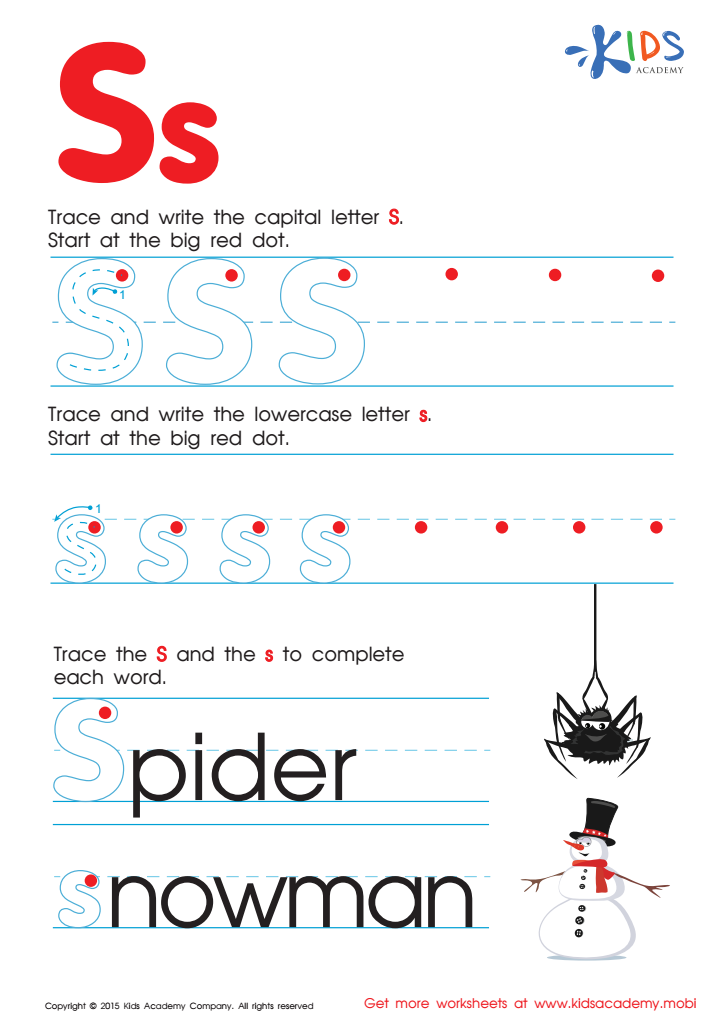
Letter S Tracing Page
Trace and write the capital and lowercase "S" on this ABC worksheet for kindergarten. Start with the big red dot and be careful. When you finish, help the spider and snowman in the pictures restore their words with the capital and lowercase letters. Continue learning the alphabet with Kids Academy.
 Assign to My Students
Letter S Tracing Page
Worksheet
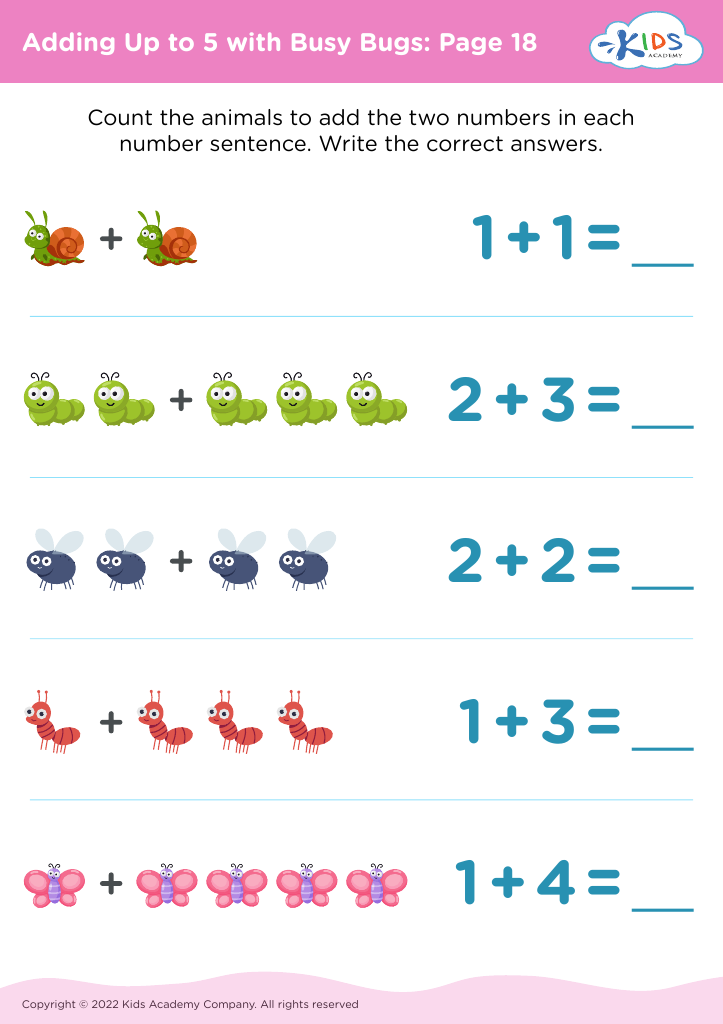

Join Kids Academy for Free
Who is primarily going to use this learning content?








Enhancing fine motor skills in children ages 4-5 is crucial for their overall development, as these abilities are foundational for many everyday tasks. At this age, children are becoming more independent and need finer control over their movements to perform chores like buttoning their shirts, tying shoelaces, or even holding a pencil correctly for writing. Strengthening these skills fosters their confidence and enables them to engage more fully in kindergarten activities, which often require dexterity, such as cutting with scissors, coloring within lines, and manipulating small objects during play.
Additionally, fine motor skills are closely linked to cognitive development. Through activities that promote these skills, such as threading beads or working with playdough, children not only enhance their hand-eye coordination but also engage in problem-solving and critical thinking. For teachers and parents, focusing on fine motor activities provides opportunities for children to explore their creativity and express themselves, particularly through art and craft projects.
Moreover, early development of fine motor skills lays the groundwork for future academic success, especially in writing and other subjects that require precision and coordination. Thus, both teachers and parents should prioritize and incorporate activities that improve these essential skills into daily routines.








