History knowledge Worksheets for Ages 4-5
4 filtered results
-
From - To
Discover our engaging History Knowledge Worksheets for ages 4-5, designed to spark young learners’ curiosity about the past! Tailored for preschoolers, these worksheets introduce fundamental historical concepts through fun activities and visual aids. Children will explore fascinating topics like famous historical figures, early civilizations, and cultural traditions, all while developing critical thinking skills. These resources are perfect for parents and educators aiming to enrich their child's understanding of history in a playful way. Download our printable worksheets today and embark on an exciting journey through time with your little ones! Perfect for classroom use or at-home learning adventures!
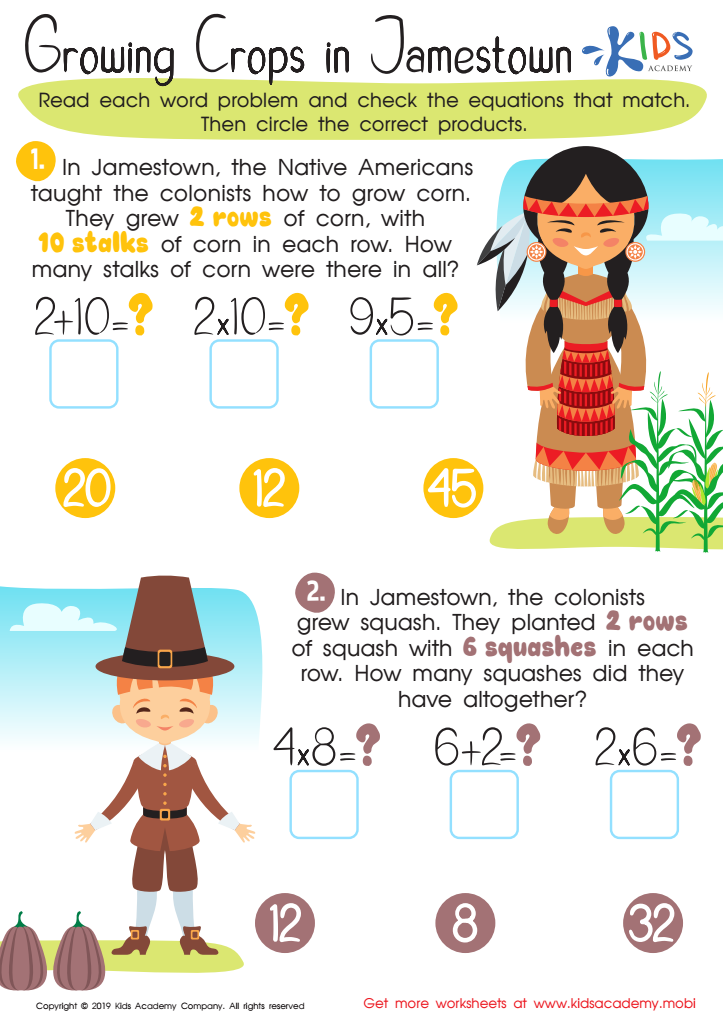
Growing Jamestown Worksheet
 Assign to My Students








Parents and teachers should prioritize history knowledge for children ages 4-5 because it plays a crucial role in their cognitive and social development. Learning about history introduces young learners to concepts of time, sequence, and change, helping them understand how their own lives are situated within a broader context. It fosters critical thinking and encourages curiosity, as children begin to ask questions about the world around them—“Why are things the way they are?” and “What happened before?”
Moreover, history helps children develop their identity and cultural awareness. By learning about their own heritage and the diverse backgrounds of others, children gain appreciation for different perspectives, which is crucial in our multicultural society. Engaging with stories from the past can also spark imagination and creativity, enriching their play and storytelling experiences.
Cognitive studies suggest that early exposure to historical concepts can enhance literacy skills, as children learn vocabulary related to time and events. Additionally, history is foundational for developing moral reasoning, as children discuss significant figures and events that demonstrate values such as courage, kindness, and resilience. By instilling a sense of history in young learners, we prepare them to be informed, empathetic, and engaged members of society.








