Noun identification Worksheets for Ages 4-5
5 filtered results
-
From - To
Discover our engaging Noun Identification Worksheets designed specifically for children aged 4-5! These interactive worksheets help young learners recognize and classify nouns, enhancing their vocabulary and literacy skills in a fun and creative way. Through colorful illustrations and captivating exercises, kids will identify person, place, and thing nouns while sharpening their observational skills. Perfect for home learning or classroom activities, our worksheets provide an enjoyable learning experience tailored to early development. Start nurturing your child's love for language with our captivating noun identification resources today! Explore the world of nouns and watch their confidence and comprehension grow!
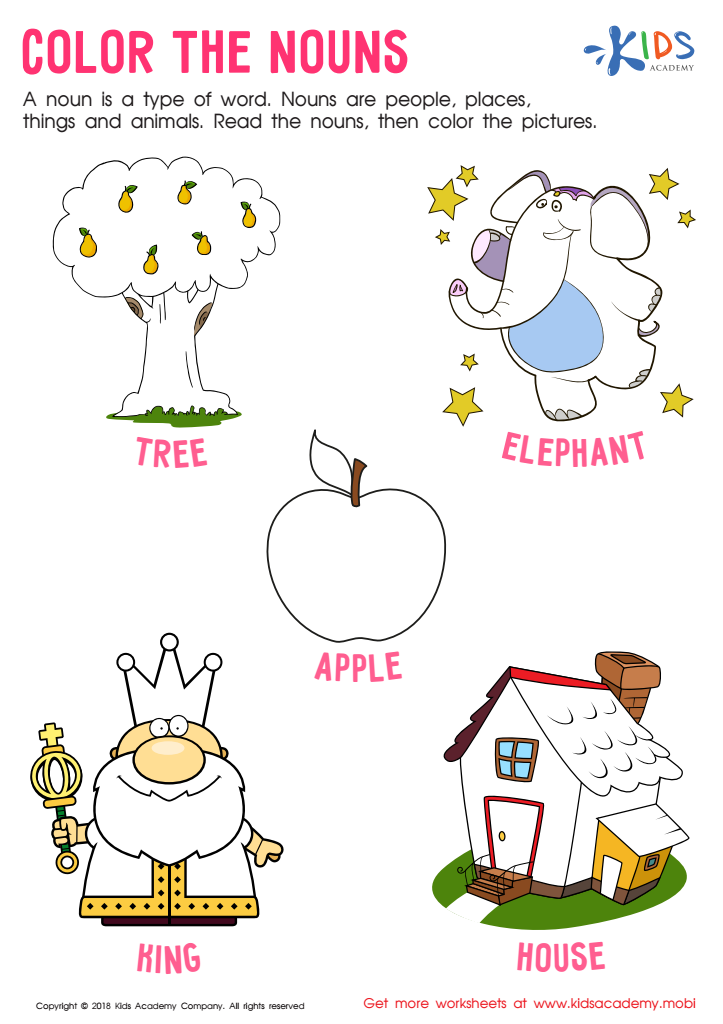
Color the Nouns Worksheet
 Assign to My Students
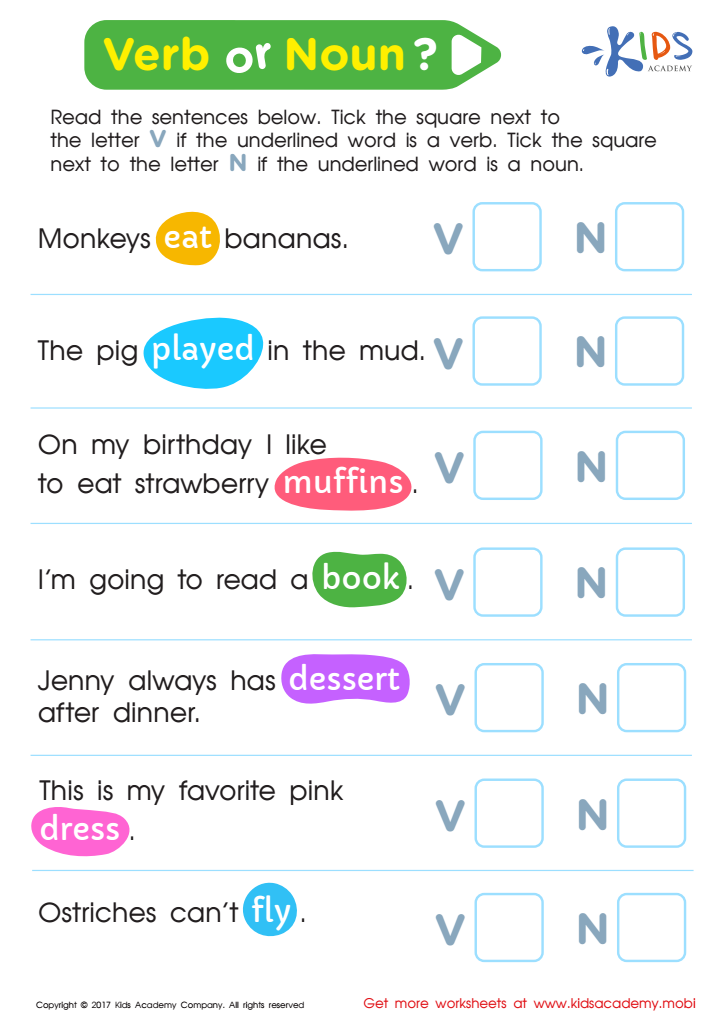
Verb or Noun Worksheet
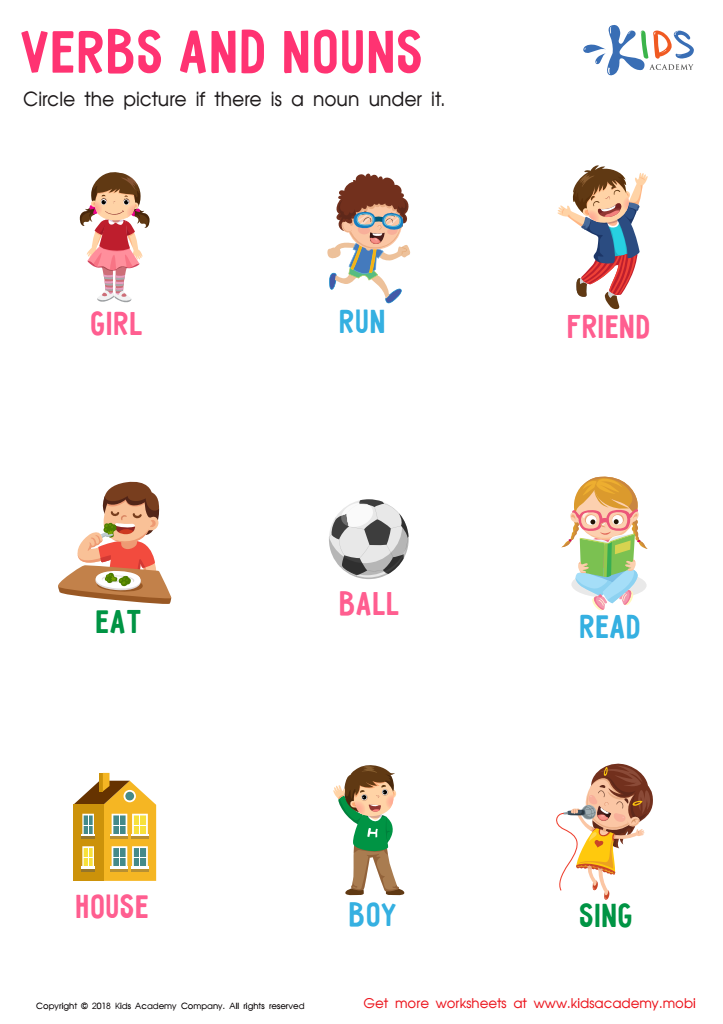
Verbs and Nouns Worksheet
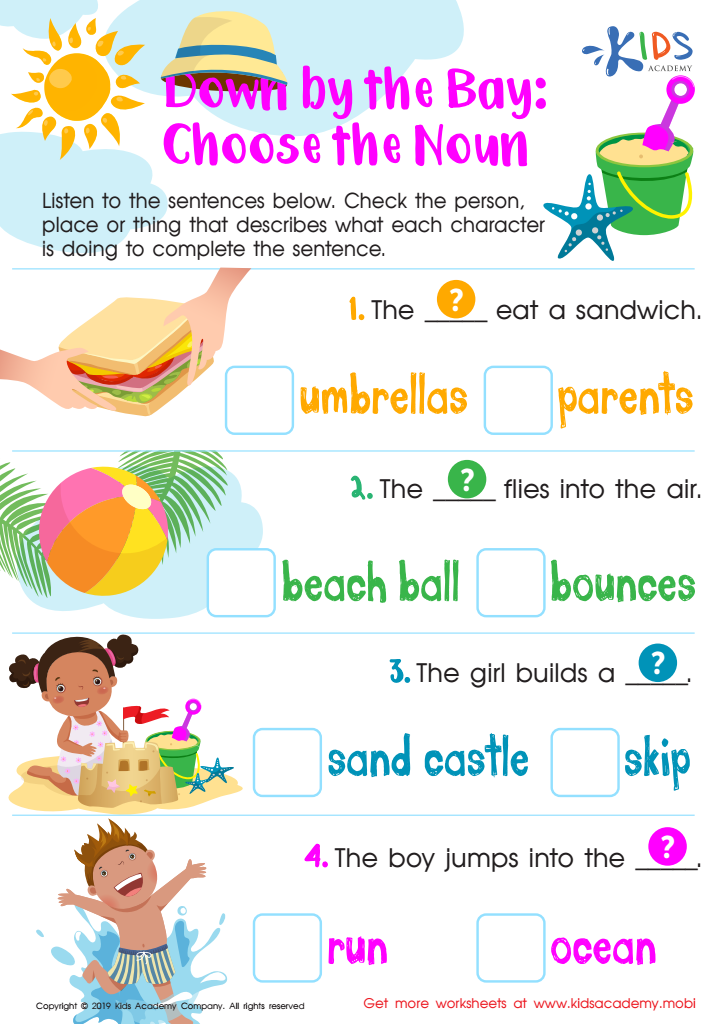
Down by the Bay: Choose the Noun Worksheet
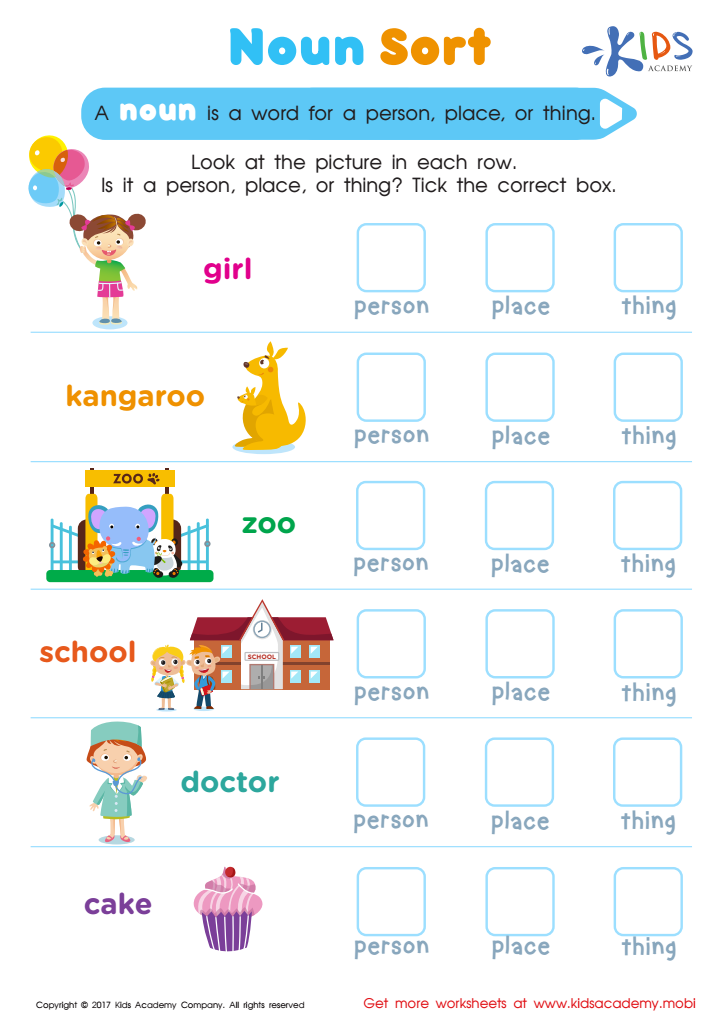
Noun Sort Printable





.jpg)

Noun identification is a fundamental skill for children aged 4-5, pivotal to their early language development and cognitive growth. At this age, children are rapidly acquiring language skills, and identifying nouns lays the groundwork for effective communication. Nouns represent people, places, things, and ideas, forming the bedrock of vocabulary and sentence construction.
When parents and teachers focus on noun identification, they enhance children's ability to express thoughts and interact with the world around them. For example, recognizing common nouns, such as "dog," "car," and "apple," enables children to describe their experiences more vividly and engage in conversations, promoting social skills and emotional expression.
Furthermore, early mastery of nouns aids reading readiness. Familiarity with nouns helps children decode text, as they can relate words to visual and contextual cues in their surroundings. Additionally, noun identification encourages listening skills, as children learn to pay attention to language used by adults.
Supporting noun identification in daily activities—through stories, conversations, and interactive play—makes learning enjoyable. By fostering this skill, parents and teachers not only cultivate a strong vocabulary base but also instill a love for language and communication that will benefit children throughout their lives.








