
Number comparison Worksheets for Ages 4-5
7 filtered results
Difficulty Level
Grade
Age
-
From - To
Subject
Activity
Standards
Discover engaging and educational number comparison worksheets designed for children aged 4-5! Our carefully crafted activities help young learners develop essential math skills through fun and interactive exercises. Kids will explore concepts of more and less by comparing groups of objects, strengthening their ability to recognize quantities. These worksheets promote critical thinking and visual discrimination while making learning enjoyable. Perfect for parents and educators looking to enhance early math foundations, our resources are easy to use and perfect for home or classroom settings. Start your child's mathematical journey with our number comparison worksheets today!
Favorites
With answer key
Interactive
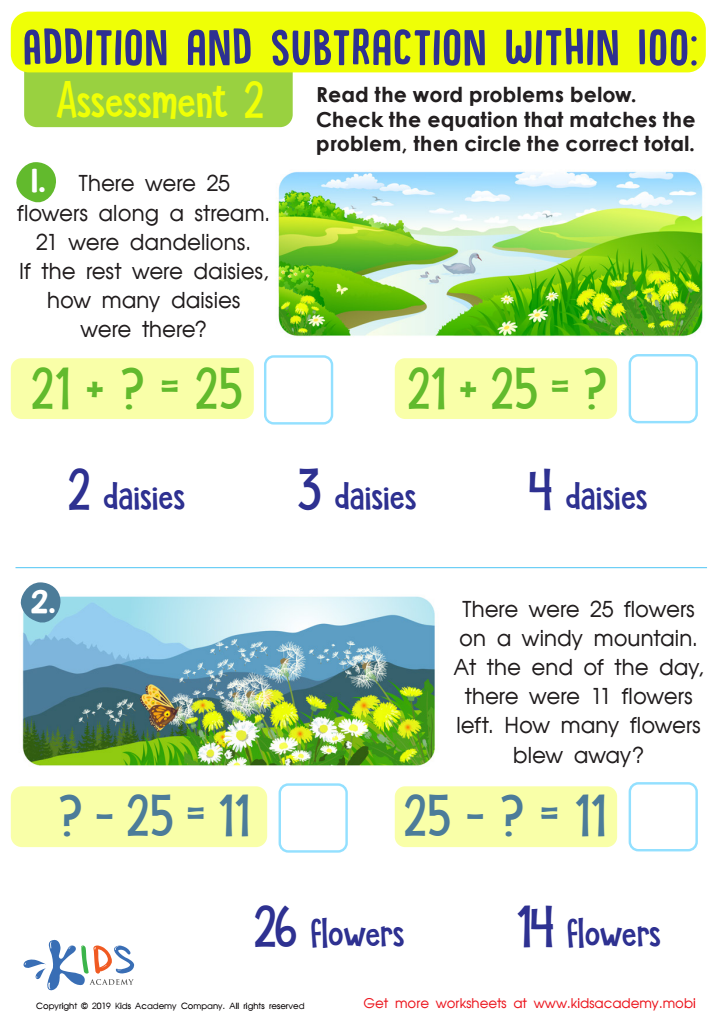
Assessment 2 Math Worksheet
Using fun exercises and pictures, you can get kids excited about math. With practice and reminders of what they've learnt, they'll be solving simple addition and subtraction equations with ease. Read the word problems in the picture to them, then help them check the equation and choose the correct answer.
 Assign to My Students
Assessment 2 Math Worksheet
Worksheet
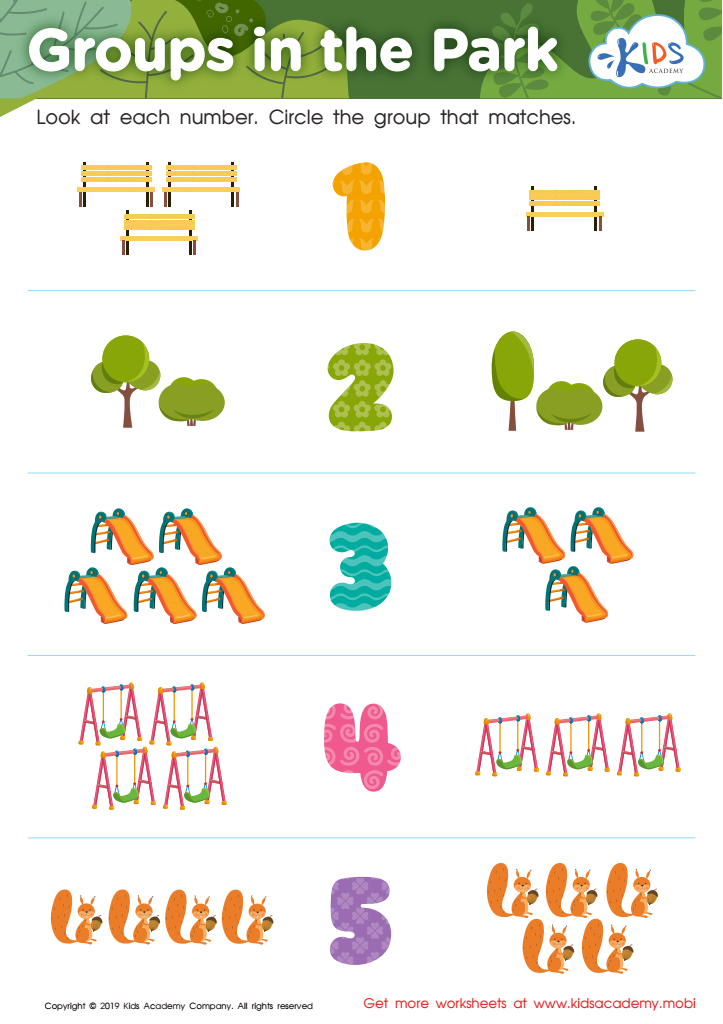
Groups in the Park Worksheet
Take your kids to the park and let them enjoy the freedom to play! Ask them what they love doing most and study a picture together - name items and count objects in the sets, then circle the correct one. It's a fun way for your kids to learn.
Groups in the Park Worksheet
Worksheet
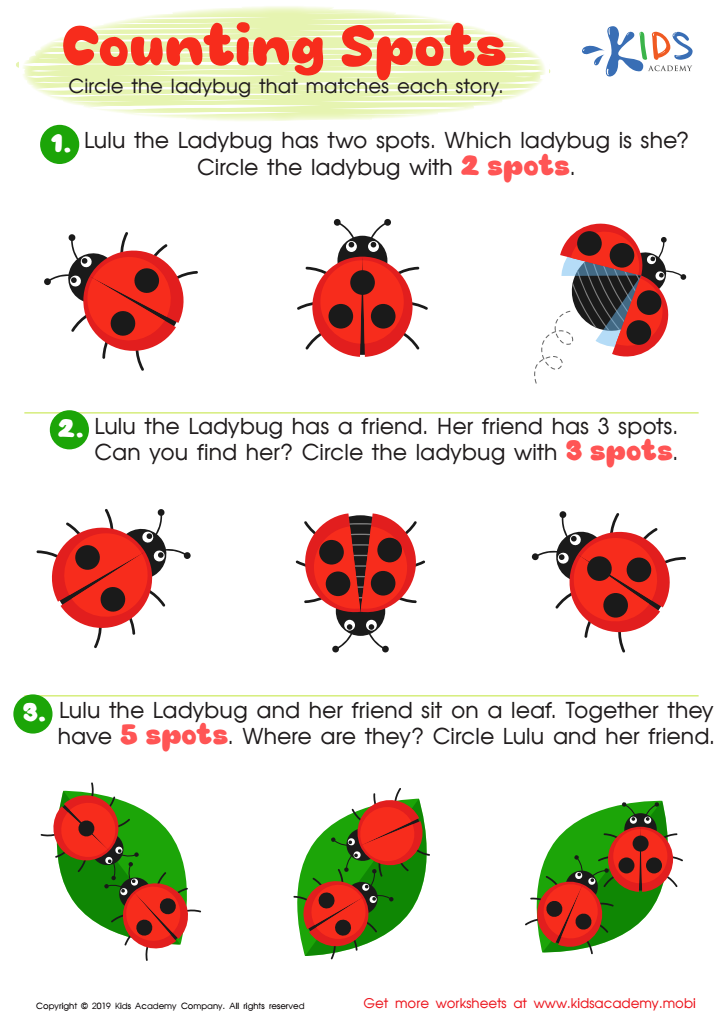
Counting Spots Worksheet
This worksheet is full of cute, colorful ladybugs. Help your kids identify Lulu, who has two spots on her body. Count the spots on each ladybug and circle the one with two spots. Then read the instructions on the other sections and help them find the ladybugs there, too!
Counting Spots Worksheet
Worksheet
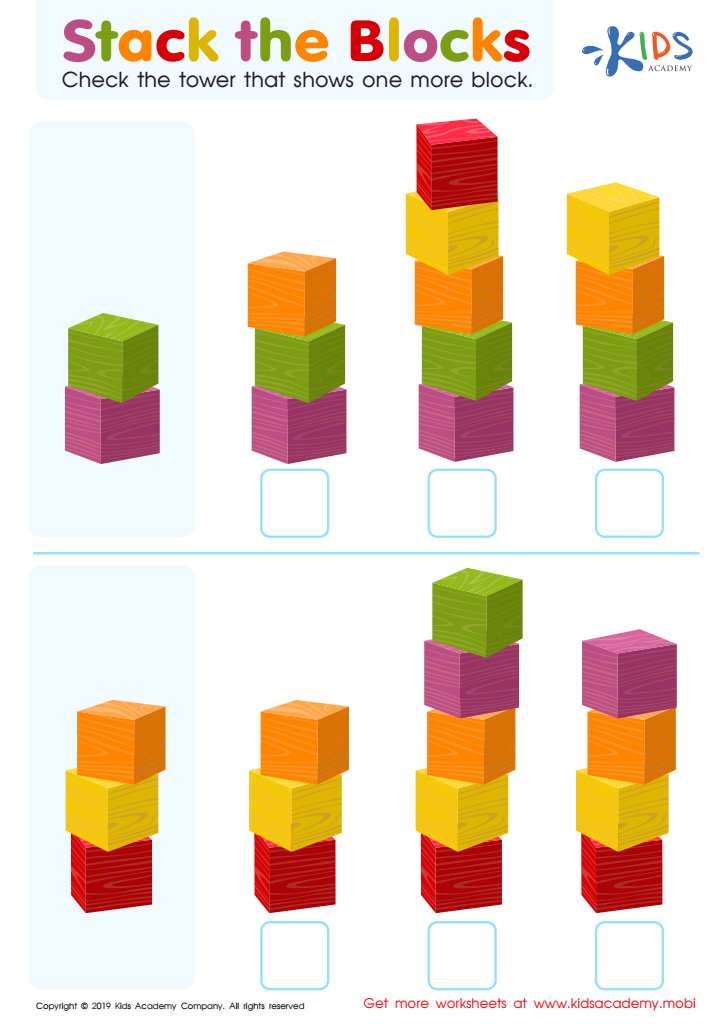
Stack the Blocks Worksheet
Playing with blocks is a great way for kids to learn! They can create patterns, shapes, and even count. In this worksheet, ask them to identify the colors and count each stack of blocks. If they can spot one extra block in the tower, even better! Encourage learning through play with these fun blocks.
Stack the Blocks Worksheet
Worksheet
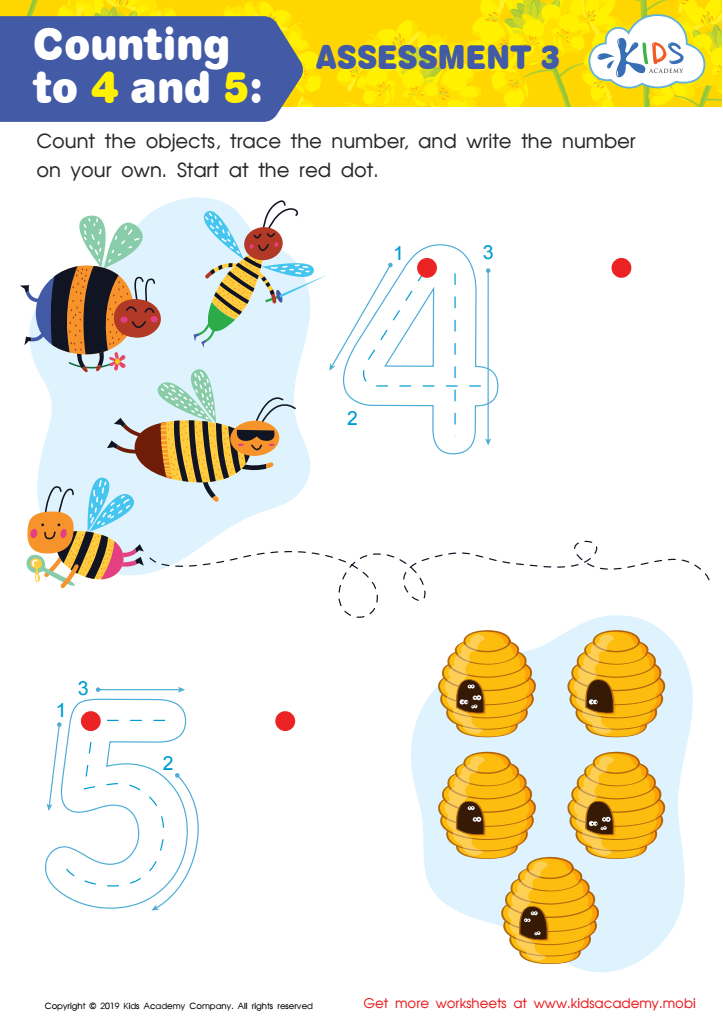
Counting to 4 and 5: Assessment 3 Worksheet
Help your kids learn to count with fun objects and items they like - like the bees in this worksheet. Ask them to count, trace the number, and write it down. Give guidance, starting at the red dot. This is an important first step in math and your kids will love it!
Counting to 4 and 5: Assessment 3 Worksheet
Worksheet
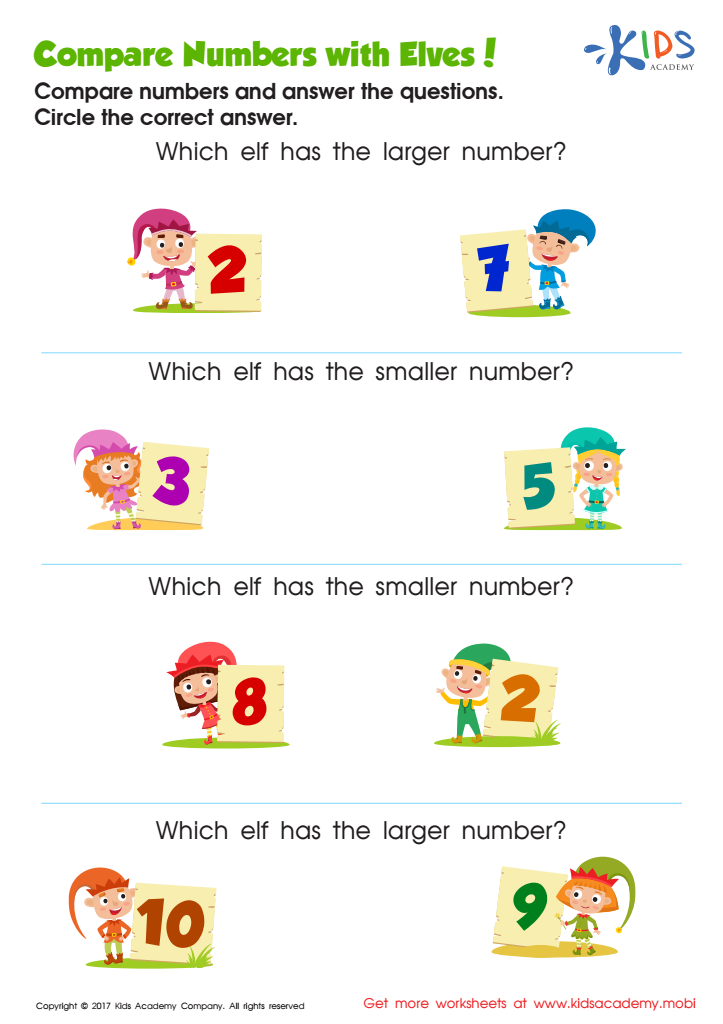
Comparing Numbers Worksheet for Kindergarten
Your child will love helping Santa's elves compare numbers with this fun worksheet for kindergarten! They must determine which number is bigger or smaller then circle the answer. It's a great activity for Christmas or any time!
Comparing Numbers Worksheet for Kindergarten
Worksheet
Join Kids Academy for Free
Who is primarily going to use this learning content?







Understanding number comparison is crucial for early learners aged 4-5, as it lays the foundation for future math skills and overall cognitive development. At this age, children start to grasp concepts of quantity, size, and value, and learning to compare numbers helps solidify their understanding of these important ideas.
Mastering number comparison encourages the development of critical thinking and problem-solving skills. When children learn to determine which number is larger or smaller, they enhance their ability to analyze and make decisions based on numerical information. This skill directly supports other mathematical concepts, such as addition, subtraction, and a deeper understanding of number relationships.
Additionally, number comparison activities engage students in playful and interactive learning, making math enjoyable rather than daunting. Teachers and parents can implement fun games and visual aids to make learning engaging, which fosters a positive attitude towards mathematics.
Furthermore, supporting children in this area reinforces essential counting skills and enhances their confidence in handling numbers. When teachers and parents invest in number comparison skills, they equip children with the tools necessary for academic success and lifelong learning, ultimately aiding in the journey toward numeracy literacy.








