Spatial awareness Worksheets for Ages 4-5 - Page 2
29 filtered results
-
From - To
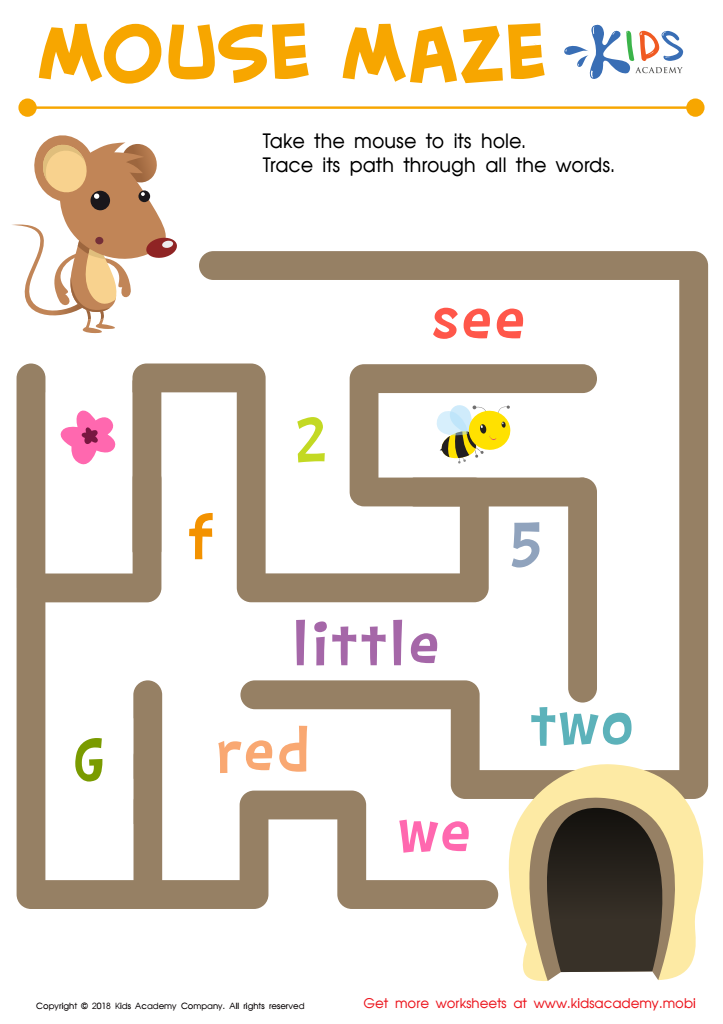
Find Words Mouse Maze Worksheet
 Assign to My Students
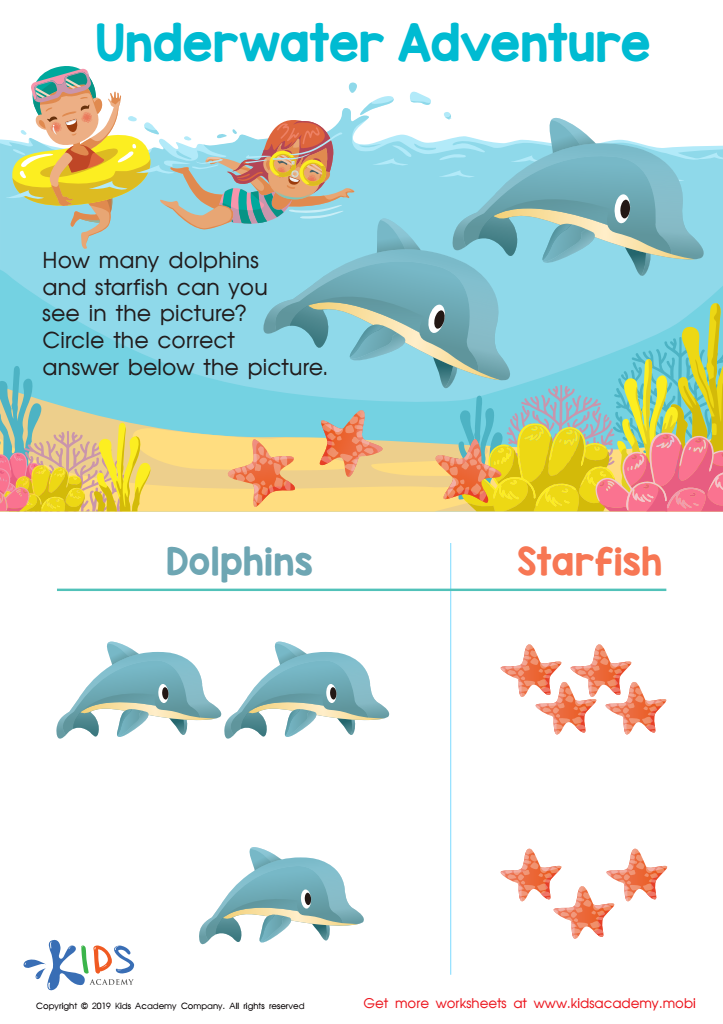
Underwater Adventure Worksheet
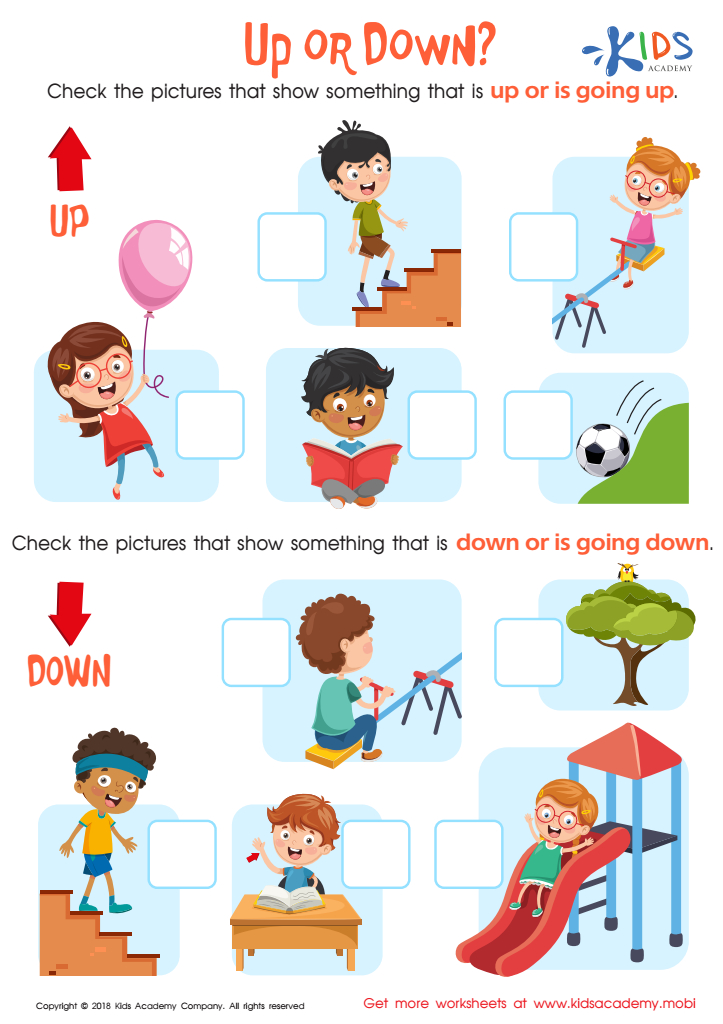
Up or Down Worksheet
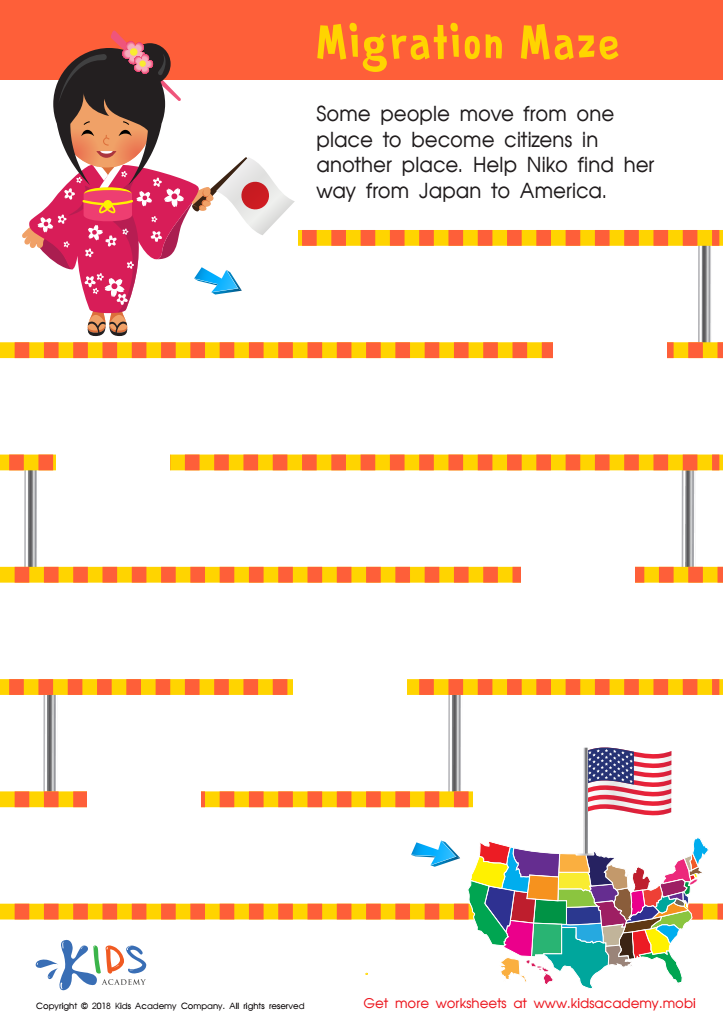
Migration Maze Worksheet
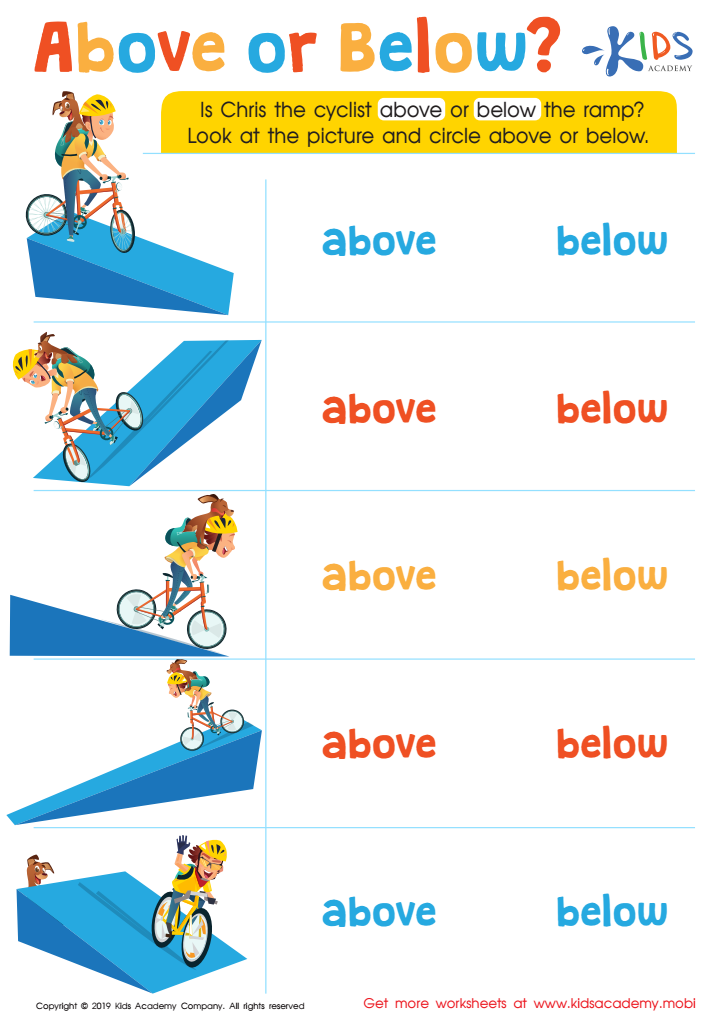
Above or Below? Worksheet







Spatial awareness is crucial for children aged 4-5 as it lays the foundation for their cognitive development and understanding of the world around them. At this age, children are beginning to comprehend concepts such as distance, size, shape, and direction, which are essential skills for problem-solving and critical thinking.
Encouraging spatial awareness helps children navigate their environment more effectively, fostering their independence and confidence. Engaging in activities like building with blocks, recognizing patterns, and solving puzzles can significantly enhance these skills. Furthermore, strong spatial awareness contributes to a child’s success in mathematics, art, and even reading, as they learn to visualize and manipulate objects in their mind.
For parents and teachers, fostering spatial awareness is an opportunity to create rich learning experiences. Interactive play, hands-on projects, and guided exploration can make learning both enjoyable and impactful. By focusing on these early developmental stages, caregivers can help children gain essential skills that will serve them throughout their education and daily life. Investing time in promoting spatial awareness in young children can ultimately lead to improved academic performance and greater creativity, paving the way for future success.








