Understanding context Worksheets for Ages 4-5
5 filtered results
-
From - To
“Understanding Context Worksheets for Ages 4-5” are designed to enhance early learning skills crucial for young minds. These worksheets focus on developing kids' ability to grasp the meaning behind words and sentences by analyzing their context. Engaging and colorful, they promote critical thinking and comprehension through various fun activities, such as identifying familiar situations or making connections between images and text. Ideal for preschoolers and kindergartners, these resources help lay a strong foundation for effective communication and reading skills. Perfect for classroom use or at-home practice, these worksheets make learning enjoyable and impactful for your little ones.
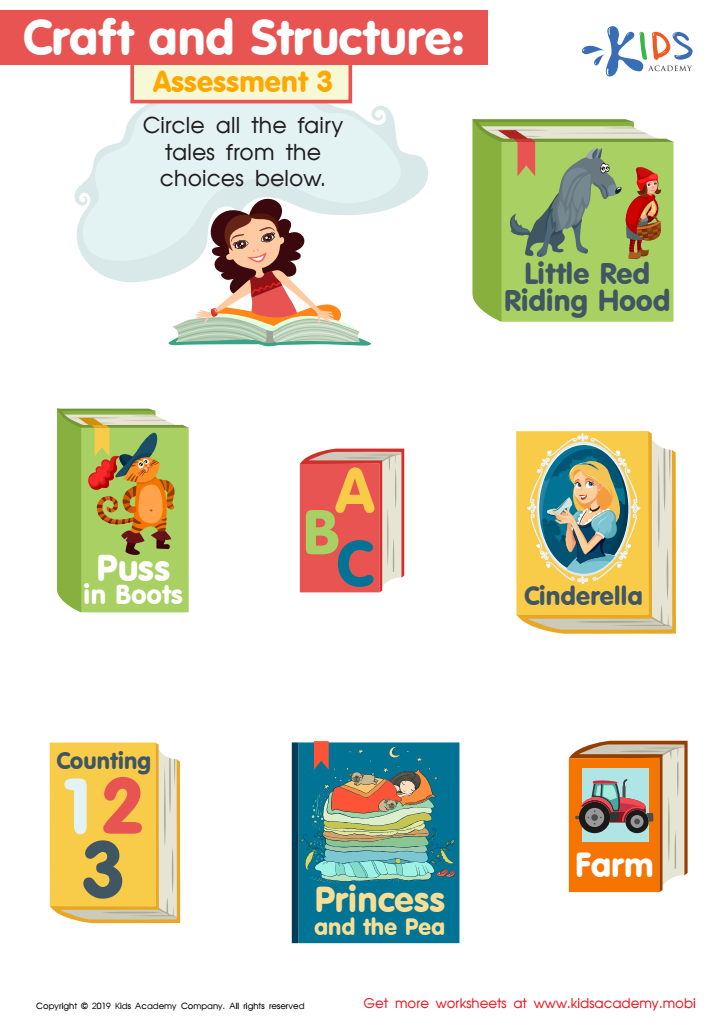
Craft and Structure: Assessment 3 Worksheet
 Assign to My Students
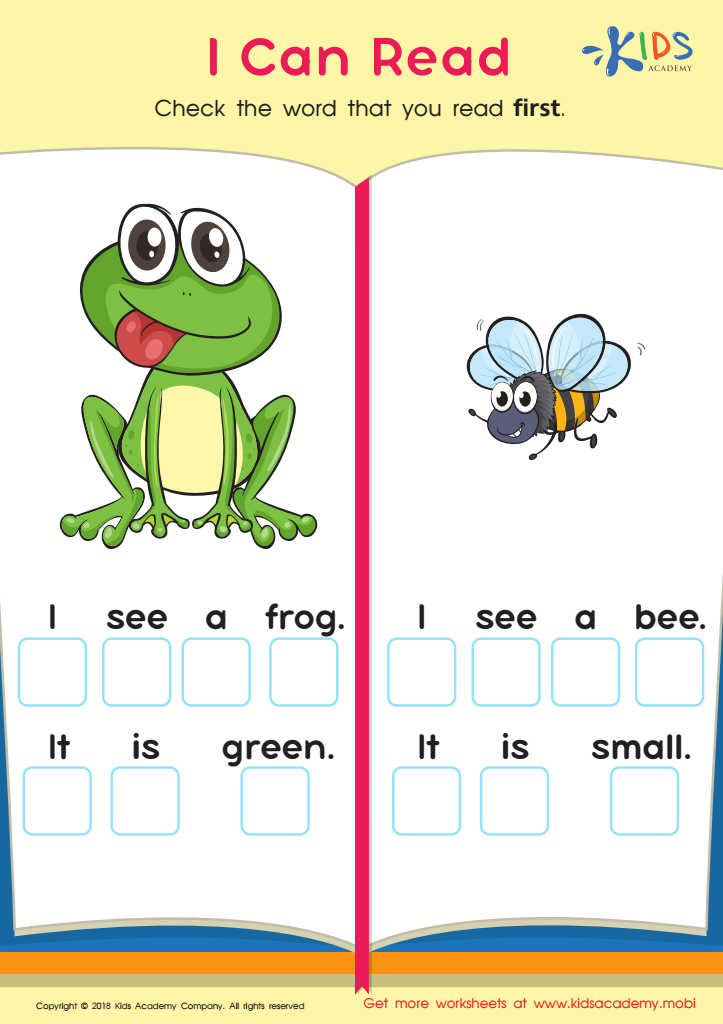
I Can Read Worksheet
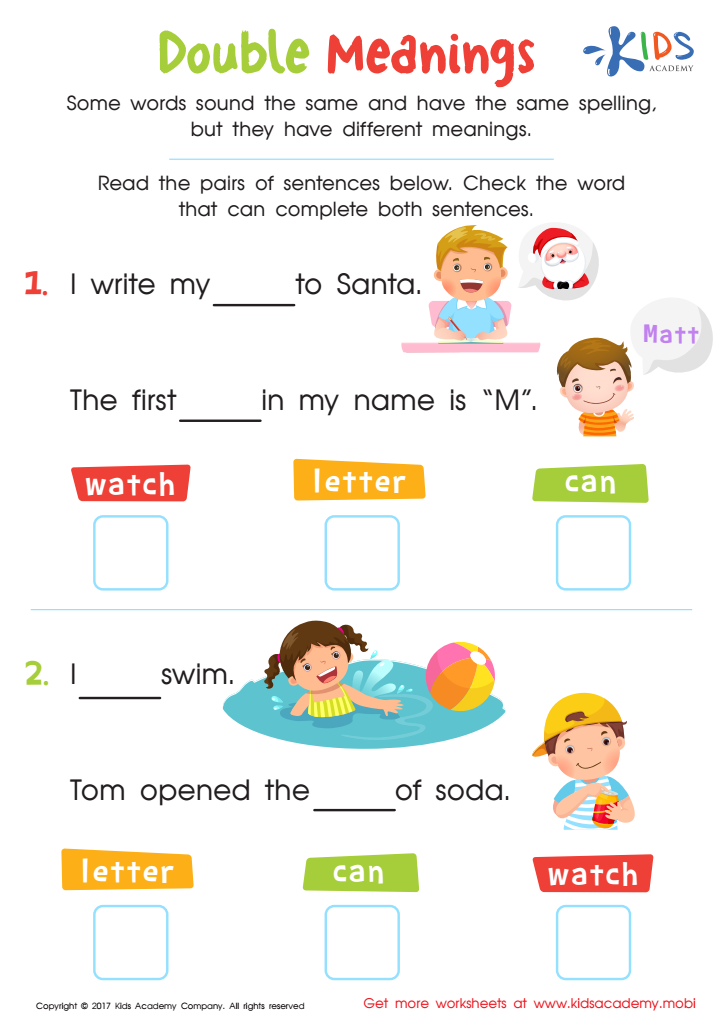
Double Meanings Worksheet
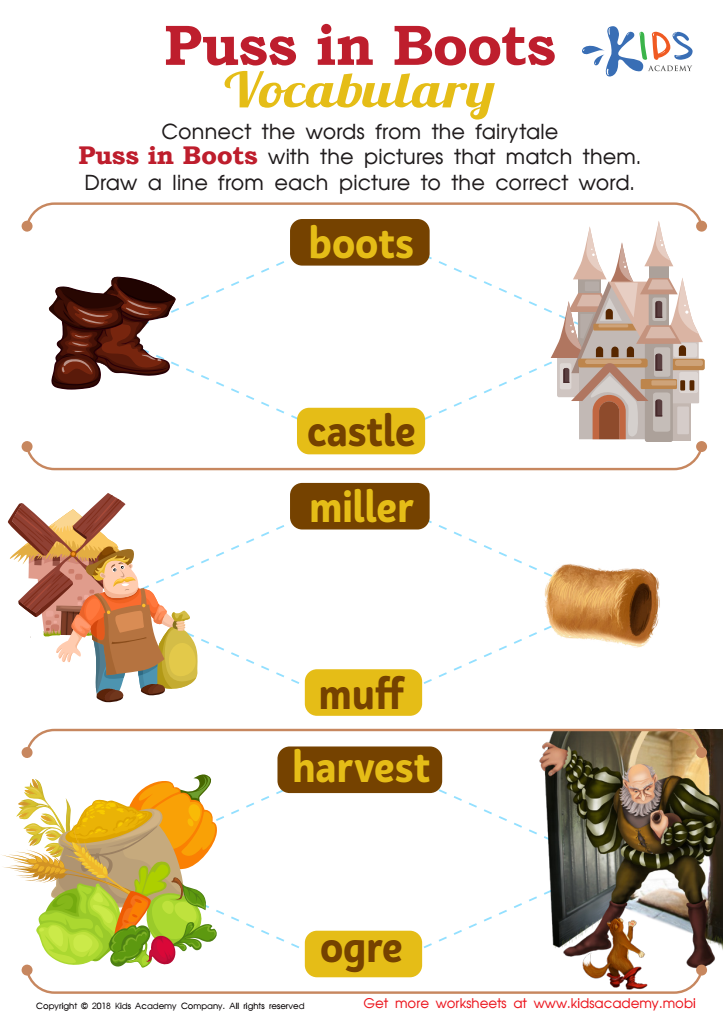
Puss in Boots Vocabulary Worksheet
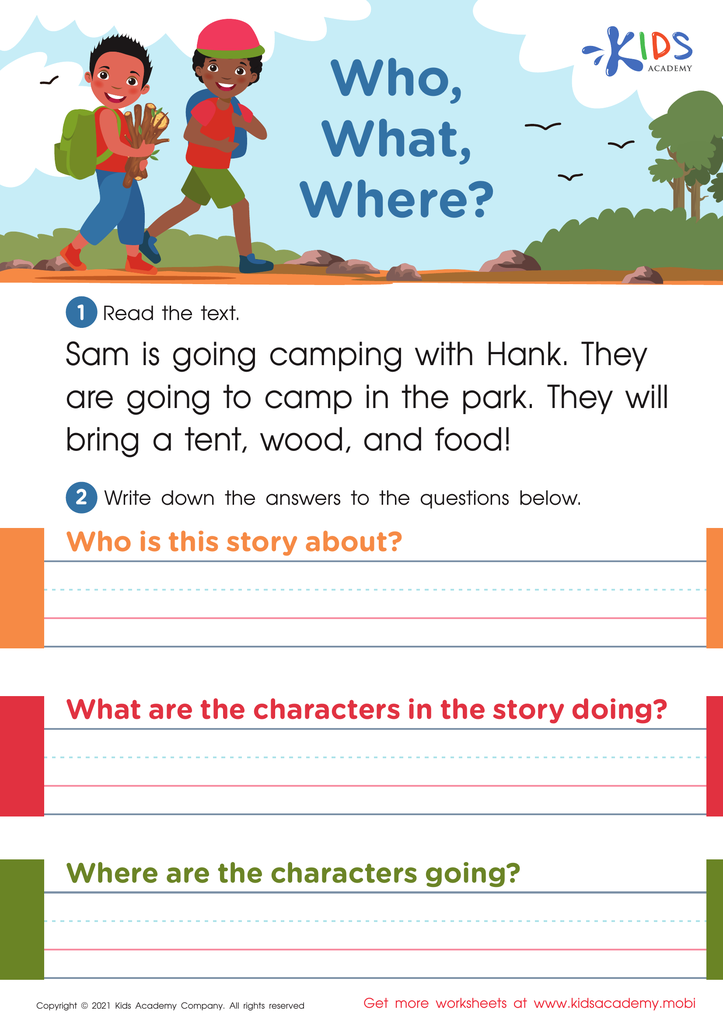
Who, What, Where? Worksheet








Understanding context is crucial for young children ages 4-5 because it forms the foundation for their communication, comprehension, and learning. At this age, kids are rapidly developing language skills, and understanding context allows them to make sense of the words and concepts they encounter. When they grasp context, they can infer meaning, relate new information to their experiences, and improve their vocabulary.
For parents and teachers, emphasizing context involves providing diverse and enriching experiences that help kids connect words with real-world situations. Contextual learning enhances cognitive development and makes lessons more meaningful and engaging, facilitating better retention and understanding. For example, reading a story about a farm while discussing farm animals or visiting a farm helps children better grasp what they're learning because they can see, hear, and sometimes even touch what they're talking about.
Furthermore, context helps children navigate social interactions effectively. By understanding social cues and nuances in conversations, they can respond appropriately, fostering better relationships with peers and adults. Encouraging children to pay attention to context empowers them to become more proficient and confident communicators, setting the stage for future academic success and emotional intelligence. Therefore, it's essential for educators and parents to create learning environments rich with context and real-life references to support their overall development.








