Visual learning stimulation Worksheets for Ages 4-5
3 filtered results
-
From - To
Discover our vibrant collection of Visual Learning Stimulation Worksheets designed specifically for children aged 4-5! These engaging worksheets help foster early literacy and cognitive skills through colorful images and interactive activities. Each worksheet promotes visual recognition, pattern identification, and problem-solving, making learning both fun and effective. Ideal for preschool environments, these resources support diverse learning styles while encouraging children to express their creativity. Easy to print and perfect for at-home activities or classroom use, our Visual Learning Stimulation Worksheets are an excellent way to support your child's educational journey. Empower your young learners today with these enriching materials!
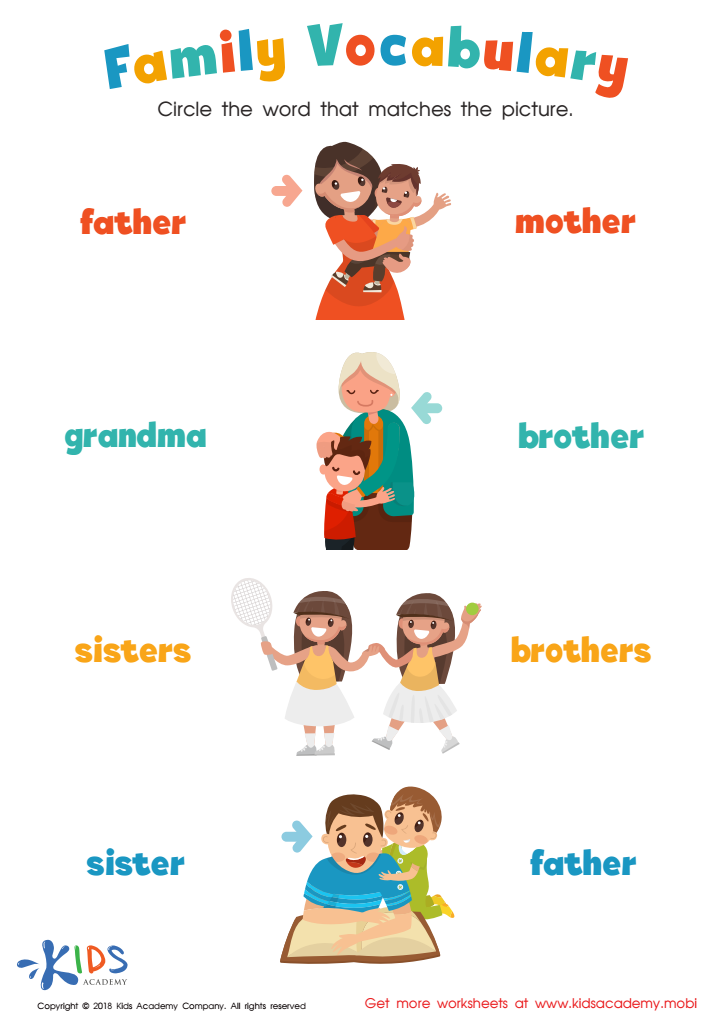
Family Vocabulary Worksheet
 Assign to My Students





.jpg)
Visual learning stimulation is crucial for children aged 4-5 as it significantly enhances cognitive development, engagement, and retention. At this age, children are developing essential skills such as critical thinking, problem-solving, and creativity. Engaging them with visual stimuli—such as colorful books, interactive displays, and educational videos—captures their attention and ignites curiosity.
Visual learning aids in the comprehension of complex concepts by providing clear representations that children can relate to and understand better. Moreover, at this developmental stage, children are naturally drawn to visuals, making them more likely to engage with materials that incorporate pictures, diagrams, and engaging graphics.
Teachers and parents should also recognize that visual stimulation fosters a stimulating environment conducive to learning. Incorporating visuals in lessons supports various learning styles, benefiting not only visual learners but also those who may thrive on tactile experiences.
Ultimately, investing time and resources into enriching visual experiences for young learners can cultivate a love for learning, boost their confidence, and lay a solid foundation for academic success in later years. By prioritizing visual learning, we prepare children not just to memorize information, but to understand and apply it.








