Fine Motor Skills Adding in the Forest Worksheets for Ages 4-5
5 filtered results
-
From - To
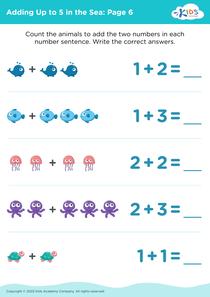
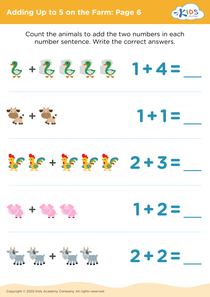
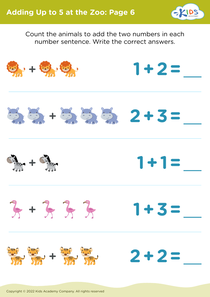
Enhance your child's fine motor skills with our "Adding in the Forest" worksheets designed for ages 4-5. Combining the excitement of nature with foundational math concepts, these engaging activities promote hand-eye coordination and dexterity as young learners practice counting and simple addition amidst a playful forest theme. Each worksheet features adorable, forest-inspired illustrations, making learning enjoyable and immersive. Teachers and parents can easily incorporate these resources into their lesson plans, providing a fun way for children to develop essential skills while enjoying creative play. Download these printable worksheets today to foster early math proficiency in a delightful, hands-on way!
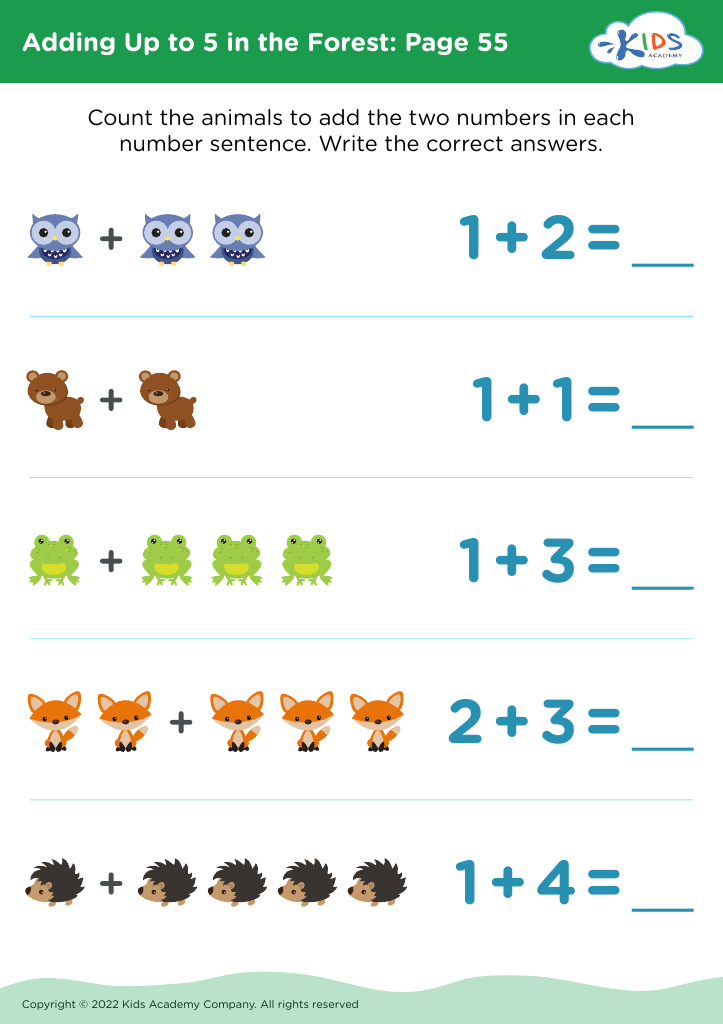
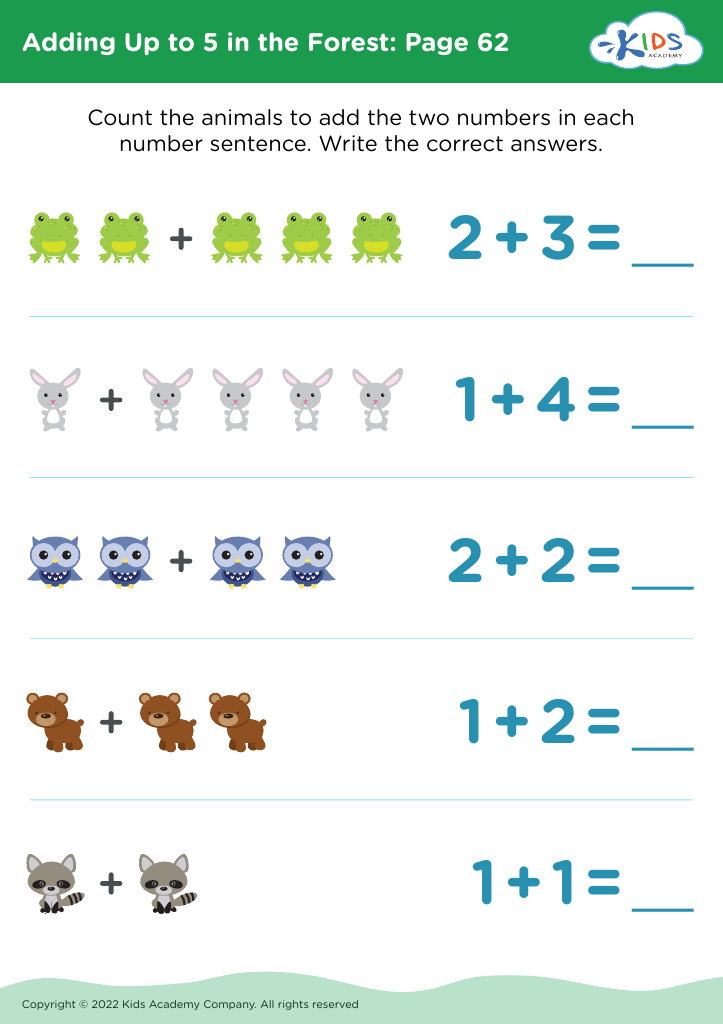
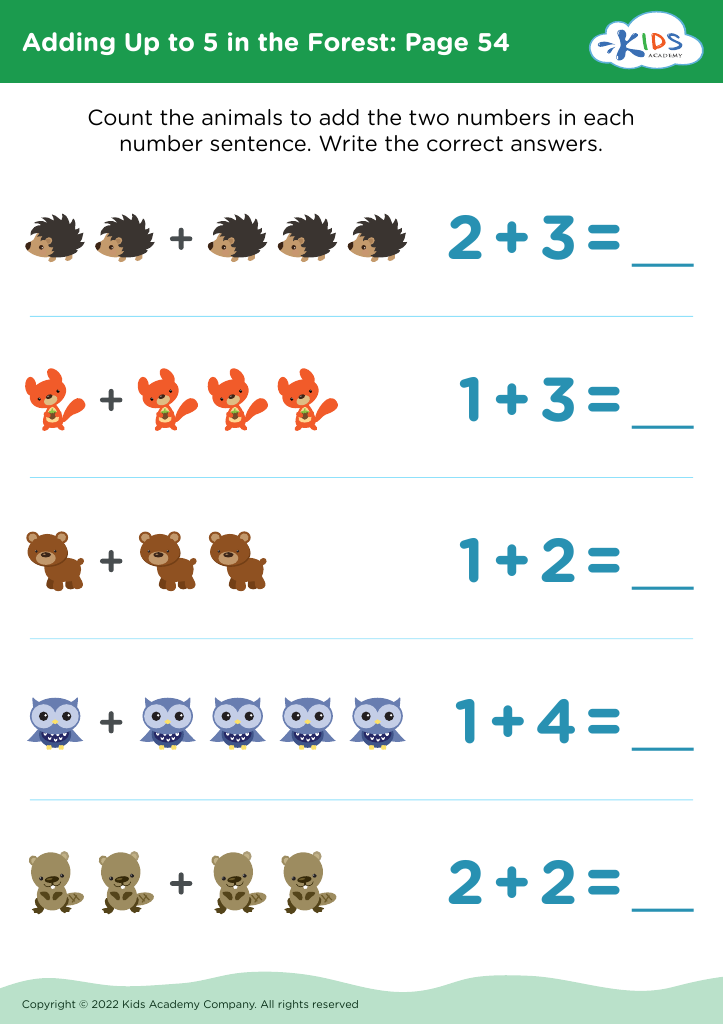
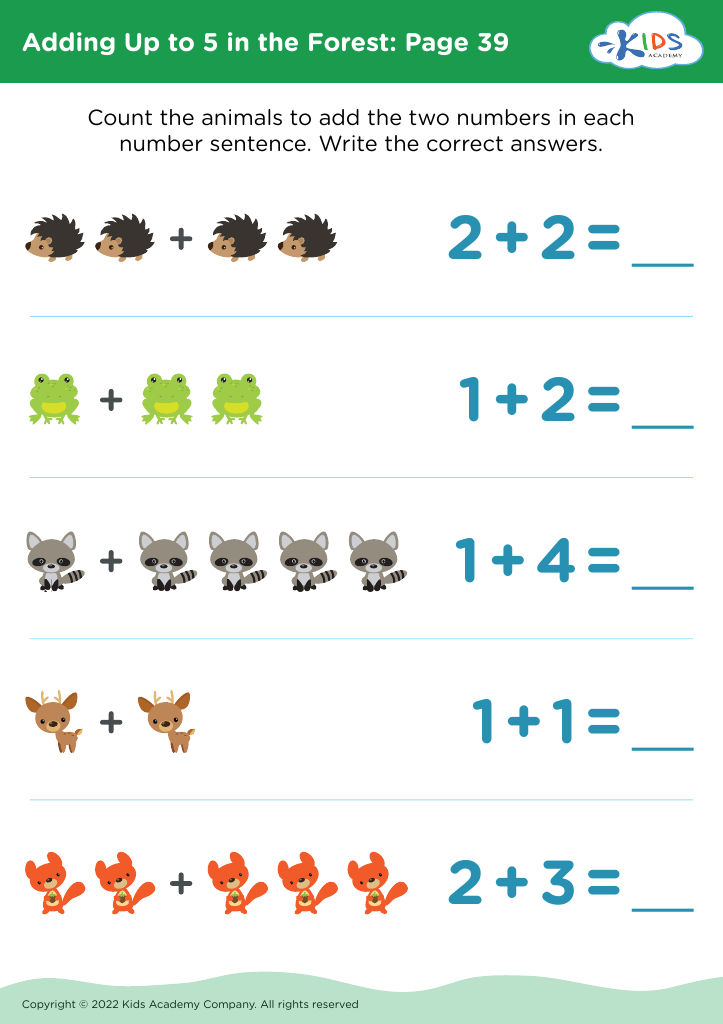
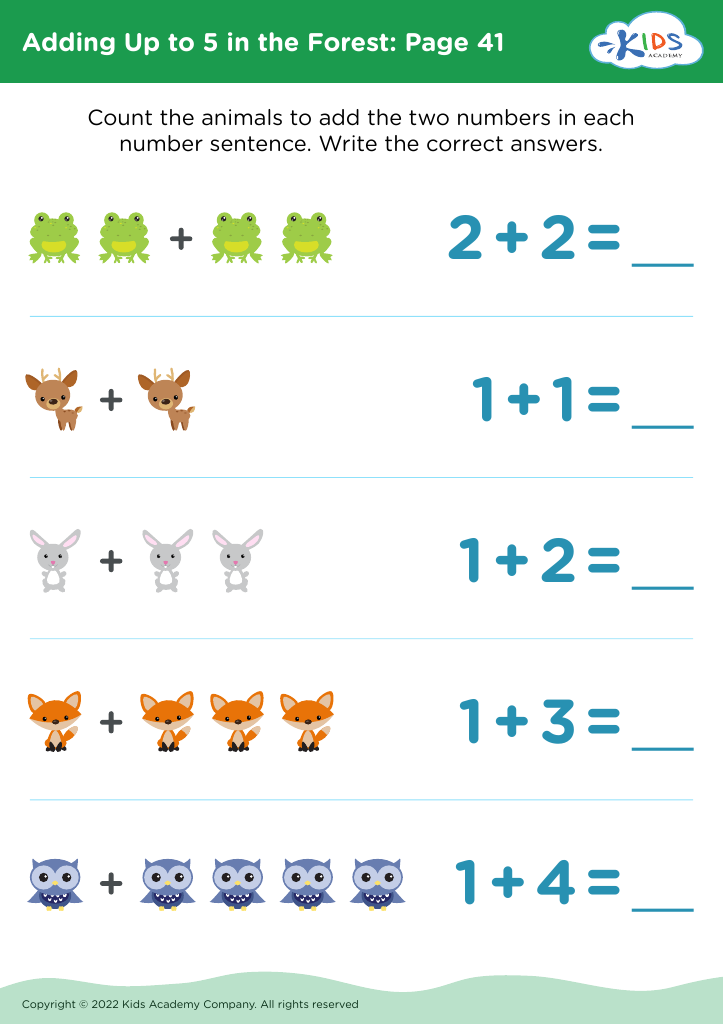



Fine motor skills are crucial for young children's development, particularly for those aged 4-5, as they form the foundation for many everyday tasks and academic skills later on. Activities like "Fine Motor Skills Adding in the Forest" engage children in playful, hands-on experiences that enhance these skills while making learning enjoyable. As children manipulate objects—such as counting nature items like leaves or stones—they not only practice precise movements but also enhance their hand-eye coordination and dexterity.
Parents and teachers should care about developing fine motor skills in this age group because they are integral to early literacy and numeracy. Mastering skills like grasping, pinching, and threading prepares children for writing, drawing, and using tools effectively. Moreover, incorporating nature in activities fosters a connection to the environment, encouraging exploration and curiosity.
When children experience success in these skill-building tasks, their confidence grows, promoting a love for learning. Furthermore, encouraging collaboration with peers during such activities can enhance social skills and teamwork. Ultimately, prioritizing fine motor development through practical, outdoor-based play equips children with essential tools for their academic journey and everyday life, laying the groundwork for future success.