Filters

78 filtered results

Clear all filters
Favorites
With answer key
Interactive

78 filtered results

Difficulty Level

Grade


Check out this FREE Trial Lesson on Adding Up to 5 for age 4-5!

H

Favorites
With answer key
Interactive
  • 4-5
  • Addition skills
  • Adding Up to 5
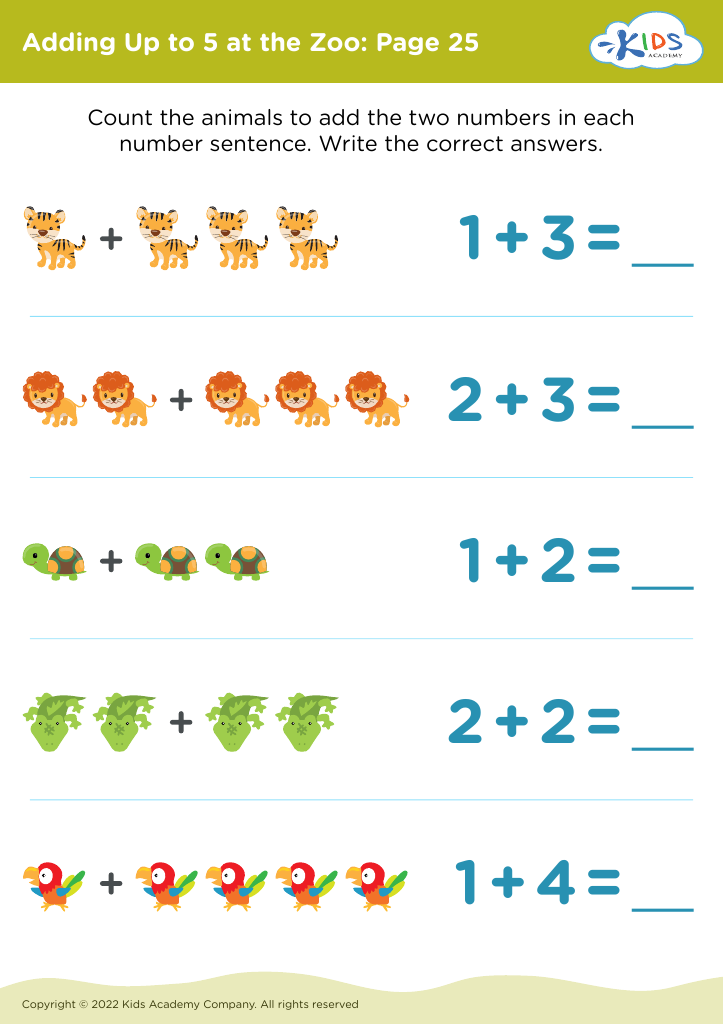
Adding Up to 5 at the Zoo: Page 25
Worksheet
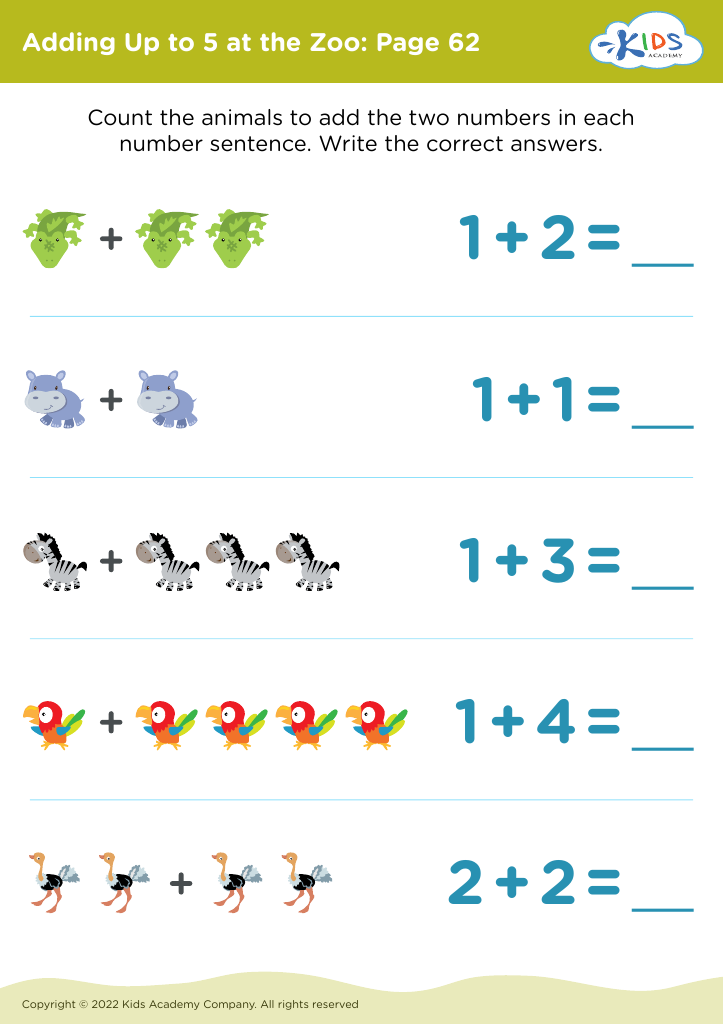
Adding Up to 5 at the Zoo: Page 62
Worksheet
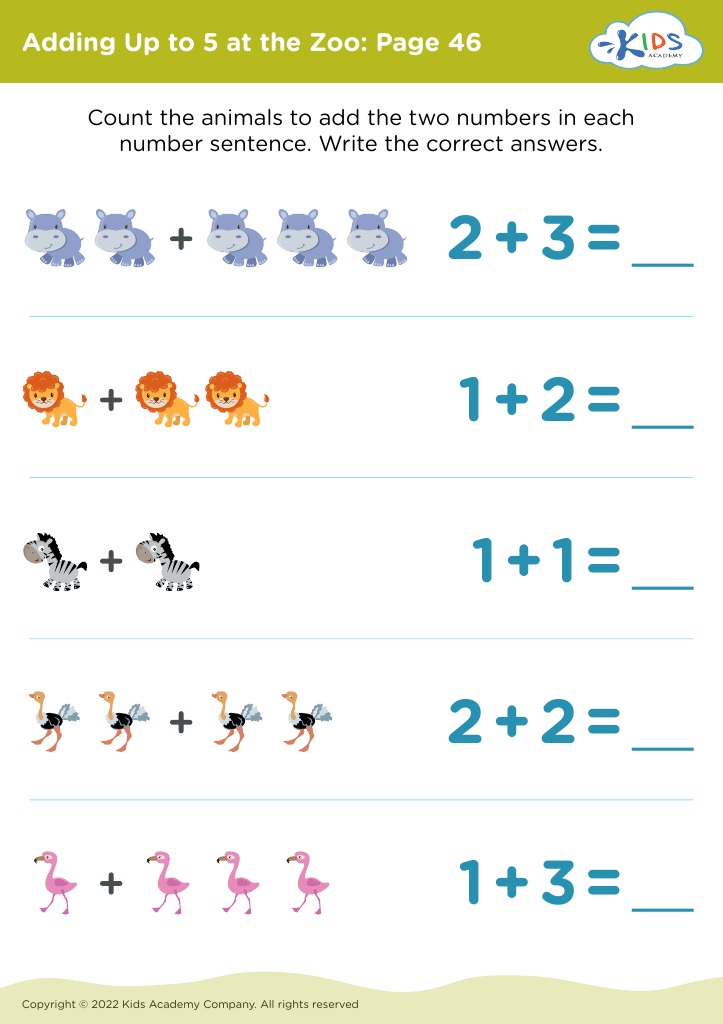
Adding Up to 5 at the Zoo: Page 46
Worksheet
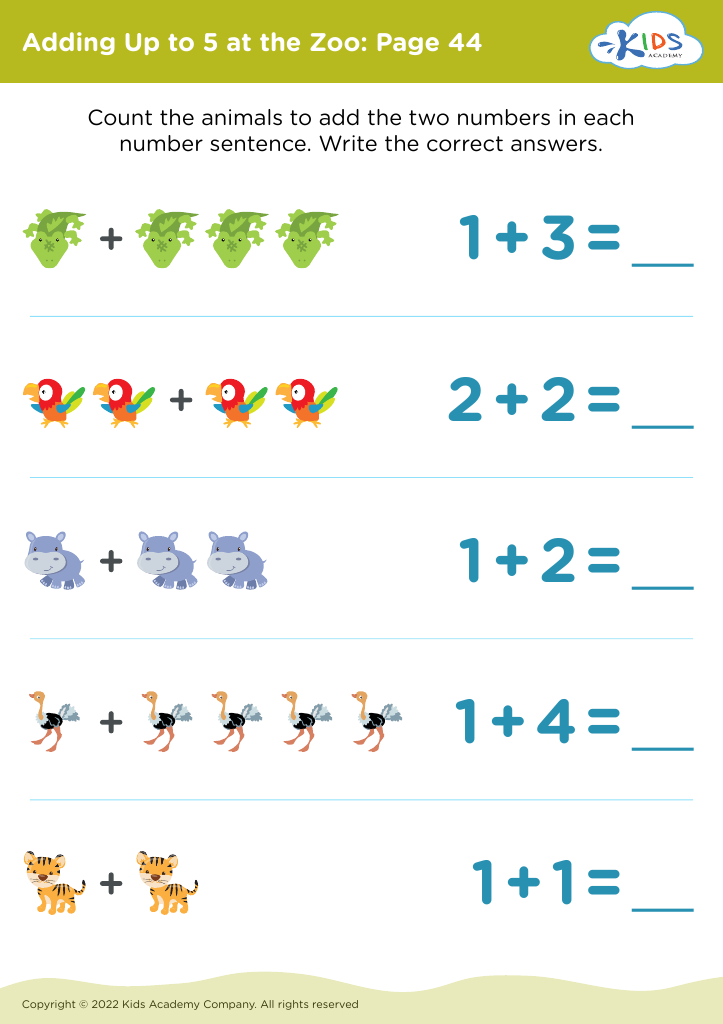
Adding Up to 5 at the Zoo: Page 44
Worksheet
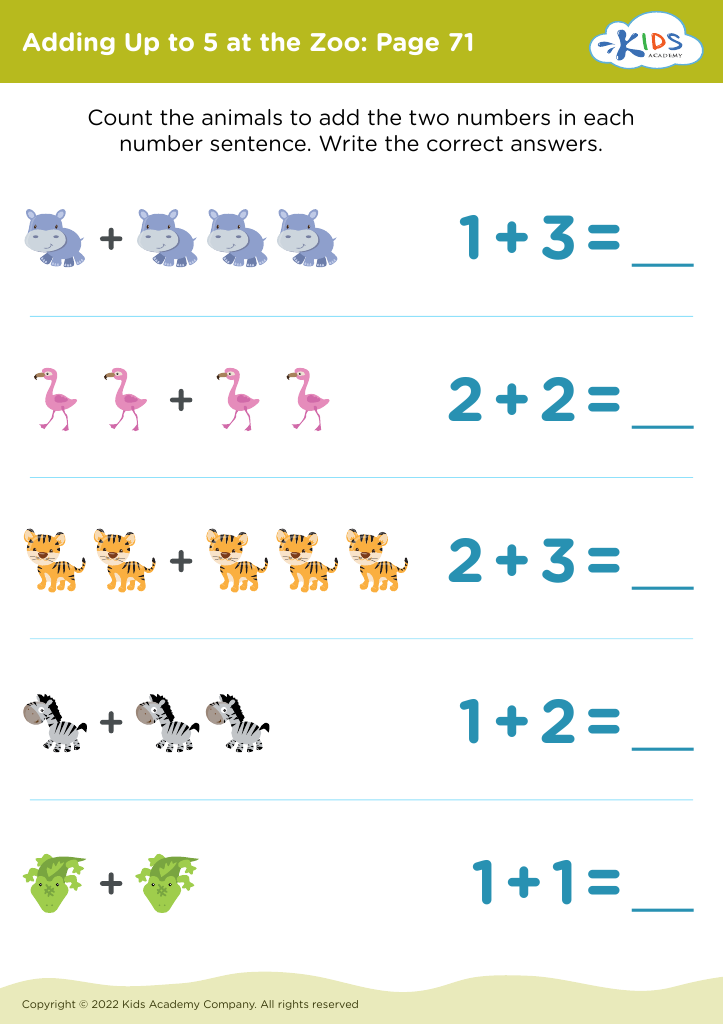
Adding Up to 5 at the Zoo: Page 71
Worksheet
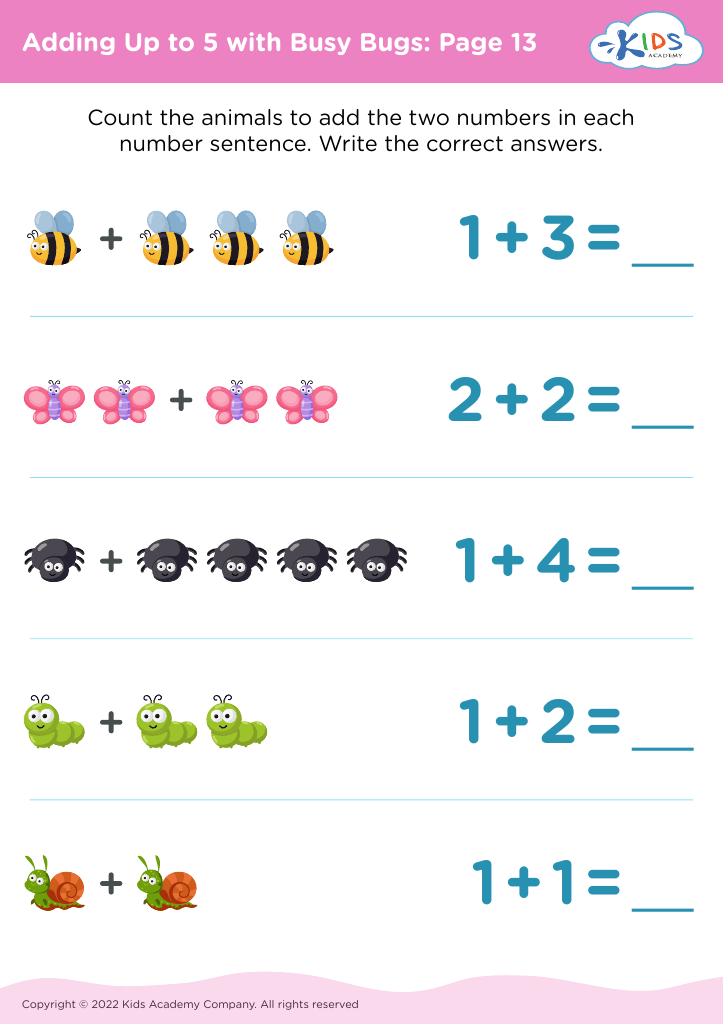
Adding Up to 5 with Busy Bugs: Page 13
Worksheet
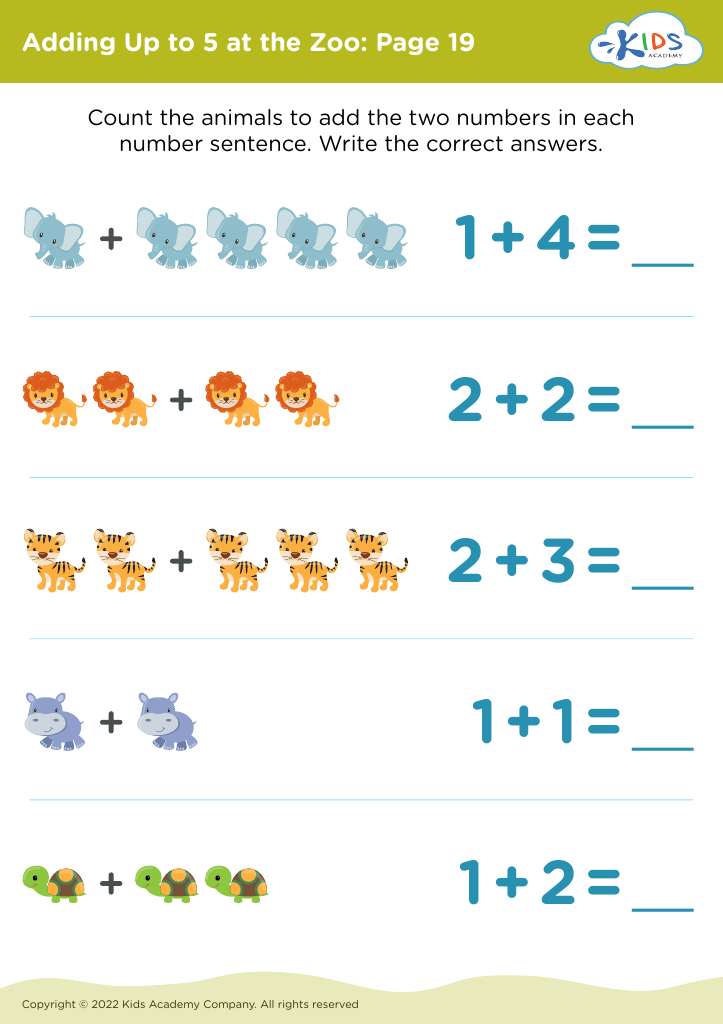
Adding Up to 5 at the Zoo: Page 19
Worksheet
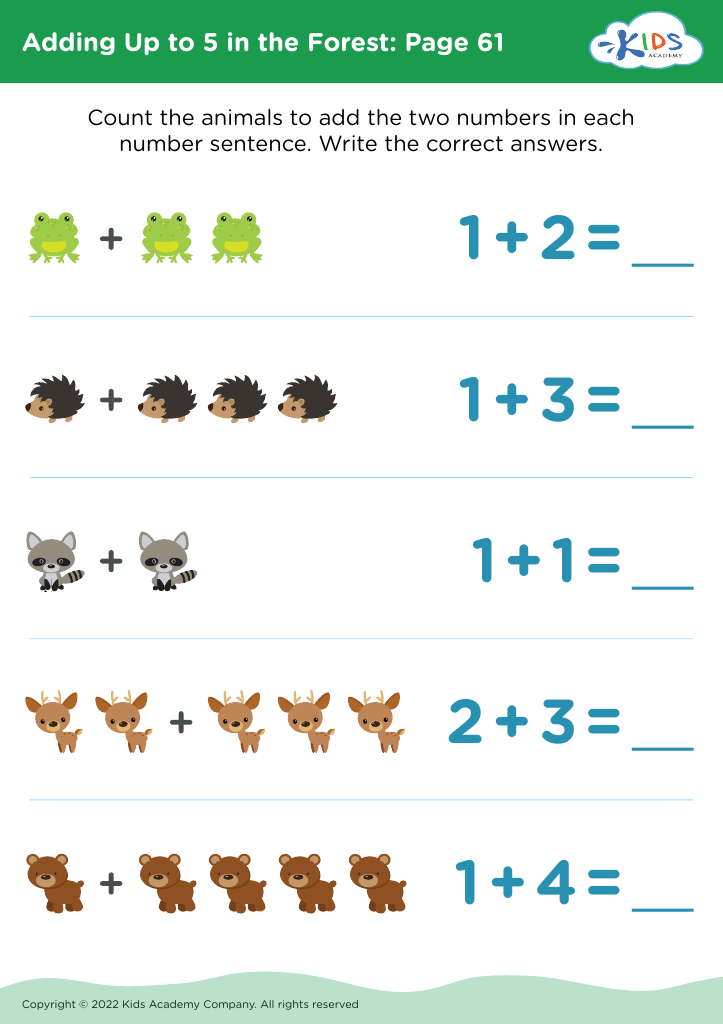
Adding Up to 5 in the Forest: Page 61
Worksheet
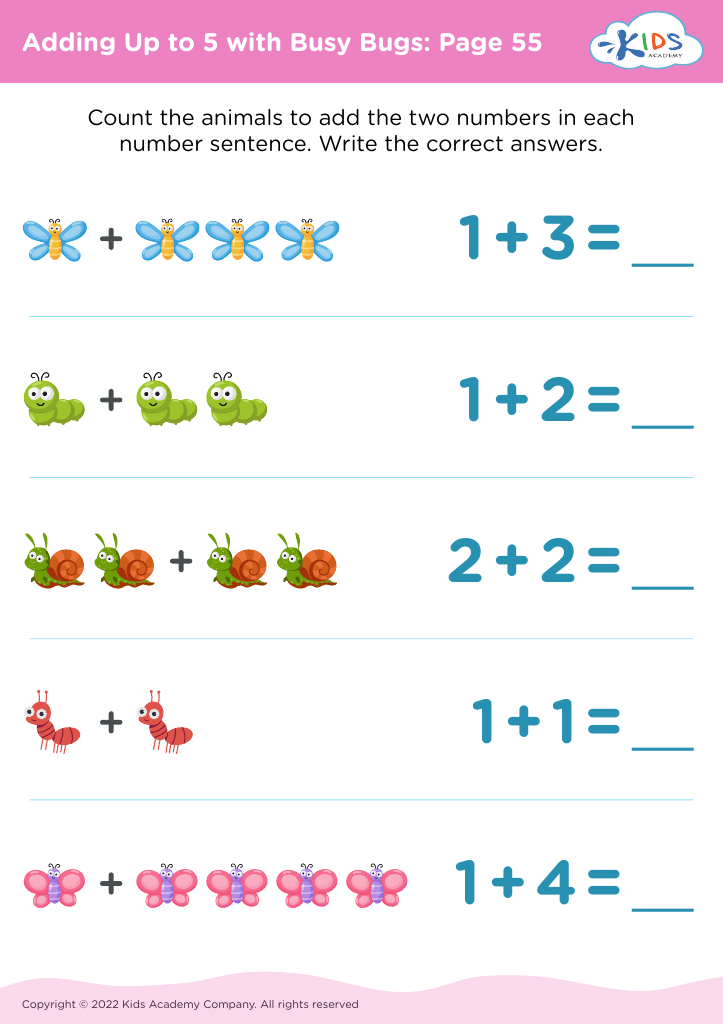
Adding Up to 5 with Busy Bugs: Page 55
Worksheet
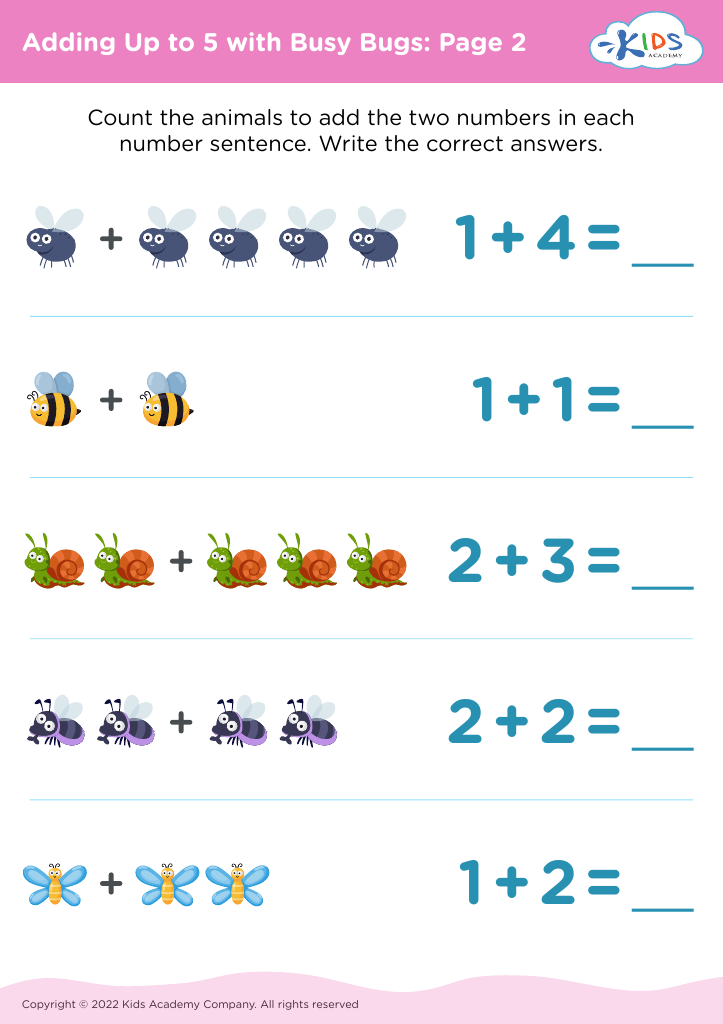
Adding Up to 5 with Busy Bugs: Page 2
Worksheet
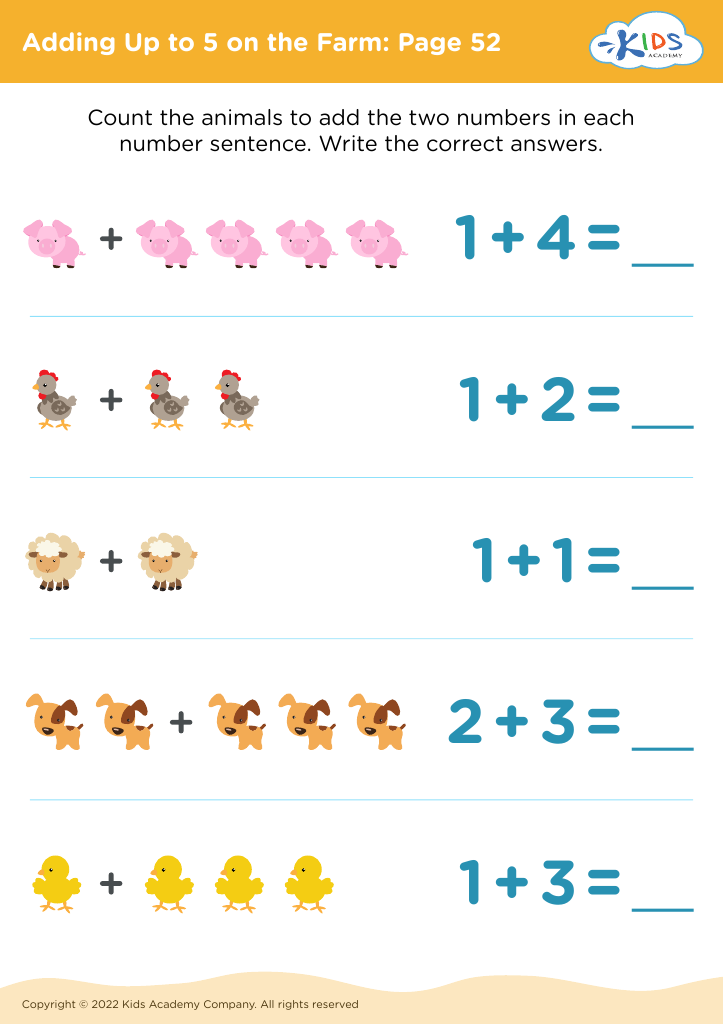
Adding Up to 5 on the Farm: Page 52
Worksheet
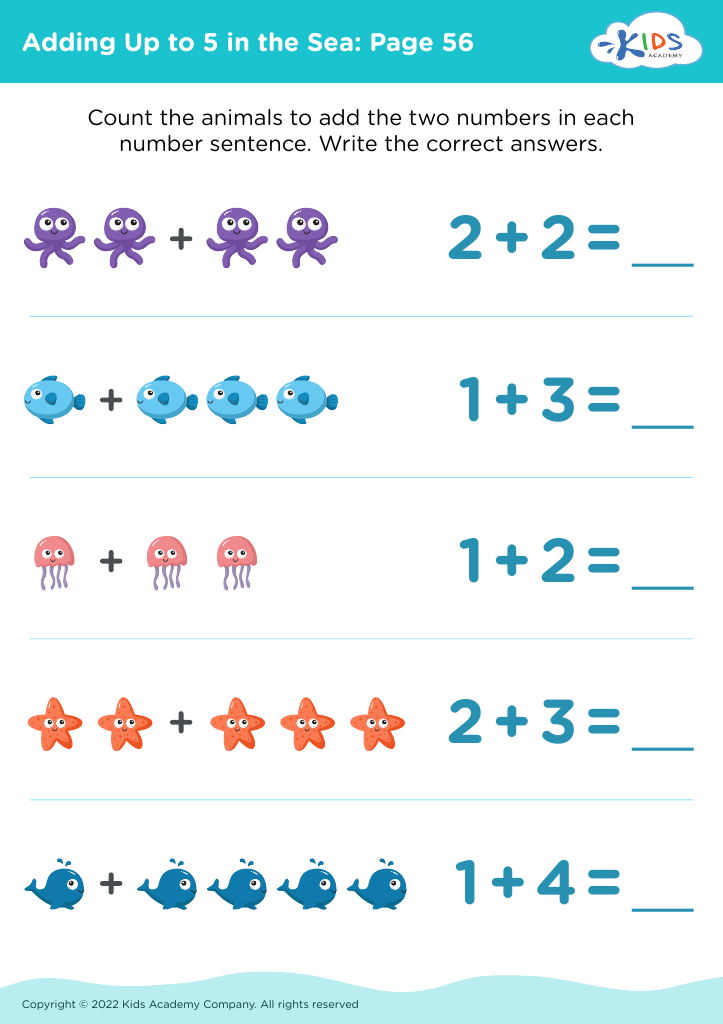
Adding Up to 5 in the Sea: Page 56
Worksheet
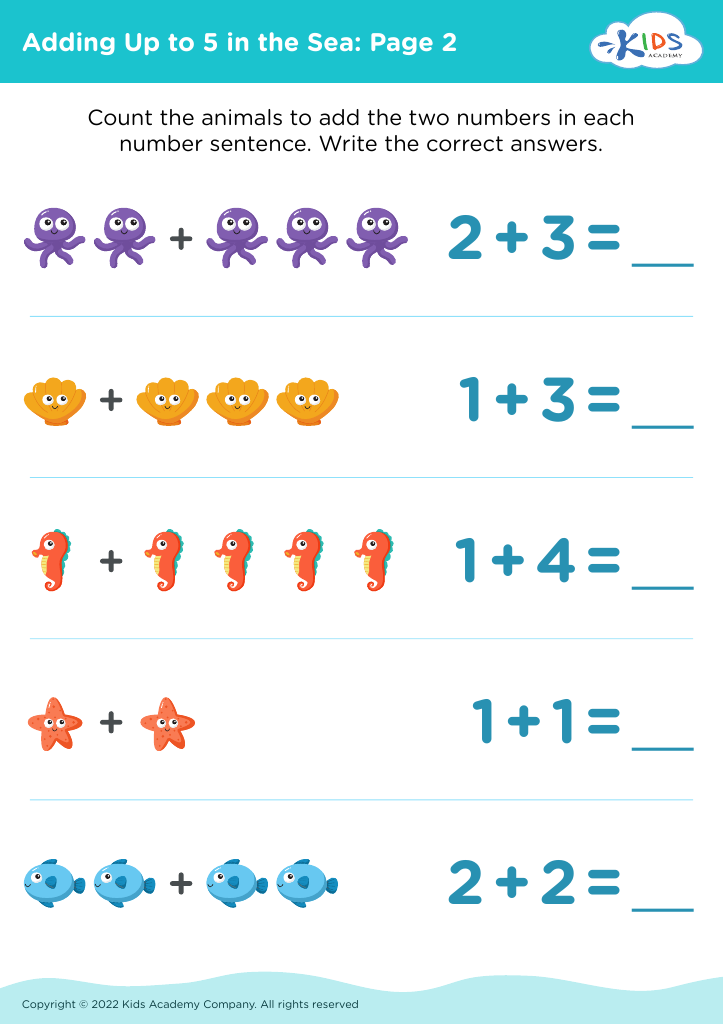
Adding Up to 5 in the Sea: Page 2

Adding Up to 5 in the Sea: Page 2

Adding Up to 5 in the Sea: Page 2
Worksheet
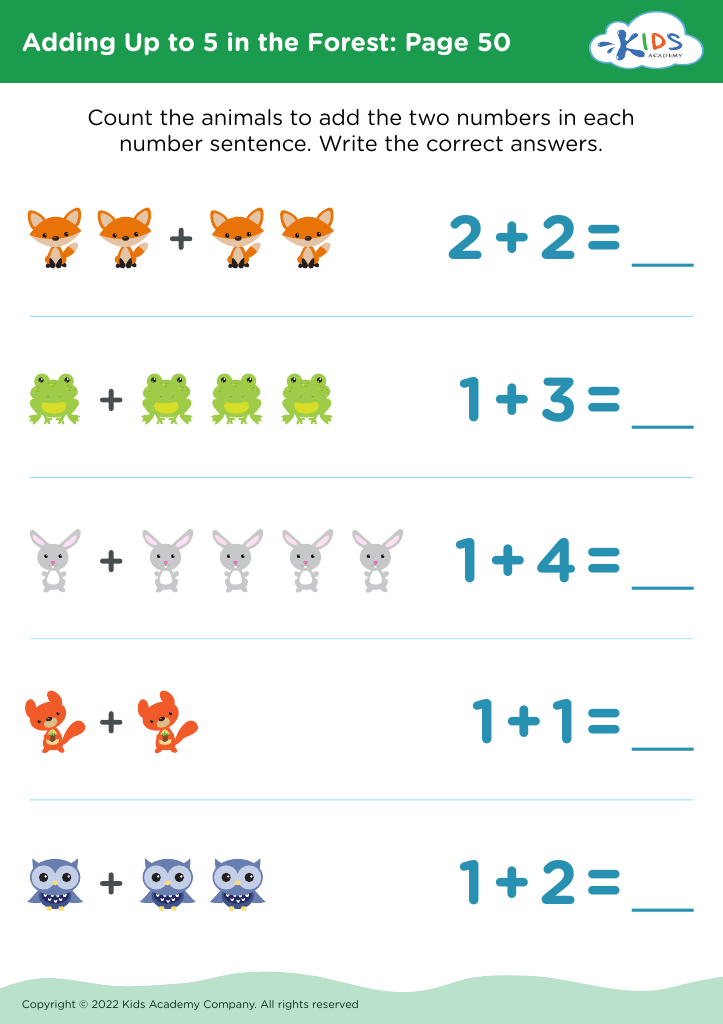
Adding Up to 5 in the Forest: Page 50
Worksheet
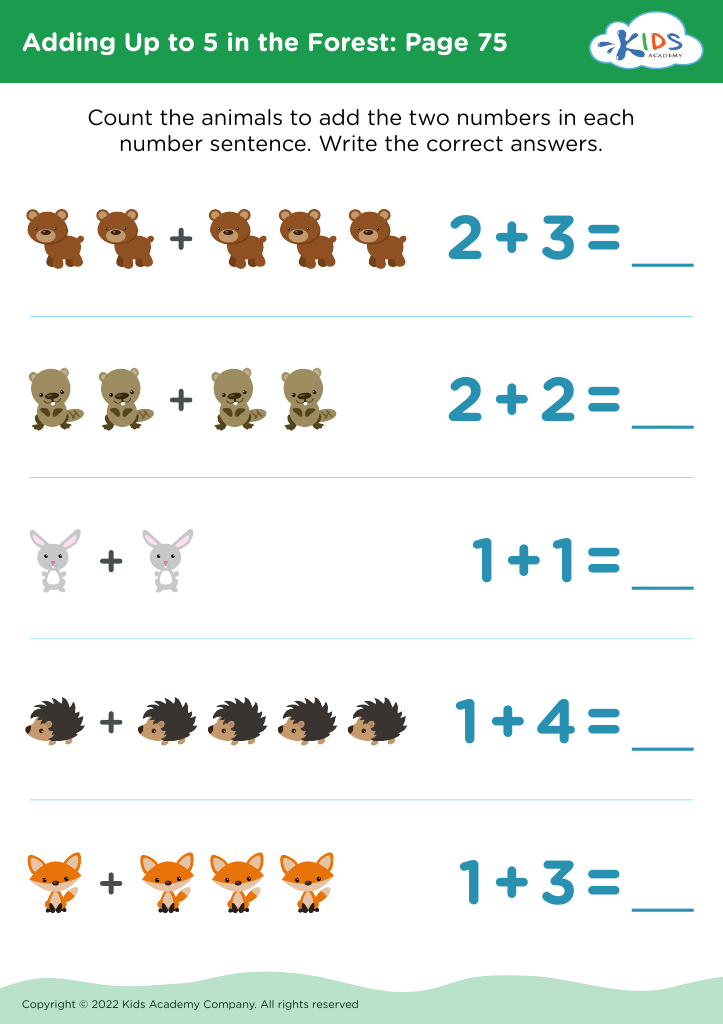
Adding Up to 5 in the Forest: Page 75
Worksheet
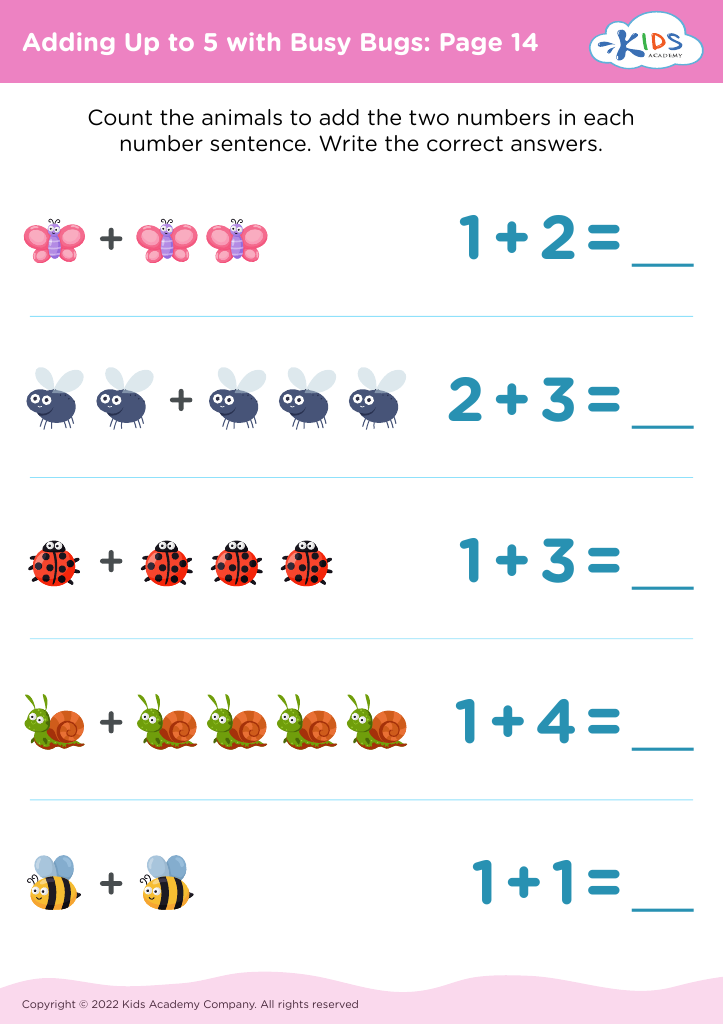
Adding Up to 5 with Busy Bugs: Page 14
Worksheet
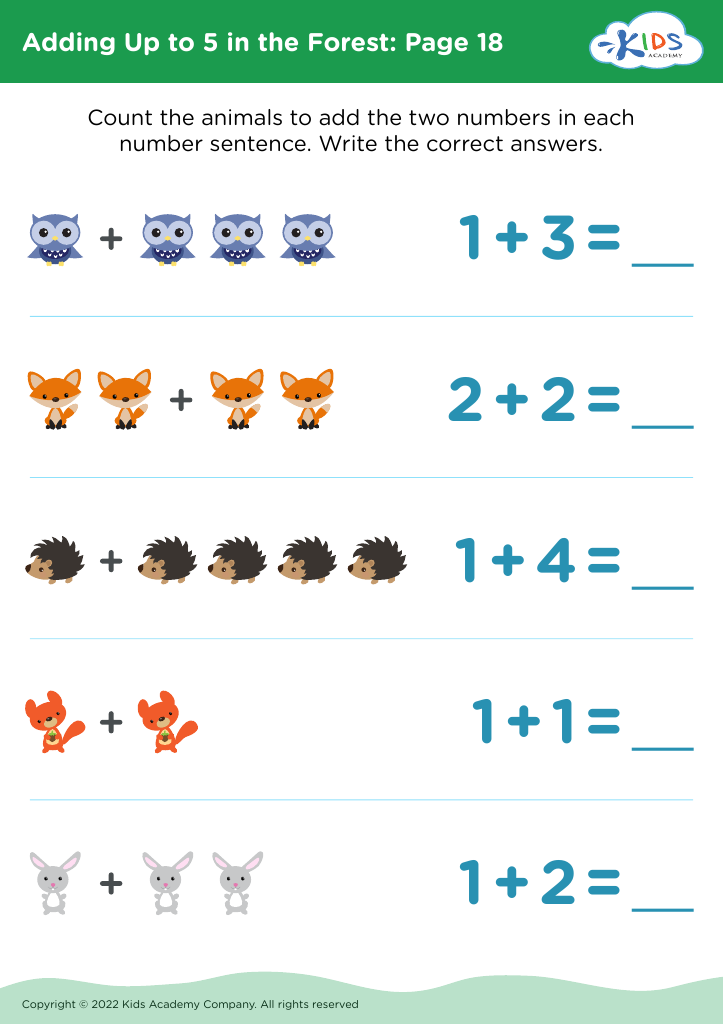
Adding Up to 5 in the Forest: Page 18
Worksheet
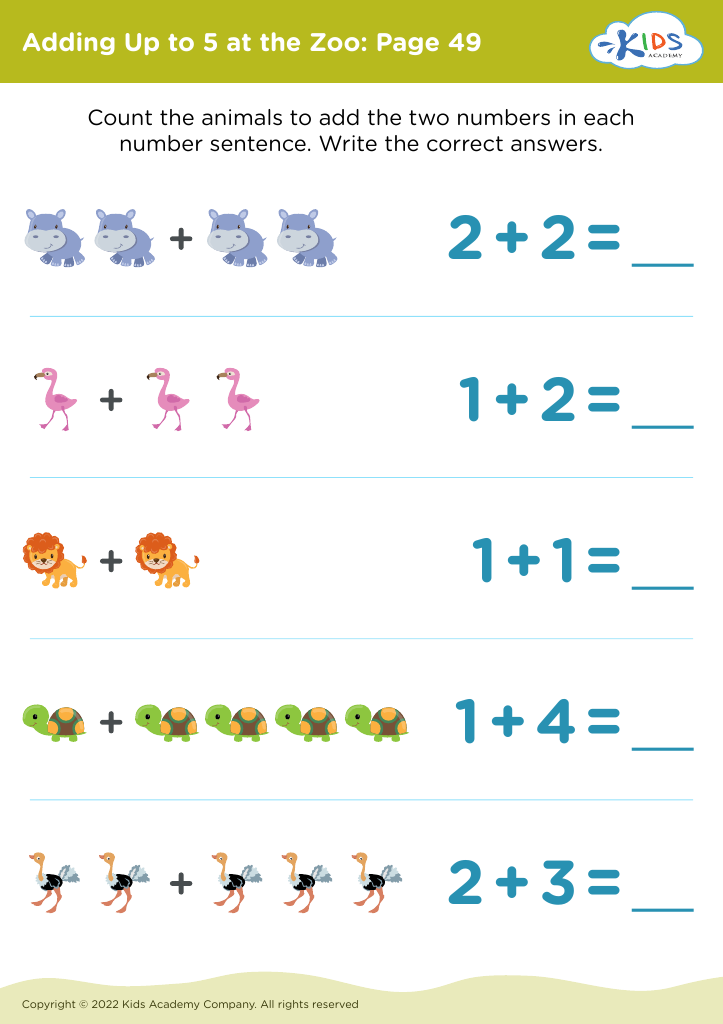
Adding Up to 5 at the Zoo: Page 49
Worksheet
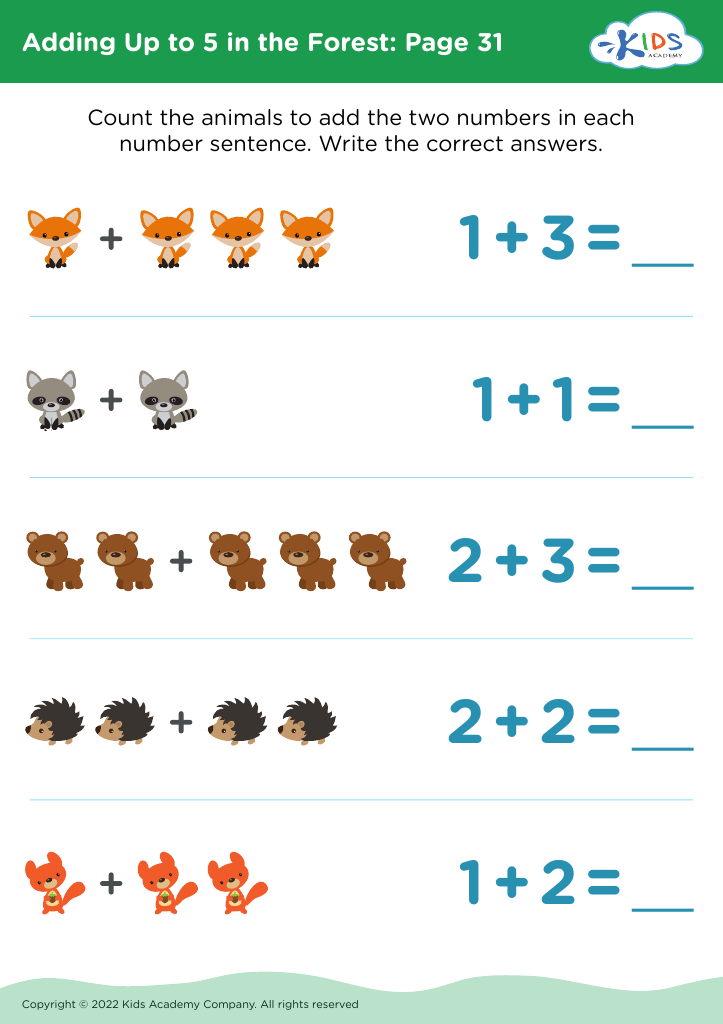
Adding Up to 5 in the Forest: Page 31
Worksheet
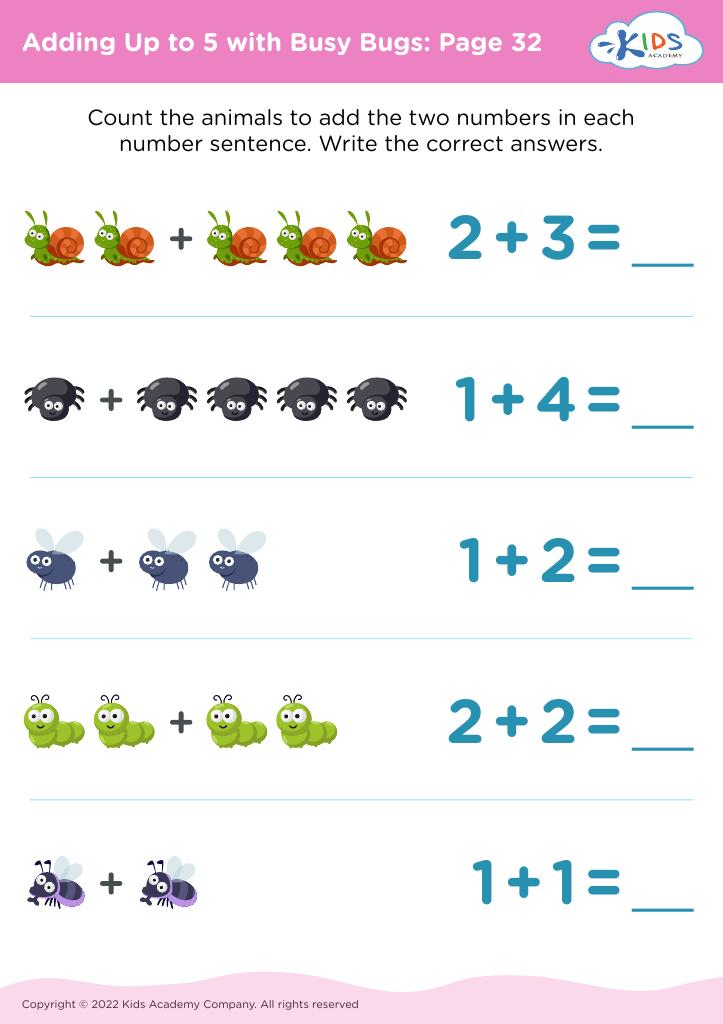
Adding Up to 5 with Busy Bugs: Page 32
Worksheet
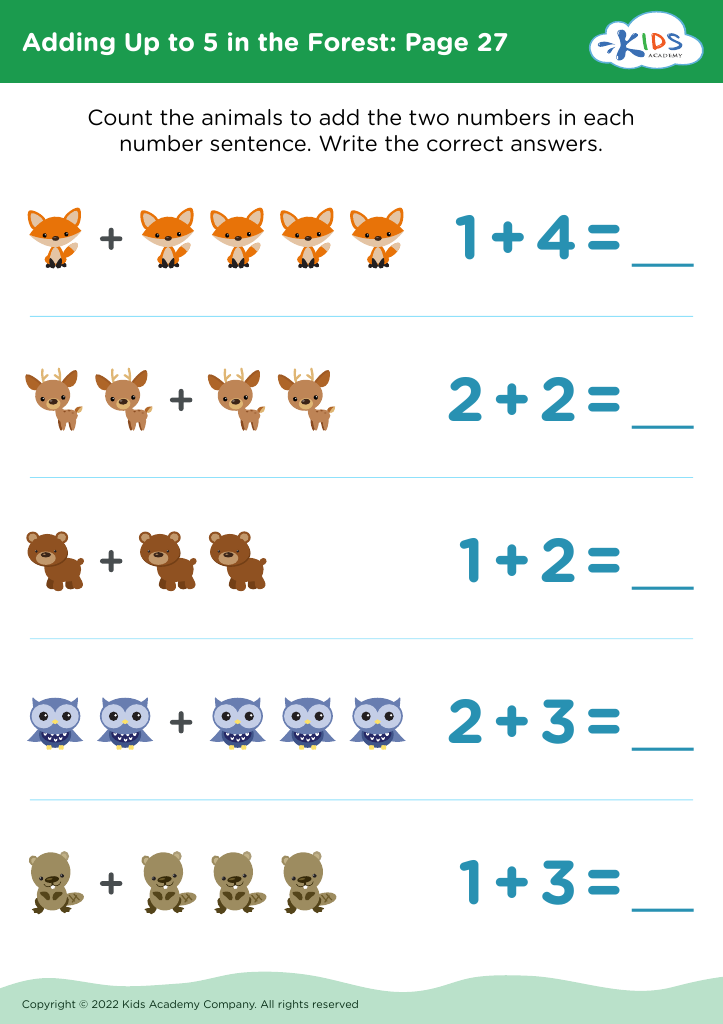
Adding Up to 5 in the Forest: Page 27
Worksheet
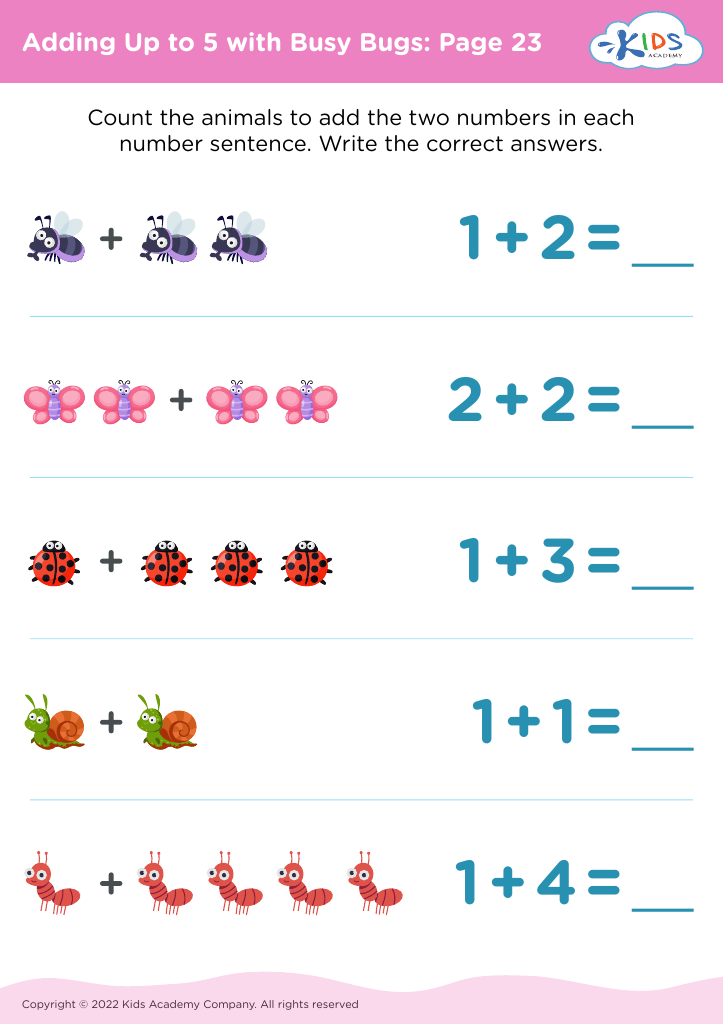
Adding Up to 5 with Busy Bugs: Page 23
Worksheet
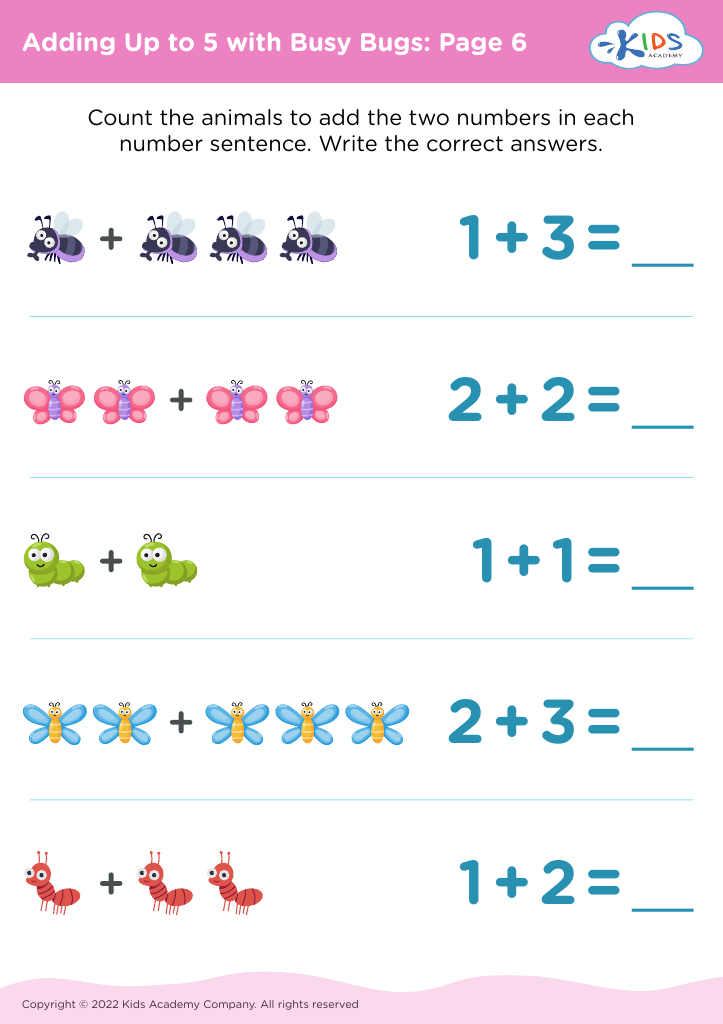
Adding Up to 5 with Busy Bugs: Page 6
Worksheet
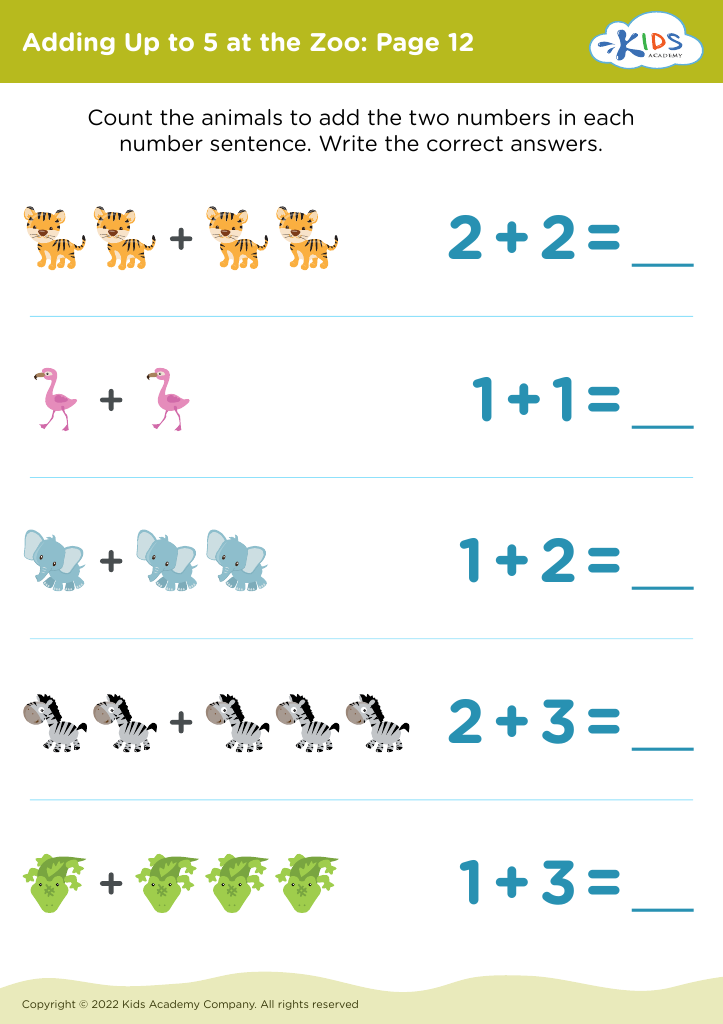
Adding Up to 5 at the Zoo: Page 12
Worksheet


Developing strong addition skills early on is crucial for young children, especially those aged 4-5. This foundational math skill serves as a vital building block for more complex mathematical concepts encountered later in school. Parents and teachers should care deeply about cultivating these skills for several reasons.

Firstly, proficiency in addition up to 5 helps children develop number sense—a fundamental understanding of how numbers work. This involves recognizing quantities, comprehending the relationships between different amounts, and predicting the outcomes of simple arithmetic operations, such as combining groups of objects.

Secondly, building confidence in early math skills fosters a positive attitude towards mathematics, reducing math anxiety as children grow older. When children are given the tools to succeed in addition, they feel capable and are more enthusiastic about learning more advanced mathematical ideas.

Moreover, learning to add up to 5 requires focus, patience, and practice, which are also important early learning habits. Through repetitive practice and reinforcement, children enhance their memory and cognitive development, as well as their problem-solving abilities.

Finally, math is everywhere in daily life. When children learn addition, they can more easily navigate their immediate environment—whether they are sharing toys, helping with household tasks, or even enjoying games that require basic math skills. Early mastery of simple addition sets a solid foundation for future academic success and everyday practical tasks.