Fine motor skills (drawing lines) Adding Up to 5 Worksheets for Ages 4-5
3 filtered results
-
From - To
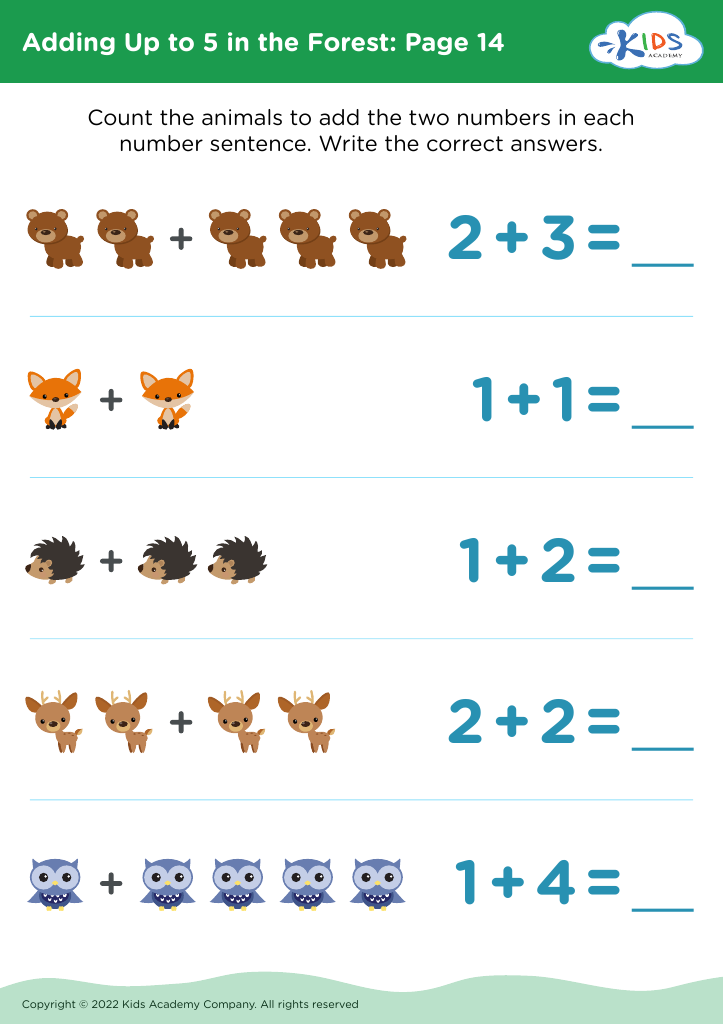
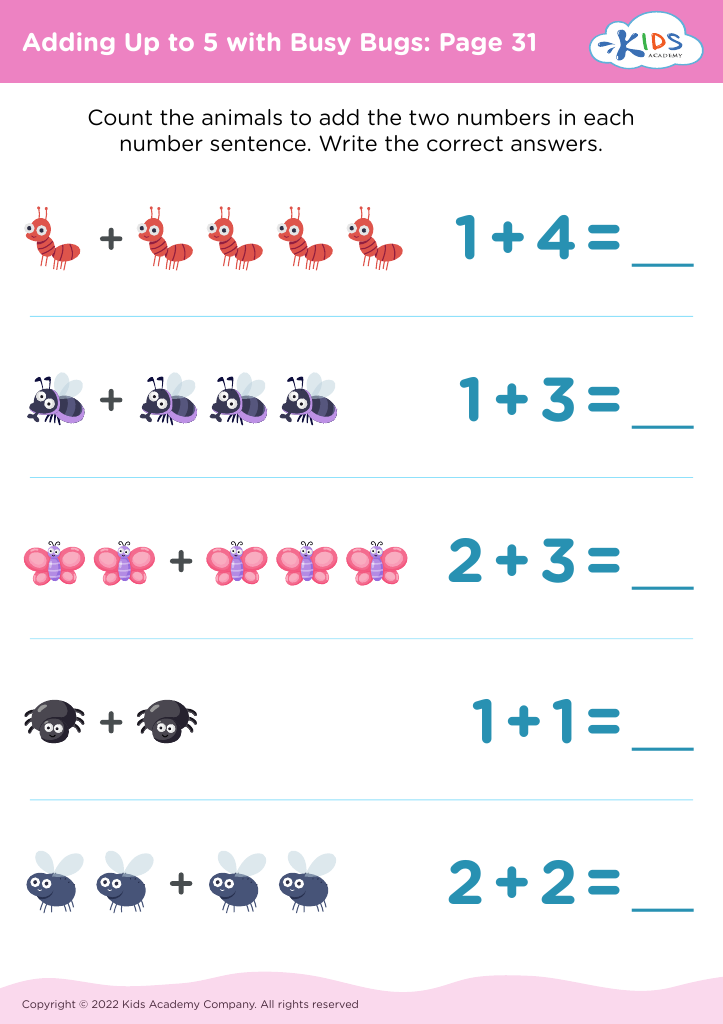
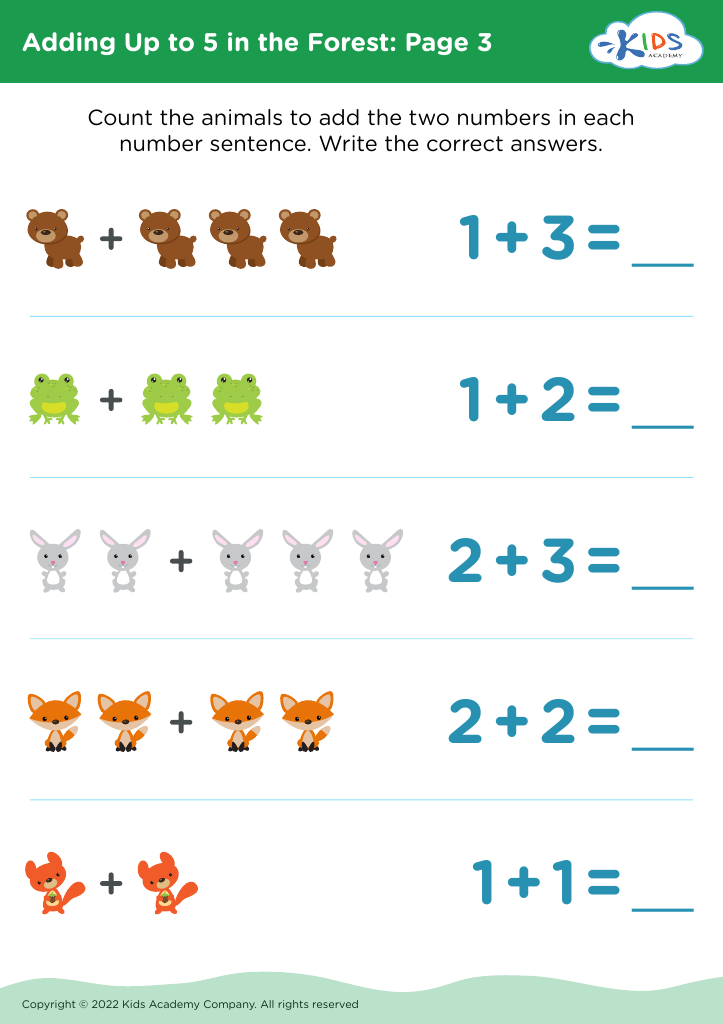
Our "Fine Motor Skills (Drawing Lines) Adding Up to 5 Worksheets for Ages 4-5" are designed to boost your child's math and motor abilities in a fun, engaging way. Each worksheet challenges children to carefully draw lines while practicing basic addition, bolstering both their fine motor skills and understanding of math concepts. Ideal for preschoolers, these activities not only improve hand-eye coordination and pencil control but also nurture early mathematical thinking, making learning a delightful experience. Discover an effective method for building foundational skills that will support your child's academic journey.


%20(1).jpg)





Fine motor skills, like drawing lines, are crucial for young children's development, particularly at ages 4-5. These skills involve the small muscles in the hands and fingers, fundamental for performing daily activities such as writing, buttoning clothes, and using utensils. Mastery of fine motor skills at an early age lays a vital foundation for academic and personal success.
One essential aspect is the ability to draw lines, which is a precursor to writing. Children who can deftly control a crayon or pencil to draw straight and curved lines are developing the strength, coordination, and dexterity required for writing letters and numbers. This ability is directly linked to literacy and numeracy skills essential for school readiness.
Furthermore, learning to add up to 5 through activities like counting objects, using fingers, or interactive games enhances cognitive abilities. These activities improve number recognition, sequential thinking, and simple problem-solving, ensuring a stronger grasp of basic math concepts.
Encouraging these foundational skills helps children build confidence and reduces the likelihood of future academic struggles. It ensures they are not only ready to start school but also poised to thrive in a setting where fine motor and basic math skills play a crucial role in daily learning and classroom activities.








