Understanding number relationships Adding Up to 5 Worksheets for Ages 4-5
3 filtered results
-
From - To
Discover our engaging "Understanding Number Relationships: Adding Up to 5 Worksheets" designed for young learners aged 4-5. These carefully crafted worksheets help children explore the fundamentals of addition by illustrating how numbers combine to form sums up to 5. Through colorful visuals and interactive exercises, kids will build a strong foundation in math concepts, enhance their problem-solving skills, and develop number sense. Perfect for both classroom and home use, these worksheets encourage early math skills while making learning fun and accessible. Unlock your child’s mathematical potential today with our easy-to-use resources that foster a love for numbers!
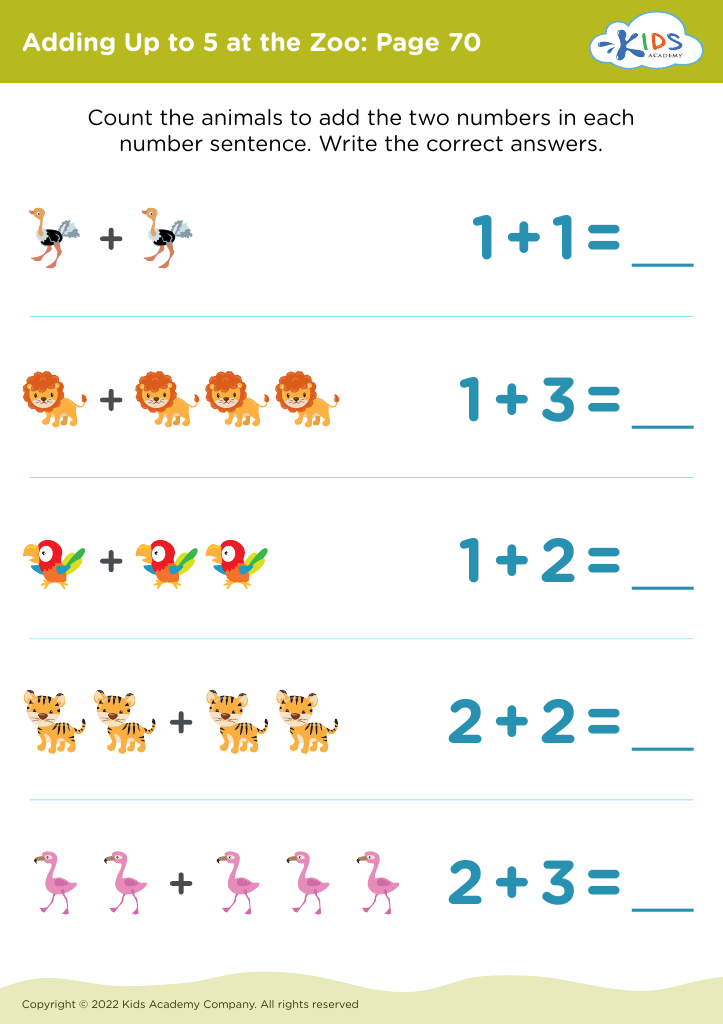
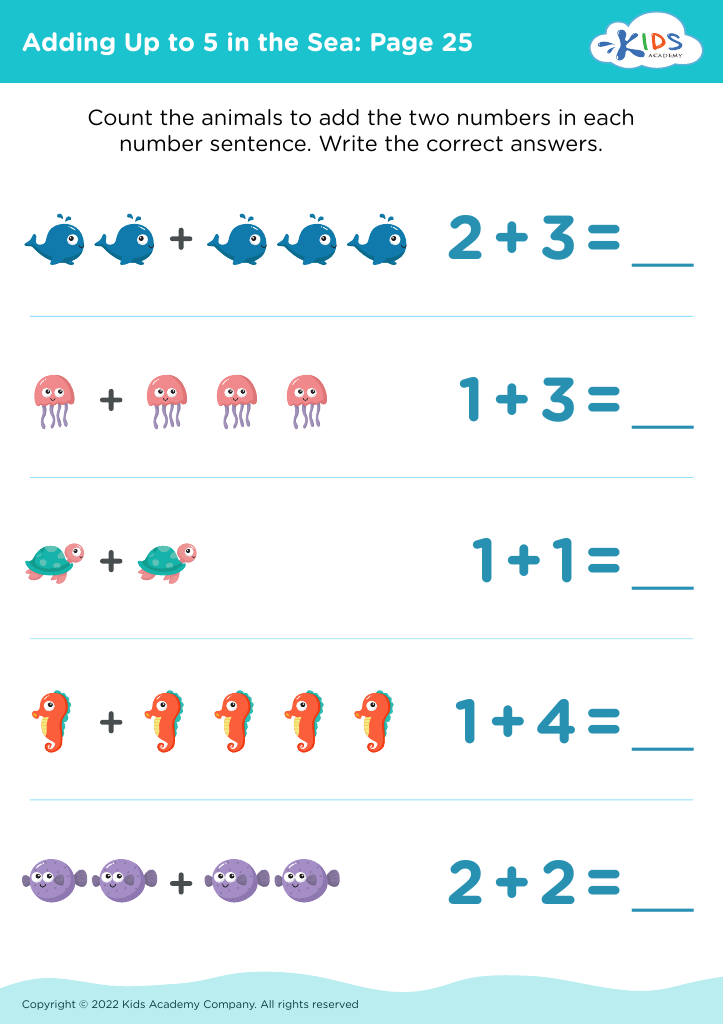
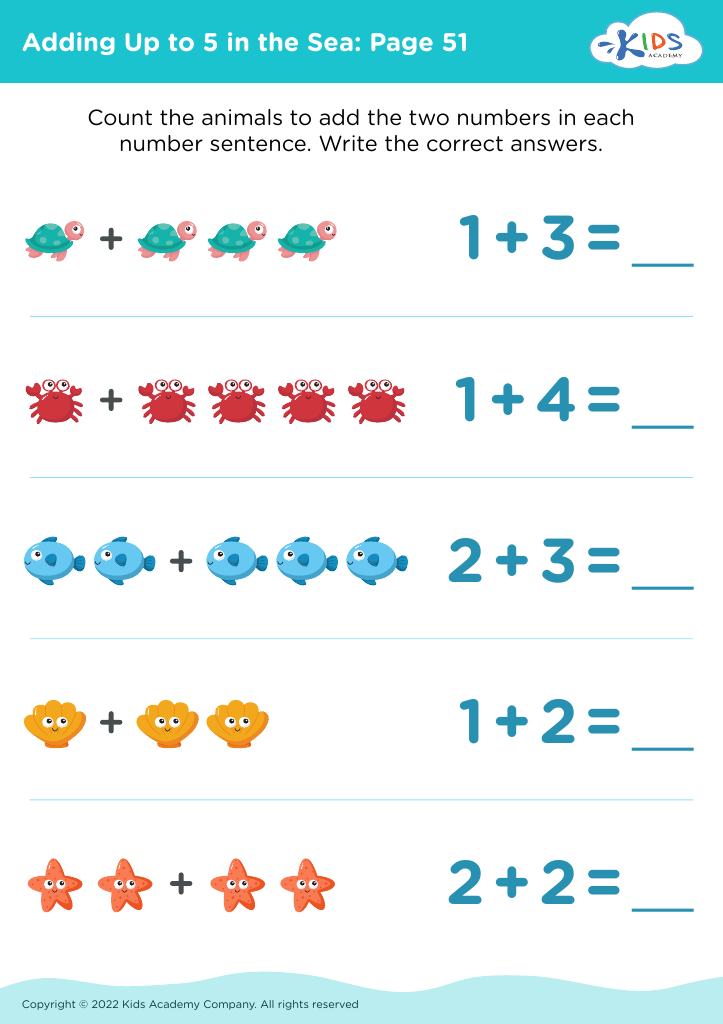








Understanding number relationships, particularly adding up to 5, is crucial for children aged 4-5 as it lays the foundation for future math skills. At this developmental stage, children are beginning to grasp basic mathematical concepts, and learning to add numbers together helps them to develop number sense. Recognizing that numbers are related allows young learners to visualize addition in a tangible way, promoting their cognitive development and enhancing problem-solving skills.
Fostering this understanding encourages children to engage in playful learning experiences, such as counting objects, using their fingers, or playing number games, which makes learning enjoyable. This age is also marked by significant cognitive growth, and mastery of simple addition prepares children for more complex arithmetic as they progress in their education.
Moreover, when parents and teachers emphasize understanding number relationships, they equip children with essential skills for everyday life, such as measuring, sharing, and budgeting. Meanwhile, a strong grasp of early math concepts can enhance overall academic performance. Ultimately, by caring about these foundational skills now, parents and teachers support children’s long-term mathematical competence and confidence, setting them on a path for success in school and beyond.








