Understanding numeracy Adding Up to 5 Worksheets for Ages 4-5
4 filtered results
-
From - To
Discover our "Understanding Numeracy: Adding Up to 5" worksheets designed specifically for young learners aged 4-5. These interactive and engaging resources aim to build foundational math skills while enhancing children's confidence. Through fun activities, children will explore basic addition concepts by combining numbers to achieve sums up to 5. With vibrant illustrations and creative exercises, these worksheets encourage critical thinking and problem-solving abilities in an enjoyable way. Perfect for home or classroom use, our worksheets provide opportunities for hands-on learning, making early numeracy a fun adventure. Start your child's mathematical journey today with these essential tools!
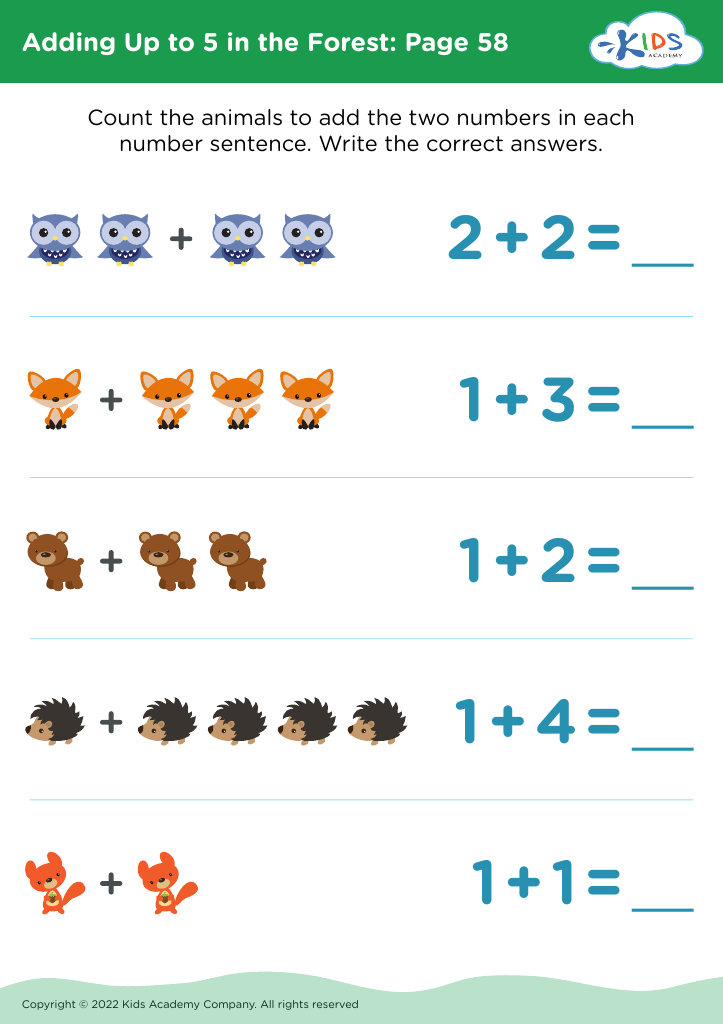
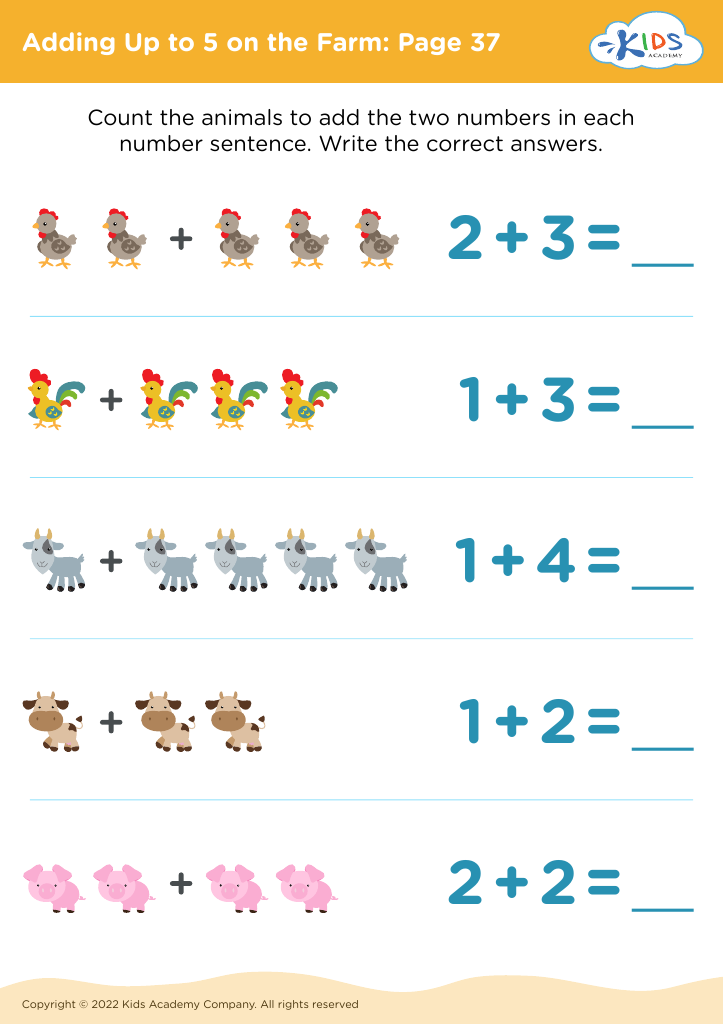
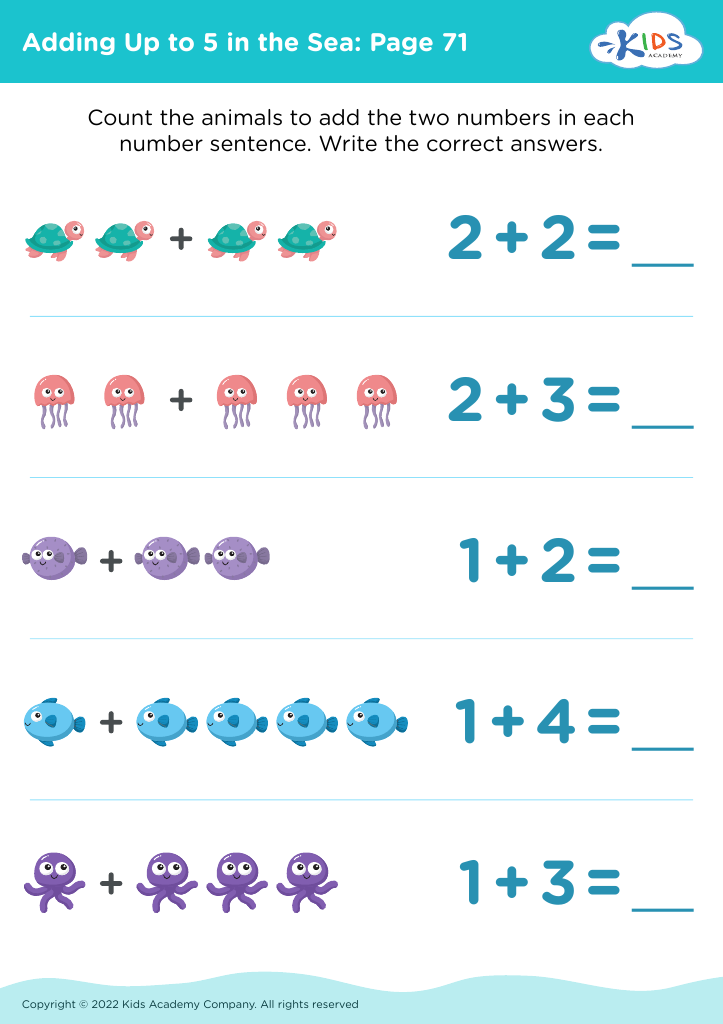
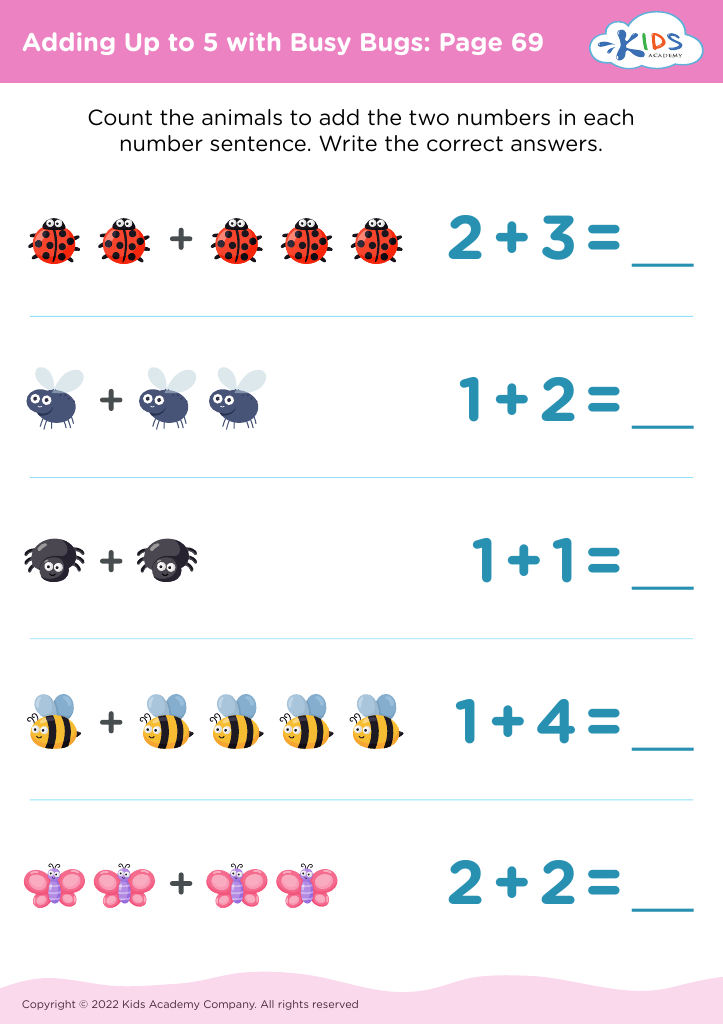








Understanding numeracy, particularly the ability to add up to 5, is crucial for children aged 4-5 years as it lays the foundation for their future mathematical skills and overall academic success. This early stage of learning not only fosters curiosity and a positive attitude towards math but also enhances cognitive development.
When young children grasp the concept of adding numbers together, they develop critical thinking skills and problem-solving abilities. It enables them to recognize patterns, understand relationships between numbers, and apply their knowledge in real-life situations, like sharing snacks or playing with toys.
For parents and teachers, supporting this early numeracy skill is essential in helping children build confidence. Mastering basic addition encourages them to pursue more complex mathematical concepts with enthusiasm in later years. Additionally, early numeracy experiences contribute to a child’s social and emotional development, as they learn to collaborate, communicate, and celebrate accomplishments.
By engaging children in fun and meaningful activities related to adding up to 5—through books, games, or hands-on practices—parents and teachers play a pivotal role in instilling a strong numerical foundation that serves as a stepping stone for academic achievement and lifelong learning.








