Underwater animal identification Adding Up to 5 Worksheets for Ages 4-5
3 filtered results
-
From - To
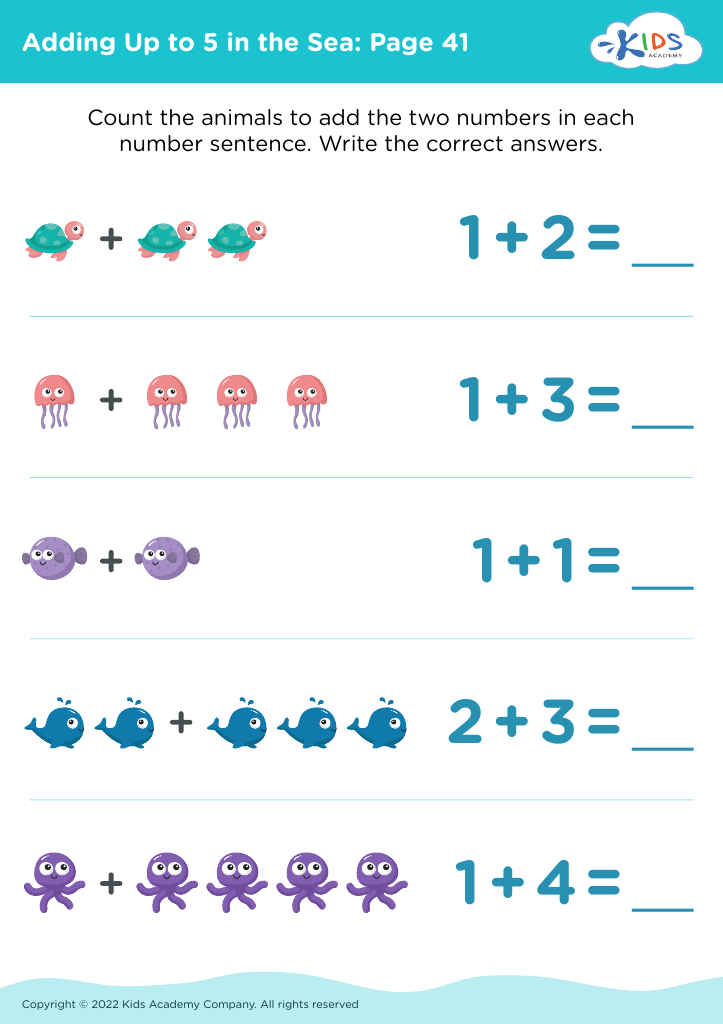
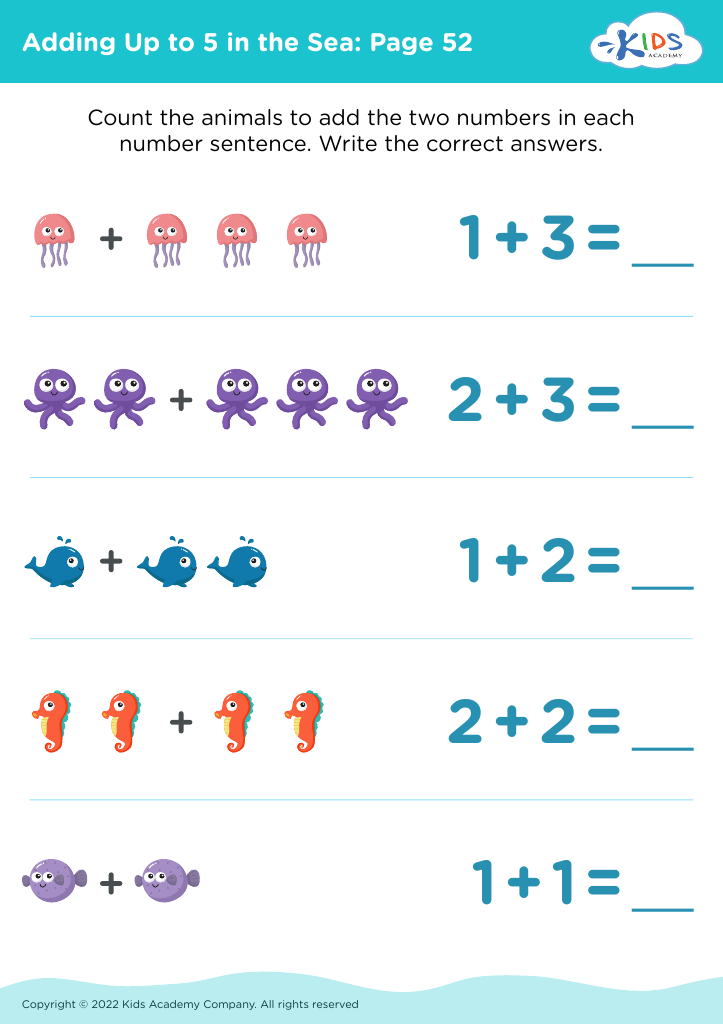
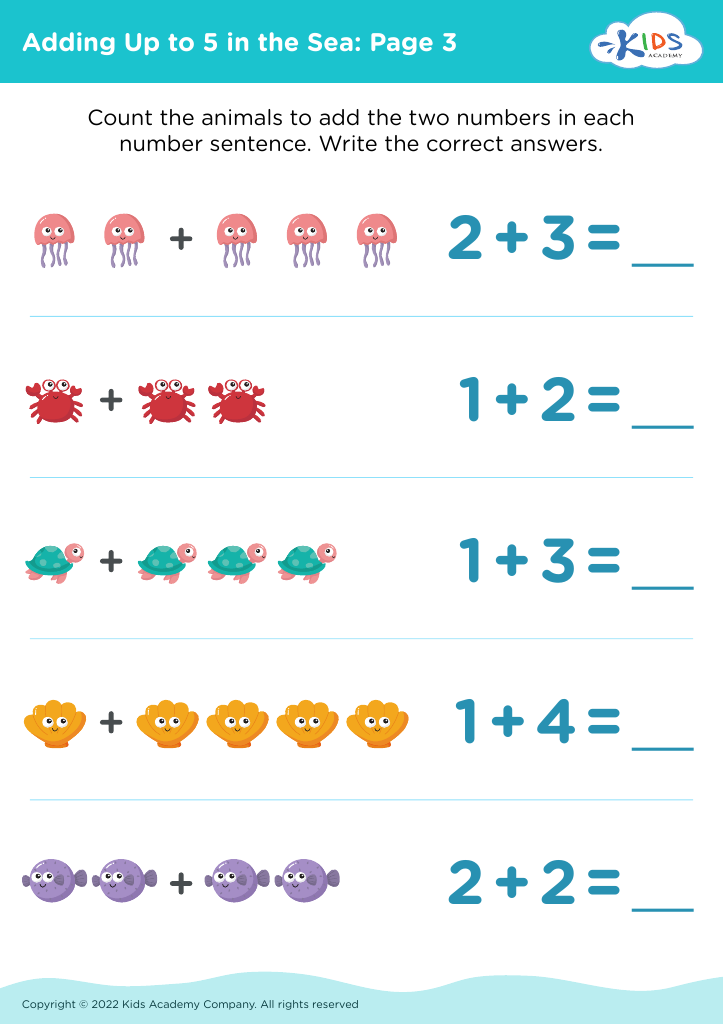
Engage young learners with our "Underwater Animal Identification" worksheets, designed specifically for ages 4-5! These fun and interactive materials enhance foundational math skills by incorporating counting and addition, featuring delightful underwater creatures. Children will enjoy identifying and counting various sea animals, helping to seamlessly integrate learning with the excitement of the ocean. Each worksheet guides children to practice adding up to 5 while developing their recognition of marine life. Ideal for classrooms or homeschooling, these engaging activities promote both numerical understanding and critical thinking. Dive into learning and make math a splash with these captivating worksheets today!






%20(1).jpg)

Understanding underwater animal identification and basic math skills like “Adding Up to 5” are crucial for the development of children aged 4-5. First, underwater animal identification fosters curiosity about marine life, promoting a sense of wonder for the environment. By recognizing various species, children develop observational skills and respect for biodiversity, which is key to fostering future conservationists.
Adding numbers, such as “Adding Up to 5,” equips young learners with foundational math skills. These skills are essential for cognitive development, enhancing their ability to solve problems and think critically. When integrated with activities like identifying underwater animals, math can become a playful, engaging experience. For example, counting sea creatures they identify during a lesson links real-life situations with learning, making education enjoyable and memorable.
Teachers and parents play a vital role in this journey. They can create interactive games, crafts, and storytelling that combine marine life and basic math concepts, making the learning process holistic. Ultimately, nurturing these skills not only builds knowledge and confidence in children but also encourages a lifelong interest in science and mathematics, laying a strong educational foundation for their future.








