Visual learning reinforcement Adding Up to 5 Worksheets for Ages 4-5
5 filtered results
-
From - To
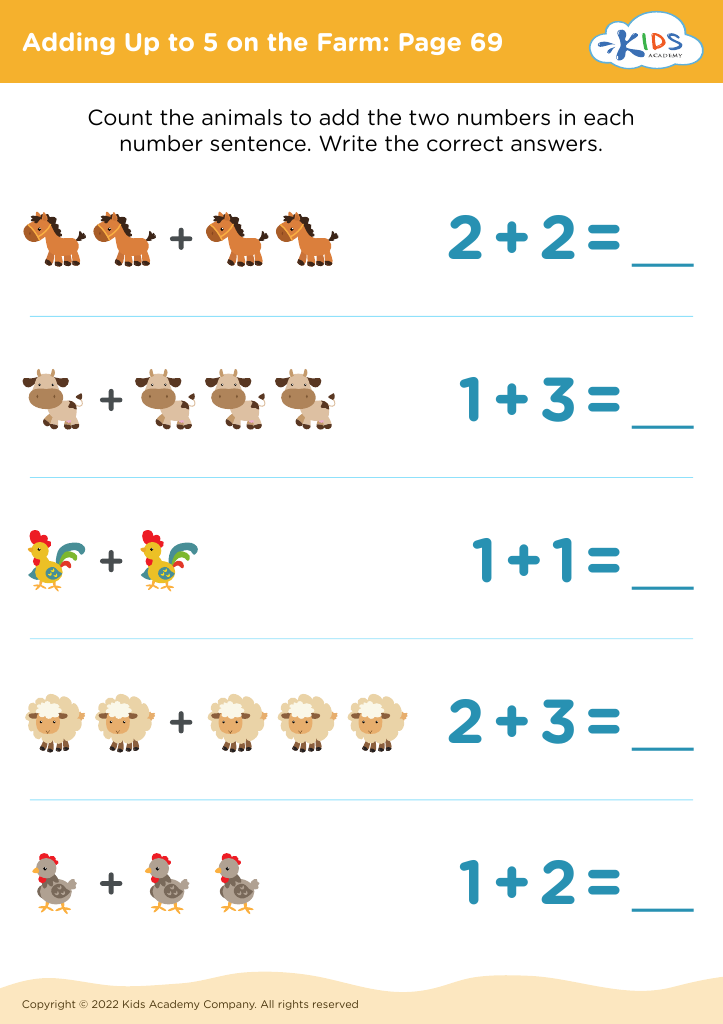
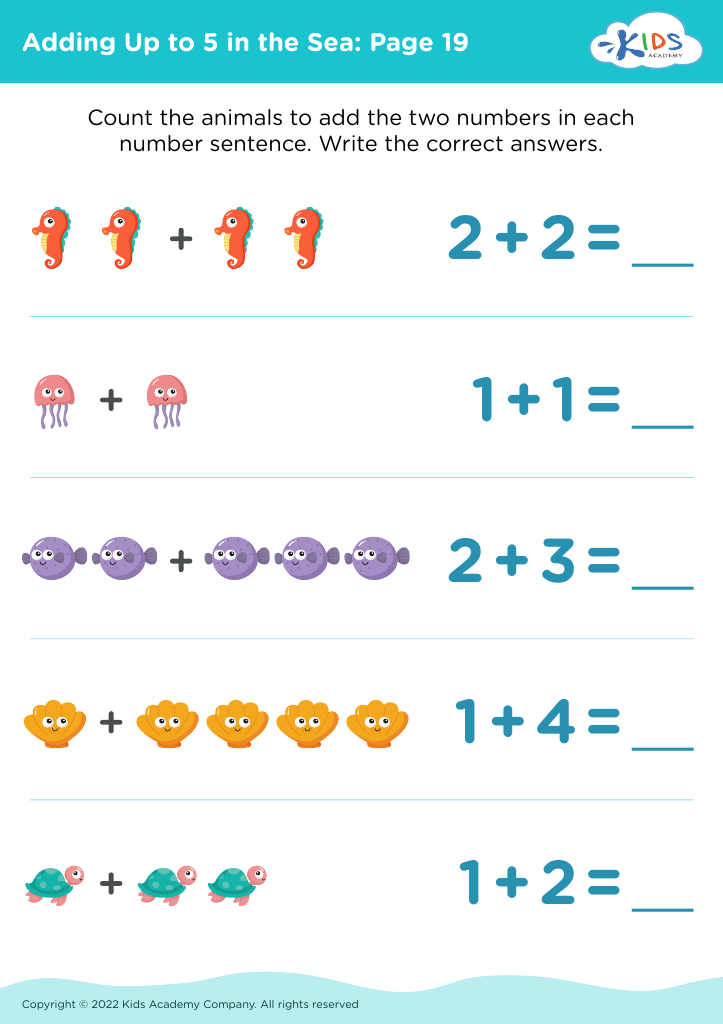
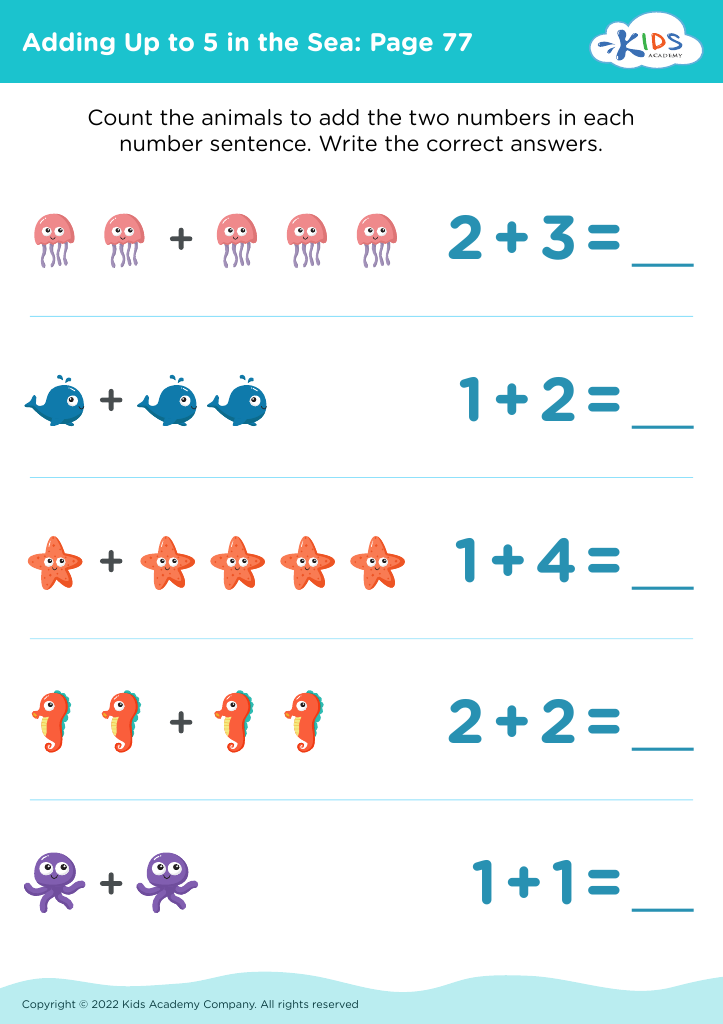
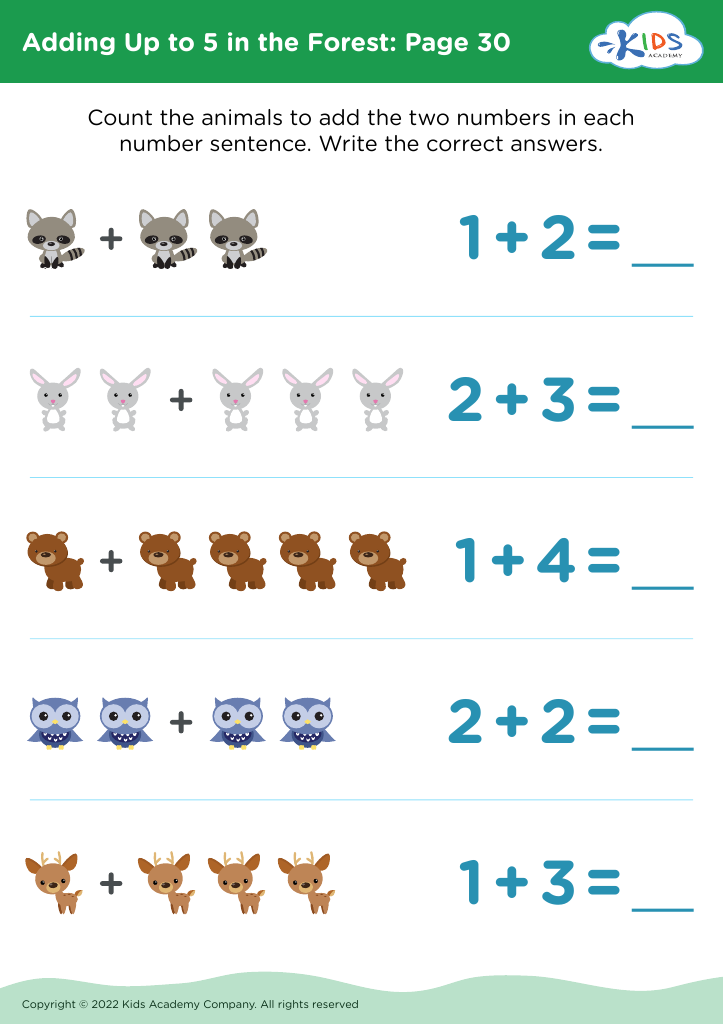
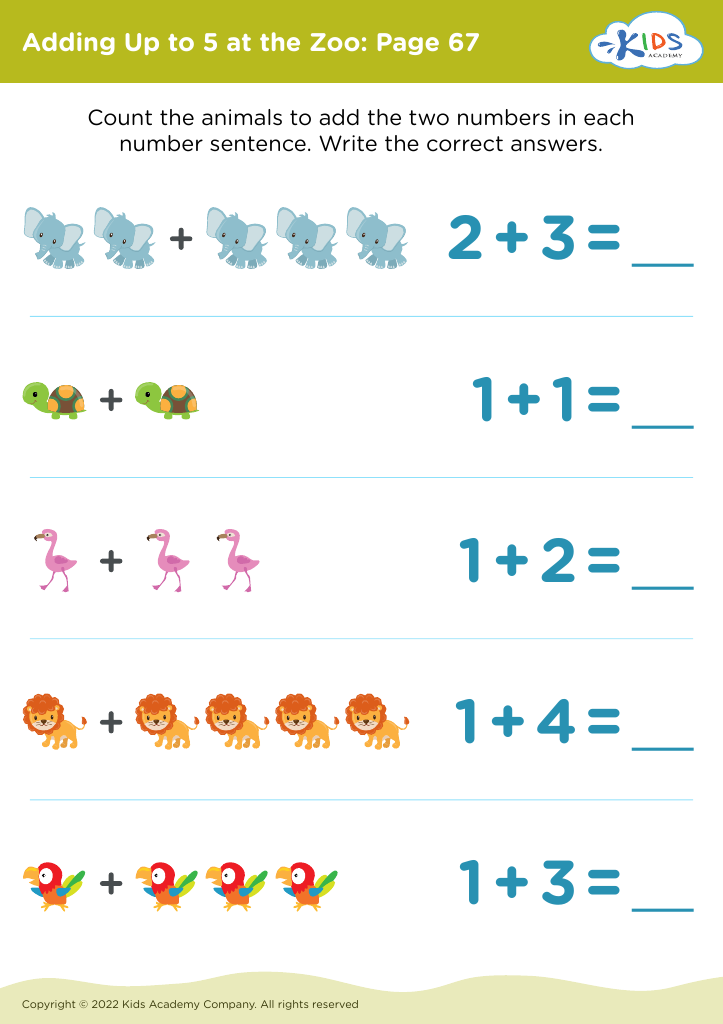
Discover the "Visual Learning Reinforcement: Adding Up to 5 Worksheets" designed for children ages 4-5! These engaging worksheets provide a fun and interactive approach to help young learners grasp the fundamentals of addition. By utilizing vibrant visuals and relatable contexts, kids will effortlessly reinforce their understanding of numbers as they explore various addition problems involving sums up to 5. Each worksheet encourages creativity while enhancing their problem-solving skills, boosting confidence in math. Perfect for home or classroom use, this resource is ideal for early education, promoting a stronger foundation in numeracy through visual learning techniques. Start your child's math journey today!


%20(1).jpg)



.jpg)

Visual learning reinforcement is vital for children aged 4-5, particularly in foundational skills like adding up to 5. At this developmental stage, children are naturally curious and learn best through engaging, interactive methods. Visual aids, such as counters, number charts, and illustrated story problems, offer concrete representations of abstract concepts, making them easier to comprehend.
For parents and teachers, investing time in visual reinforcement aids not only helps children grasp mathematical concepts more effectively but also fosters a love for learning. When children see math in a tangible format, they're more likely to develop confidence and motivation in their abilities, setting a positive tone for future educational endeavors.
Moreover, visual learning aligns with diverse learning styles; some children may grasp concepts better through seeing rather than through listening or reading alone. This inclusivity ensures that all children, regardless of their preferred learning modality, have the opportunity to succeed.
Practicing addition with visual aids enhances cognitive skills and promotes problem-solving and critical thinking. By caring about and implementing visibility in learning, parents and teachers empower children to build a strong mathematical foundation, paving the way for future academic success while also nurturing their overall development and enthusiasm for learning.








