Visual-motor skills Adding Up to 5 Worksheets for Ages 4-5
3 filtered results
-
From - To
Enhance your child's learning with our "Visual-Motor Skills Adding Up to 5 Worksheets for Ages 4-5." These fun and engaging worksheets are designed to combine basic math practice with activities that improve hand-eye coordination and fine motor skills. With colorful images and simple addition problems, children will joyfully grasp the concept of adding numbers up to 5. Perfect for young learners, these sheets provide a strong foundation for future math success while simultaneously developing crucial visual-motor skills. Ideal for parents and teachers, these printable worksheets make early math both accessible and enjoyable for little ones. Download now and watch them thrive!
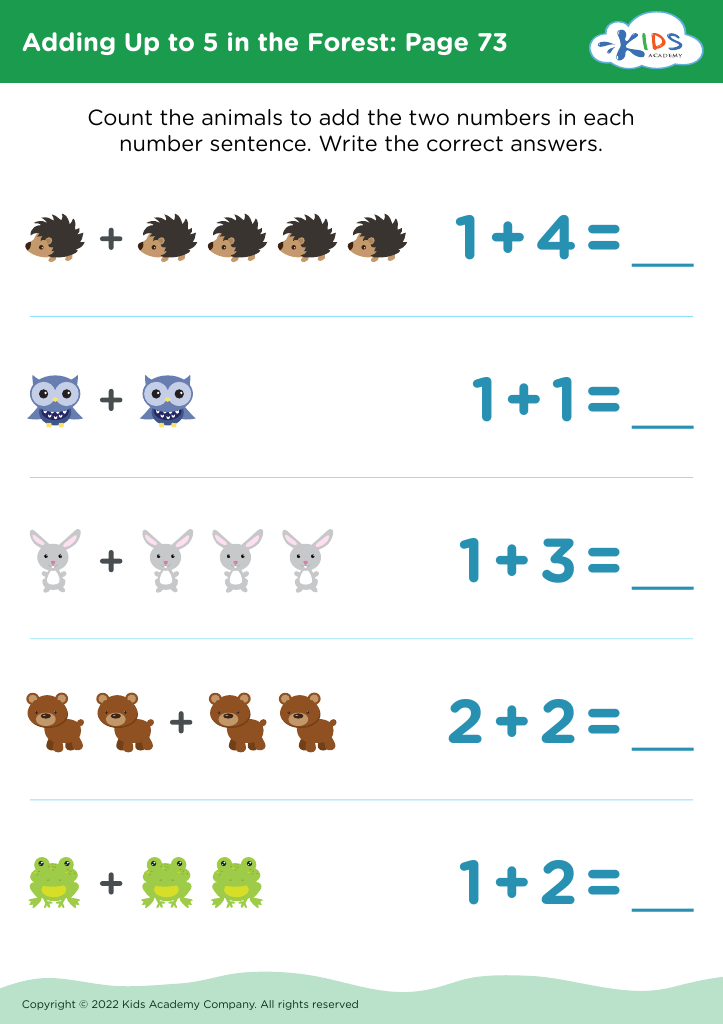
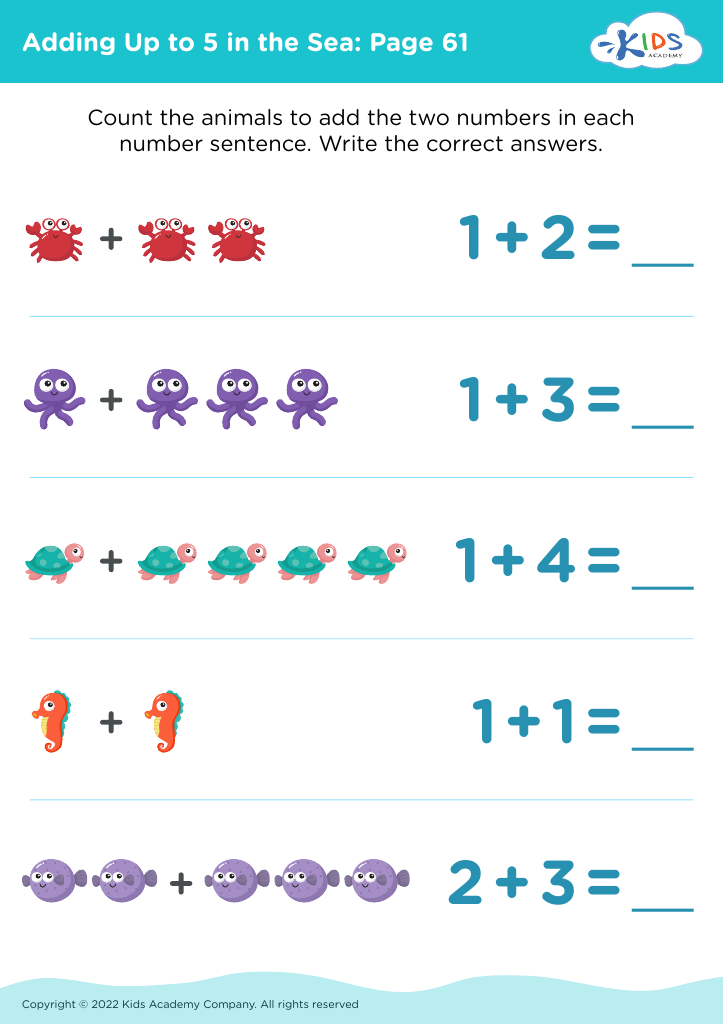
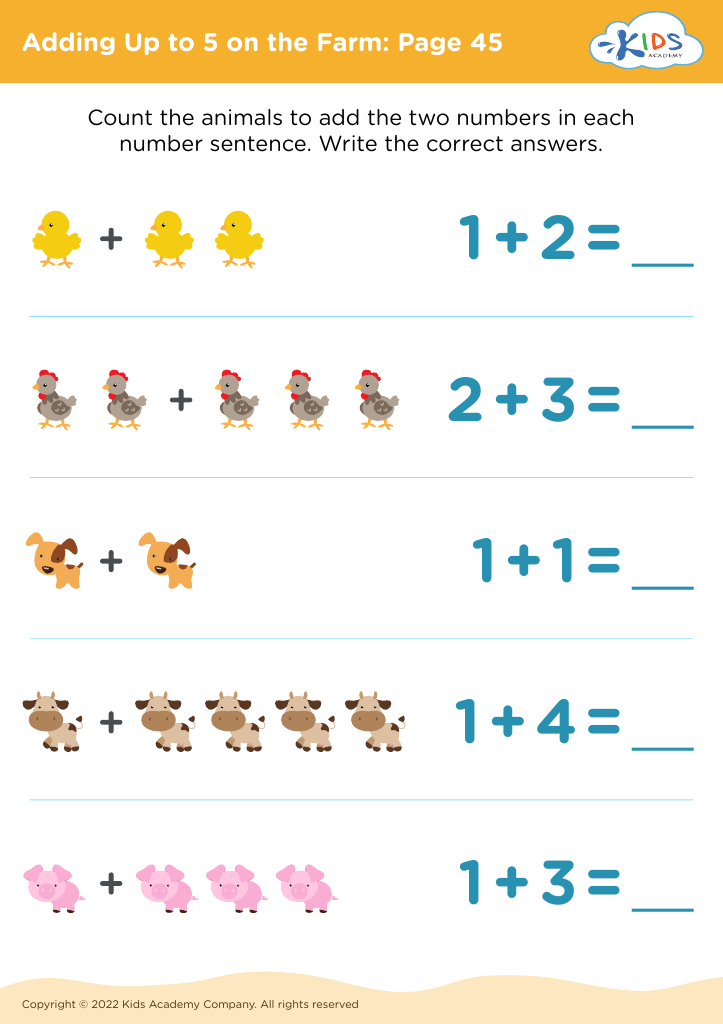



.jpg)




Visual-motor skills involve the coordinated effort between the eyes and hands to perform tasks. For young children aged 4-5, these skills are crucial as they underpin many essential developmental milestones. One key area where visual-motor skills are showcased is in adding up to 5, a pivotal math skill for this age group. When children practice addition within this range, they engage in activities that strengthen their ability to visually track numbers, grasp concepts, and physically manipulate counting objects or write numerals.
Parents and teachers should prioritize visual-motor skill development because it lays a foundation for academic success and daily life skills. Effective integration of sight and movement helps children better understand spatial relationships, enhancing their ability to read and write. Completing mathematical tasks like adding up to 5 also boosts cognitive development, as it requires both focus and memory recall.
Moreover, strong visual-motor skills contribute to children's confidence and independence. In early education, these abilities make a difference in classroom participation, setting the stage for continued interest in math and other subjects.
By actively supporting the development of visual-motor skills through fun, engaging activities, parents and teachers not only aid in smoother academic transitions but also foster competent and well-rounded young learners.








