Visual Perception Skills Adding Up to 5 Worksheets for Ages 4-5
4 filtered results
-
From - To
Enhance your child's foundational math skills with our "Visual Perception Skills Adding Up to 5 Worksheets" tailored for ages 4-5. These engaging worksheets are designed to improve visual discrimination, tracking, and spatial awareness, all while helping young learners grasp the concept of addition using numbers up to 5. Each activity encourages children to visualize and identify quantities, promoting essential cognitive skills in a fun and interactive way. Ideal for at-home practice or classroom use, these worksheets provide a fantastic opportunity for early learners to build confidence in mathematics alongside essential visual perception abilities. Start your child's math journey today!
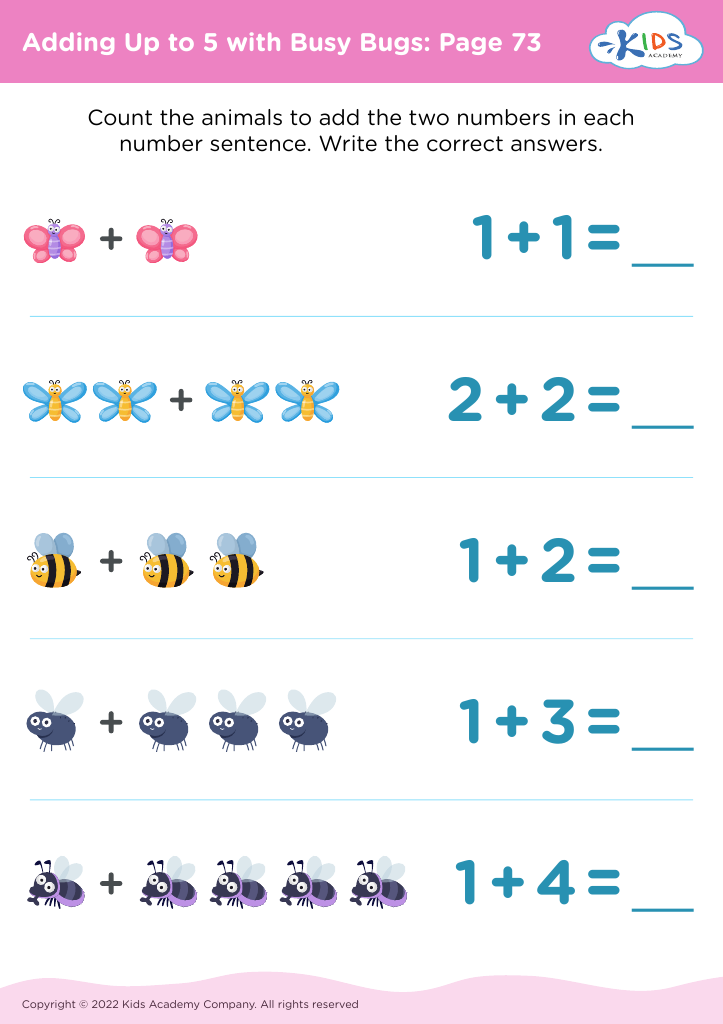
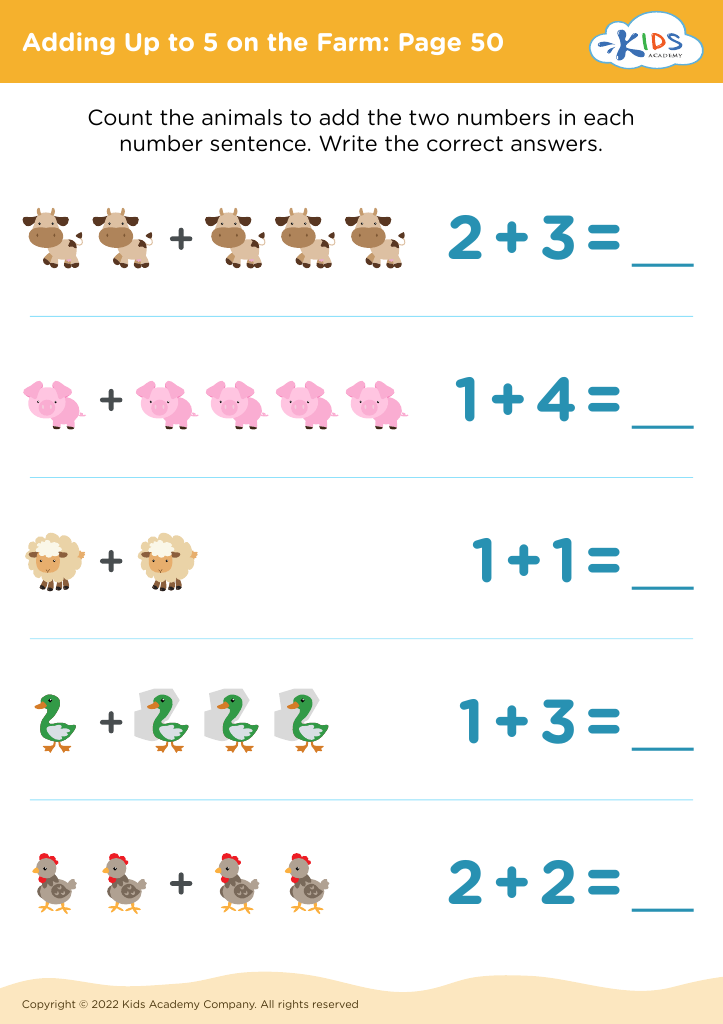
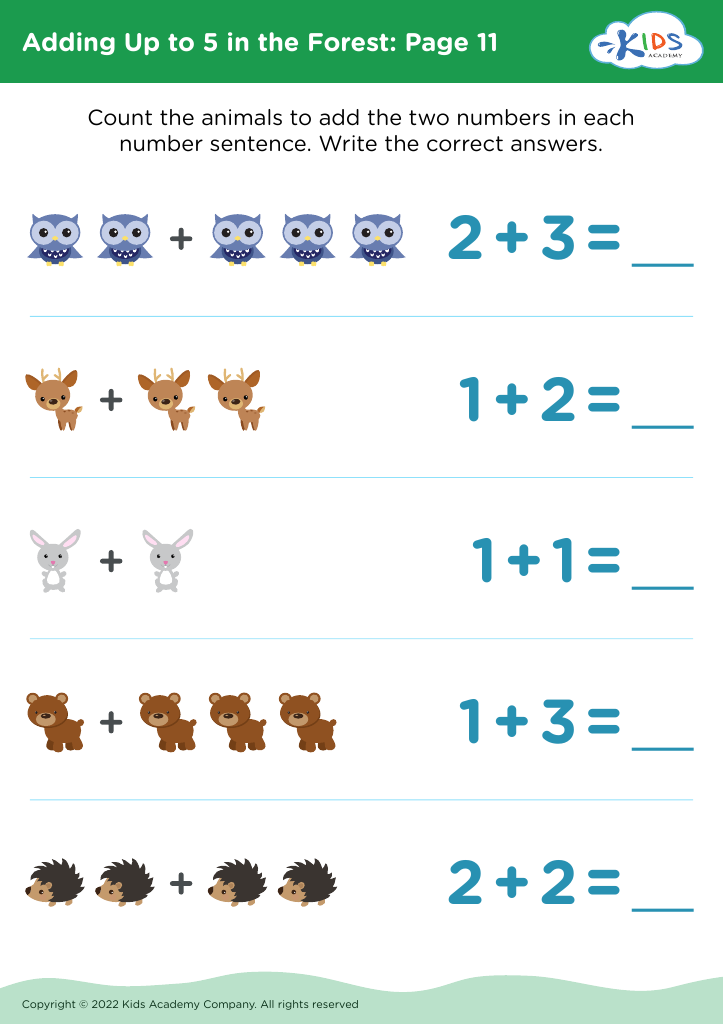
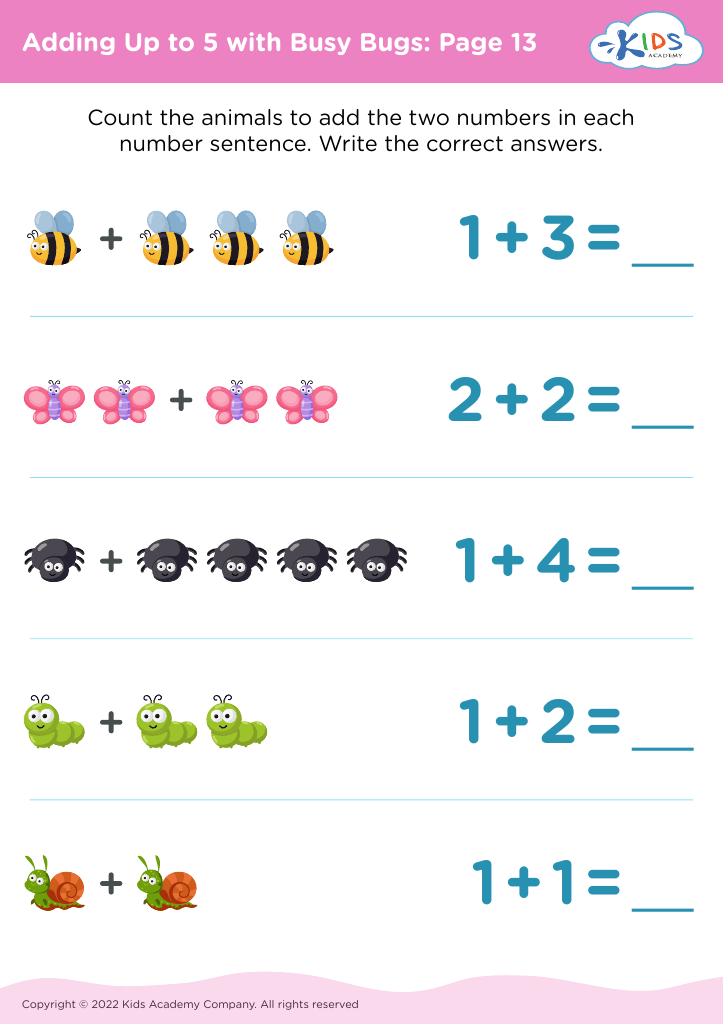



%20(1).jpg)




Visual perception skills are essential for young children as they form the foundation for learning and cognitive development. For ages 4-5, mastering visual perception skills, particularly in tasks such as adding up to 5, is crucial for several reasons.
Firstly, these skills enhance children's ability to recognize and interpret shapes, patterns, and quantities, which are fundamental in mathematics. When children can visually perceive numbers and their relationships, they can better grasp concepts like counting, addition, and subtraction.
Secondly, developing these skills at an early age fosters confidence and motivation in learning math. When children successfully manipulate small numbers like 1 through 5, they build a positive self-image and a willingness to tackle more complex problems as they progress.
Thirdly, strong visual perception contributes to overall academic success. Skills such as matching, sorting, and distinguishing between different objects not only apply to math but also enhance reading and writing readiness. Parents and teachers should prioritize activities that strengthen these skills, such as games involving sorting, matching shapes, and using visual aids.
In summary, investing attention in visual perception skills for young learners is vital for their future success academically and developmentally.








