Logical thinking development Addition and Subtraction Word Problems Worksheets for Ages 4-5
3 filtered results
-
From - To
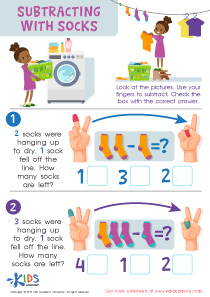
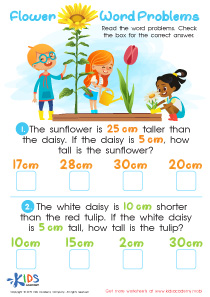
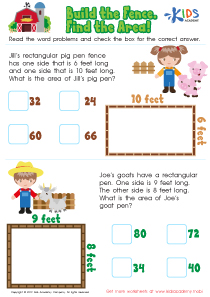
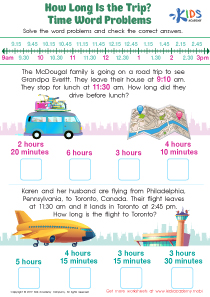
Our "Logical Thinking Development: Addition and Subtraction Word Problems Worksheets for Ages 4-5" effortlessly blend math practice with critical thinking. Tailored for young learners, these engaging worksheets nurture foundational math skills through fun and relatable scenarios. Each problem encourages children to delve into logical reasoning while mastering basic addition and subtraction. Designed by education experts, these worksheets promote active learning, ensuring children not only understand math concepts but also apply them logically in varied situations. Ideal for preschool and kindergarten, these activities are perfect for sparking a love for math and enhancing cognitive development from an early age.
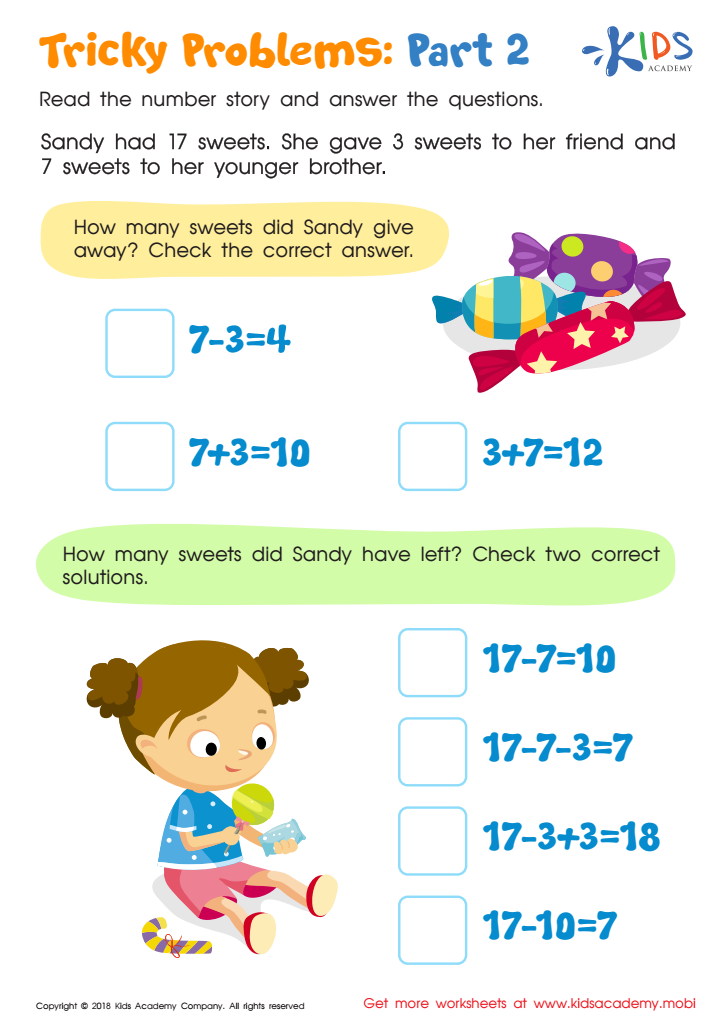
Tricky Problems Worksheet: Part 2
 Assign to My Students
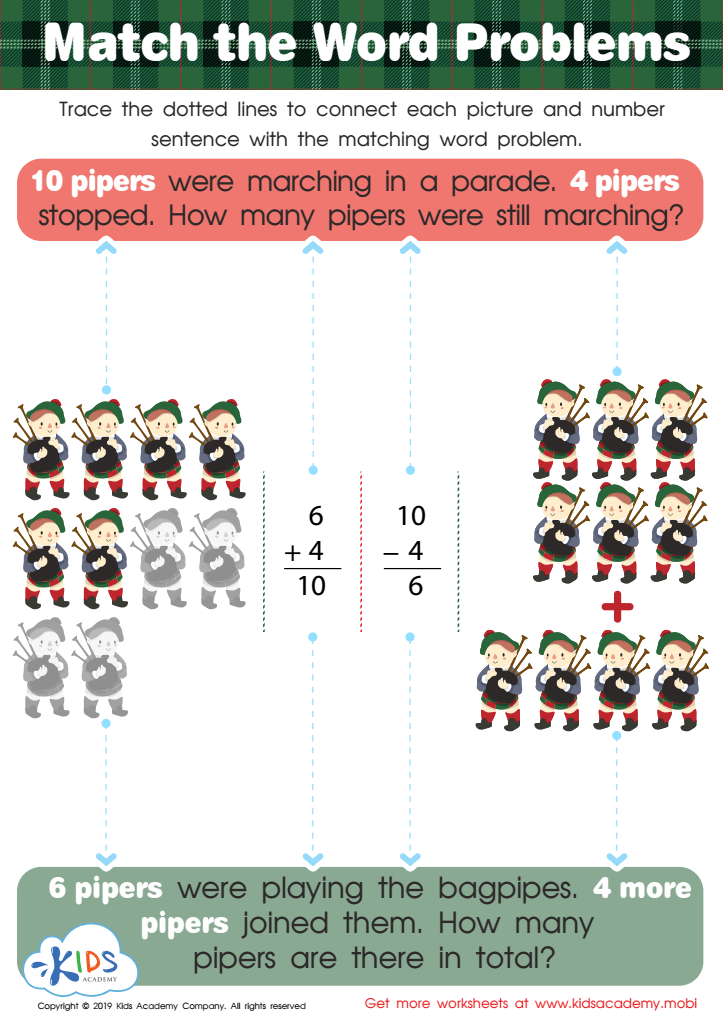
Match the Word Problems Worksheet
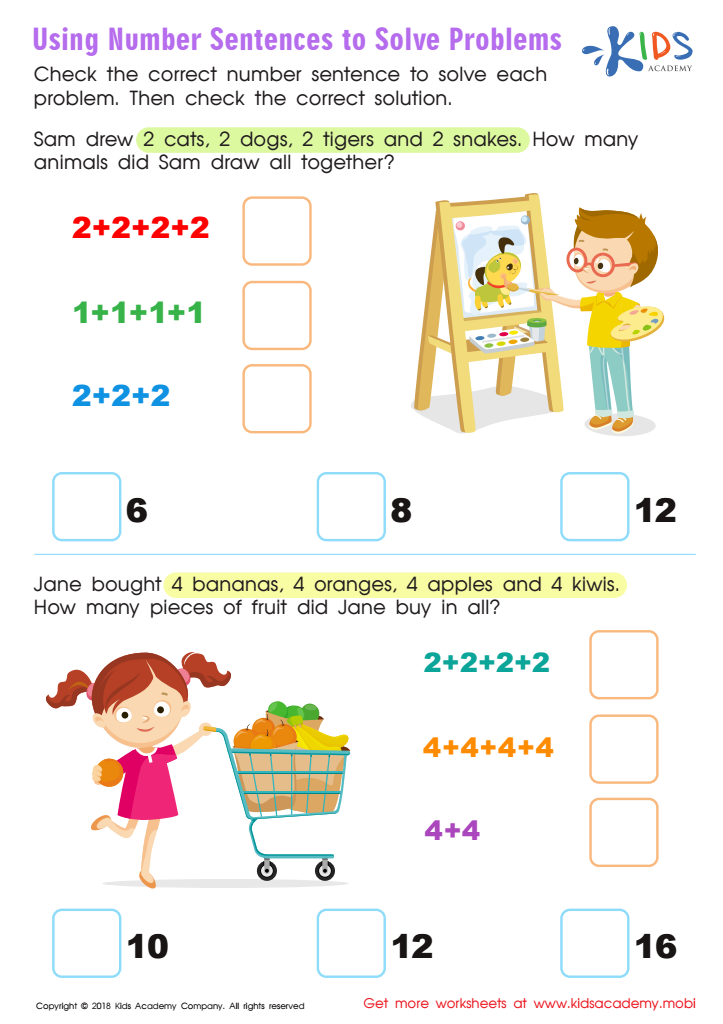
Using Number Sentences to Solve Problems Worksheet








Logical thinking development is a cornerstone for young children, especially when dealing with addition and subtraction word problems. At ages 4-5, children are in a critical phase of cognitive development. Encouraging competence in these areas equips them with essential problem-solving skills that serve as the groundwork for more advanced mathematics and everyday decision-making.
Approaching addition and subtraction through word problems not only engages their budding mathematical abilities but also enhances language comprehension, as they must understand the scenario before solving it. For instance, if a story problem involves distributing snacks to friends, children learn to contextualize abstract numbers into relatable, tangible situations. This connection fosters better retention and understanding.
Furthermore, early exposure to word problems nurtures critical thinking and logical reasoning, crucial life skills beyond mathematics. It teaches children to analyze information, differentiate relevant from irrelevant details, and systematically work through steps to arrive at a solution.
For parents and teachers, prioritizing logical thinking through these problems boosts children's confidence and curiosity in learning. It provides a dual benefit: strengthening math proficiency and fostering sound reasoning abilities. Ultimately, providing children with strong foundational skills in logical thinking helps guide their academic and real-world successes, making them more adept and independent learners.