Fine motor skills (writing) Addition & Subtraction Worksheets for Ages 4-5 - Page 2
33 filtered results
-
From - To
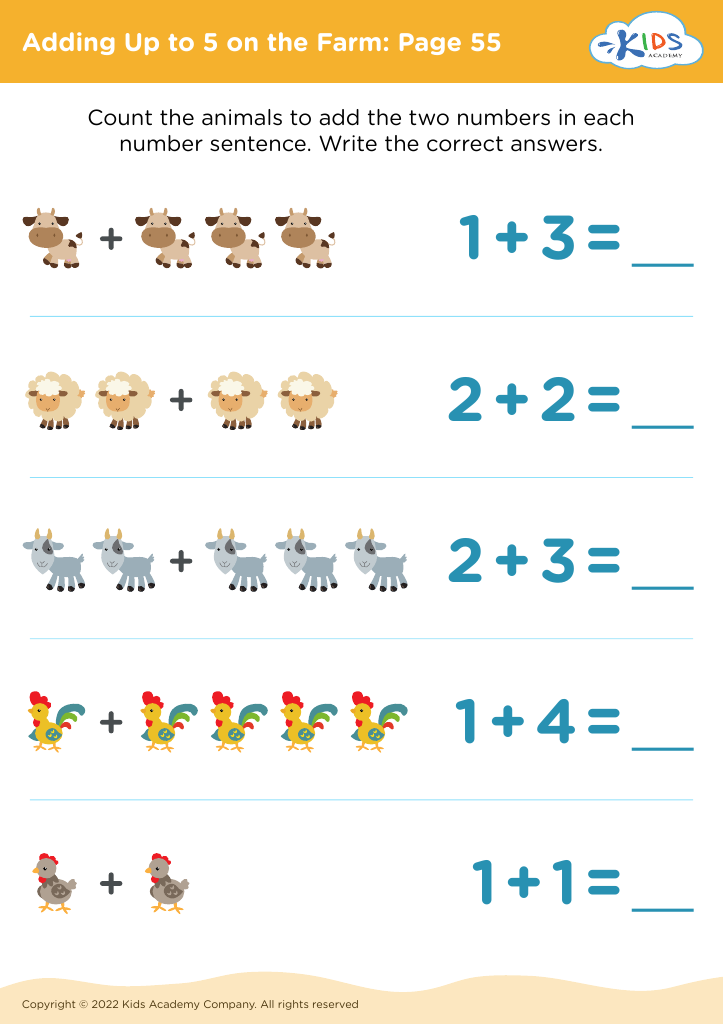
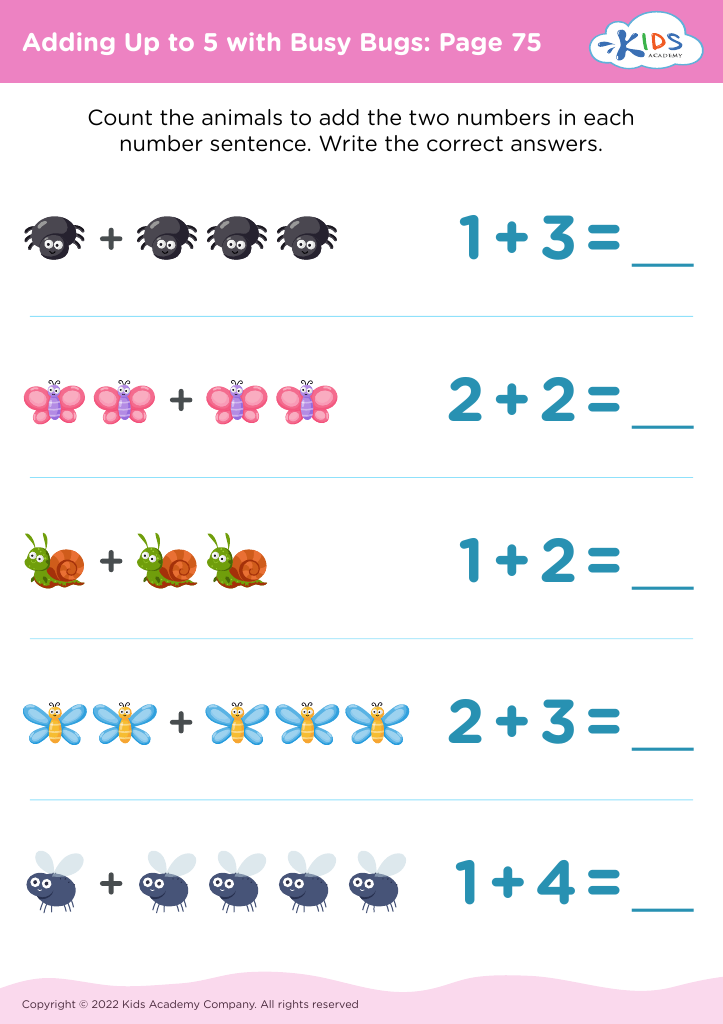
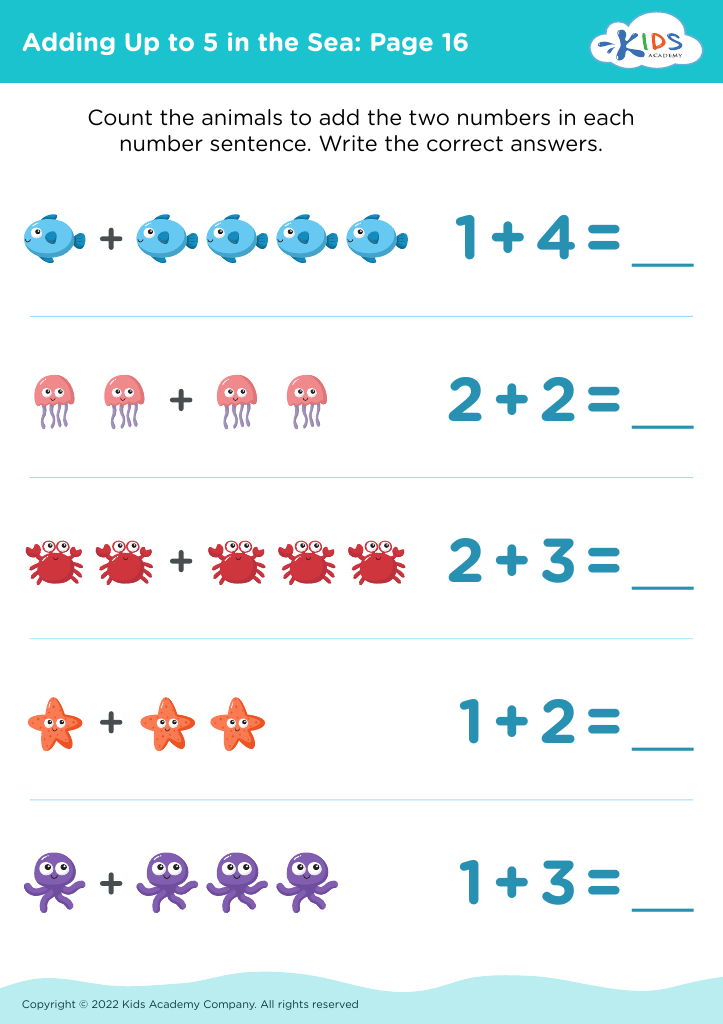
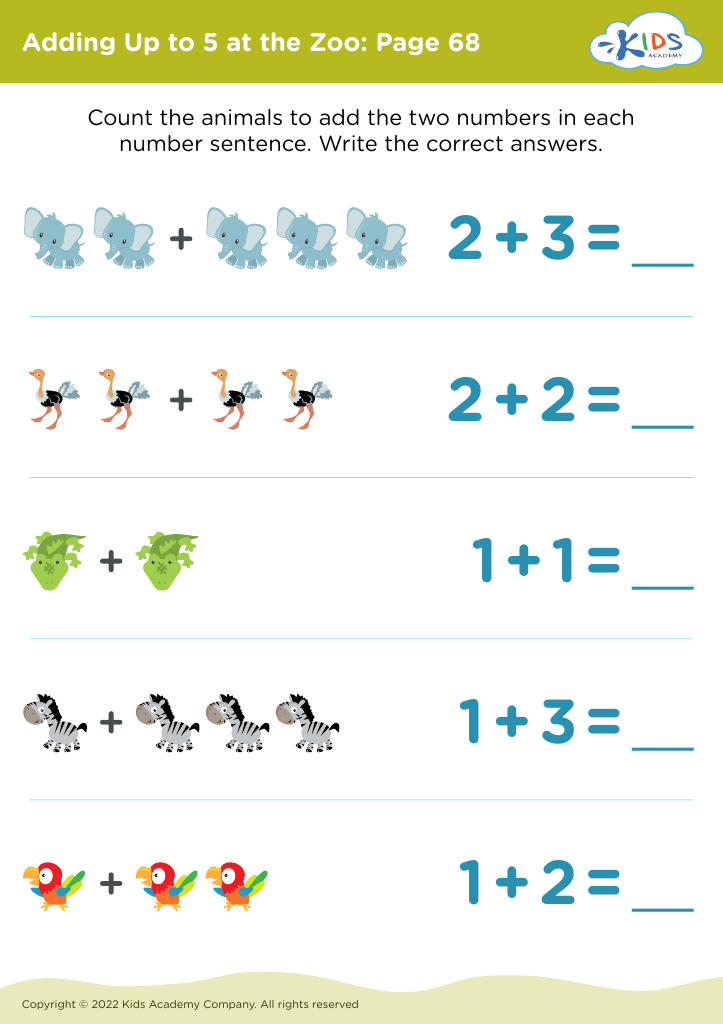
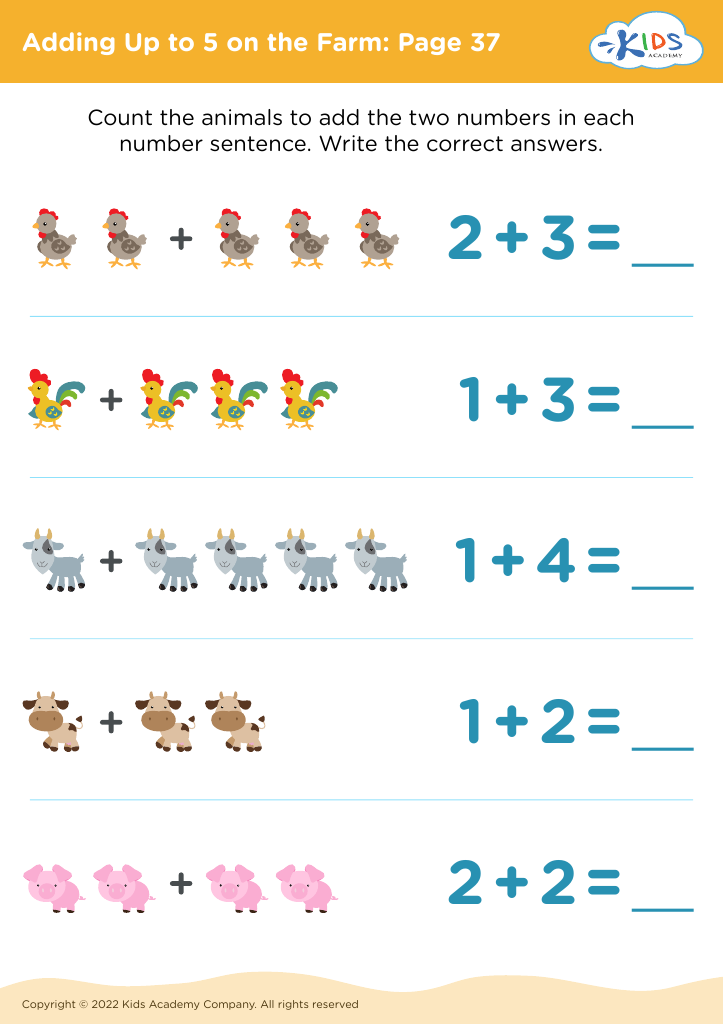
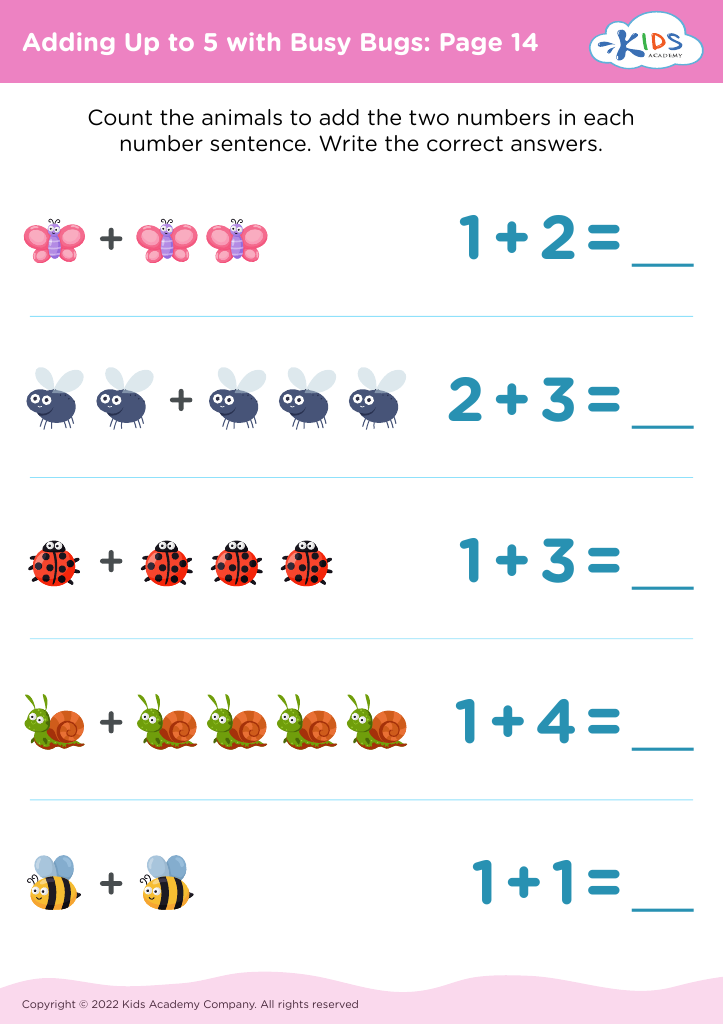
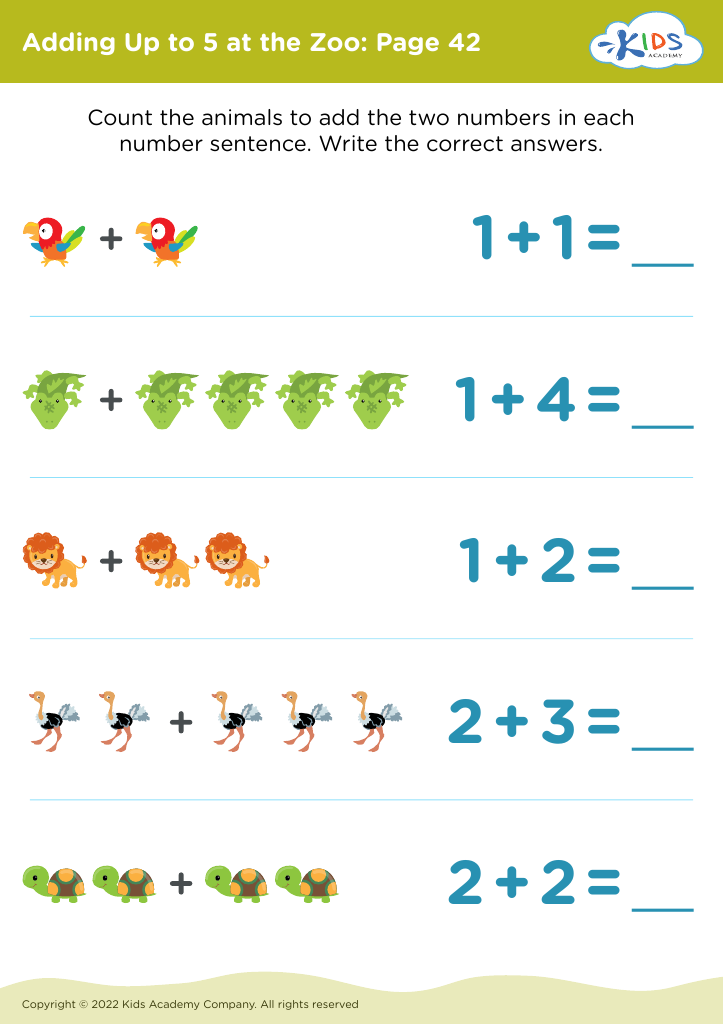
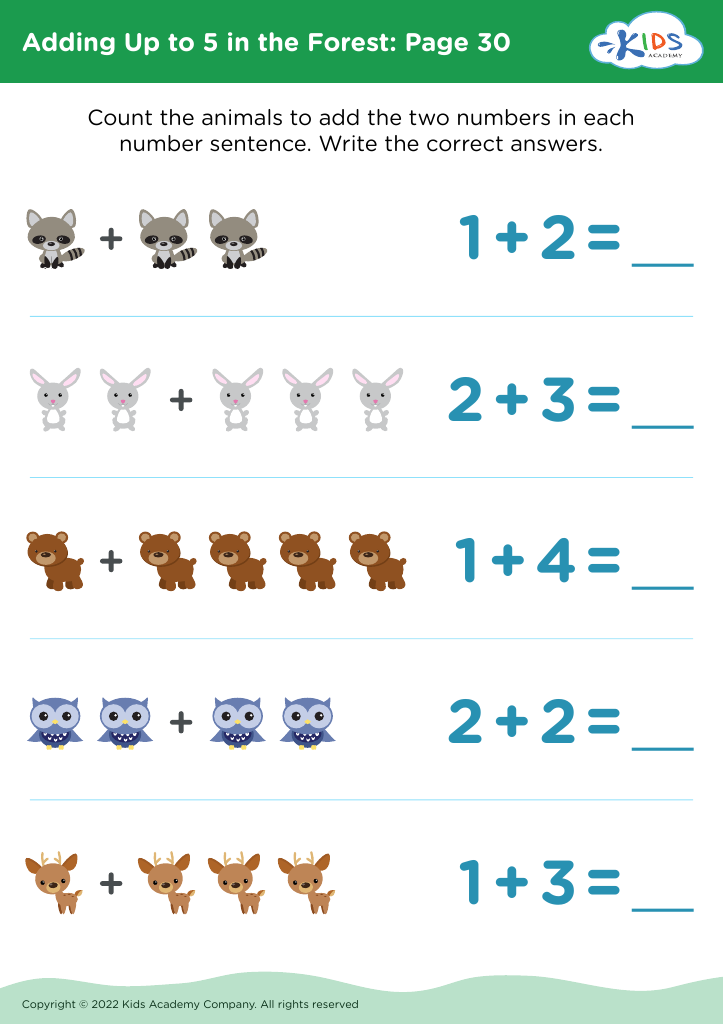
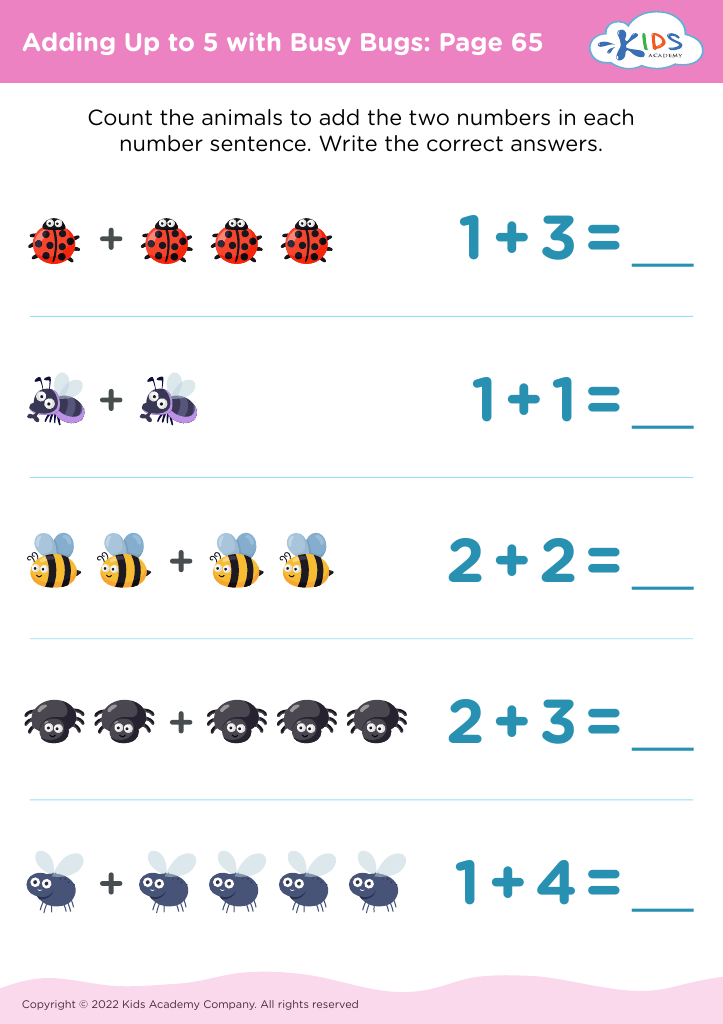








Fine motor skills are essential for young children as they directly impact their ability to perform tasks involving hand-eye coordination, particularly in writing and mathematical activities like addition and subtraction. For children aged 4-5, developing fine motor skills is crucial because it lays the foundation for effective handwriting, organization of thoughts, and executing mathematical processes.
First, writing is vital for expressing ideas and communicating effectively. Well-developed fine motor skills help children hold pencils correctly, form letters neatly, and write with control. This ability builds their confidence in academic settings, fostering a desire to engage in writing tasks.
Moreover, as children learn addition and subtraction, fine motor skills enable them to manipulate objects, such as counting beads or blocks, which helps them visualize mathematical concepts. This tactile experience deepens their understanding of numbers and improves their problem-solving skills.
Parents and teachers play an integral role in nurturing these skills through engaging activities like drawing, cutting, and building. Supporting fine motor development not only prepares children for more complex academic challenges but also encourages their overall cognitive growth, emotional well-being, and readiness for the classroom environment. Investing time in these skills pays long-term dividends for children's educational journeys.








