
Mental math practice Addition & Subtraction Worksheets for Ages 4-5
6 filtered results
Difficulty Level
Grade
Age
-
From - To
Subject
Activity
Standards
Boost your child's math skills with our Mental Math Practice Addition & Subtraction Worksheets for Ages 4-5. Our engaging and colorful worksheets are designed to develop quick calculation abilities in young learners. By practicing these fun exercises, kids will enhance their addition and subtraction skills, improve problem-solving techniques, and build a strong mathematical foundation. Perfect for preschoolers and early kindergarteners, our worksheets include various activities such as counting objects, filling in missing numbers, and solving simple equations. Start your child on the path to math success with Kids Academy's expertly crafted mental math worksheets today!
Favorites
With answer key
Interactive
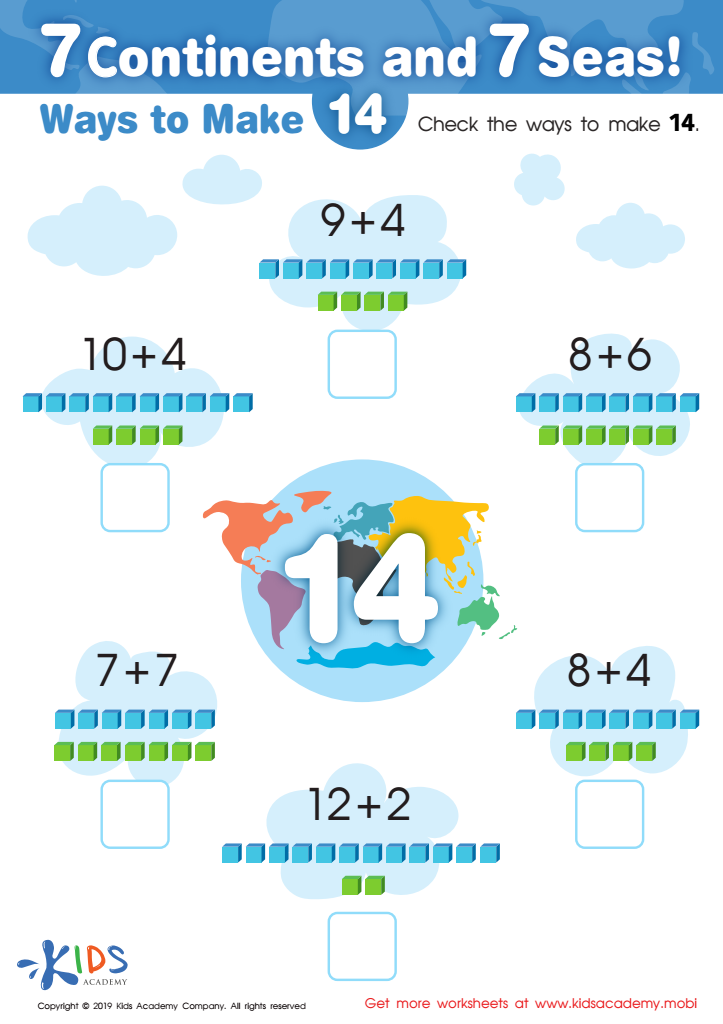
7 Continents and 7 Seas Worksheet
Remind kids of the continents and show them how different numbers can add up to the same figure. Give examples, like 2+2 =4, and 3+1 =4. Ask if they can provide other examples, then work through the simple additions in this worksheet with them. Ask them to circle all equations that make 14.
 Assign to My Students
7 Continents and 7 Seas Worksheet
Worksheet
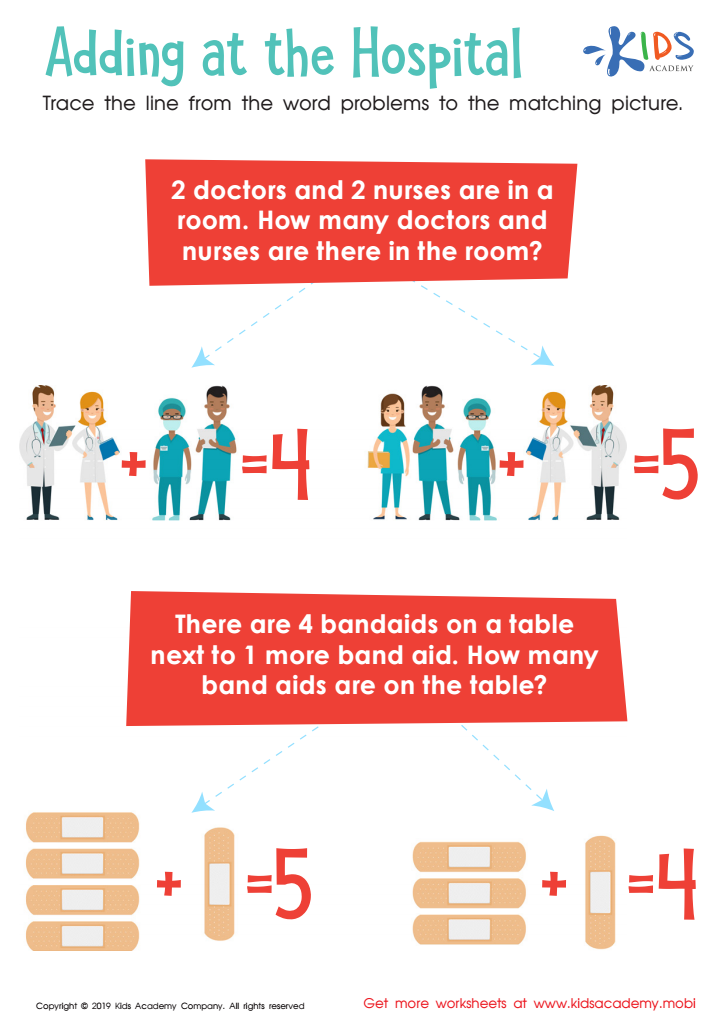
Adding at the Hospital Worksheet
A hospital visit doesn't have to be scary for kids. With this worksheet, they can count along with doctors and nurses, by reading the word problems and tracing lines to the corresponding picture. Guide them through it and you'll help them have a fun experience.
Adding at the Hospital Worksheet
Worksheet
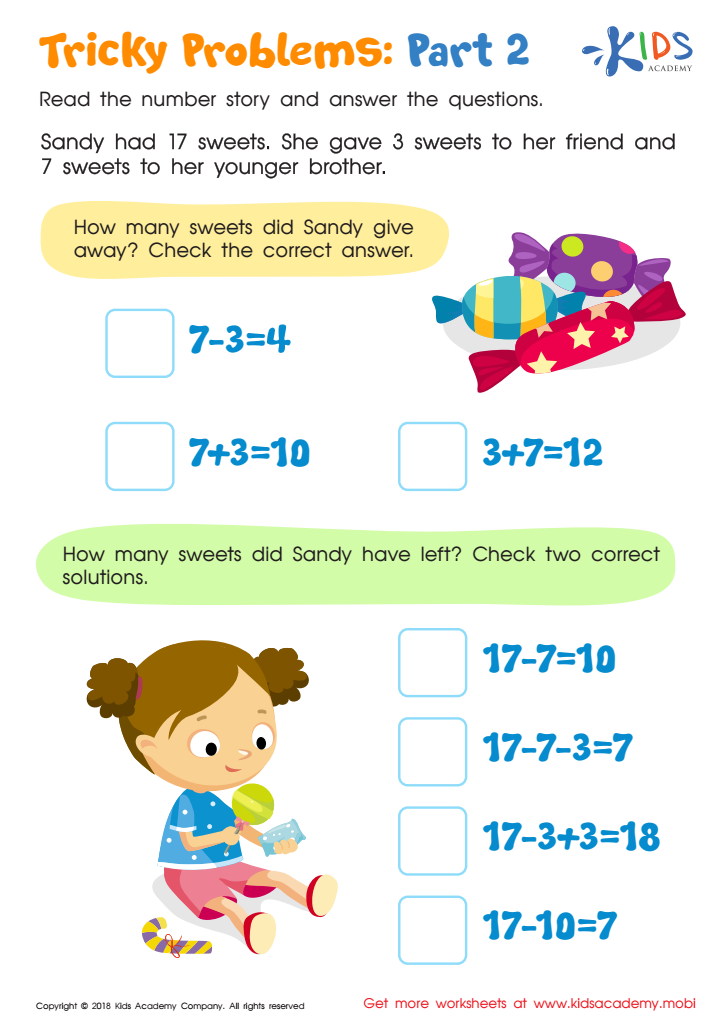
Tricky Problems Worksheet: Part 2
Help your little math learner visualize number stories with this engaging worksheet. They'll connect pictures to the story and use math facts to find the sums. After that, they'll be able to identify the correct number sentences to match. Let them practice and get better at problem solving!
Tricky Problems Worksheet: Part 2
Worksheet
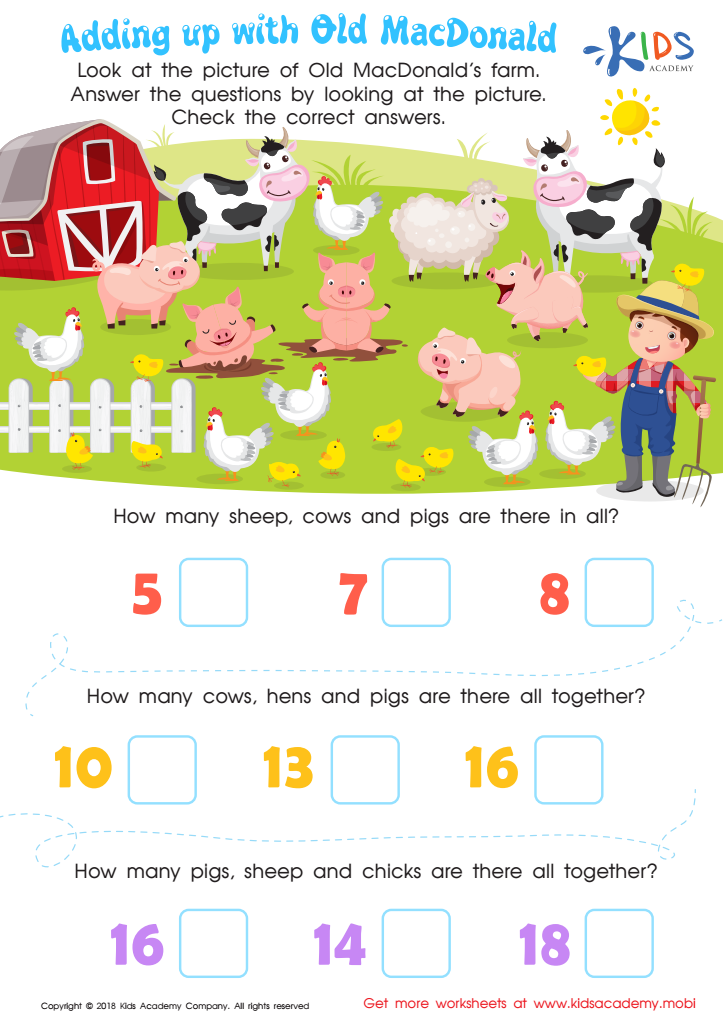
Adding Up with Old MacDonald Worksheet
Old MacDonald needs help counting his animals! Give your little math whiz a fun challenge with a free PDF worksheet. They'll love counting the animals and doing basic addition with two or three addends. Who knew math could be so much fun on the farm?
Adding Up with Old MacDonald Worksheet
Worksheet
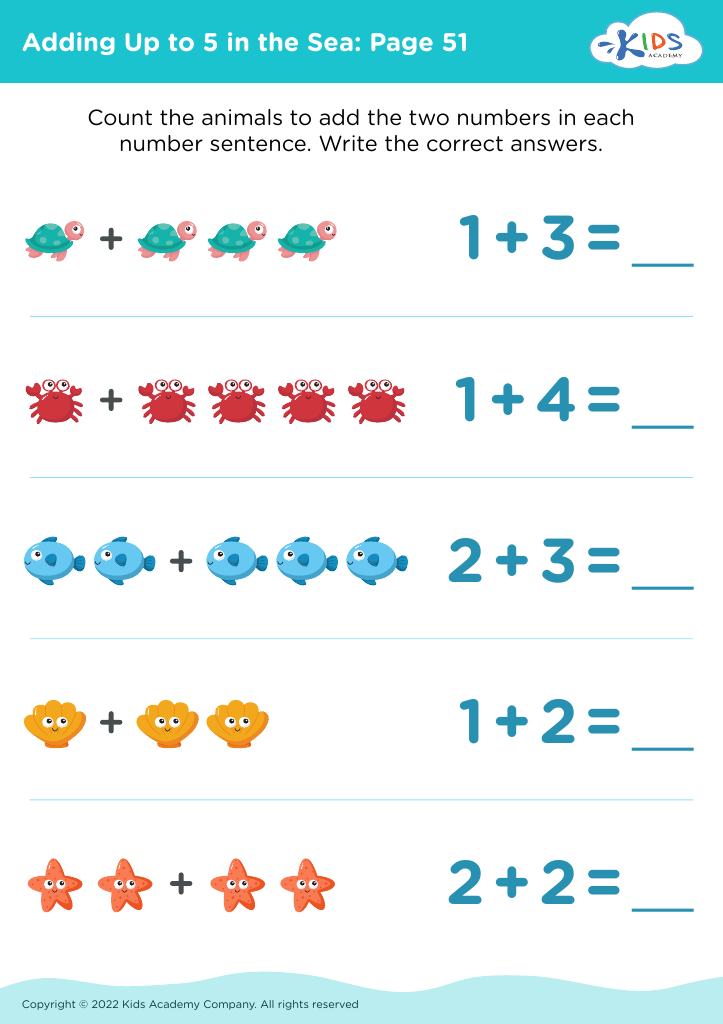
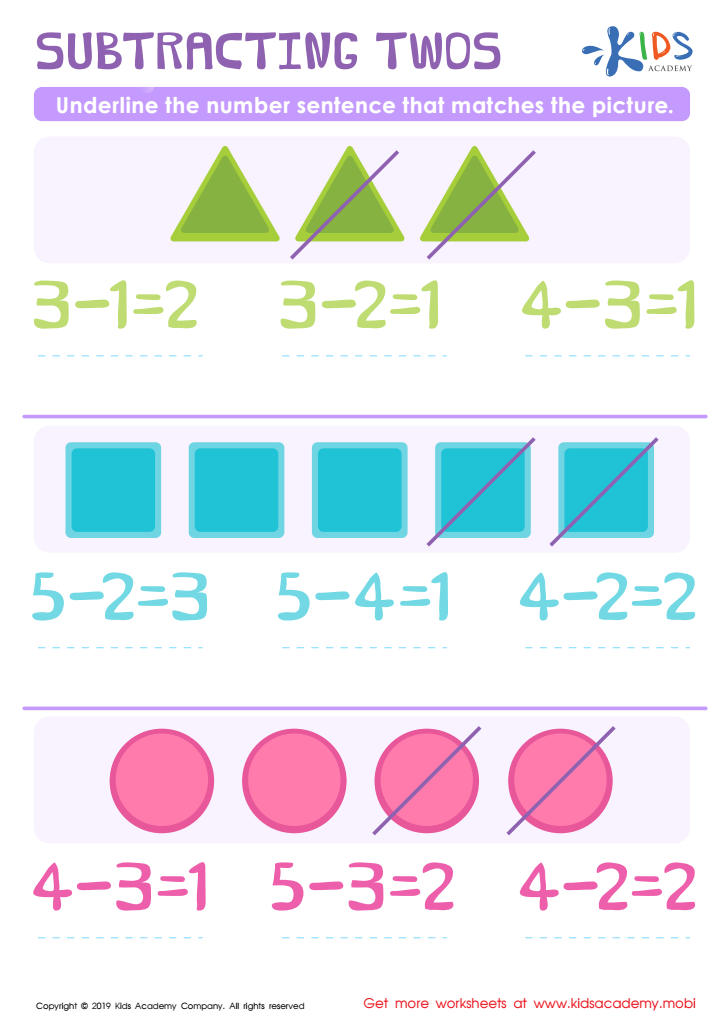
Subtracting Twos Worksheet
Help your children learn the basics of math with this worksheet. It has three number sentences they can match up with the pictures. Start by making math an enjoyable subject and help your kids underline the equation that matches up. This will give them a strong foundation to build on for the rest of their math journey.
Subtracting Twos Worksheet
Worksheet
Join Kids Academy for Free
Who is primarily going to use this learning content?








Parents and teachers have a pivotal role in developing foundational arithmetic skills in children aged 4-5, and mental math practice focused on addition and subtraction is particularly crucial at this stage. Firstly, engaging in mental math exercises enhances a child's cognitive abilities by fostering problem-solving skills, logical reasoning, and numerical fluency. This early exposure promotes neural connectivity essential for more complex mathematical concepts encountered in later years.
Moreover, mental math encourages a strong number sense, enabling children to understand and manipulate numbers effortlessly. This sets the groundwork for a positive math mindset, helping to alleviate math anxiety often seen in older students. Children who exhibit confidence in their ability to perform quick calculations are more likely to tackle challenging problems with enthusiasm rather than fear.
In addition, mental math activities are generally short and engaging, making them perfect for the attention span of young learners. Integrating fun, interactive methods such as games, songs, and everyday scenarios, fosters a love for learning and ensures the retention of knowledge. By prioritizing mental math practice in the early years, parents and teachers are investing in a child's long-term academic success, contributing to their overall confidence and proficiency in mathematics and other interconnected disciplines.








