Fine Motor Skills Addition Worksheets for Ages 4-5 - Page 2
34 filtered results
-
From - To
Help the Bee Find 16 Flowers Worksheet
 Assign to My Students
Planting Seeds for 11 Worksheet
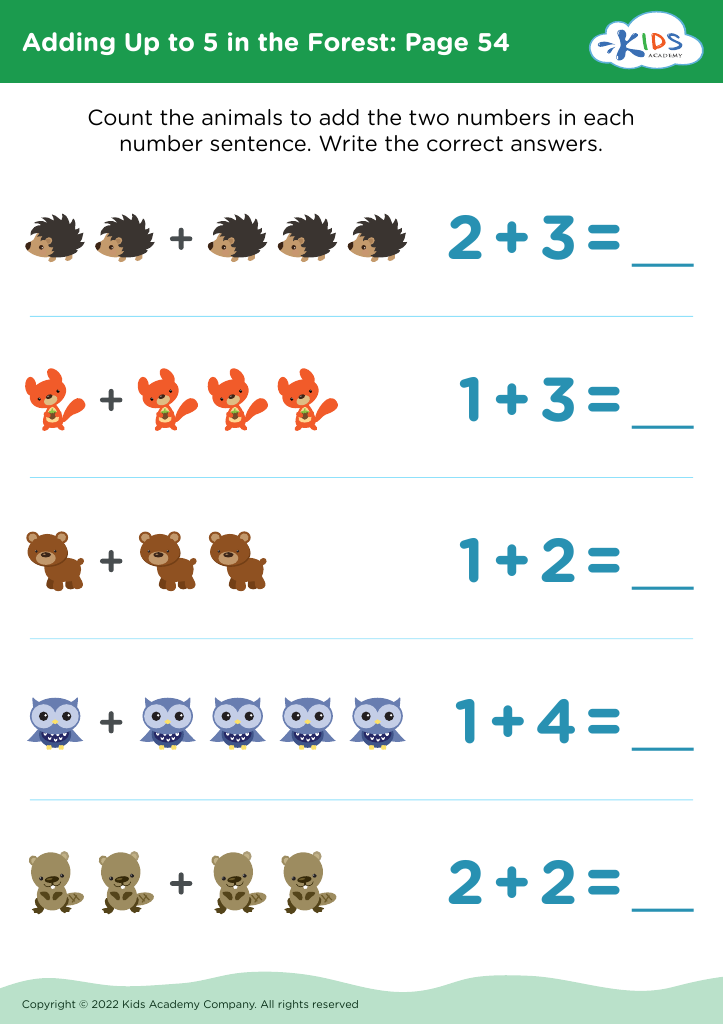
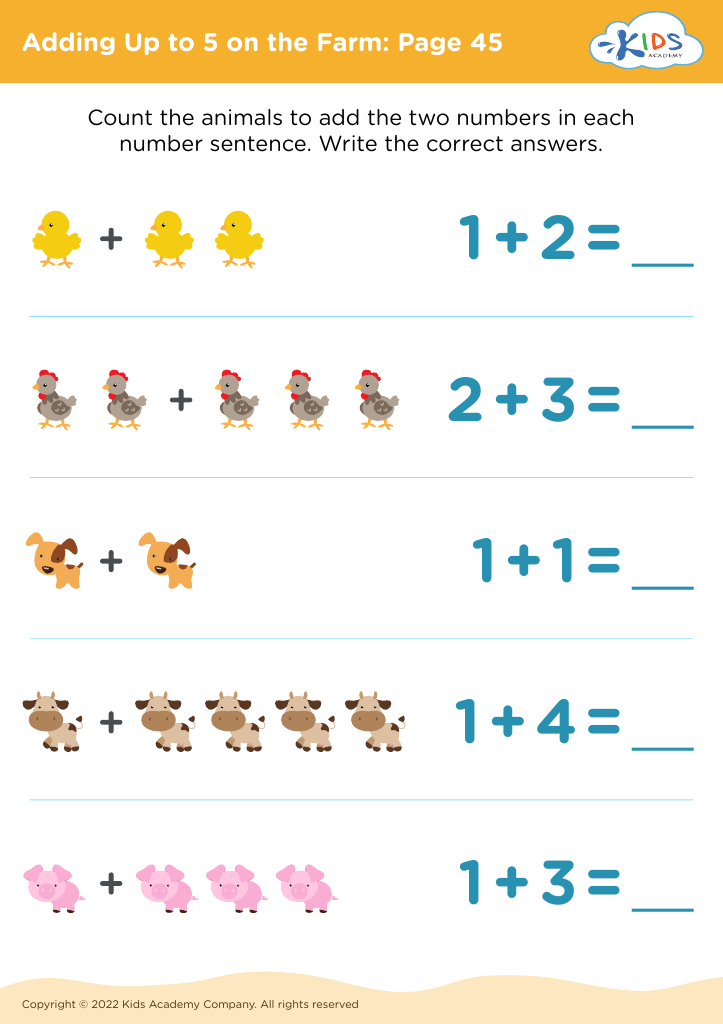

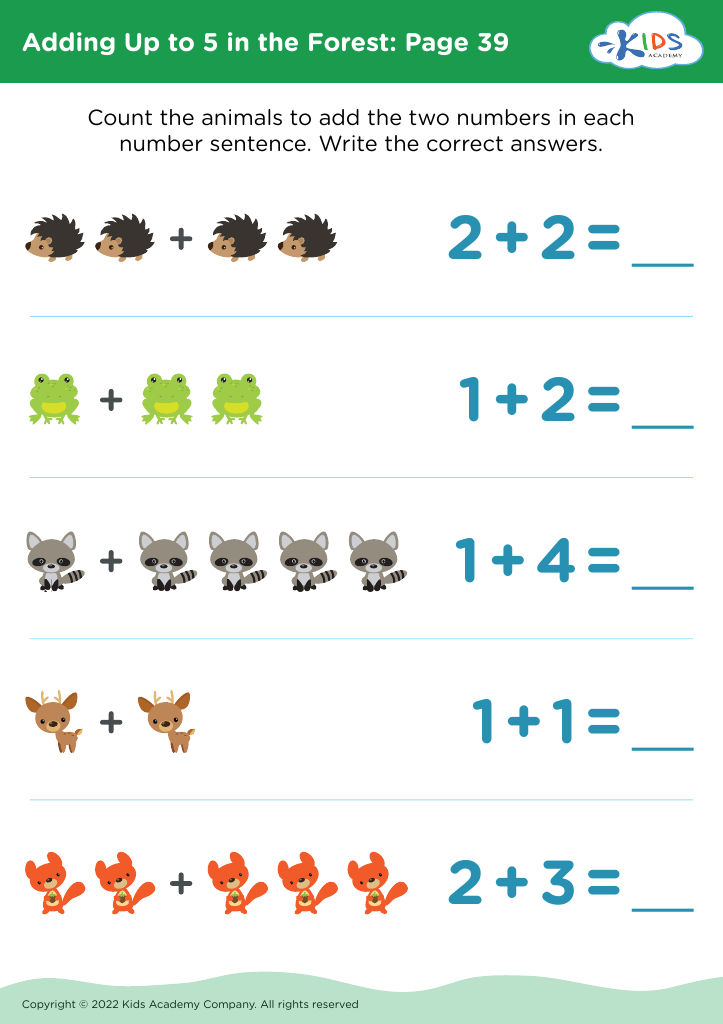
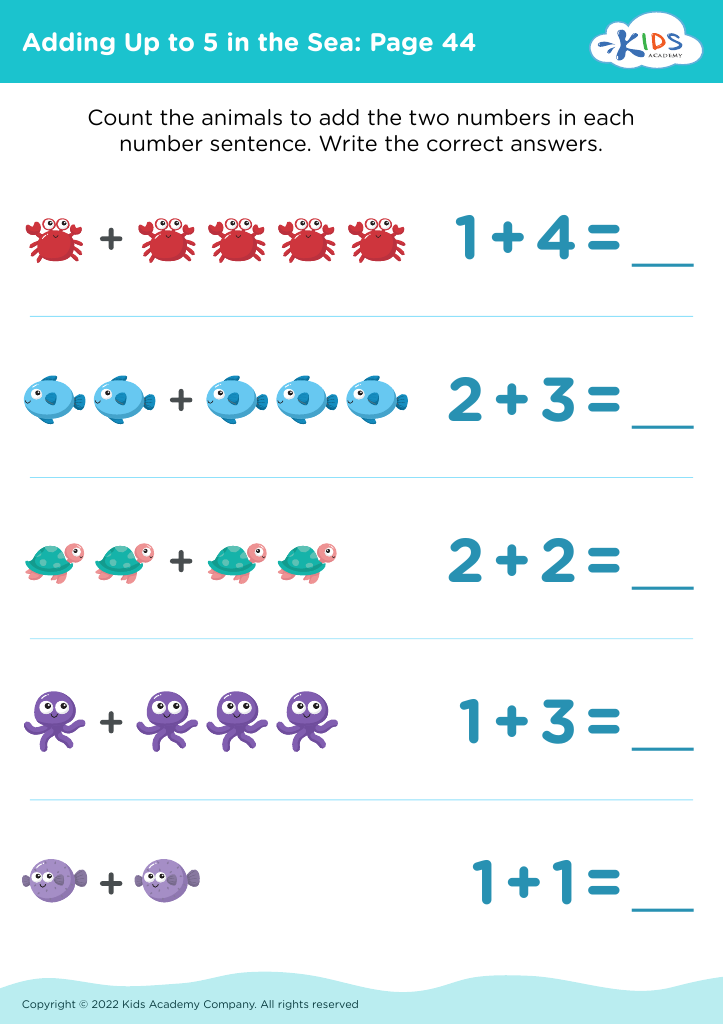
Adding in the Arctic Worksheet








Fine motor skills are crucial for children aged 4-5 as they significantly influence their overall development and daily functioning. These skills involve the use of small muscles in hands and fingers, which are essential for tasks like writing, drawing, and self-care activities such as buttoning clothing or tying shoelaces. Developing fine motor skills at this age fosters greater independence and confidence in children, encouraging them to engage actively in their learning environment.
Parents and teachers should prioritize fine motor skill activities because they lay the foundation for academic success. For instance, improved handwriting and better grip on writing tools stem from enhanced fine motor capabilities. Furthermore, these skills are closely linked to cognitive development; activities that involve tasks like building with blocks or threading beads promote problem-solving and critical thinking.
Engaging in fine motor skill activities can also be a wonderful opportunity for bonding. Fun, hands-on tasks such as arts and crafts, playdough manipulation, and simple puzzles can strengthen the parent-child or teacher-child relationship while addressing developmental milestones. Overall, a strong emphasis on fine motor skills prepares children for school readiness, self-esteem, and lifelong learning. It's a critical investment in their future success and autonomy.








