Understanding numeracy Addition Worksheets for Ages 4-5
4 filtered results
-
From - To
Discover the joy of learning with our "Understanding Numeracy Addition Worksheets" designed for children aged 4-5. Our engaging worksheets help young learners build a strong foundation in basic addition skills while fostering a love for math. Through colorful visuals and interactive activities, children will explore number recognition, counting, and simple addition concepts. These worksheets not only enhance mathematical understanding but also promote critical thinking and problem-solving abilities. Ideal for parents and educators, they provide valuable resources to make learning fun and effective. Download our worksheets today and inspire your child's journey into the exciting world of mathematics!
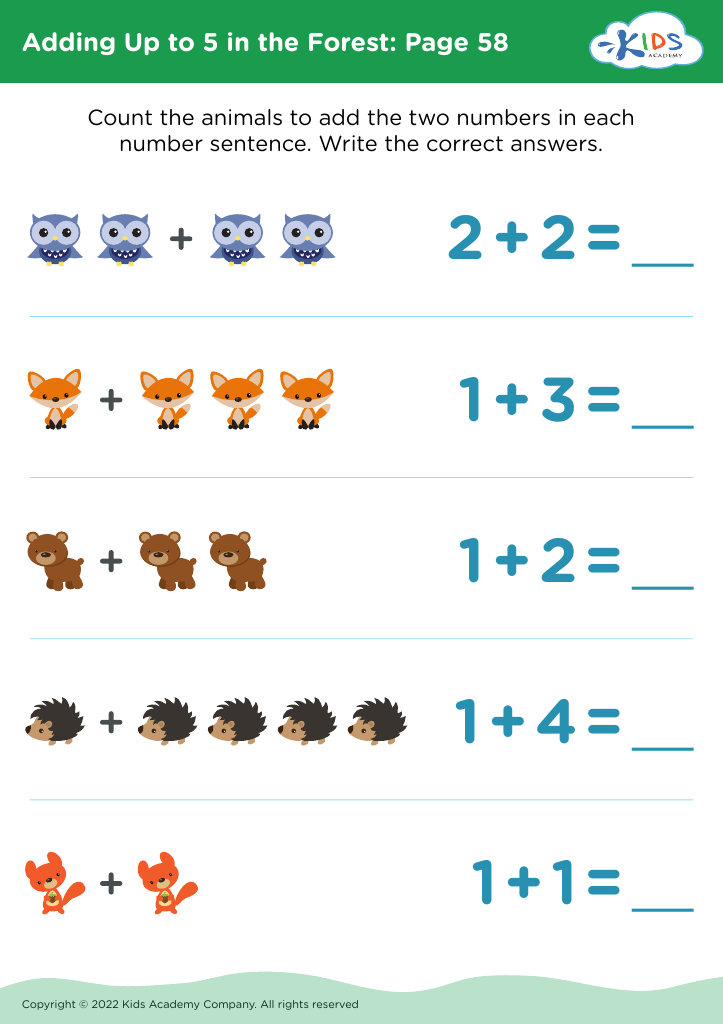
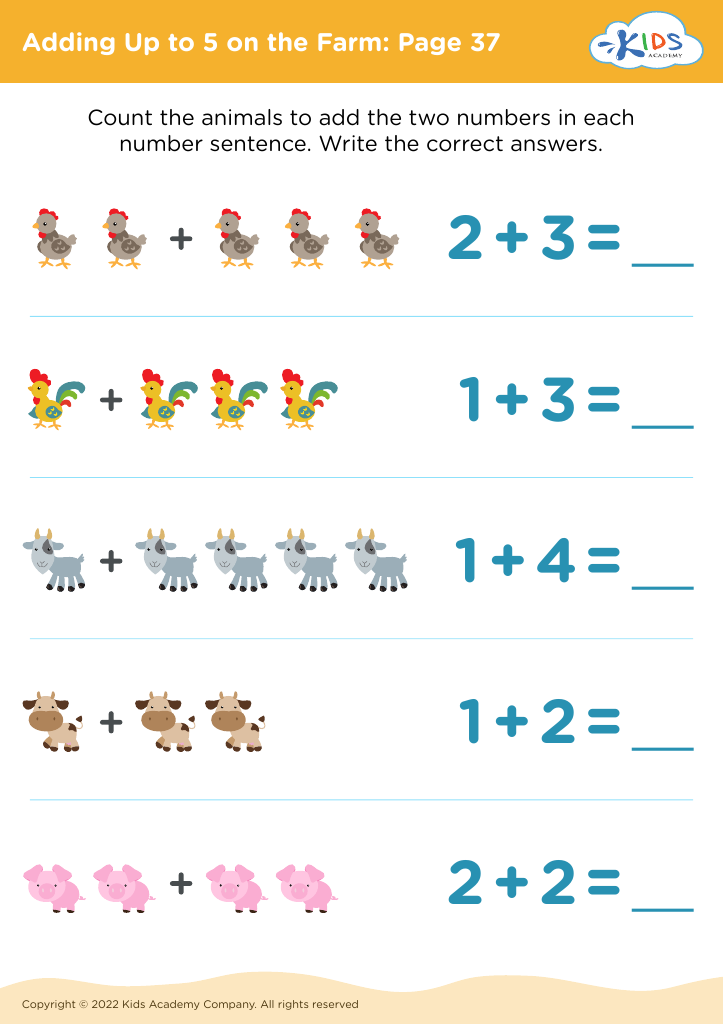
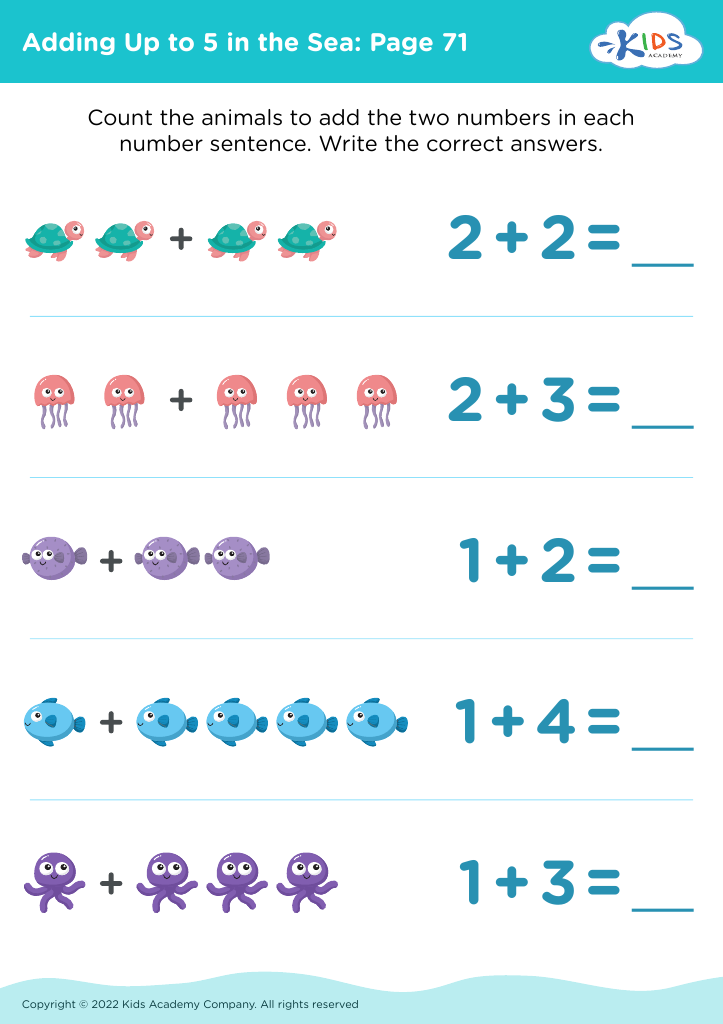
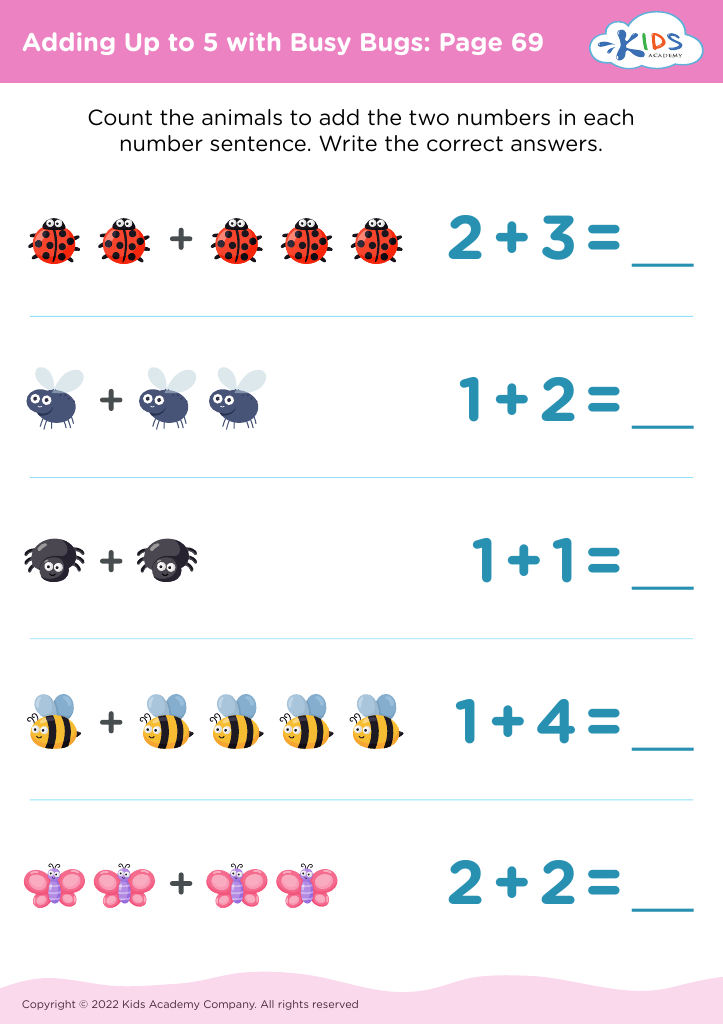








Understanding numeracy, particularly addition for ages 4-5, is foundational for a child's future mathematical learning and overall cognitive development. During these early years, children are naturally curious and eager to explore concepts like numbers and quantities. Parents and teachers should care about fostering numeracy skills because mastering addition helps young learners develop problem-solving abilities and logical thinking.
At this age, children learn through play and hands-on experiences, making it crucial for caregivers to introduce addition in fun and engaging ways. Activities like counting blocks, using fingers, and playing number games can make learning enjoyable and relatable, ensuring a stronger grasp of concepts.
Additionally, early numeracy skills contribute to greater confidence in math as children progress in their education. If children lack a solid understanding of addition, they might struggle with more complex mathematical concepts in later grades, leading to a negative attitude towards math.
Furthermore, positive early experiences can encourage a lifelong interest in mathematics, equipping children with essential skills for daily life and future academic success. By supporting children’s understanding of addition, parents and teachers help lay the groundwork for critical thinking, independence, and a healthy perspective on learning.








