Basic Addition Skills Math Worksheets for Ages 4-5 - Page 11
257 filtered results
-
From - To
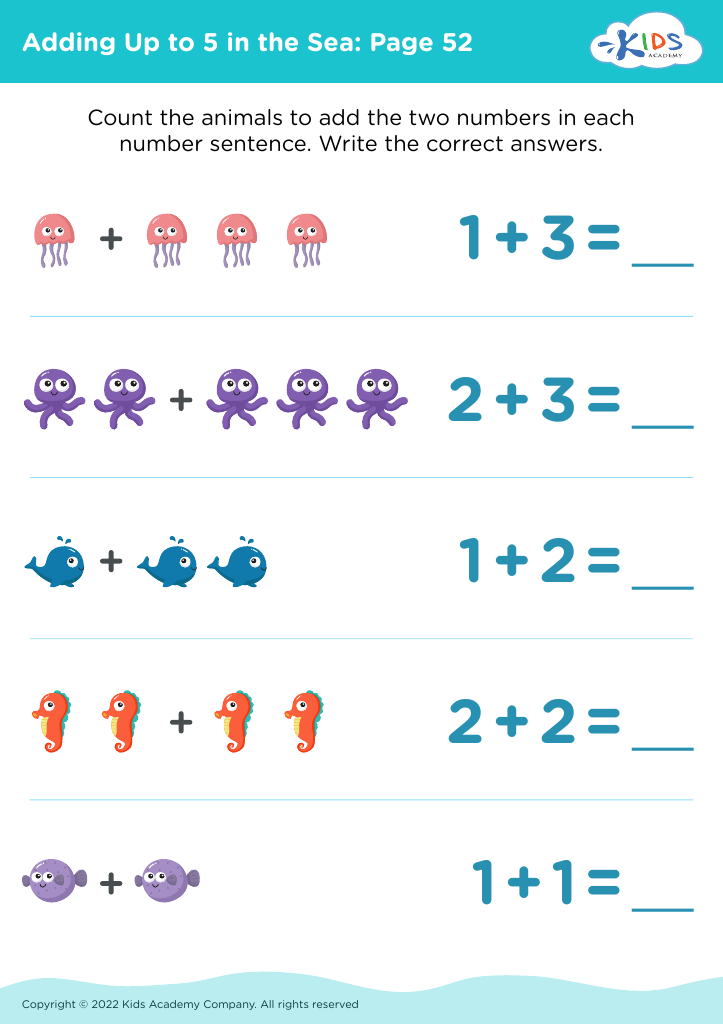
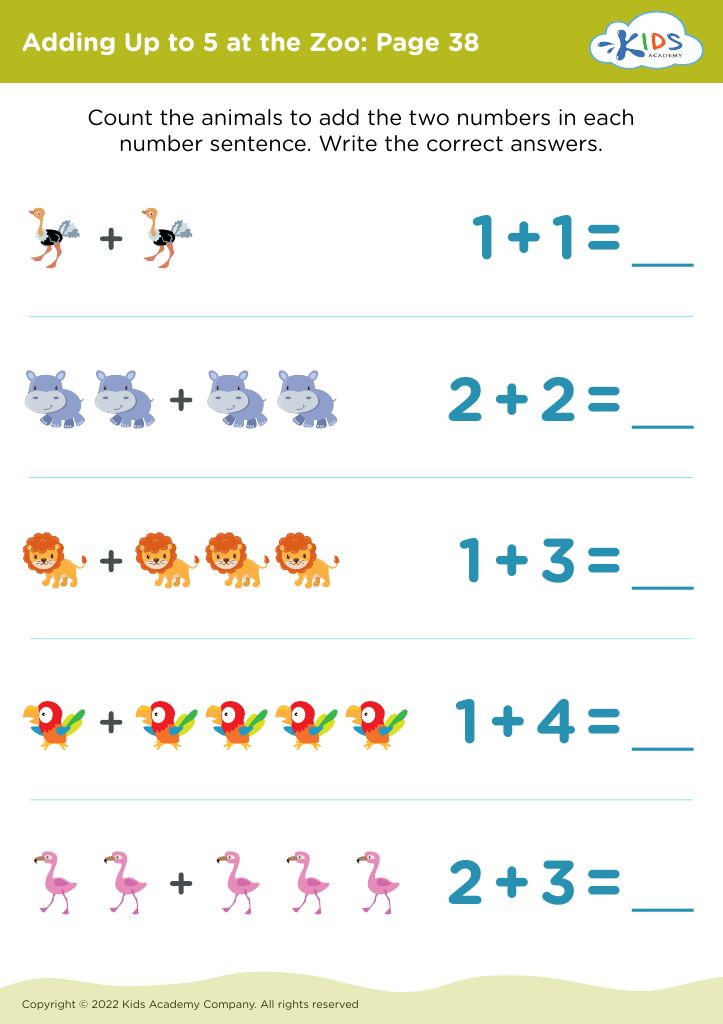
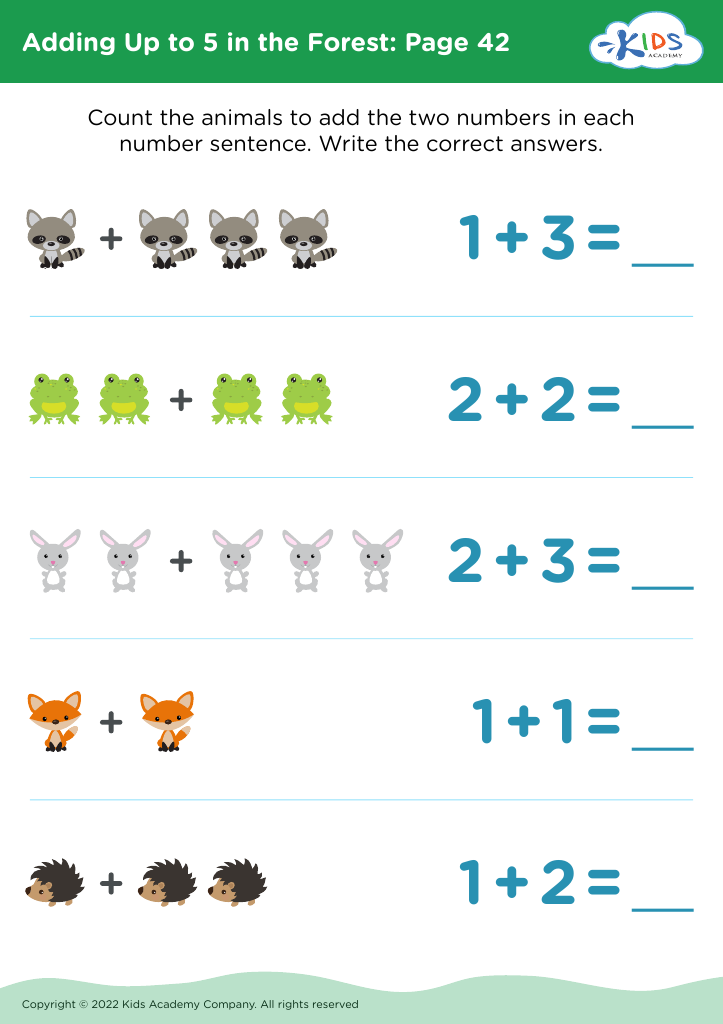
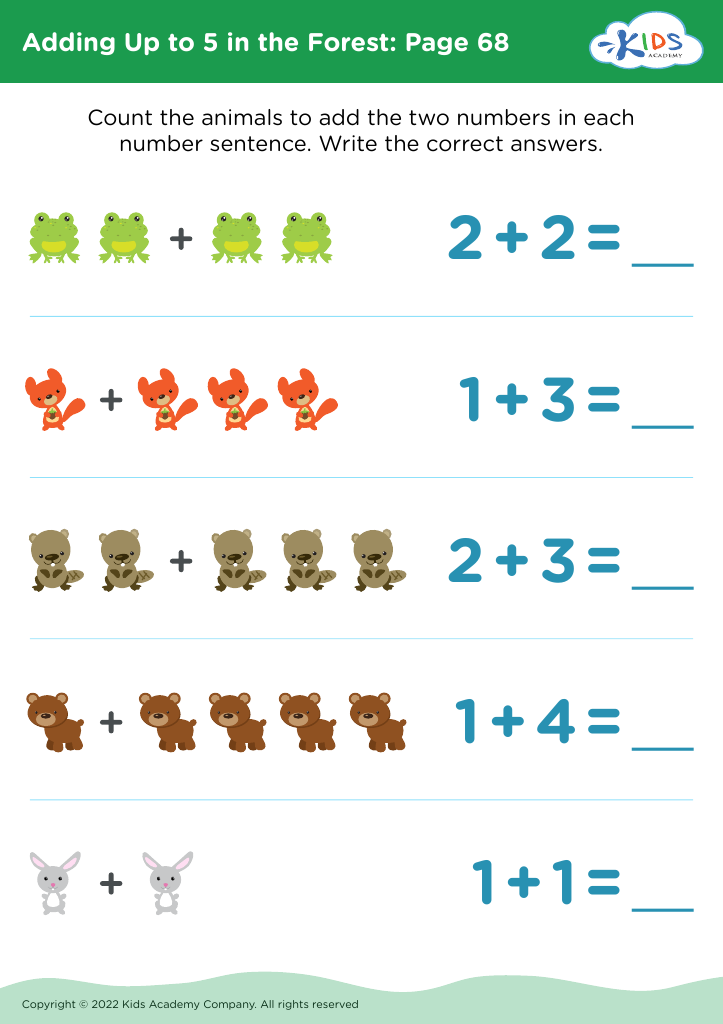
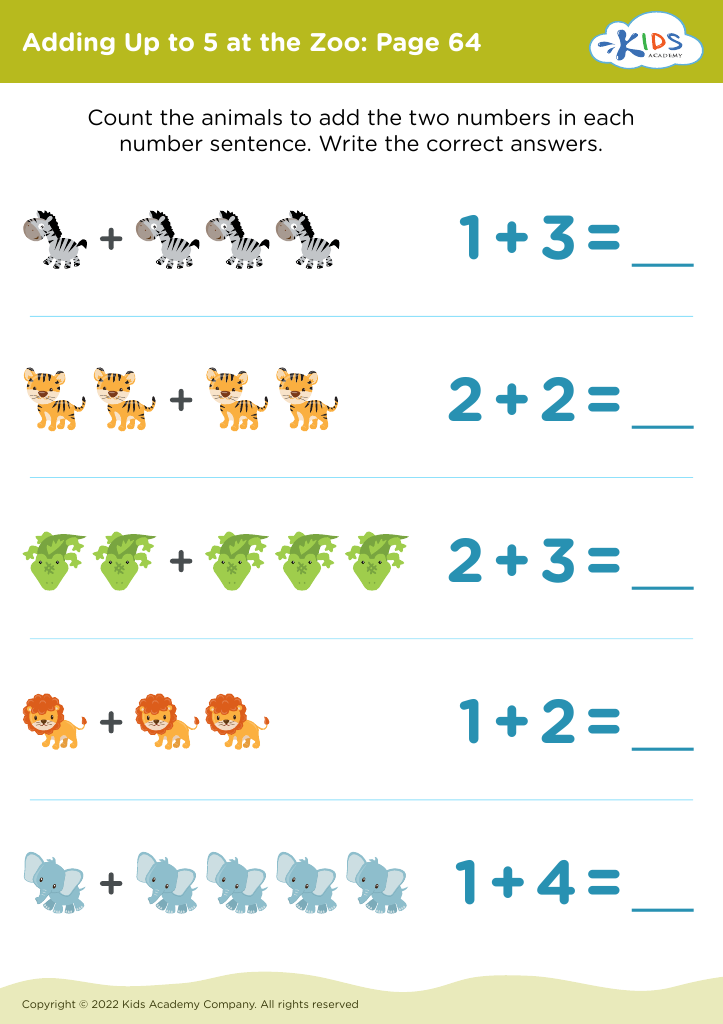
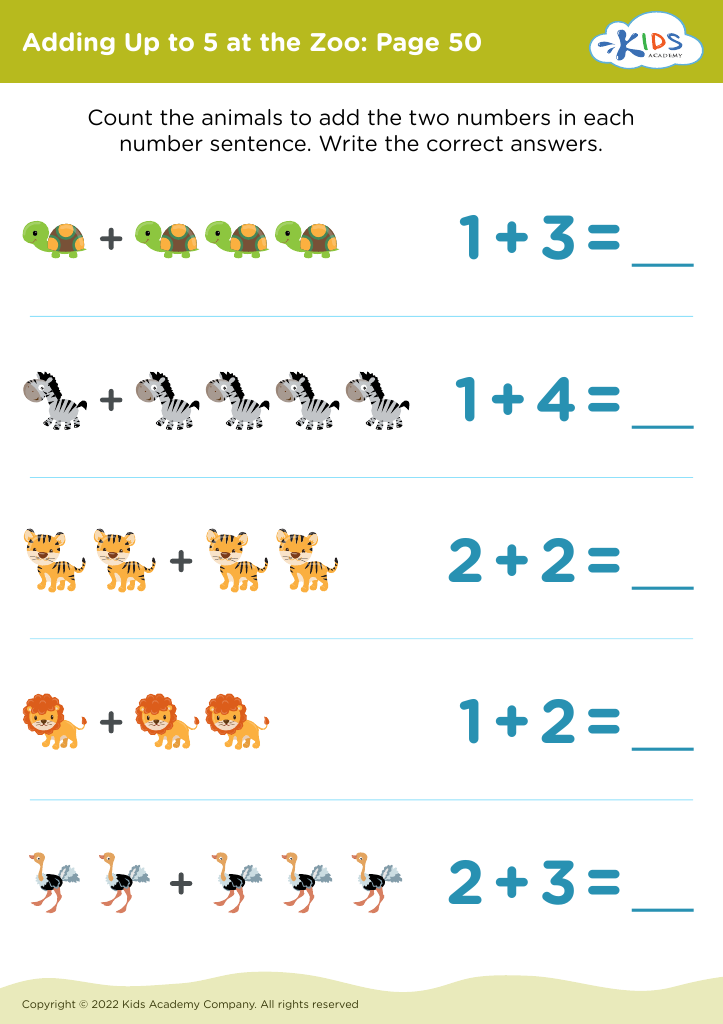
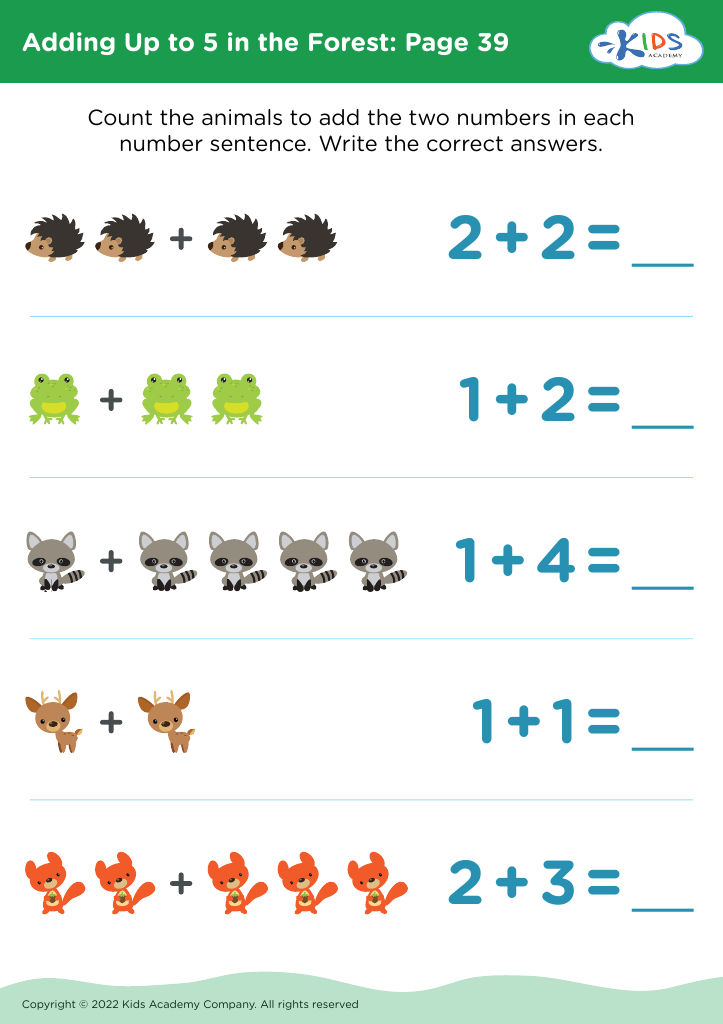
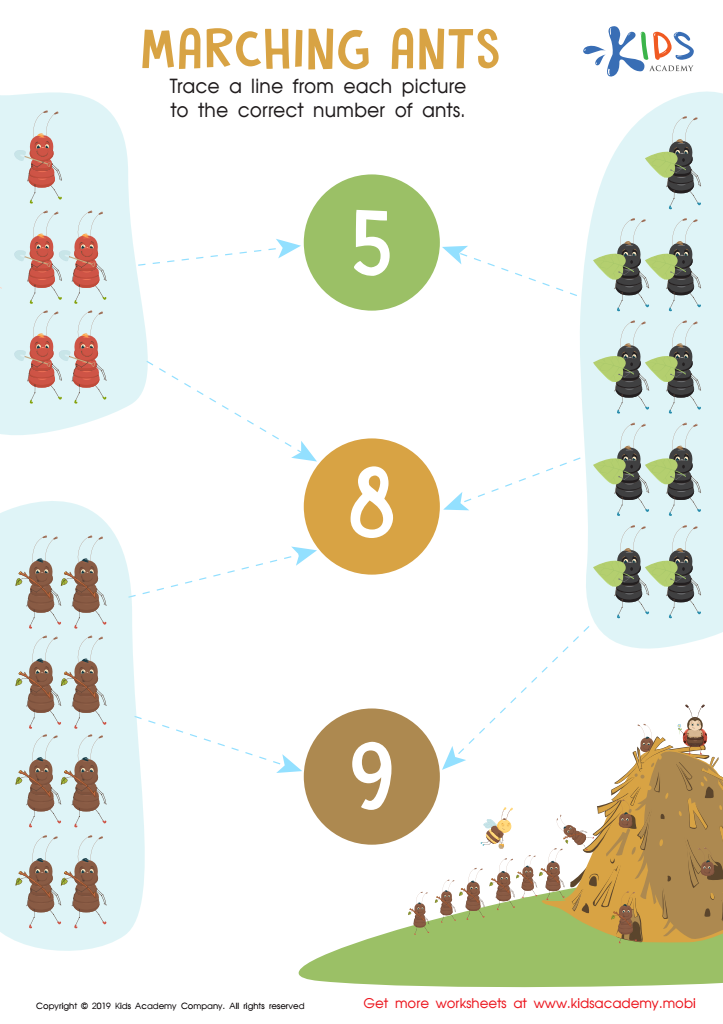
Marching Ants Worksheet
 Assign to My Students
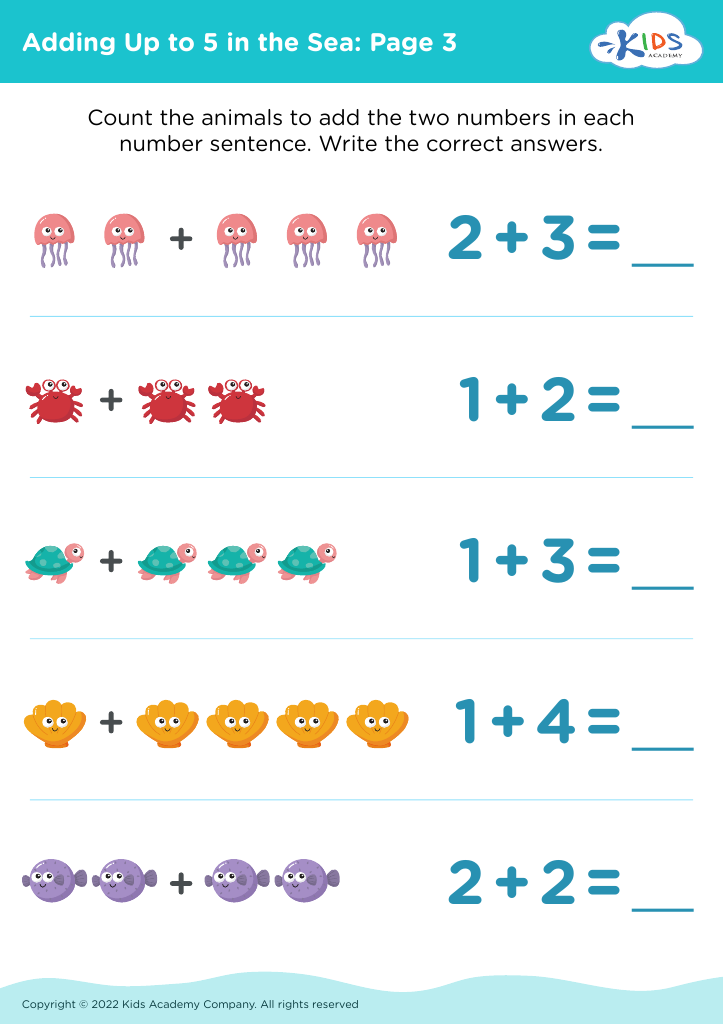
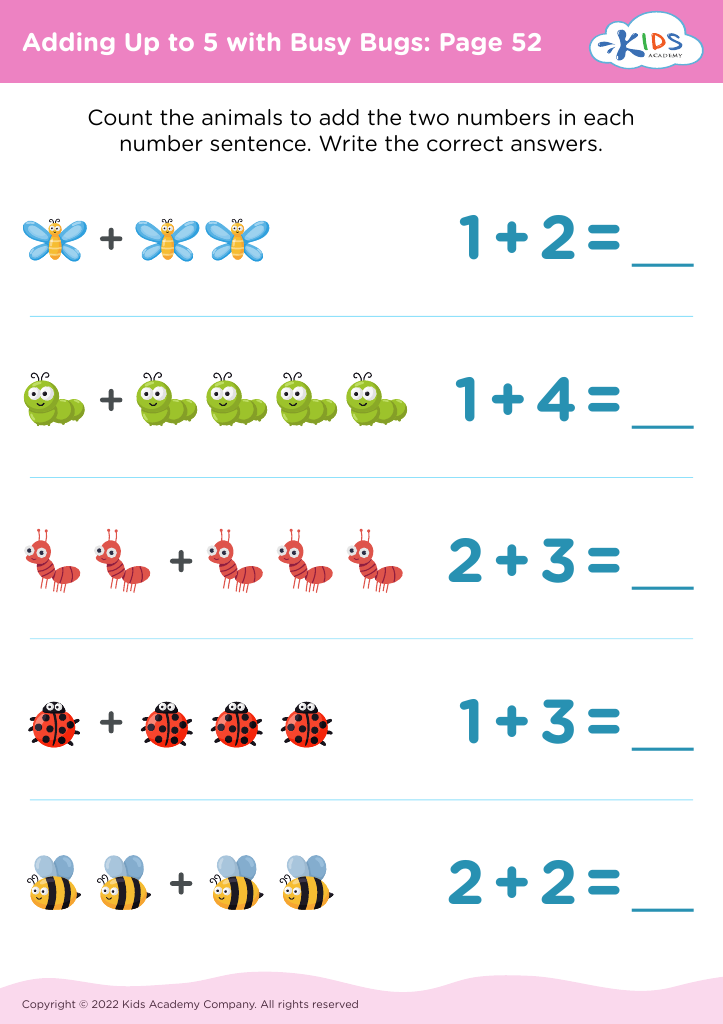
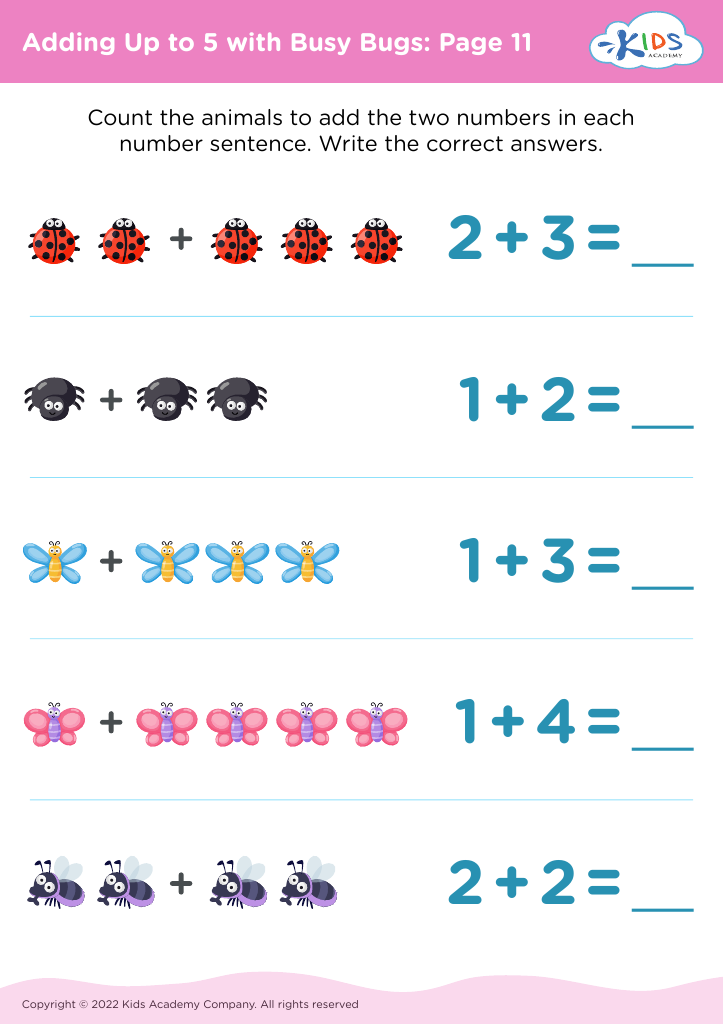
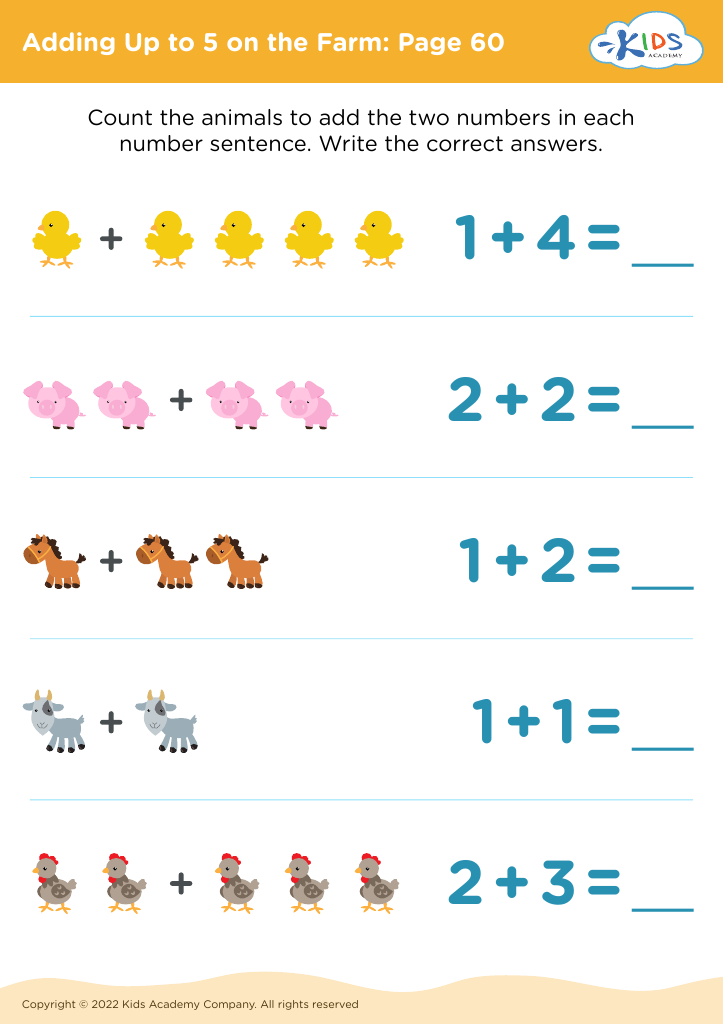
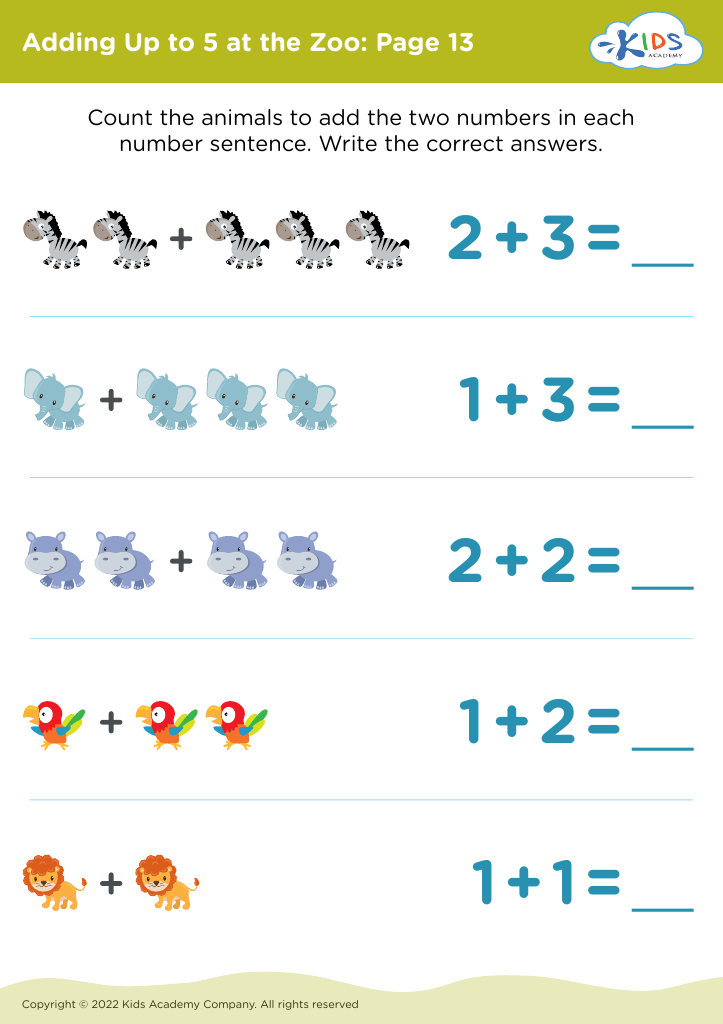
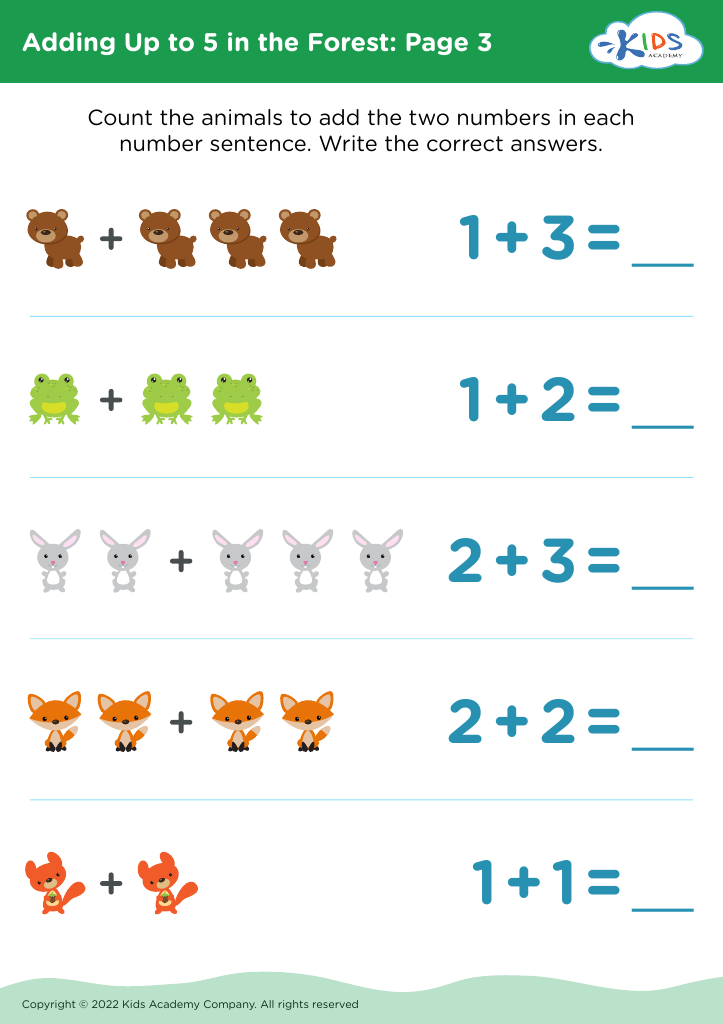
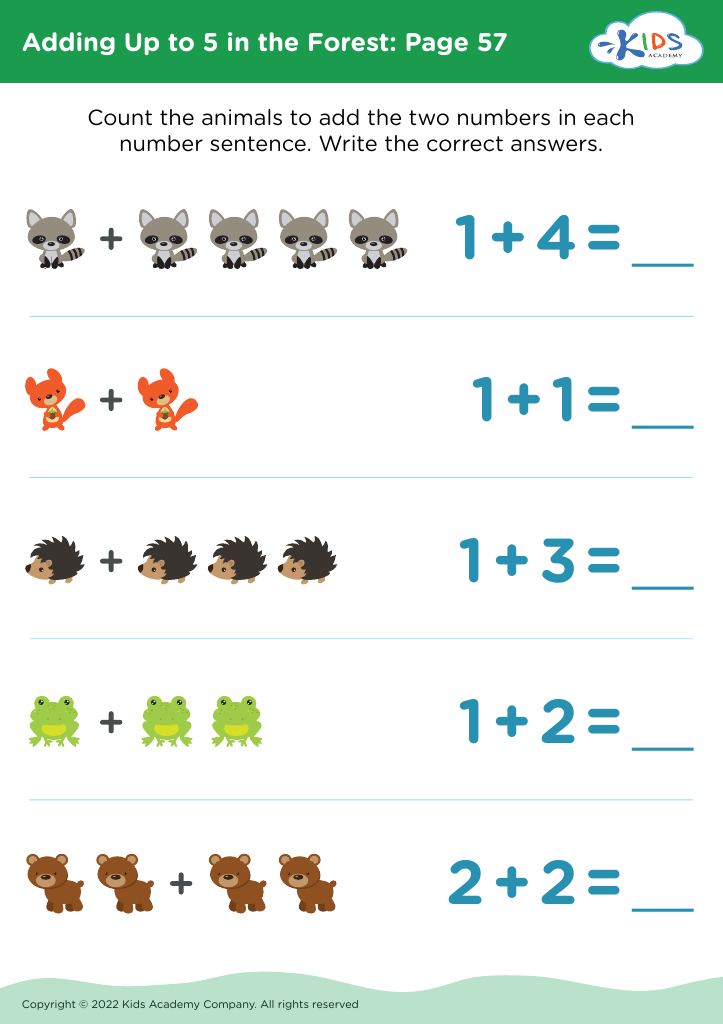
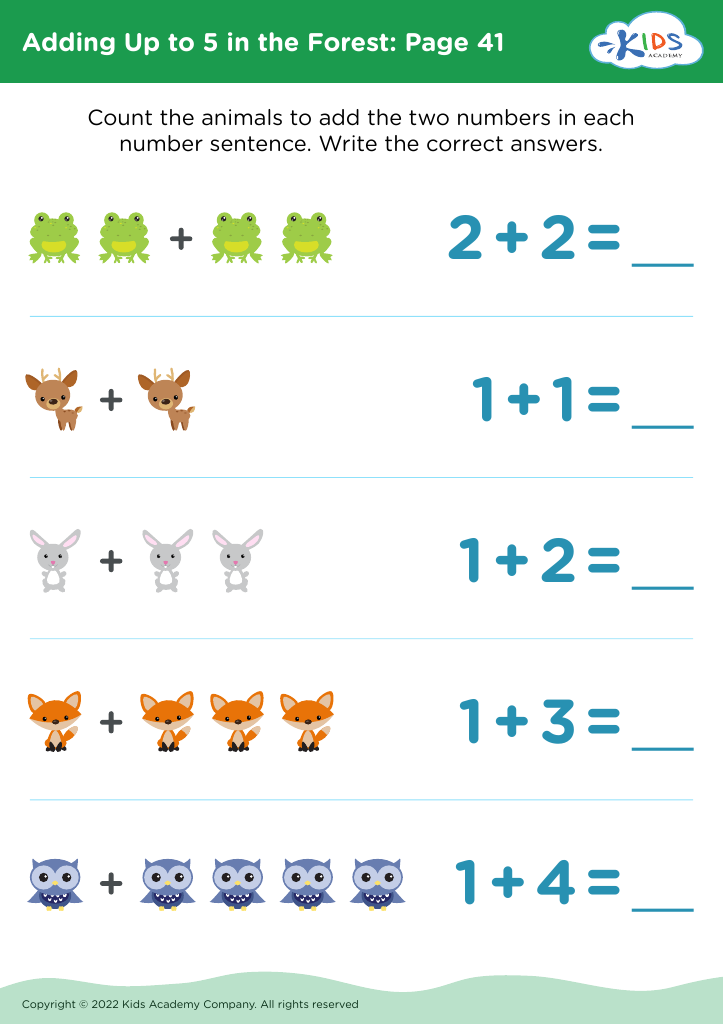
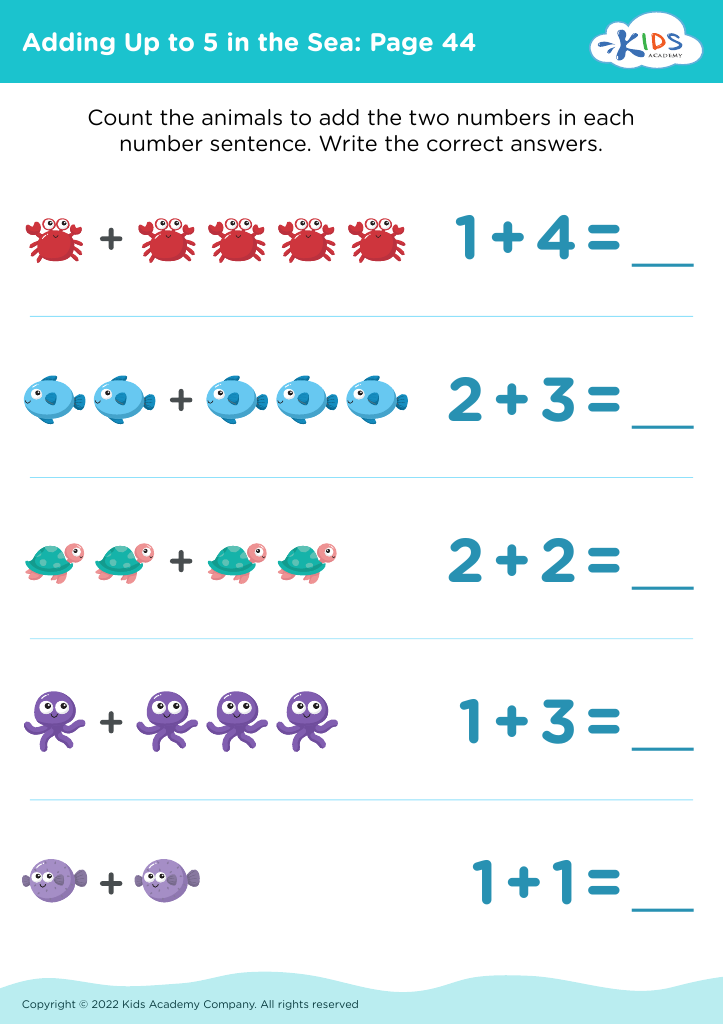








Parents and teachers play a critical role in cultivating foundational math skills, particularly with basic addition, in children ages 4-5. At this early stage, math is not just about numbers; it fosters essential cognitive development, such as logical thinking and problem-solving abilities. Basic addition serves as a fundamental building block for more complex math concepts that children will encounter later in their academic journey, including subtraction, multiplication, and division.
Teaching addition at this age helps instill a sense of confidence and competence in children, encouraging a positive attitude toward math. It promotes a child's ability to recognize patterns, relationships, and their significance in everyday life. For instance, learning that 2 apples plus 2 apples equal 4 apples makes abstract concepts more tangible.
Moreover, mastering basic math skills early on is linked to better performance in other subjects and standardized tests. It equips children with the tools needed to process information, make decisions, and think critically. By investing time in teaching basic addition, parents and teachers help set the groundwork for lifelong learning and academic success. Additionally, early math skills correlate with better social-emotional development, as children learn to share joy and success with their peers through collaborative problem-solving activities.








