Understanding comparisons Math Worksheets for Ages 4-5
3 filtered results
-
From - To
Explore our "Understanding Comparisons Math Worksheets" designed specifically for children aged 4-5. These engaging activities help young learners grasp essential concepts of comparison, such as bigger vs. smaller, taller vs. shorter, and more vs. less. Through colorful illustrations and interactive exercises, kids will develop their critical thinking and observational skills while having fun. Each worksheet is carefully crafted to support early math skills and boost confidence in a foundational understanding of comparisons. Ideal for home or classroom use, these resources encourage exploration and learning, setting the stage for future mathematical achievements. Start your child’s journey in math with our delightful comparison worksheets today!
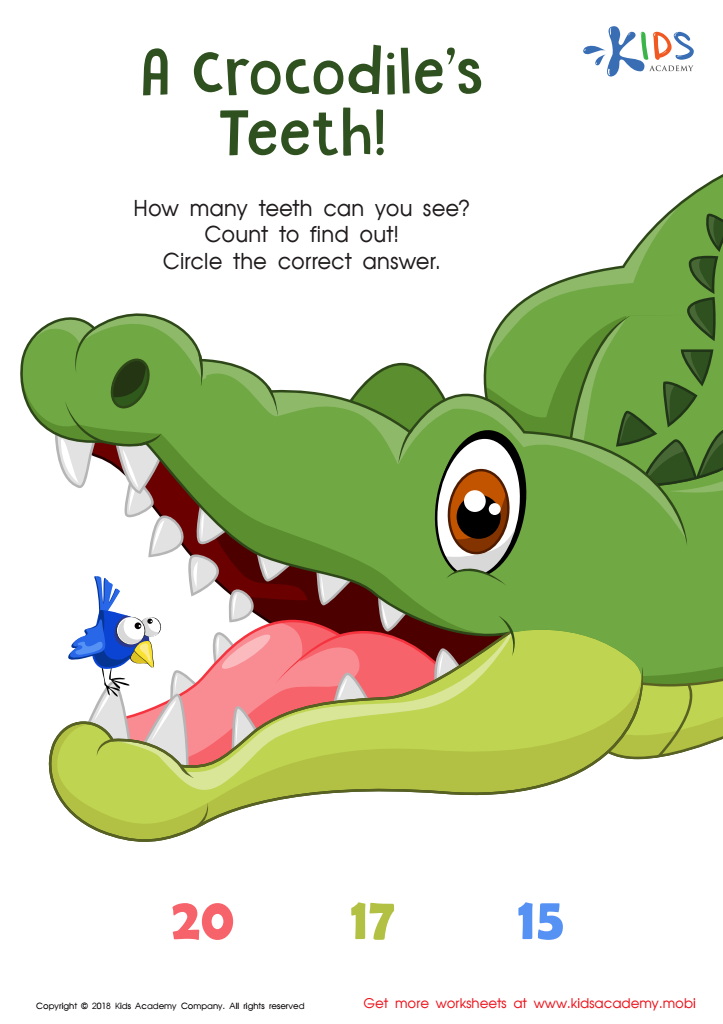
A Crocodile's Teeth Worksheet
 Assign to My Students
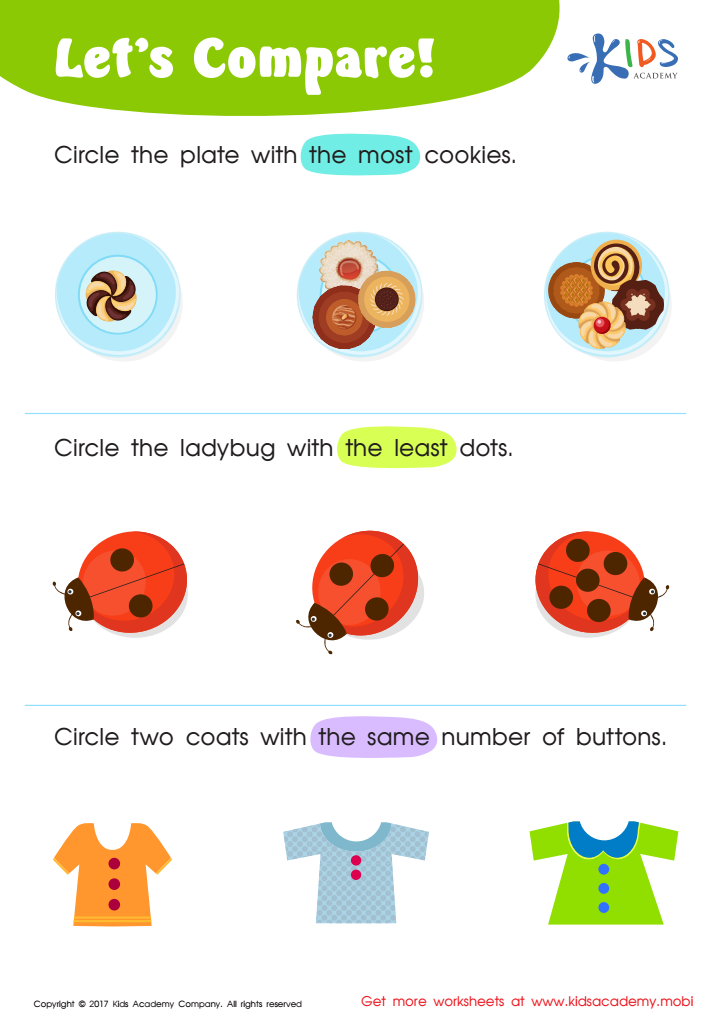
Matching: Classifying Toys by Size Worksheet
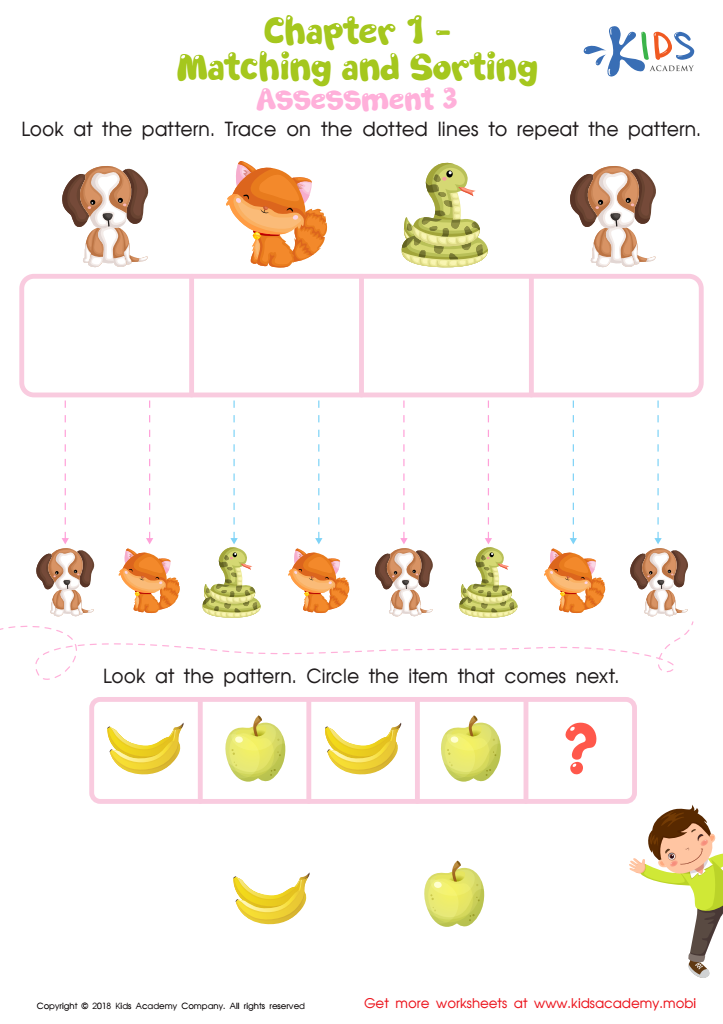
Matching and Sorting for Preschool: Assessment 3 Worksheet







Understanding comparisons in math is crucial for young learners aged 4-5, and here’s why parents and teachers should care. At this stage, children are developing foundational skills that set the groundwork for their future academic success. Learning how to compare quantities—such as more vs. less or bigger vs. smaller—enhances their critical thinking and problem-solving abilities.
By mastering these concepts, children become capable of analyzing their surroundings and making informed decisions based on size, quantity, and attributes. For example, comparing objects can help them make sense of everyday experiences, such as sharing toys or dividing snacks, fostering social interactions and cooperation.
Additionally, comprehension of comparisons fuels language development. As children articulate their observations and reasoning, they expand their vocabulary and improve communication skills. The skills they cultivate will translate into more advanced mathematical concepts, such as addition and subtraction, once they progress in their education.
Involving parents and teachers in this learning process reinforces the importance of comparison skills. Engaging in activities—such as sorting, measuring, or playing comparison games—can make learning fun and meaningful, ensuring that children not only grasp these concepts but also enjoy the journey of learning math.








