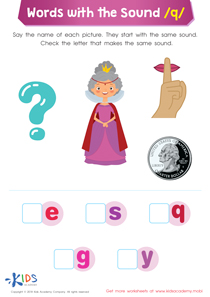
Word Recognition Consonant Digraphs Worksheets for Ages 4-6
5 filtered results
Difficulty Level
Grade
Age
-
From - To
Subject
Activity
Standards
Discover our engaging Word Recognition Consonant Digraphs Worksheets designed specifically for ages 4-6! These interactive printables provide young learners with essential practice in identifying and recognizing consonant digraphs, enhancing their reading skills and vocabulary. Each worksheet features fun activities and colorful visuals that make learning enjoyable and effective. By utilizing these resources, children will improve their phonemic awareness and build a strong foundation for future literacy. Perfect for classroom use or home learning, our worksheets cater to various learning styles, helping every child succeed. Start fostering a love for reading with our appealing consonant digraphs worksheets today!
Favorites
With answer key
Interactive
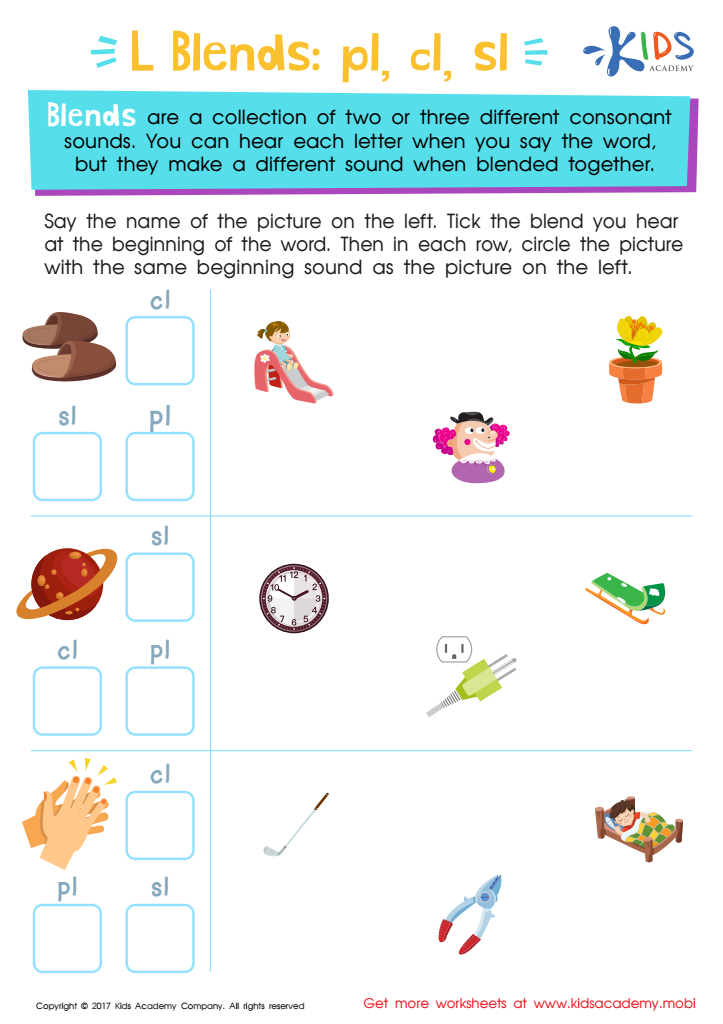
L Blends: "Pl", "Cl" and "Sl" Printable
This printable worksheet will help your child recognize and identify the Pl, Cl, and Sl consonant blends, sound them out, and identify them in print. Improve your child's reading and writing skills with fun and colorful phonics practice!
 Assign to My Students
L Blends: "Pl", "Cl" and "Sl" Printable
Worksheet
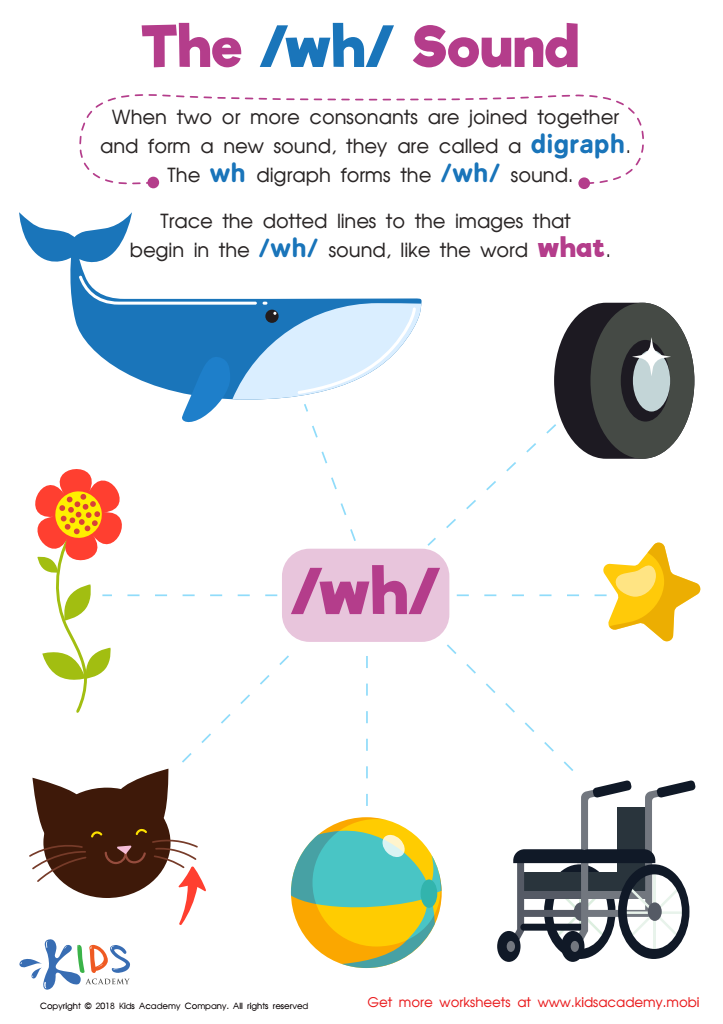
The /wh/ Sound Worksheet
Digraphs join two consonants to make a new sound, like /wh/. Give examples, like "whale", "when" and "why". Ask kids to name pictures in a worksheet and trace dotted lines to images beginning with the /wh/ sound; "what" is one example.
The /wh/ Sound Worksheet
Worksheet
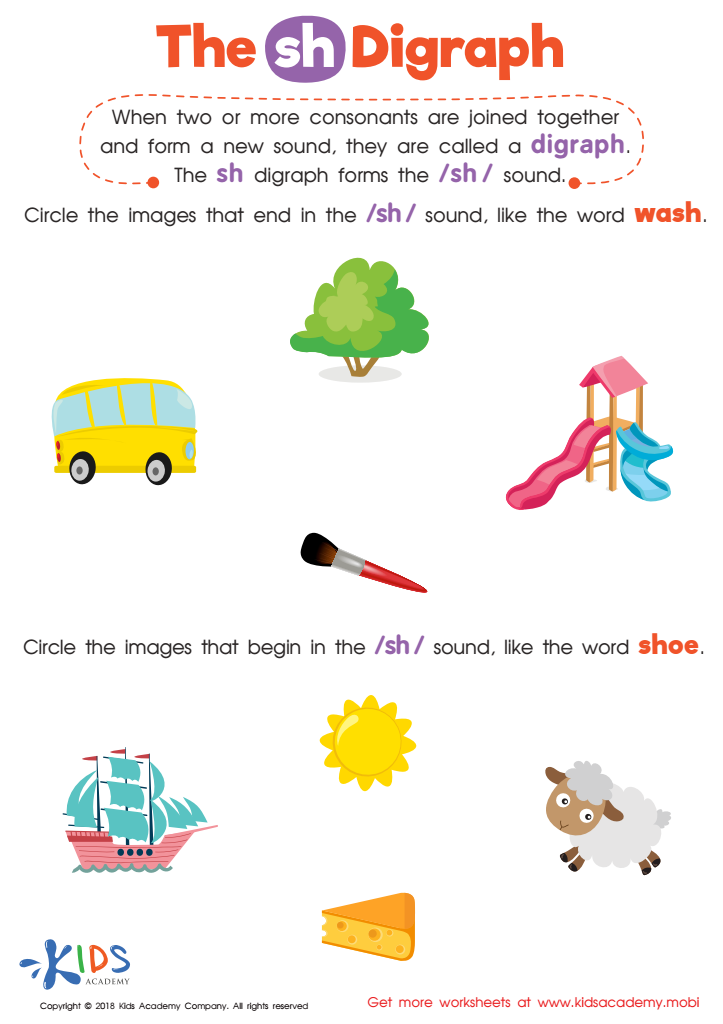
The SH Digraph Worksheet
There are many phonetic sounds, each with its own unique sound. When two or more consonants are combined to create a new sound, it's called a digraph. Example: the sh digraph creates the /sh/ sound. Have kids look at the pictures and say the words aloud. Help them circle the images ending with /sh/, like 'wash'.
The SH Digraph Worksheet
Worksheet
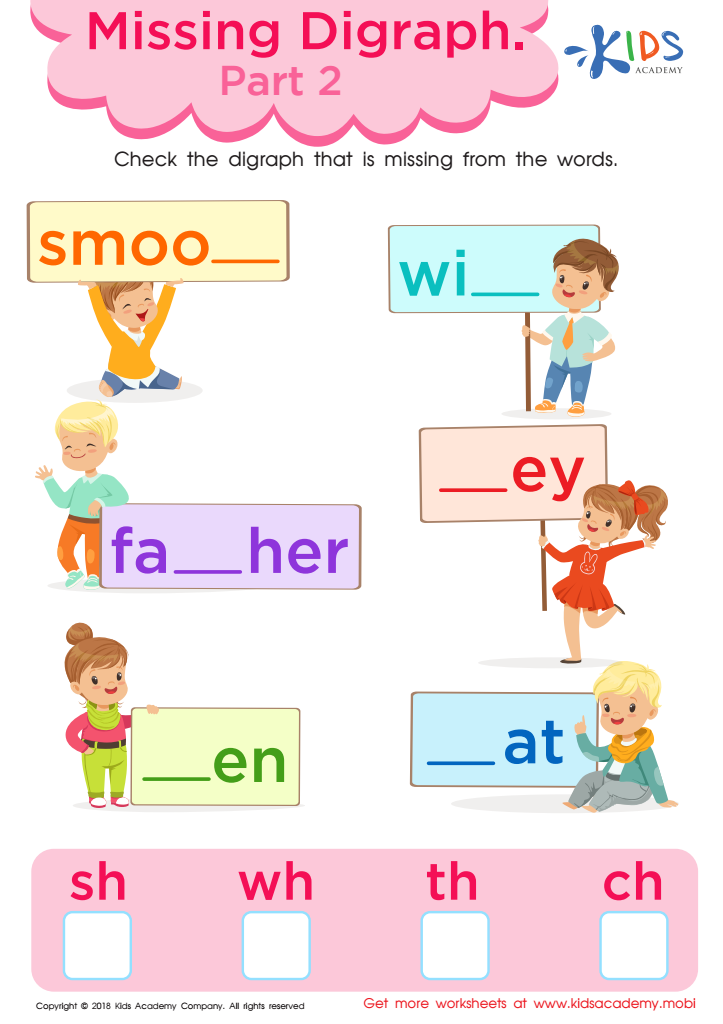
Missing Digraph: Part 2 Worksheet
Practice the "th" digraph with this fun worksheet from Kids Academy! See how it appears at the beginning, middle, or end of words and help learners fill in the blanks. Check if they got it right by finding the th digraph at the bottom!
Missing Digraph: Part 2 Worksheet
Worksheet
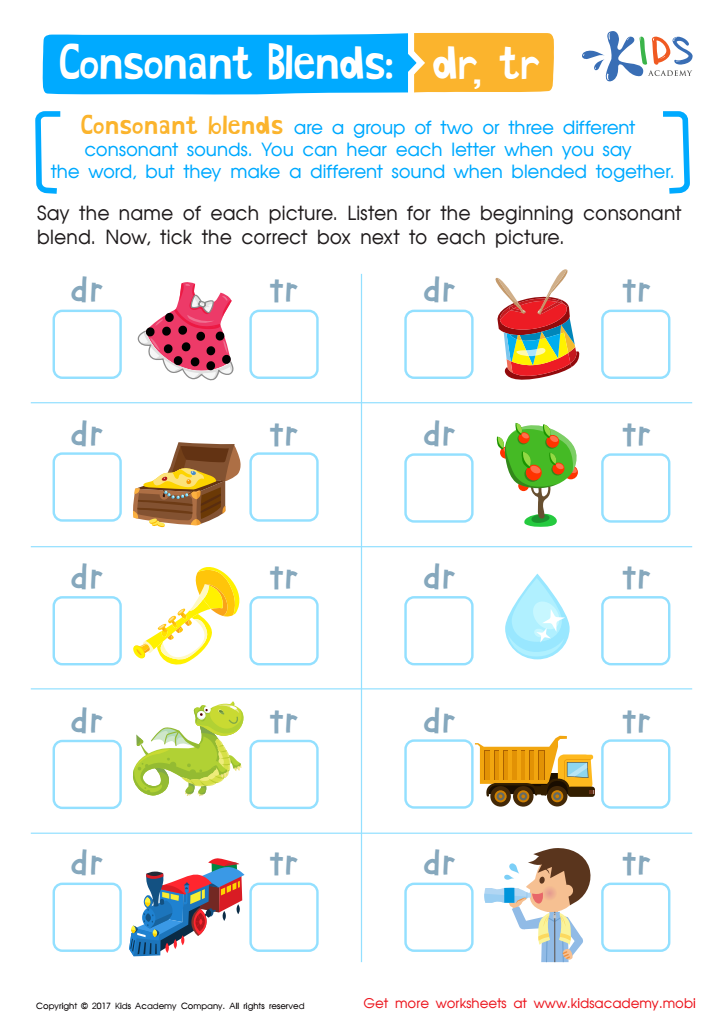
Consonant Blends: "Dr" and "Tr" Printable
Pictures of the words provide a visual cue, and sound-outs help with auditory cues.
Consonant Blends: "Dr" and "Tr" Printable
Worksheet
Join Kids Academy for Free
Who is primarily going to use this learning content?


Word recognition, especially in the context of consonant digraphs, is a fundamental skill for young learners aged 4 to 6. Consonant digraphs, which are pairs of consonants that create unique sounds, such as "ch," "sh," and "th," are critical building blocks in early literacy development. Parents and teachers should care about this aspect of reading instruction for several reasons.
Firstly, mastering consonant digraphs enhances phonemic awareness, helping children decode words more effectively. As children recognize these sounds, their confidence in reading increases, fostering a love for literature and self-directed learning.
Secondly, early familiarity with consonant digraphs prepares children for more complex reading and writing skills later on. Recognizing patterns in language sets a solid foundation for spelling and vocabulary development, crucial for academic success.
Furthermore, in a world rich with print, understanding consonant digraphs enables children to engage with their environment, making connections between written and spoken language. This engagement supports cognitive development and nurtures communication skills.
Ultimately, integrating consonant digraphs into early education cultivates proficient readers, ready to navigate their academic journeys. Parents and teachers’ support in this area lays the groundwork for lifelong learning and a profound appreciation for reading.