Sound differentiation Alphabet Worksheets for Ages 4-6
3 filtered results
-
From - To
Your child will love enhancing their phonemic awareness with our Sound Differentiation Alphabet Worksheets designed specifically for ages 4-6! These engaging and colorful worksheets guide young learners through identifying and differentiating sounds associated with each letter of the alphabet. Tailored for early learners, the activities feature fun illustrations and exercises that make learning to recognize and pronounce sounds exciting. Perfect for homeschooling or supplementary classroom resources, these worksheets promote essential early literacy skills in a playful way. Help your child build a strong foundation in reading with our easy-to-follow sound differentiation activities, making learning both effective and enjoyable!
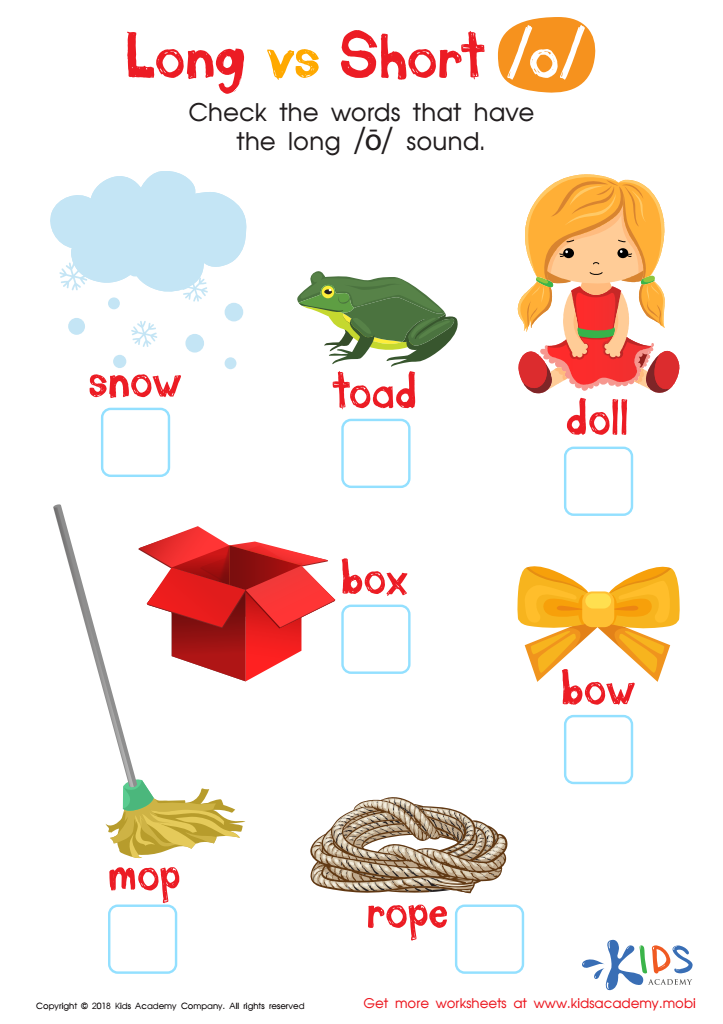
Long vs Short O Reading Worksheet
 Assign to My Students
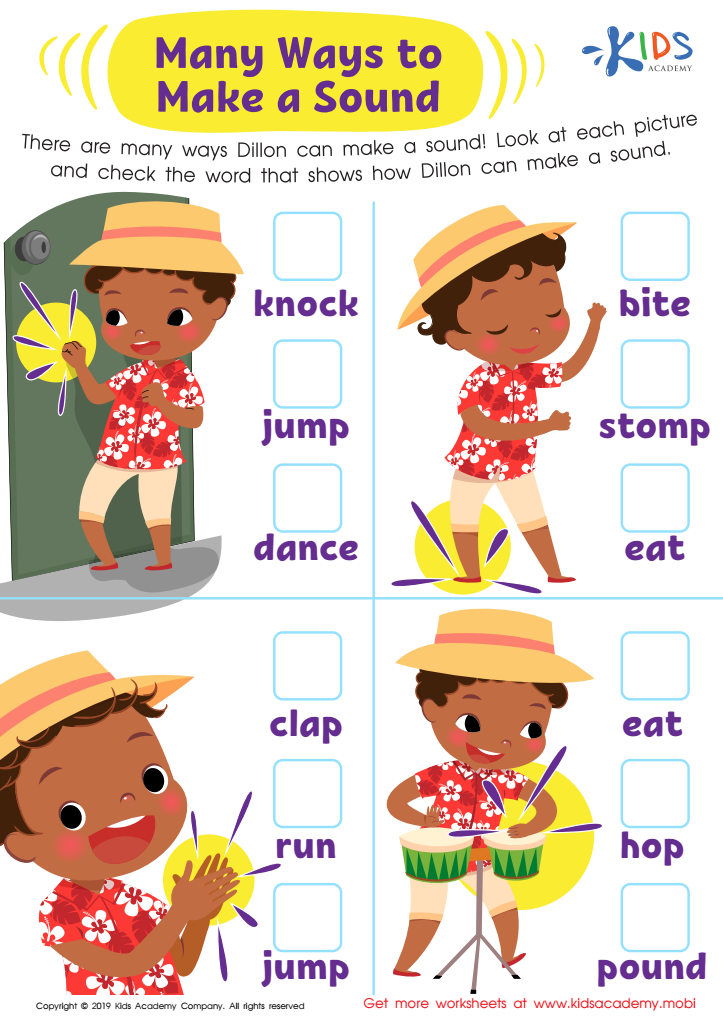
Many Ways to Make a Sound Worksheet
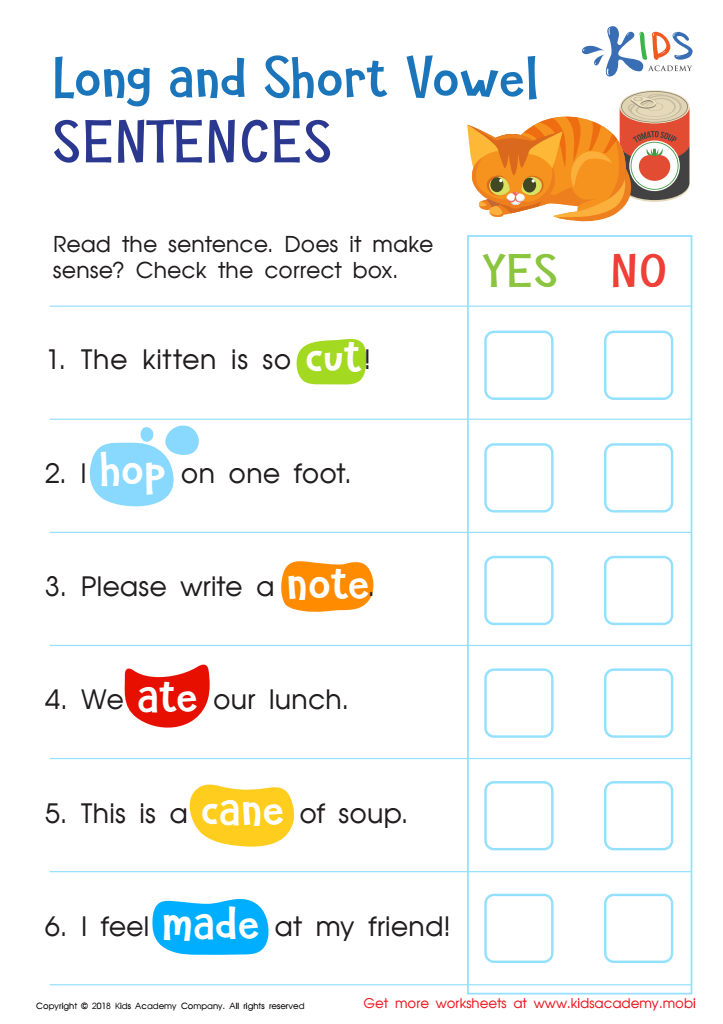
Long and Short Vowel Sentences: Assessment Worksheet








Sound differentiation in the alphabet is crucial for children aged 4-6 because it lays the foundation for effective reading and communication skills. At this age, children are developing their phonemic awareness, which is the ability to hear, identify, and manipulate sounds in spoken words. Understanding sound differentiation helps them distinguish between similar sounds, which is essential for recognizing letters and their corresponding phonemes.
Parents and teachers play a significant role in fostering this skill. By incorporating sound differentiation activities, such as rhyming games, alliteration exercises, and sound matching tasks, caregivers can create an engaging learning environment. These activities not only enhance auditory discrimination but also stimulate cognitive development, enabling children to process language effectively.
Moreover, sound differentiation supports early literacy, as children who can identify sounds quickly establish a strong connection between letters and their sounds, assisting in spelling and reading comprehension later on. In an era where literacy rates are paramount for academic success, prioritizing sound differentiation is vital. It empowers children with the tools they need to explore books, expand their vocabulary, and ultimately communicate confidently. In summary, supporting sound differentiation benefits children’s long-term educational journeys and builds a solid foundation for lifelong learning.







