
Visual discrimination Alphabet Worksheets for Ages 4-6
5 filtered results
Difficulty Level
Grade
Age
-
From - To
Subject
Activity
Standards
Enhance your child's early literacy skills with our Visual Discrimination Alphabet Worksheets designed for ages 4-6! These engaging worksheets help young learners differentiate between letters through fun and interactive activities. By focusing on visual discrimination, children develop critical skills needed for reading and writing. Our colorful and stimulating worksheets encourage kids to identify similarities and differences among letters, fostering their ability to recognize letters quickly and accurately. Perfect for homeschoolers or classroom use, these worksheets not only strengthen letter recognition but also promote hand-eye coordination and fine motor skills. Download today to give your child a head start in their learning journey!
Favorites
With answer key
Interactive
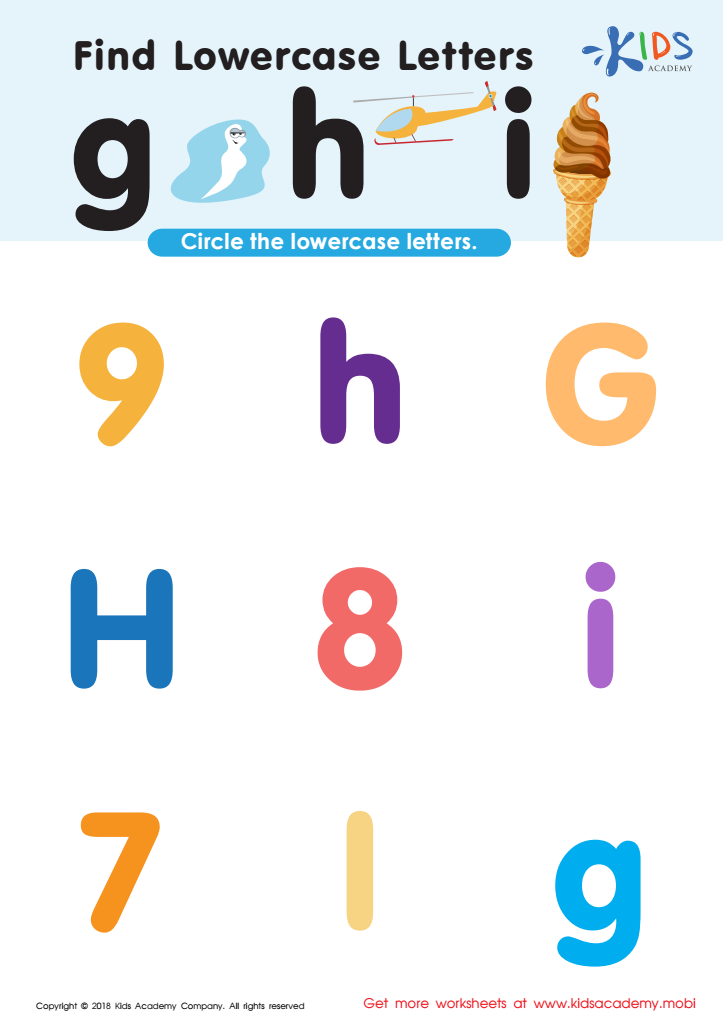
Find Lowercase Letters g h i Worksheet
Turn learning into a fun journey with your child! Use this free worksheet to find and circle the lowercase letters hidden amongst uppercase letters and numbers. Your child will understand what you're teaching them as they enjoy the search.
 Assign to My Students
Find Lowercase Letters g h i Worksheet
Worksheet
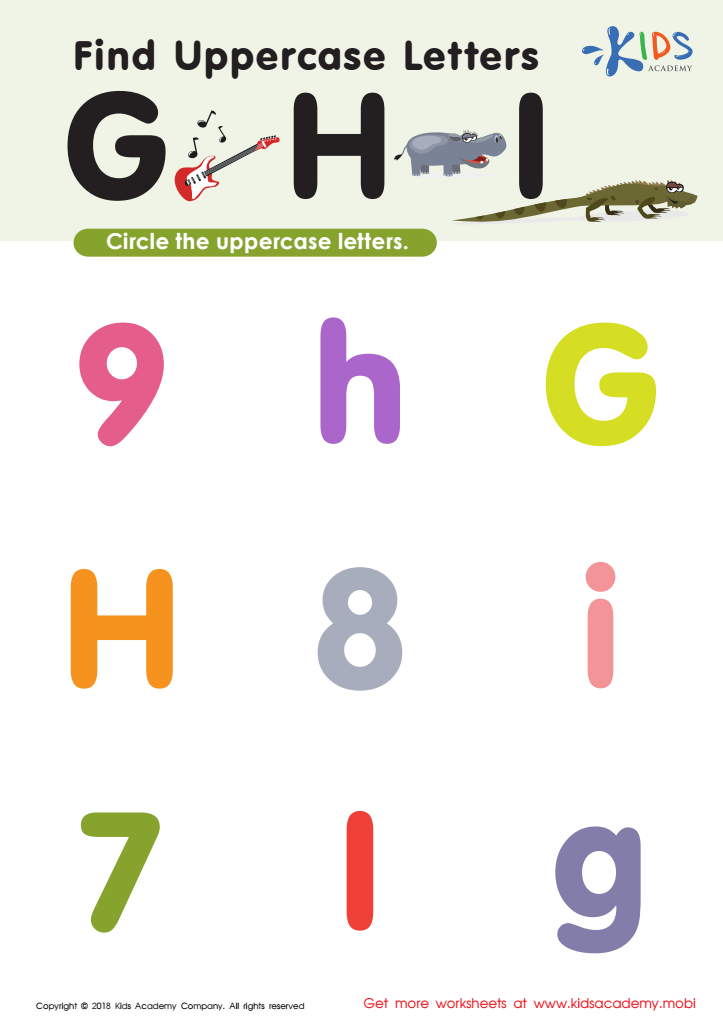
Find Uppercase Letters G, H, and I Worksheet
Find G, H, and I in uppercase with this downloadable worksheet! Numbers are included to challenge your kindergartener's letter recognition skills. Plus, practice G, H, and I sounds using the cute graphics. Perfect for learning letter case recognition!
Find Uppercase Letters G, H, and I Worksheet
Worksheet
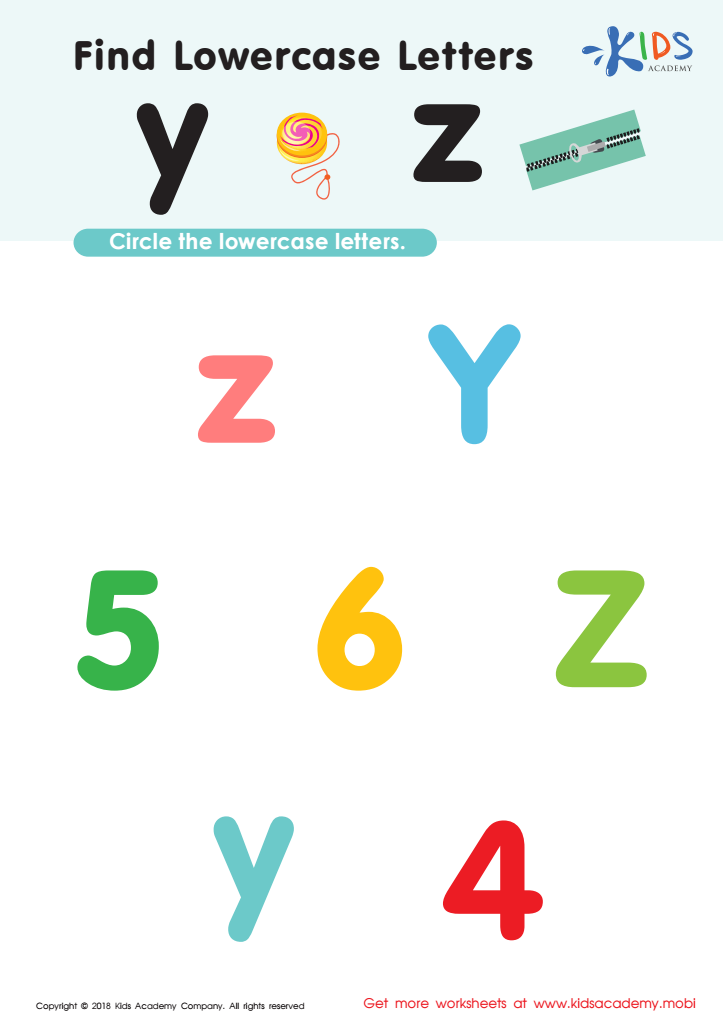
Find Lowercase Letters y z Worksheet
Help your kid learn the alphabet. Before they can move on to words and reading, they must first know the lower and uppercase letters. Show them how to find the letters y and z in this worksheet, which is filled with uppercase letters and numbers. Together, find and circle them.
Find Lowercase Letters y z Worksheet
Worksheet
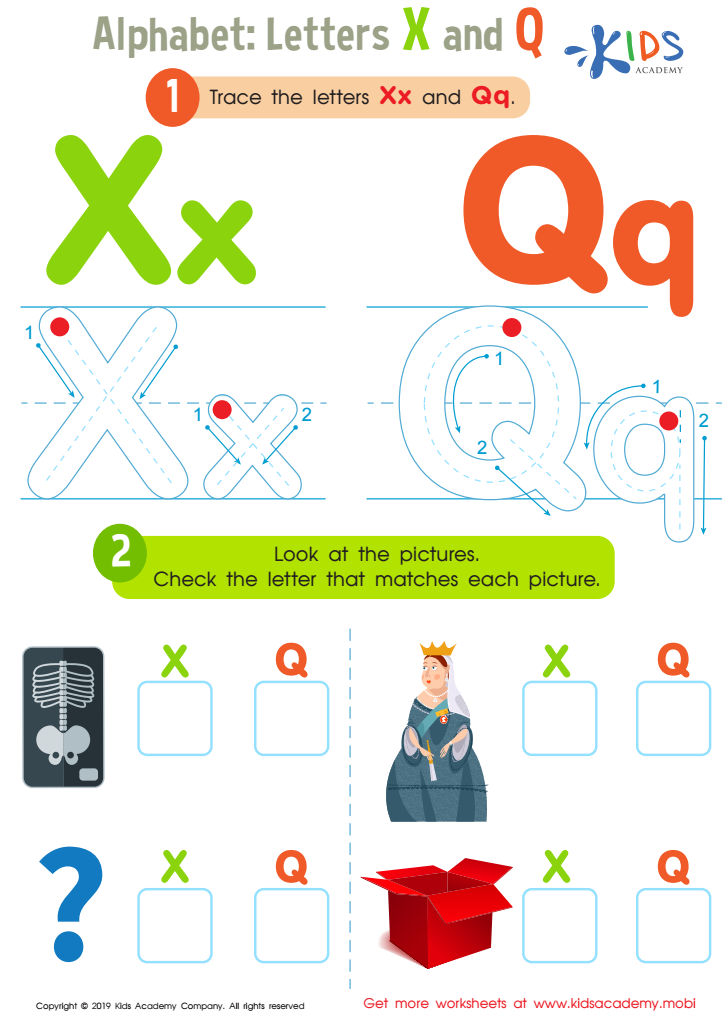
Letters X and Q Tracing Worksheet
Do you want your students to improve writing and letter recognition? This worksheet is a great place to start! Kids can trace the letters «X» and «Q» and identify pictures that match each letter. With a little encouragement, they'll do a great job!
Letters X and Q Tracing Worksheet
Worksheet
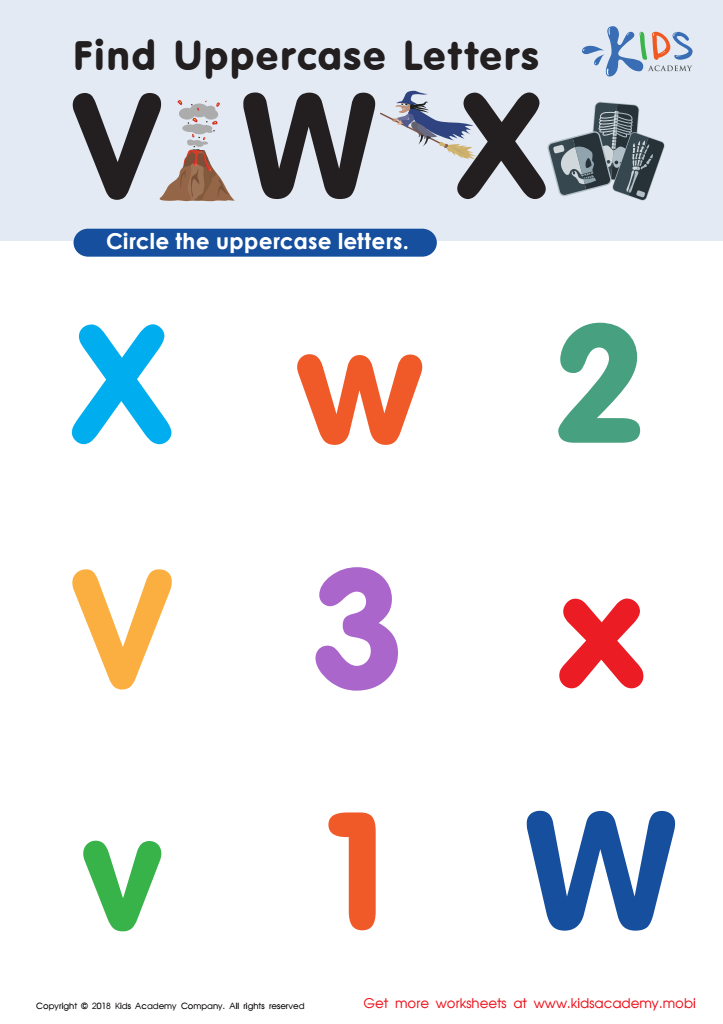
Find Uppercase Letters V, W, X Worksheet
Ask your kids if they can spot the uppercase letters V, W and X hidden in the lowercase letters and numbers, then have them circle them. After that, ask them to give you examples of words beginning with those letters. This worksheet will help them get started.
Find Uppercase Letters V, W, X Worksheet
Worksheet
Join Kids Academy for Free
Who is primarily going to use this learning content?







Visual discrimination is a vital skill that develops early in childhood, particularly between the ages of 4 and 6. It involves the ability to notice and identify subtle differences and similarities in shapes, letters, and other visual forms. For parents and teachers, fostering this skill is crucial for several reasons.
Firstly, strong visual discrimination aids in the recognition of letters, which is foundational for reading. Children must be able to distinguish between letters like 'b' and 'd' or 'p' and 'q' to develop strong reading skills. Furthermore, this capability enhances overall visual literacy, allowing children to interpret visual information in their environment effectively.
Additionally, improving visual discrimination contributes to skills in sorting, categorizing, and organizing information, which are essential for achieving academic success in early education. It also promotes fine motor skills, as children engage in activities like writing and drawing.
Activities that enhance visual discrimination—like puzzles, matching games, and letter tracing—can be fun and engaging, encouraging independent learning. Therefore, both parents and teachers should prioritize visual discrimination activities, adopting playful methods to support children's early developmental phases and set a strong foundation for future learning.







