Lowercase identification Letter Recognition Worksheets for Ages 4-6
5 filtered results
-
From - To
Help your child master lowercase letter recognition with our engaging worksheets designed for ages 4-6! These fun and interactive resources will guide young learners in identifying and distinguishing lowercase letters through various activities. Each worksheet features colorful illustrations, playful exercises, and practice opportunities to enhance literacy skills. As children engage with these materials, they will build confidence in their knowledge of the alphabet while developing fine motor skills. Ideal for parents and teachers alike, our lowercase identification worksheets foster a love for learning and prepare kids for future reading success. Download now to ignite your child’s journey into the world of letters!
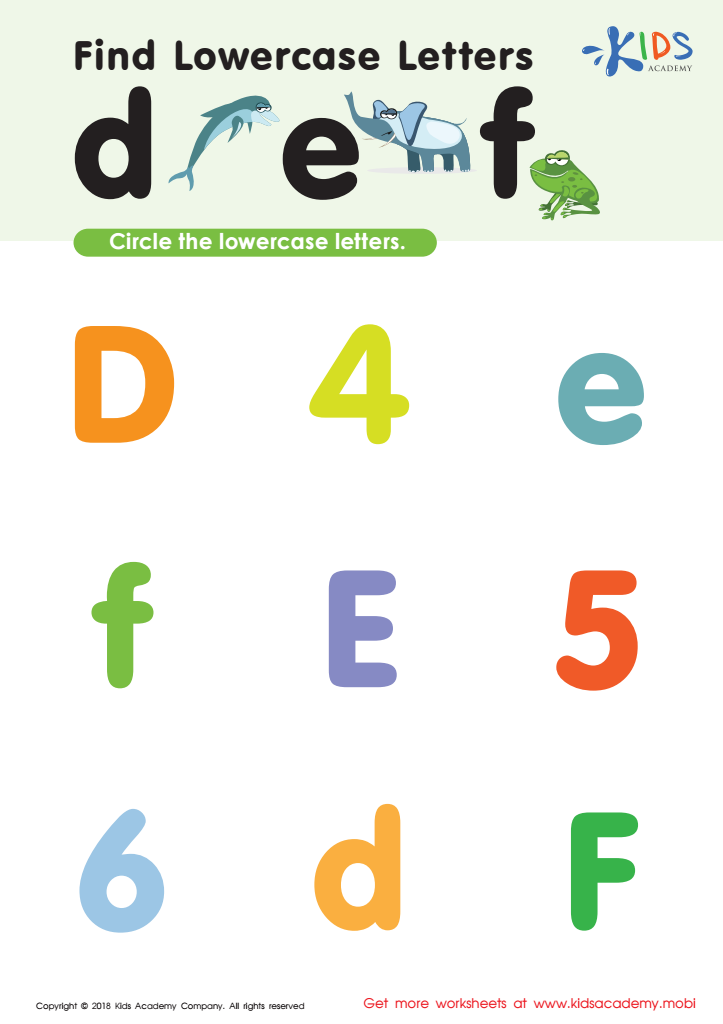
Find Lowercase Letters d e f Worksheet
 Assign to My Students
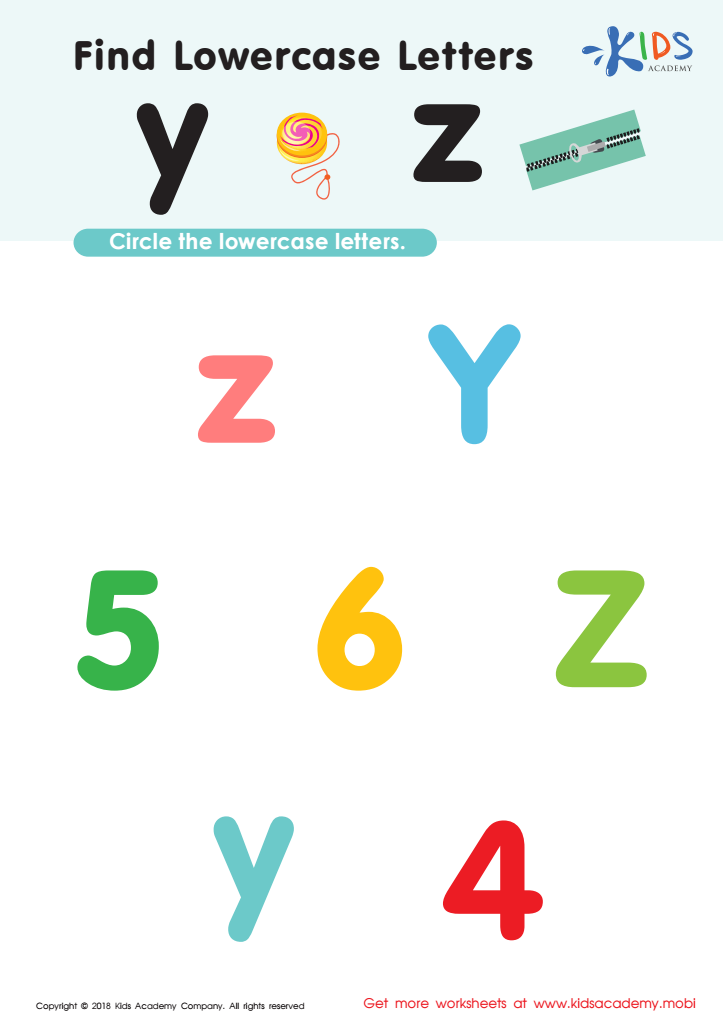
Find Lowercase Letters y z Worksheet
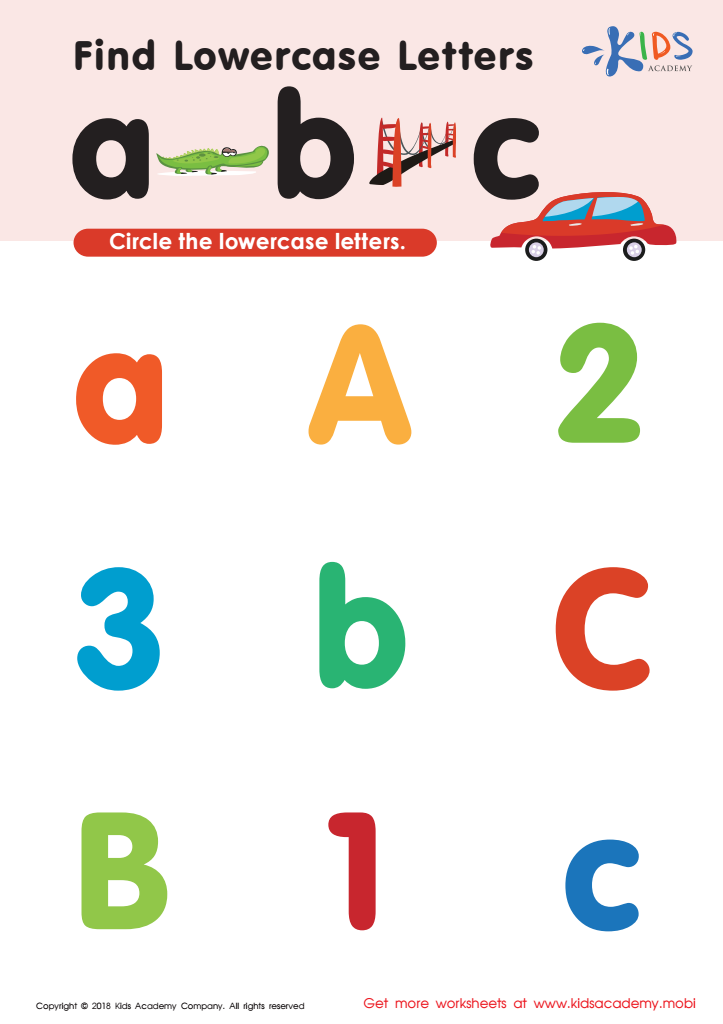
Find lowercase letters a b c Worksheet
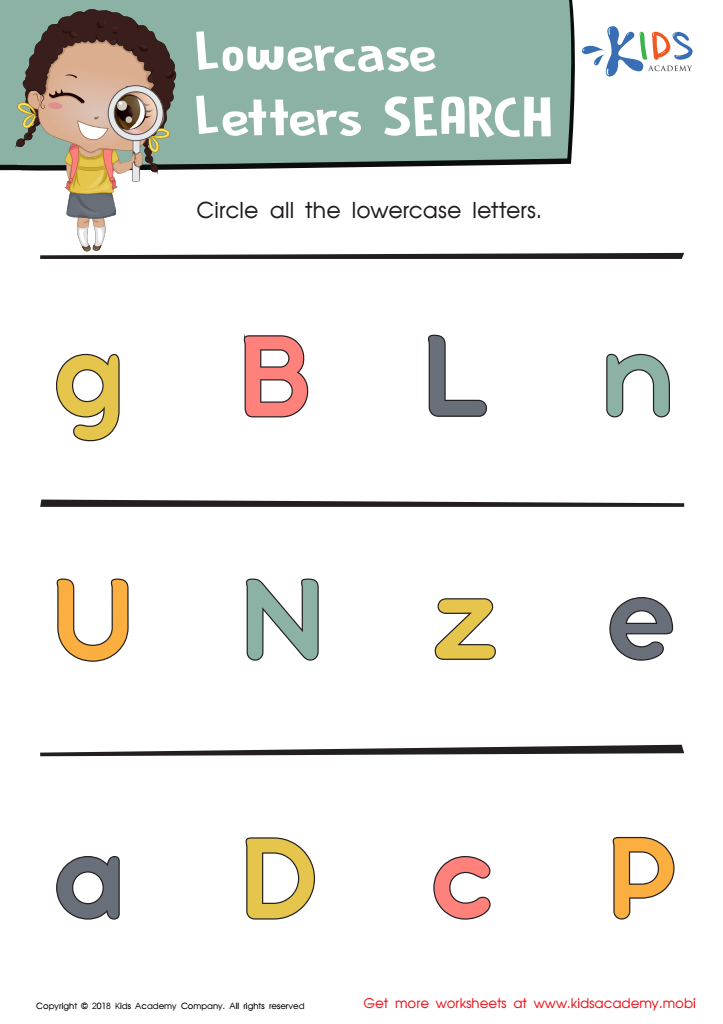
Lowercase Letters Search: Assessment Worksheet
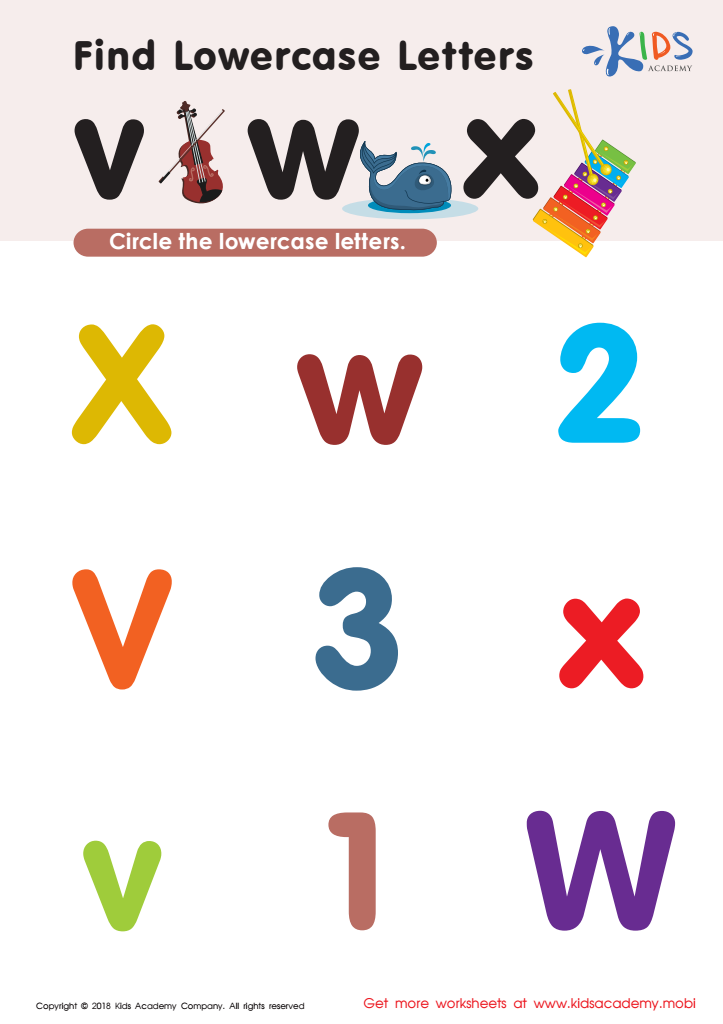
Find Lowercase Letters v w x Worksheet








Lowercase letter identification is a fundamental skill essential for early literacy development in children aged 4-6. At this critical stage, children are laid the groundwork for reading and writing, and recognizing lowercase letters is crucial because most written text, including books, labels, and signs, predominantly uses them.
Understanding lowercase letters enables children to decode words and grasp basic phonetics, enhancing their reading fluency over time. It also fosters confidence, as they become more adept at recognizing letters in various contexts—an skill vital for their educational journey. Besides academic advantages, lowercase letter mastery encourages fine motor skills development through writing practices, honing children's hand-eye coordination and dexterity.
For parents and teachers, focusing on lowercase letter recognition means investing in children's future academic success and cultivating a love for reading. Interactive activities such as games, songs, and play can transform potentially challenging learning moments into enjoyable experiences. Additionally, emphasizing lowercase recognition helps bridge the gap to identify uppercase letters, facilitating smooth progress in overall literacy. Ultimately, by prioritizing lowercase letter identification, adults play a crucial role in supporting children’s cognitive development and fostering lifelong skills that will serve them well in school and beyond.







