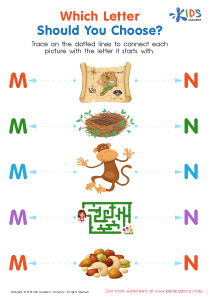
Letter recognition Lowercase/Small Letters Worksheets for Ages 4-6
11 filtered results
-
From - To
Discover our engaging lowercase letter recognition worksheets designed specifically for children aged 4-6! These printable resources provide a fun and interactive way for young learners to familiarize themselves with small letters. Each worksheet features colorful illustrations and creative activities that encourage proper letter identification while enhancing fine motor skills. Great for home or classroom use, our worksheets help children boost their confidence in reading and writing. Perfect for early learners, these activities make mastering lowercase letters enjoyable and effective, paving the way for future literacy skills. Start your child’s alphabet adventure today with our delightful and educational worksheets!
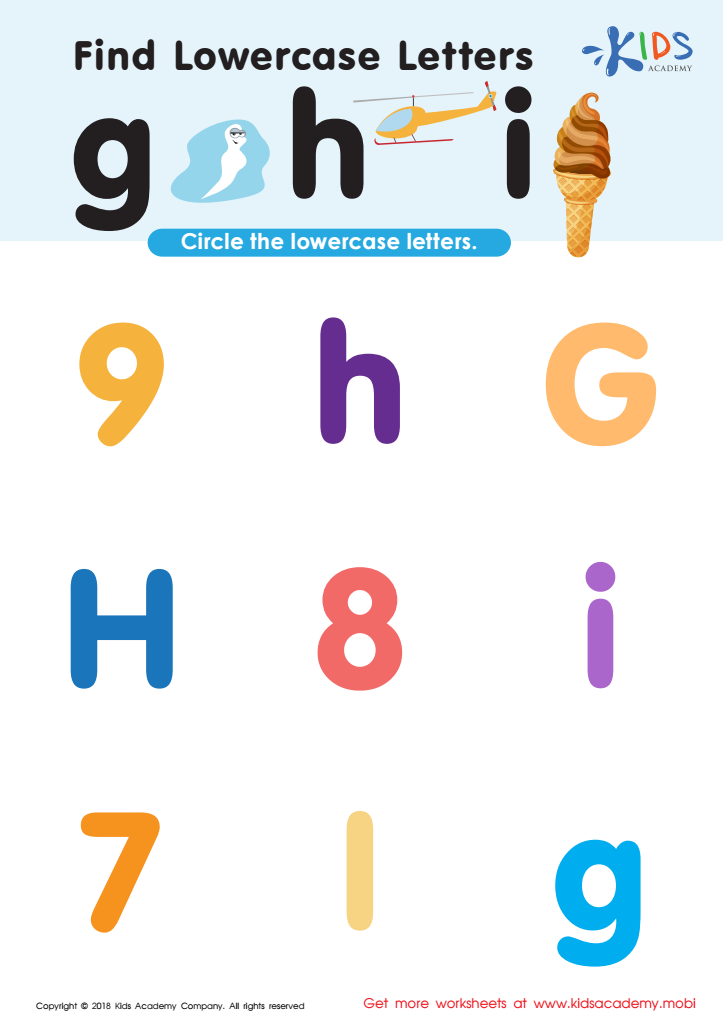
Find Lowercase Letters g h i Worksheet
 Assign to My Students
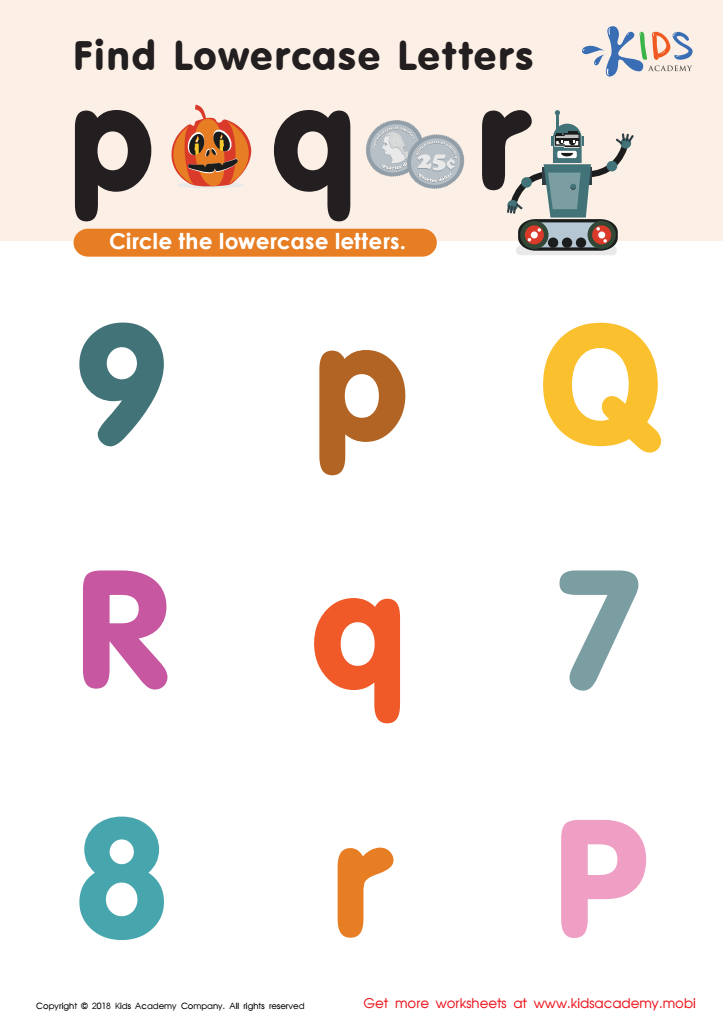
Find lowercase Letters p q r Worksheet
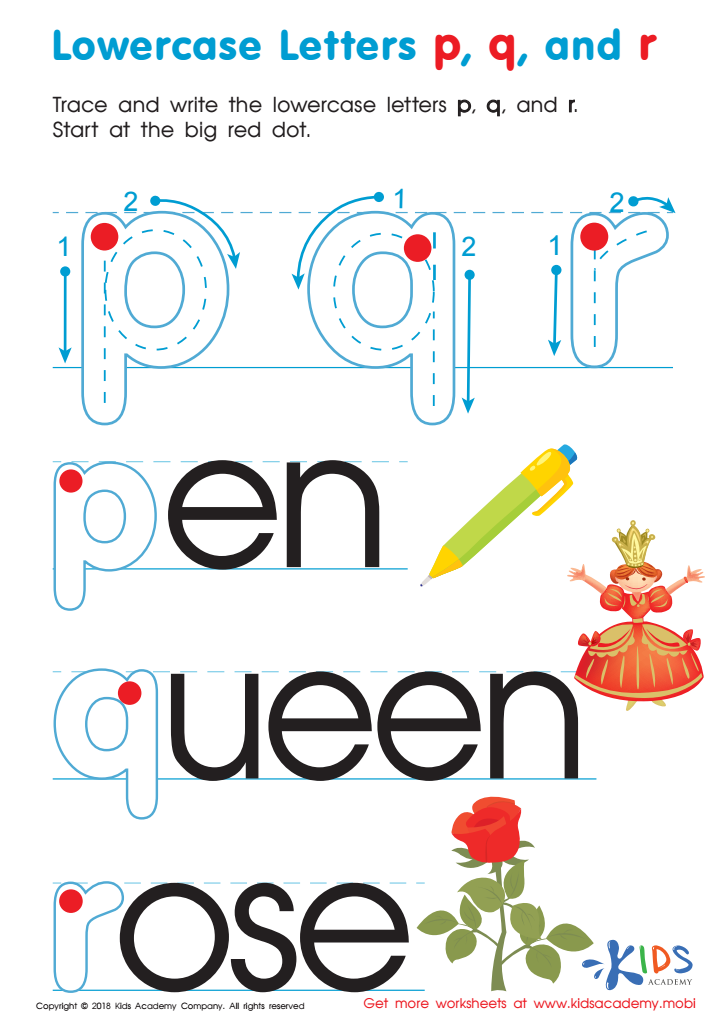
Lowercase Letters p q r Worksheet
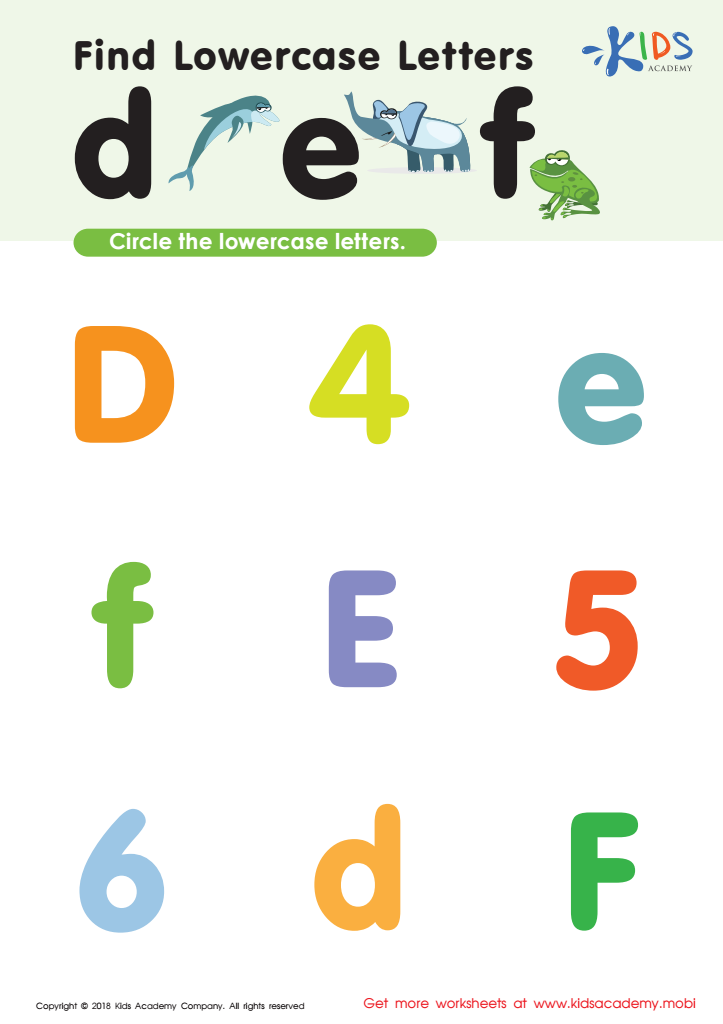
Find Lowercase Letters d e f Worksheet
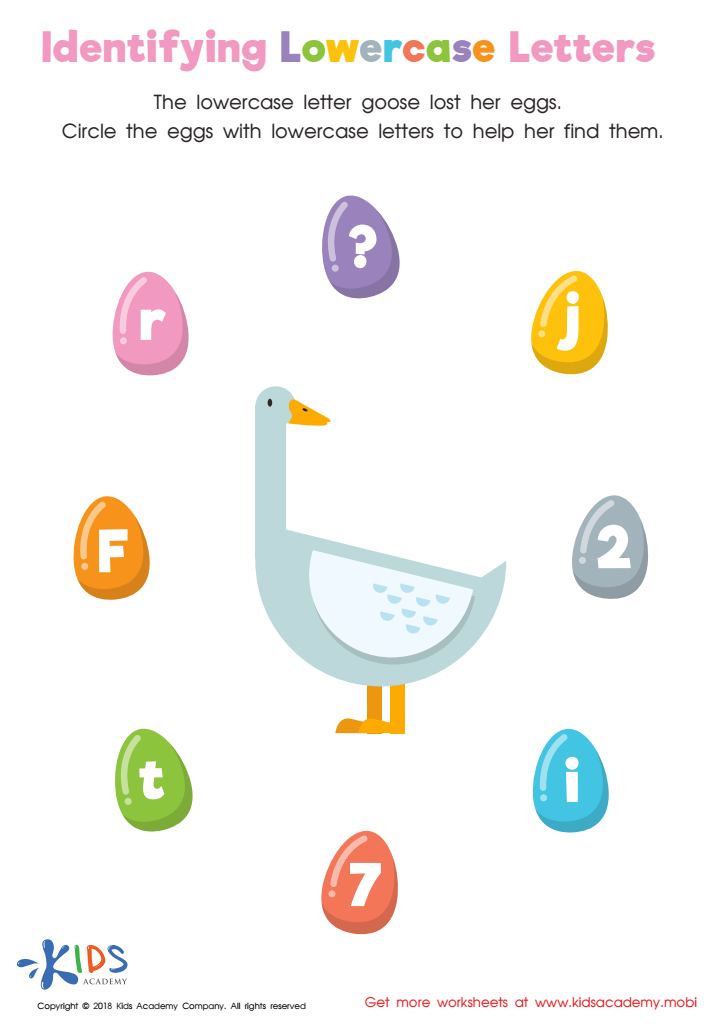
Identifying Lowercase Letters Worksheet
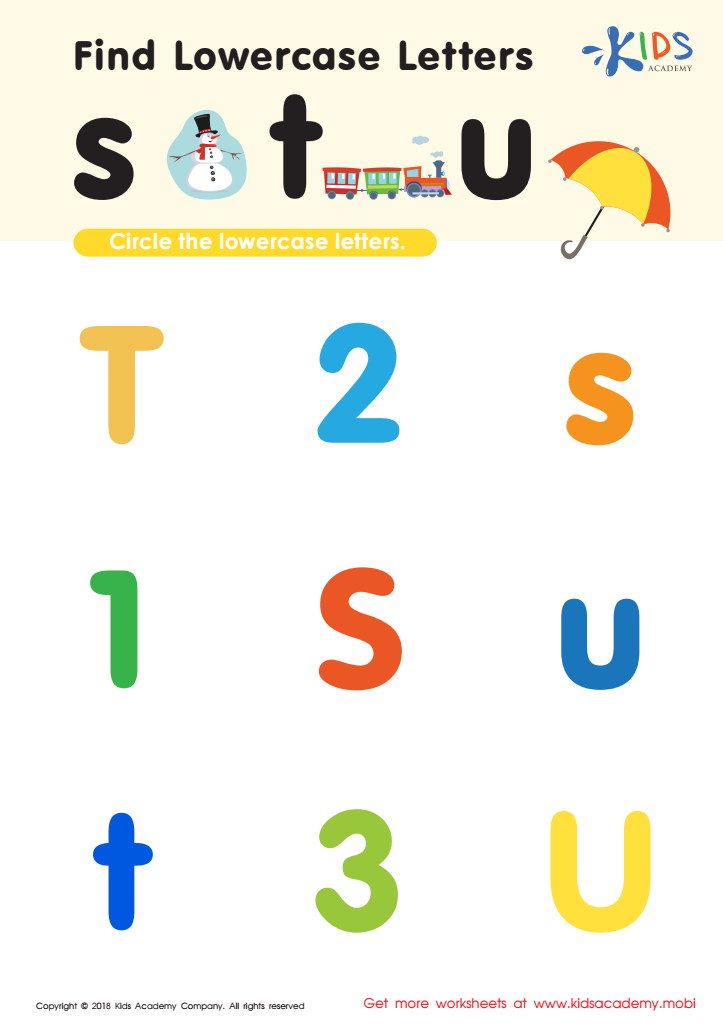
Find lowercase Letters s t u Worksheet
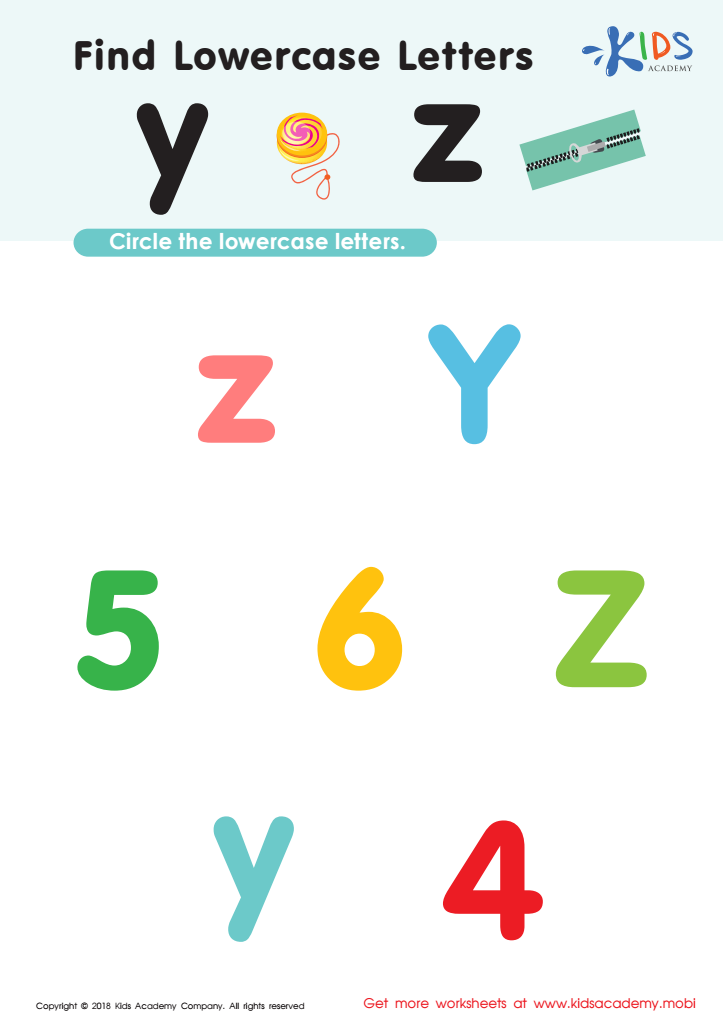
Find Lowercase Letters y z Worksheet
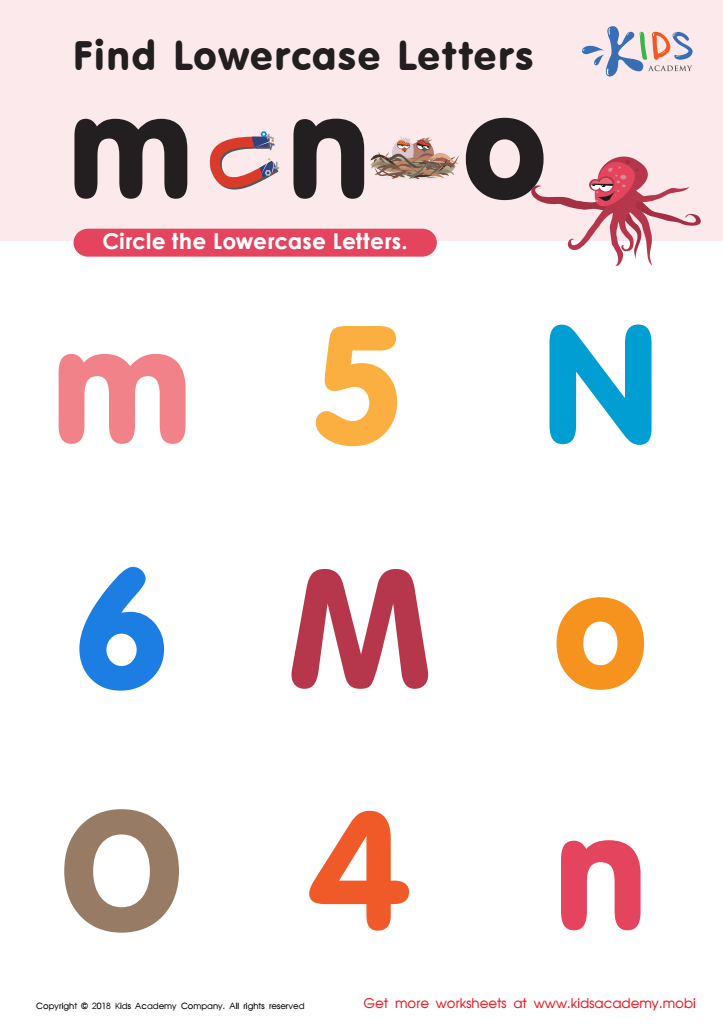
Find Lowercase Letters m n o Worksheet
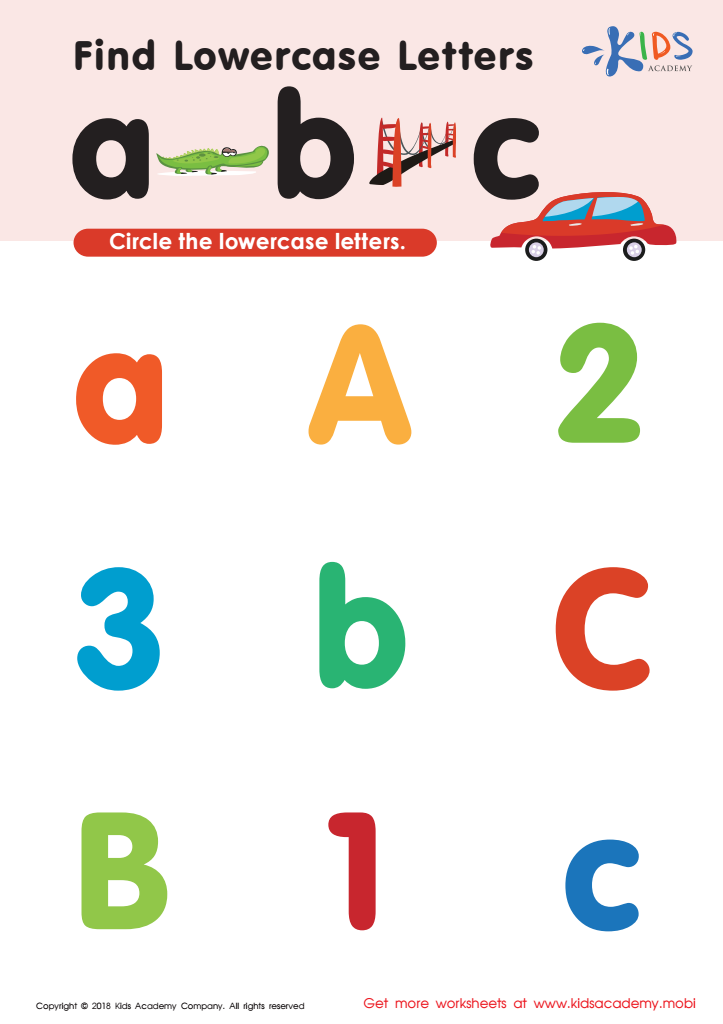
Find lowercase letters a b c Worksheet
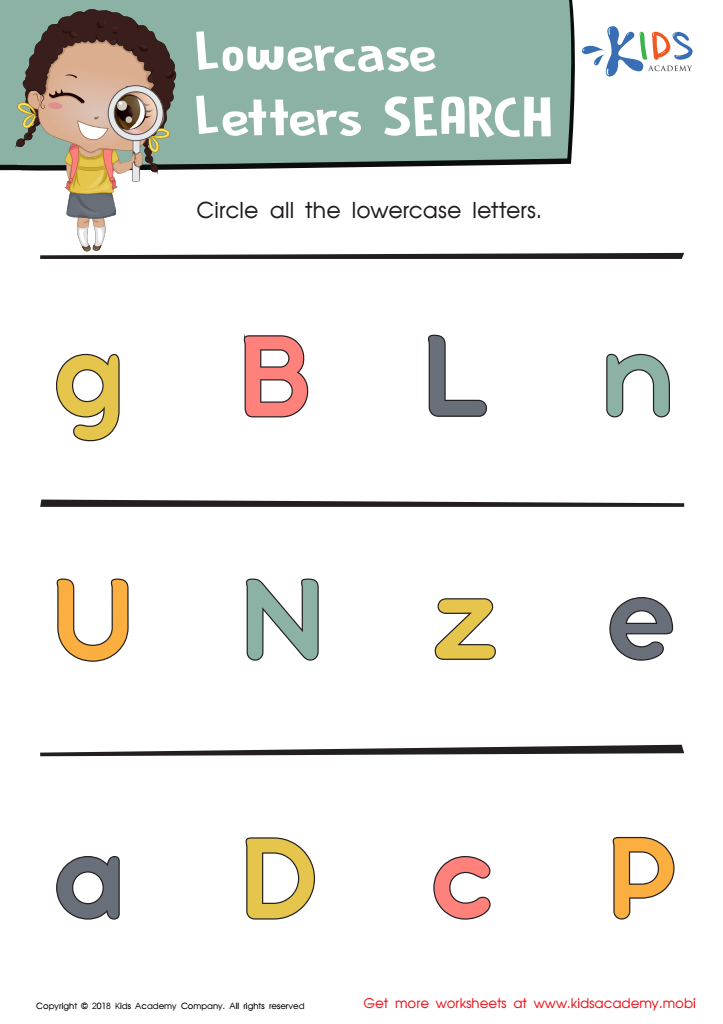
Lowercase Letters Search: Assessment Worksheet
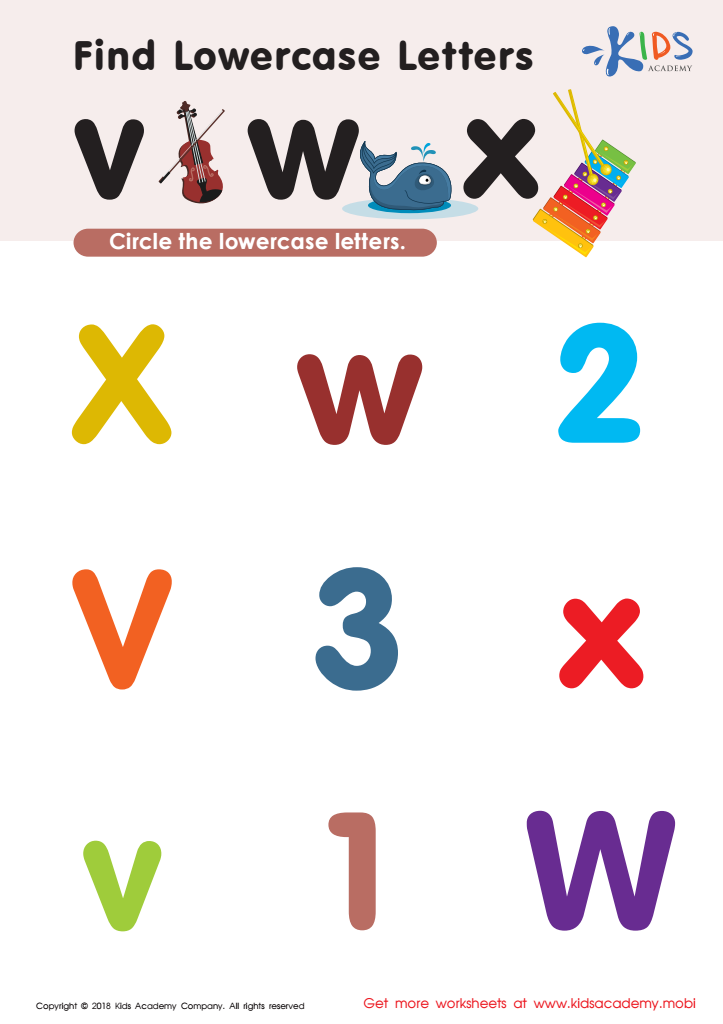
Find Lowercase Letters v w x Worksheet


Letter recognition, particularly for lowercase letters, is a fundamental building block for literacy development in children aged 4-6. At this crucial stage, children are developing their reading skills and finding their place in the world of words. Lowercase letters are essential, as they dominate everyday writing—children encounter them in books, on signs, and when communicating through writing. If children do not learn to recognize these letters early on, it may hinder their ability to read fluently and express themselves as they grow.
Moreover, mastering lowercase letters enhances phonemic awareness; as children identify each letter’s shape and sound, they build connections between letters and their corresponding phonemes. This understanding facilitates listening, speaking, reading, and writing skills. When parents and teachers prioritize lowercase letter recognition, they foster a lover for reading, expose children to new vocabulary, and enrich their overall learning experience.
Furthermore, strong letter recognition skills set the path for academic success. Confidence in letter knowledge contributes positively to emergent writing and reading behaviors, encouraging children to engage with texts independently. Because lower-case letters form the basis for future literacy abilities, recognizing their importance can shape a child's educational journey beyond the early years.