Sound identification Phonics Worksheets for Ages 4-6
4 filtered results
-
From - To
Boost your child's phonemic awareness with our engaging Sound Identification Phonics Worksheets designed for ages 4-6. Our expertly crafted worksheets help young learners recognize and match sounds to corresponding letters, laying the foundation for essential early literacy skills. Through fun and interactive activities, children will improve their ability to distinguish sounds, enhancing their reading and writing abilities. Perfect for home or classroom use, these high-quality printable resources are designed to make learning enjoyable and effective. Encourage your child's reading journey today with our innovative phonics worksheets tailored specifically for early learners.
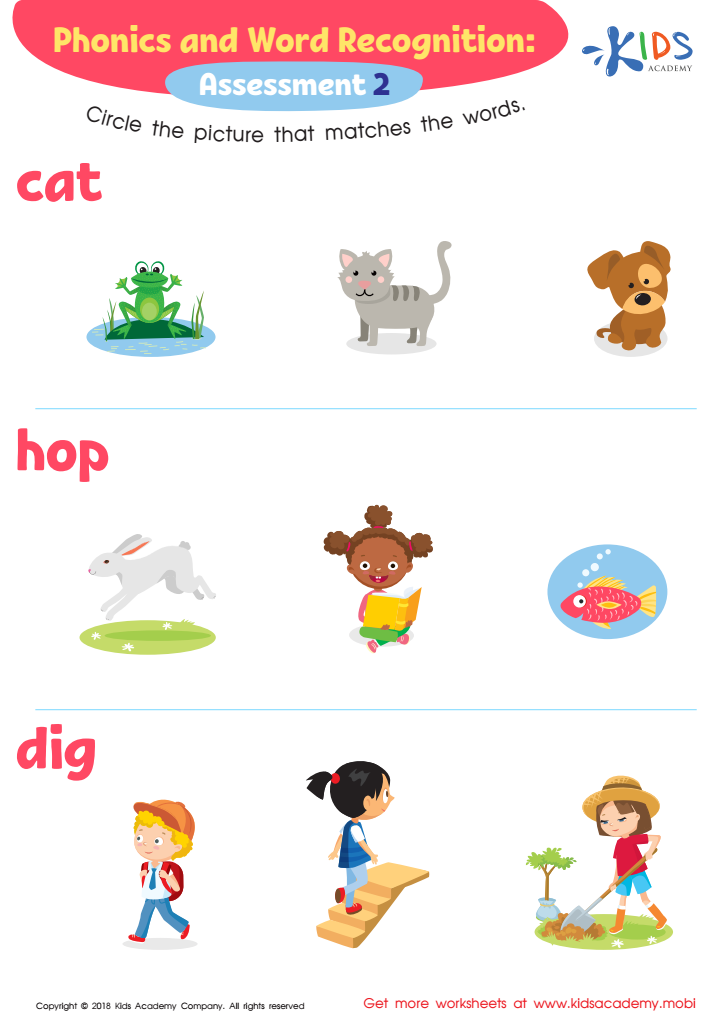
Phonological Awareness: Assessment 2 ELA Worksheet
 Assign to My Students
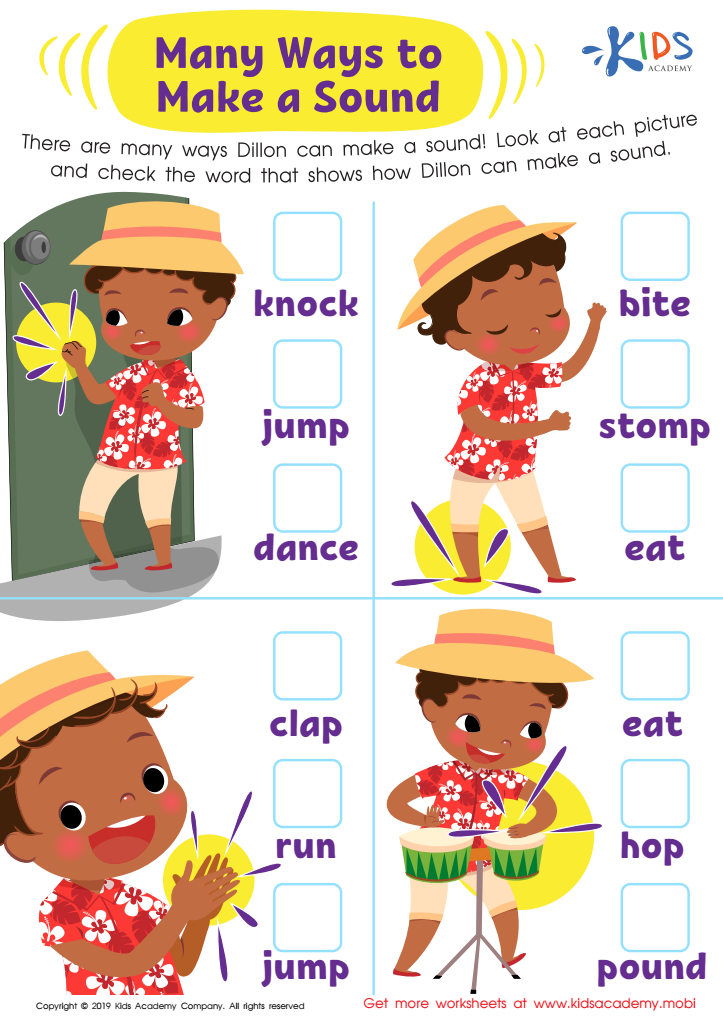
Many Ways to Make a Sound Worksheet
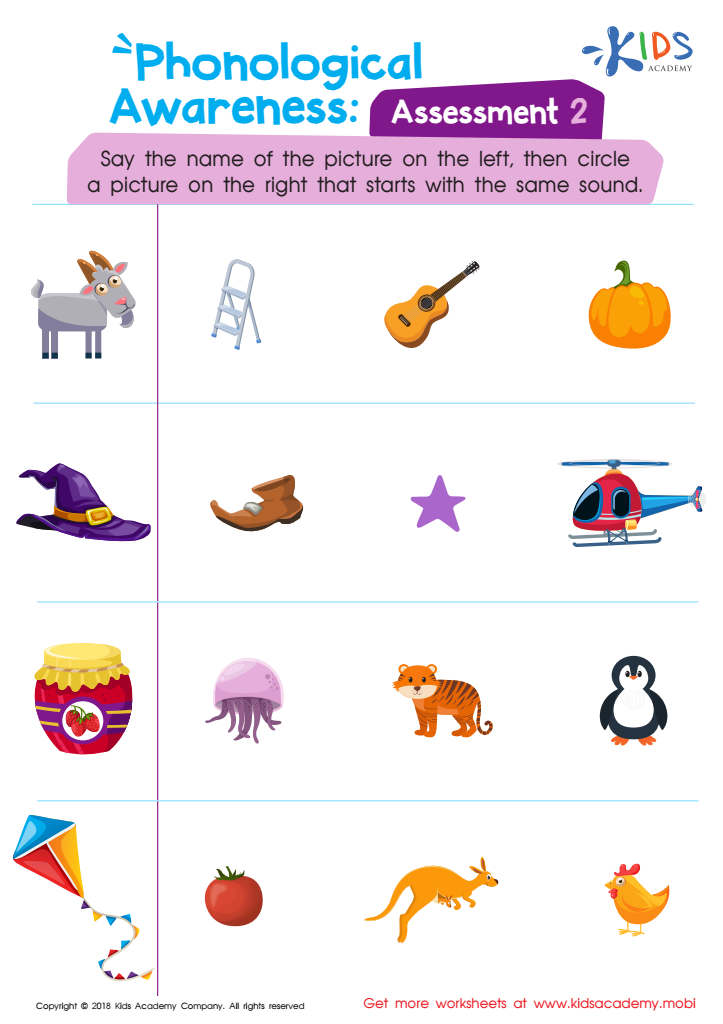
Phonological Awareness: Assessment 2 Worksheet
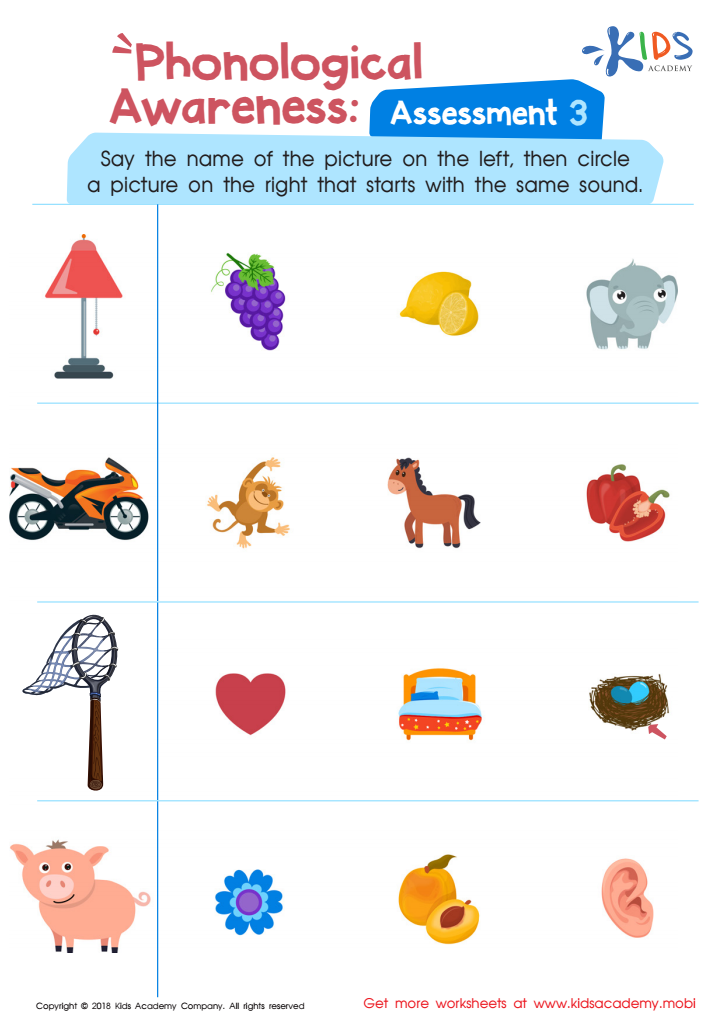
Phonological Awareness: Assessment 3 Worksheet








Parents and teachers should care deeply about sound identification and phonics for ages 4-6 because this period is crucial for foundational literacy development. At this age, children are at the optimal stage for their brains to absorb language concepts, and sound identification is a key building block for reading and writing skills.
Phonics instruction, which involves relating sounds to written letters and blending these sounds to form words, is essential for helping kids decode unfamiliar words. Understanding sound-letter correspondence enhances their ability to sound out words, improving reading fluency and accuracy. This skill set is the cornerstone of more advanced literacy skills like comprehension, vocabulary, and writing.
Moreover, early proficiency in phonics can boost a child's confidence, instilling a positive attitude toward learning and literacy. Struggling with reading in the early years can lead to frustration and a lack of interest in books, which can have long-term negative implications on academic performance.
Additionally, early intervention means that any learning difficulties related to reading can be identified and addressed sooner, providing better outcomes. As children who read well tend to excel in other subject areas too, focusing on phonics at an early age sets the stage for broader educational success. Overall, investing time and effort in phonics instruction during these formative years can bring lifelong benefits in communication, cognition, and academic achievements.







