Spelling improvement Phonics Worksheets for Ages 4-6
6 filtered results
-
From - To
Enhance your child's spelling abilities with our engaging Phonics Worksheets, specifically designed for ages 4-6. These worksheets focus on developing essential phonetic skills, helping young learners recognize letters and sounds, and aiding in word formation. Through fun activities, children will practice blending sounds and decoding words, making spelling a joyful experience. Our user-friendly worksheets foster both independent and guided learning, ensuring your child builds confidence in their reading and writing skills. Ideal for home or classroom use, these Phonics Worksheets support early childhood education by laying the foundation for literacy success. Unlock your child's potential today with our interactive learning resources!
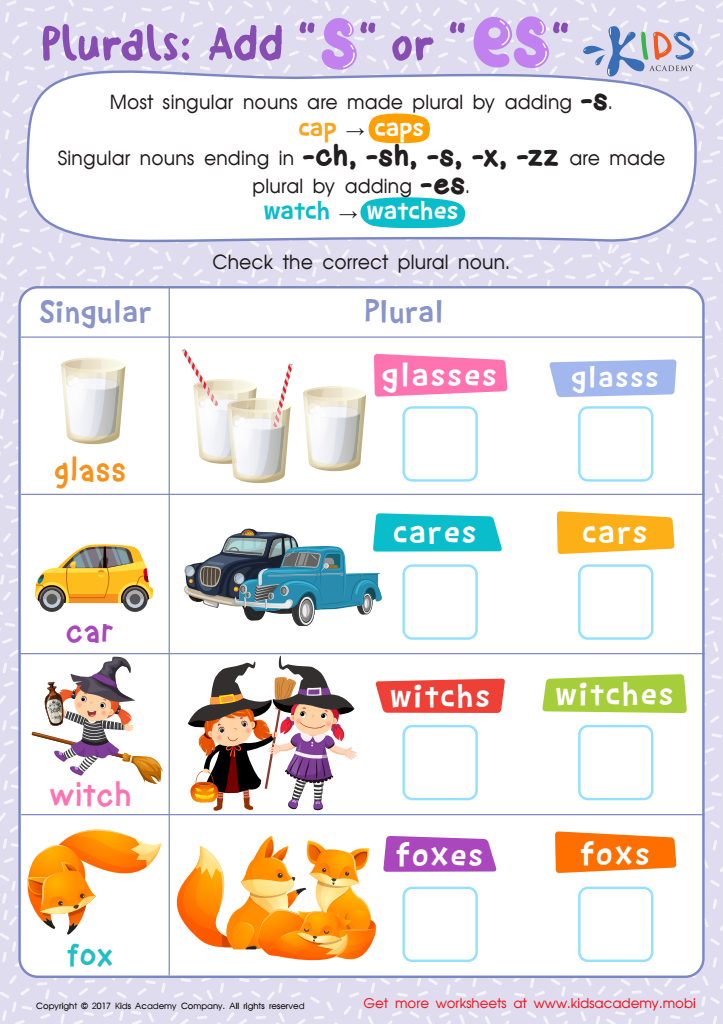
Plurals: "–es" or "–es"? Worksheet
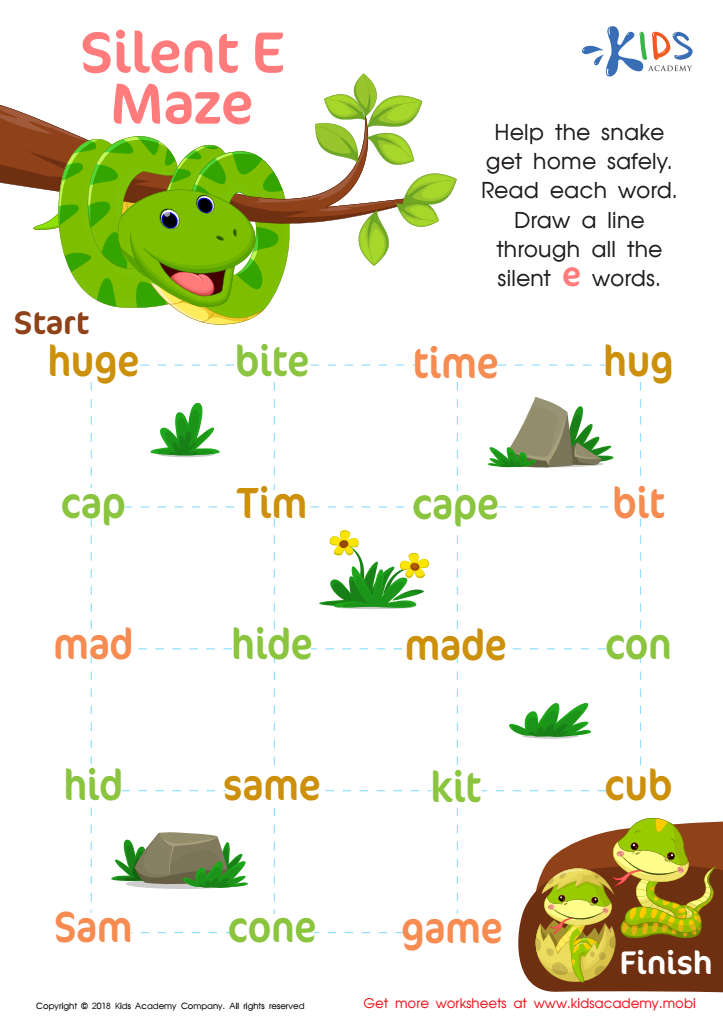
Silent E Maze Worksheet
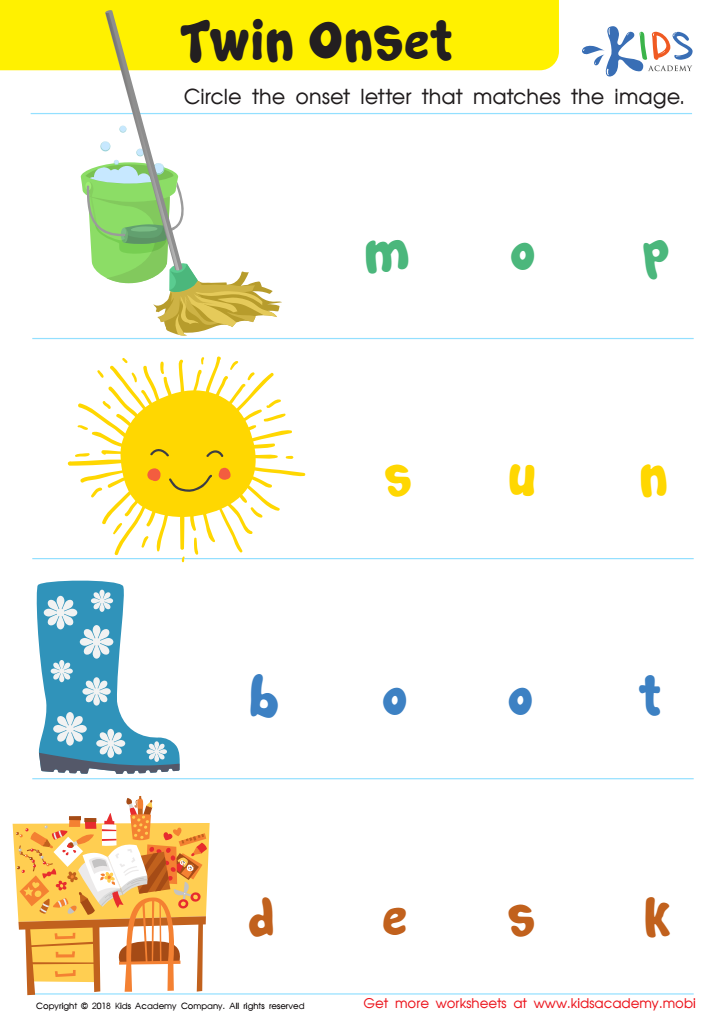
Twin Onset Worksheet
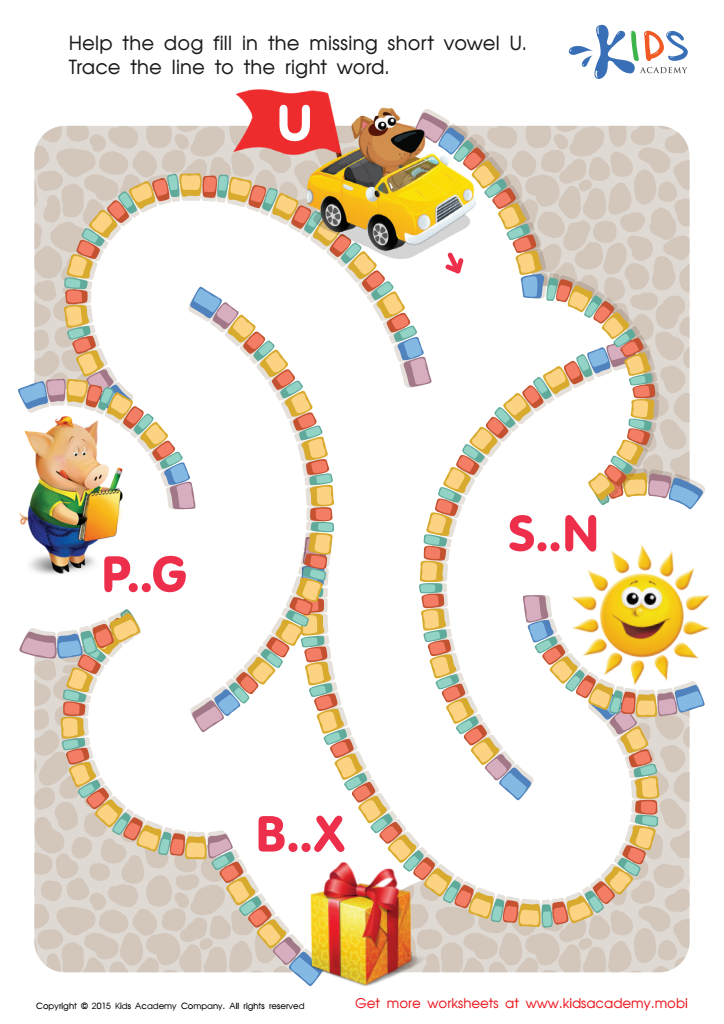
Short Vowel Sound U Worksheet
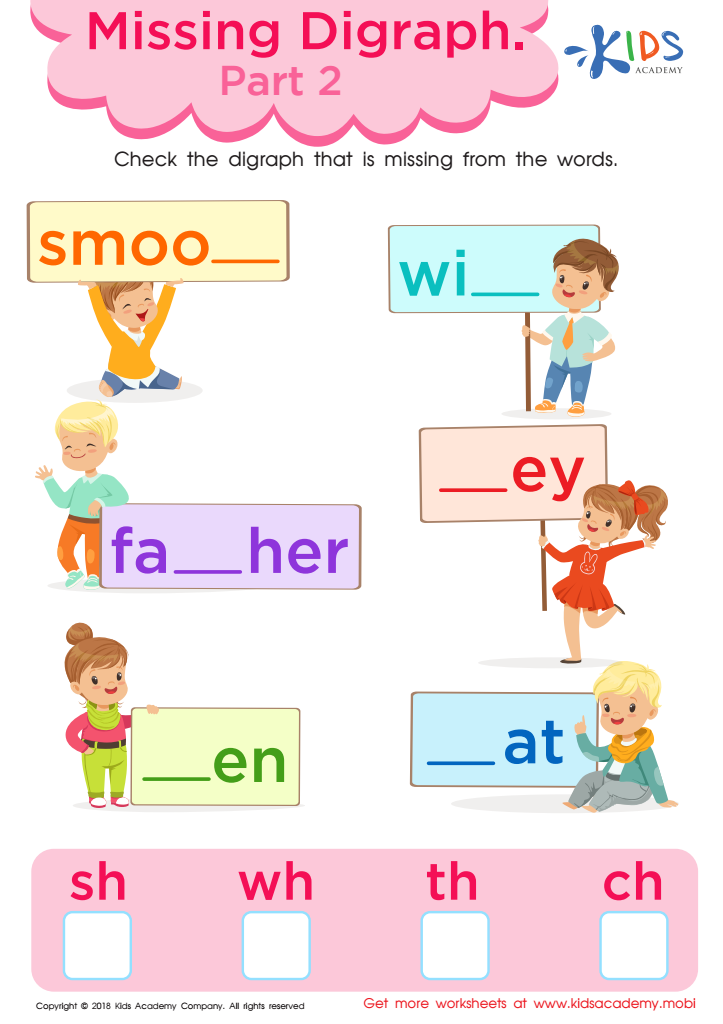
Missing Digraph: Part 2 Worksheet
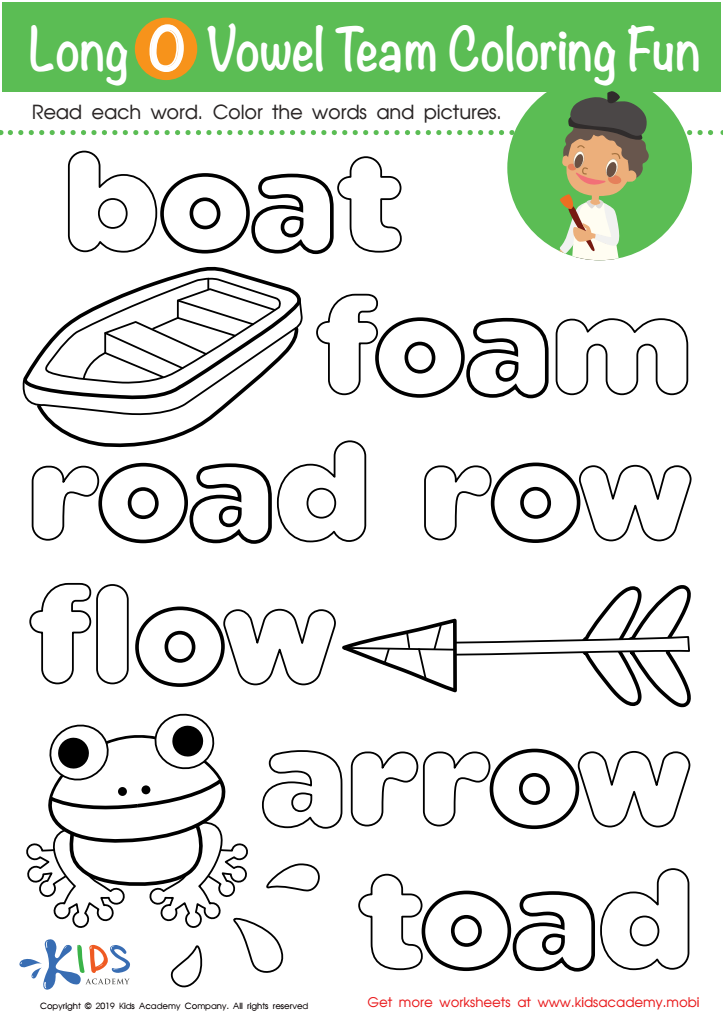
Long O Vowel Team Coloring Worksheet
 Assign to My Students








Spelling and phonics are fundamental skills for young children, forming the building blocks of literacy and effective communication. For children aged 4-6, phonics instruction helps them understand the relationship between letters and sounds, enabling them to decode words and spell them correctly. Early mastery of these skills enhances reading fluency, comprehension, and overall academic confidence.
Parents and teachers should prioritize spelling and phonics because early intervention sets a strong foundation for future reading and writing success. Children who struggle with phonics may experience frustration as they progress through school, potentially leading to a lifelong aversion to reading. Furthermore, effective phonics instruction promotes critical thinking skills, as it encourages kids to sound out unfamiliar words independently.
Supporting spelling improvement through phonics also fosters a love for language. Engaging activities like rhymes, songs, and games can make learning to spell enjoyable. When children experience success in spelling, it boosts their self-esteem and encourages exploration of new vocabulary. This not only nurtures their literacy development but also their enthusiasm for learning, ultimately shaping proficient readers and communicators in the long term. In a world where effective communication is vital, fostering these early literacy skills is an invaluable investment in a child's future.







