Lowercase identification Upper & Lowercase Letters Worksheets for Ages 4-6
5 filtered results
-
From - To
Help your child master the alphabet with our "Lowercase Identification Upper & Lowercase Letters Worksheets" designed for ages 4-6. Our carefully crafted worksheets make learning fun and engaging, highlighting the differences between upper and lowercase letters. Each activity is designed to develop important literacy skills, from letter recognition to proper writing technique. Ideal for young learners, these resources support early reading proficiency and build a strong foundation for future learning. With colorful graphics and varied exercises, our worksheets provide the perfect practice for kindergarten and preschool children. Start today and watch your child's confidence soar!
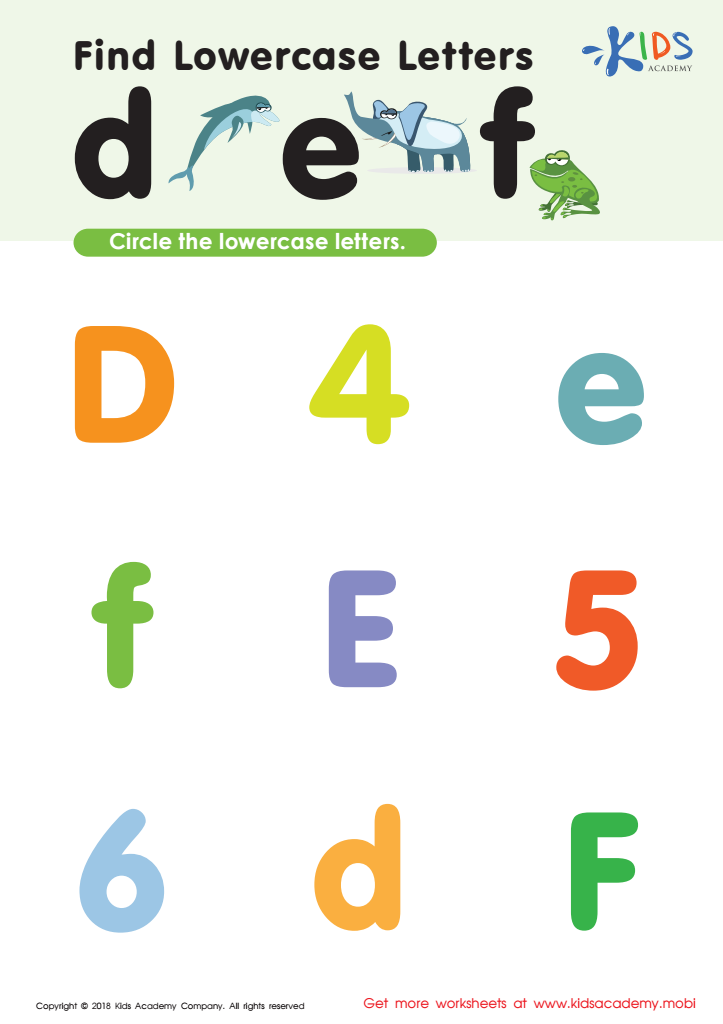
Find Lowercase Letters d e f Worksheet
 Assign to My Students





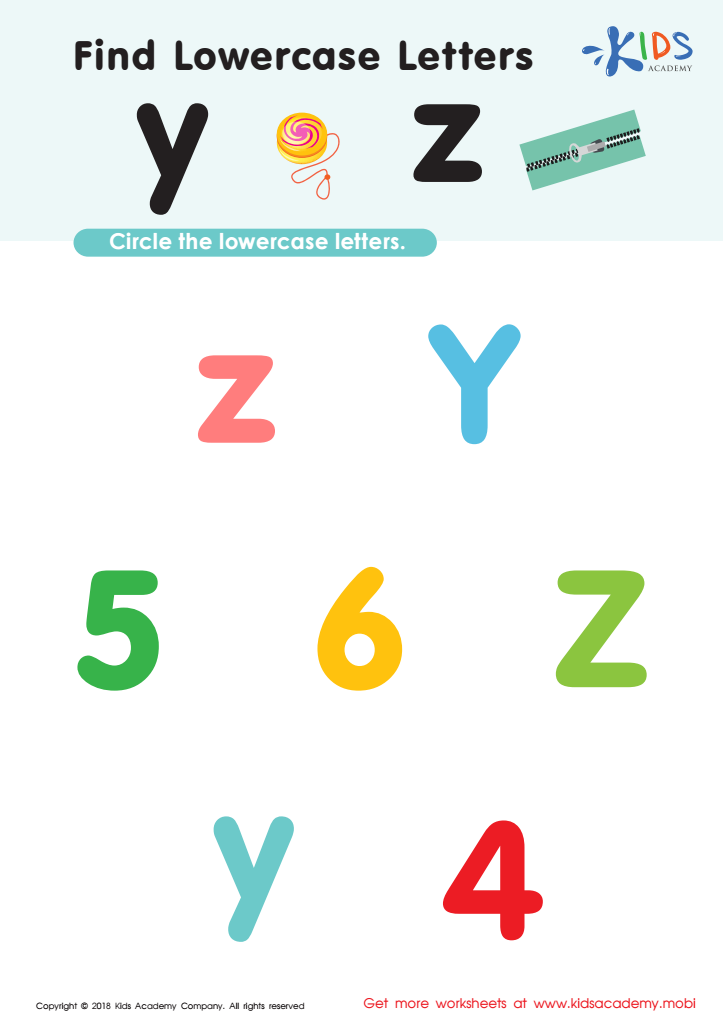
Find Lowercase Letters y z Worksheet
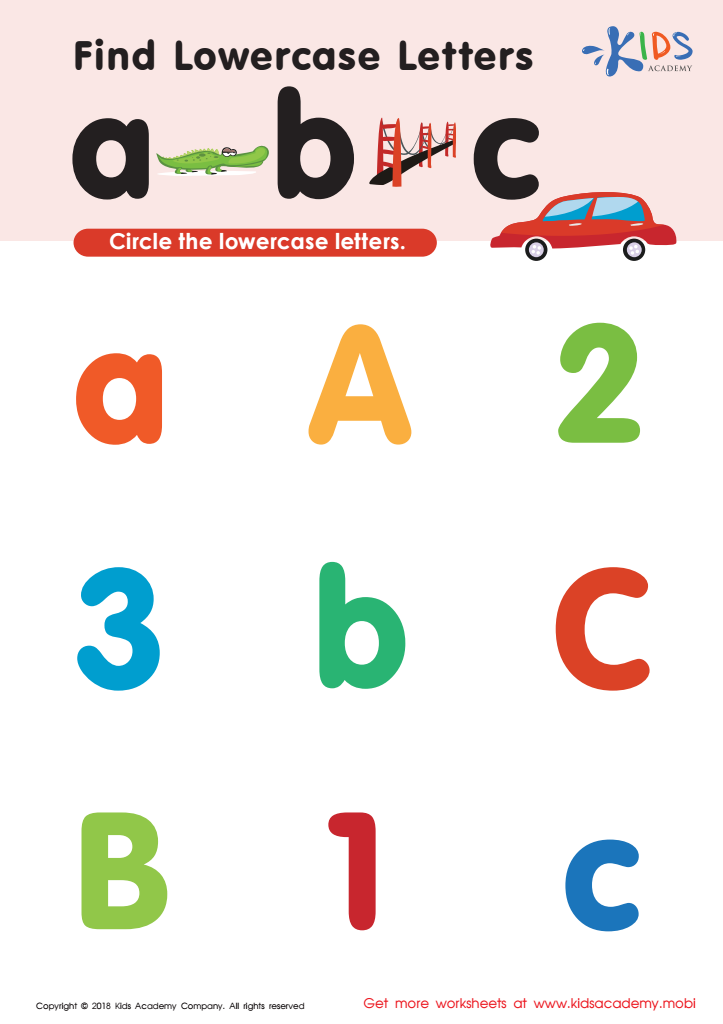
Find lowercase letters a b c Worksheet
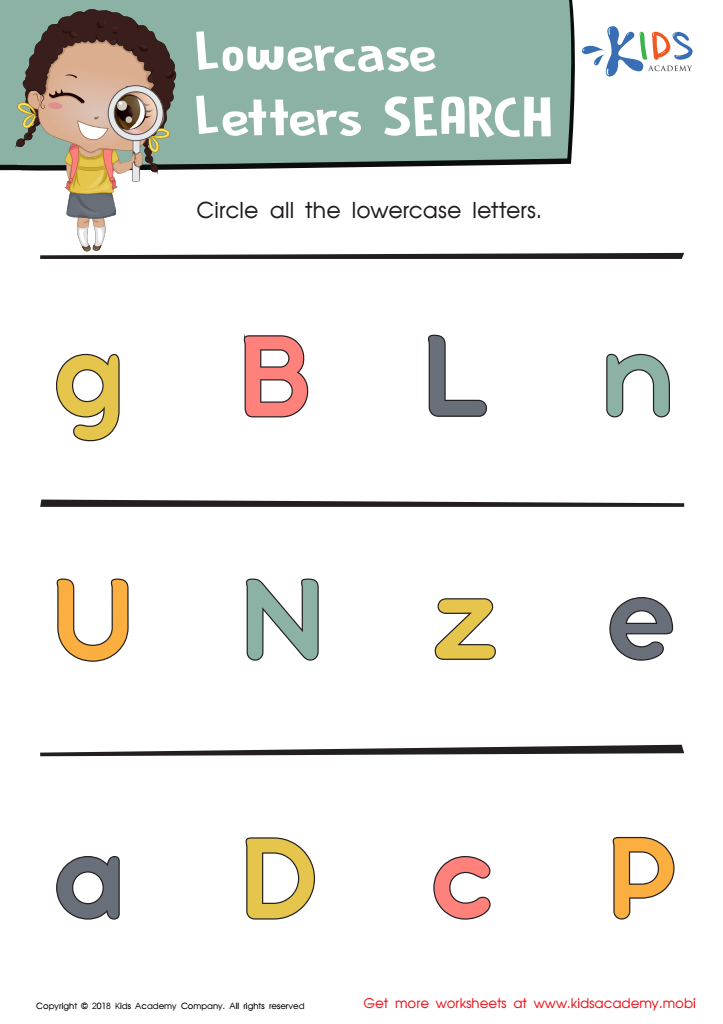
Lowercase Letters Search: Assessment Worksheet
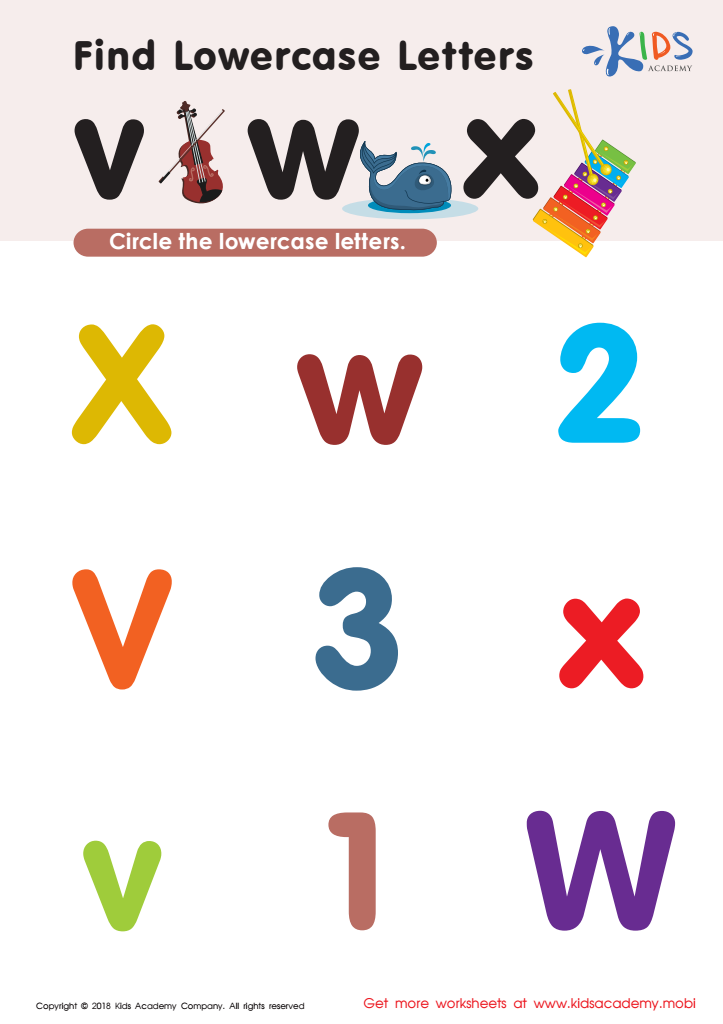
Find Lowercase Letters v w x Worksheet






Parents and teachers should pay close attention to uppercase and lowercase letter identification for ages 4-6 because this foundational skill is crucial for early literacy development. During these formative years, children are at the prime age for learning to recognize letters of the alphabet, which directly impacts their ability to read and write. Understanding the differences between uppercase and lowercase letters helps children better grasp the alphabetic principle, the foundation that associates letters with their respective sounds.
Strong letter recognition is a precursor to successful decoding, spelling, and ultimately, fluent reading. Children who can easily identify both uppercase and lowercase letters are more likely to develop phonemic awareness and phonics skills, crucial components of literacy. This early skill not only supports reading development but also aids in developing fine motor skills as children learn to write letters consistently.
In addition, consistent practice with letter recognition enhances a child's confidence and enthusiasm for learning. Educators' and parents' involvement in this process can make a significant difference in early literacy outcomes, fostering a love for reading and learning that will support academic success throughout a child's educational journey. Prioritizing this basics at a young age sets a strong foundation for future learning and cognitive development.







