Cognitive Development Chess Worksheets for Ages 4-6
5 filtered results
-
From - To
Discover our engaging Cognitive Development Chess Worksheets designed specifically for children ages 4-6! These thoughtfully crafted materials blend fun and learning, helping young learners develop essential cognitive skills such as problem-solving, critical thinking, and strategic planning through the timeless game of chess. Each worksheet provides age-appropriate exercises that foster creative thinking and improve focus, all while introducing foundational chess concepts. Perfect for home or classroom use, our worksheets ensure children are not only entertained but also gaining valuable skills that set the stage for future academic success. Ignite your child's passion for chess and watch their cognitive abilities flourish!
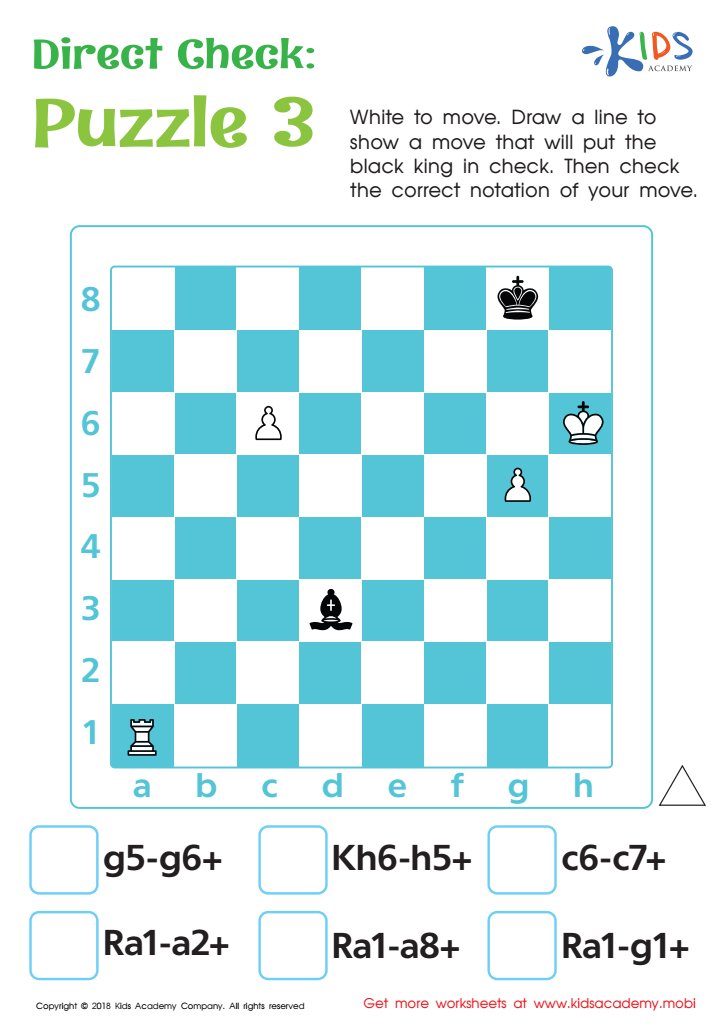
Direct Check: Puzzle 3 Worksheet
 Assign to My Students
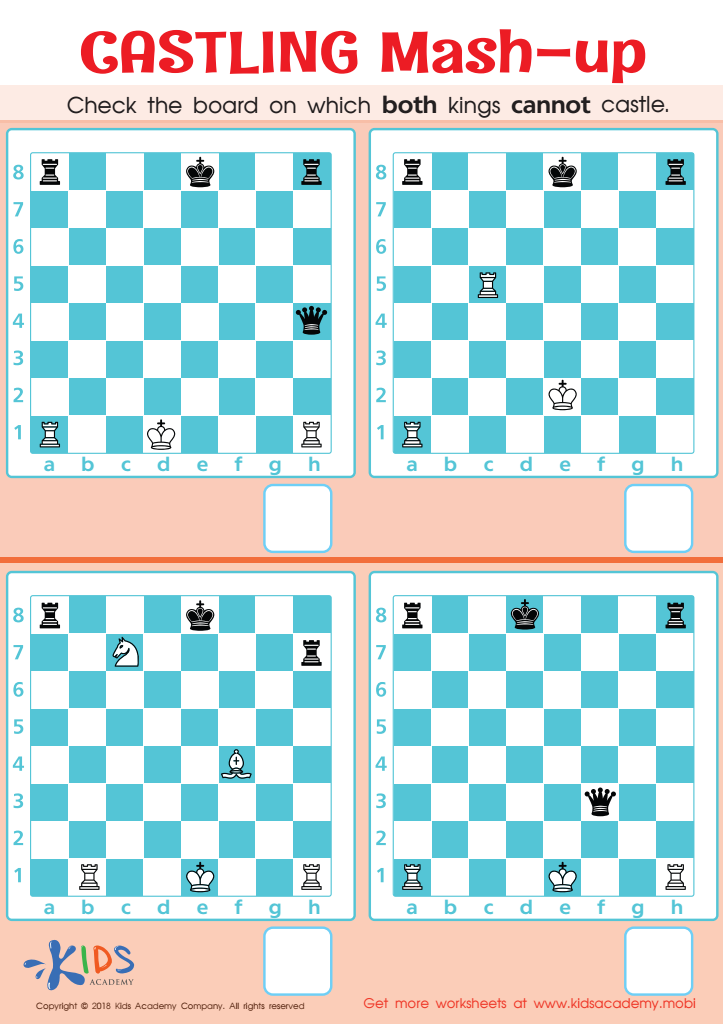
Castling Mash–up Worksheet
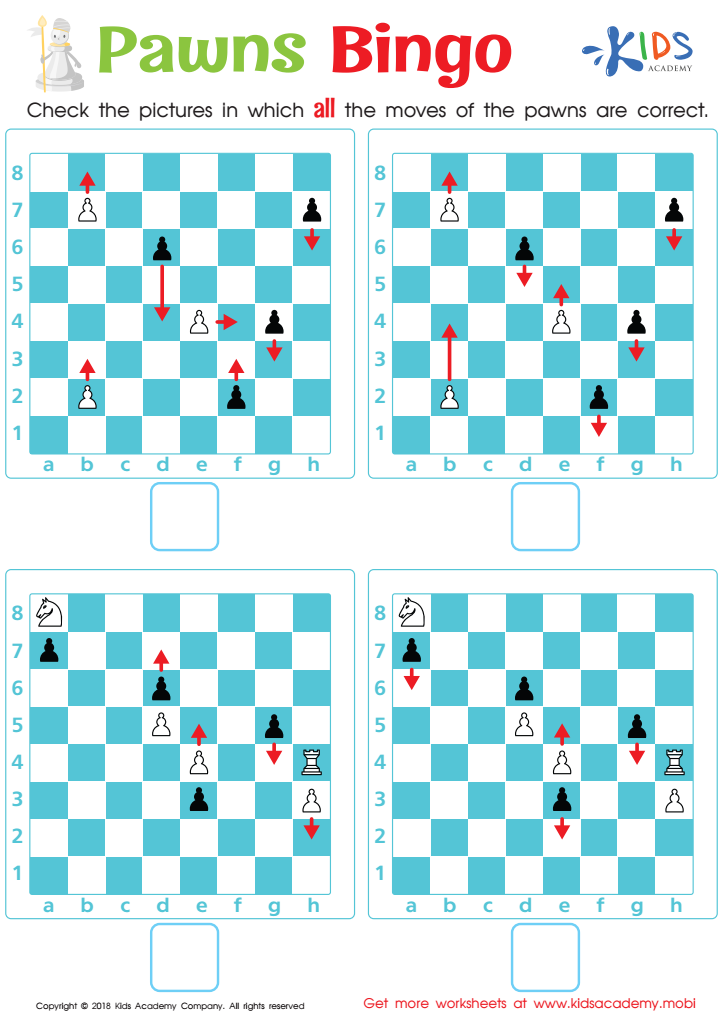
Pawns Bingo Worksheet
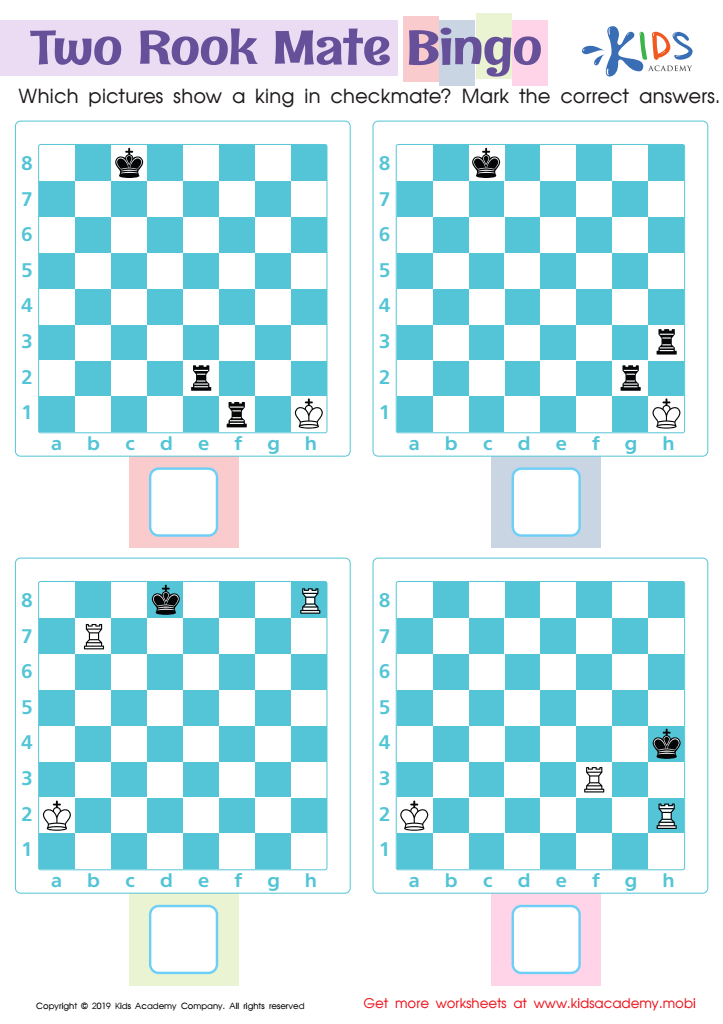
Two Rook Bingo Worksheet
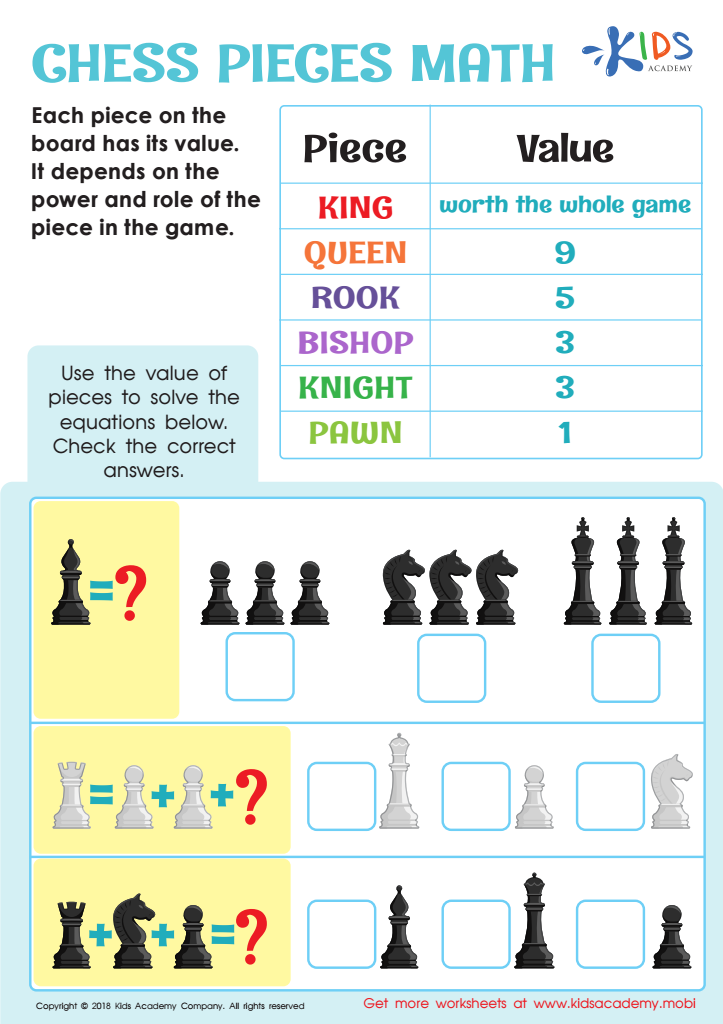
Chess Pieces Math Worksheet







Cognitive Development Chess for ages 4-6 offers a unique opportunity for parents and teachers to enhance children's critical thinking, problem-solving, and social skills through engaging gameplay. At this formative age, children's brains are highly adaptable and particularly receptive to learning. Chess introduces them to concepts of strategy, planning, and foresight in a playful context, stimulating cognitive growth.
Playing chess encourages children to hone their ability to think ahead and anticipate the consequences of their decisions. This aligns with educational goals, helping them develop skills in mathematics, logical reasoning, and decision-making. Moreover, the game fosters patience and discipline, essential qualities that will benefit children in their academic and personal lives.
Additionally, chess can provide valuable social interaction opportunities. As children learn to play games together, they develop communication skills, learn to respect opponents, and understand the importance of sportsmanship.
Finally, introducing chess at a young age can help mitigate anxiety, as it teaches children to engage with challenges thoughtfully and collaboratively. For parents and teachers, promoting chess is not just about learning a game; it’s about laying a strong foundation for lifelong learning and interpersonal skills, crucial for success in an evolving world.