Critical Thinking Chess Worksheets for Ages 4-6
4 filtered results
Difficulty Level
Grade
Age
-
From - To
Subject
Activity
Standards
Our "Critical Thinking Chess Worksheets for Ages 4-6" are designed to spark young minds through the exciting game of chess. Tailored for early learners, these worksheets introduce essential chess concepts while developing critical thinking and problem-solving skills. Kids will enjoy fun, interactive activities that make learning chess both engaging and educational. Perfect for beginners, our worksheets guide children step-by-step, helping them recognize patterns, make strategic decisions, and improve concentration. Give your child a head start in cognitive development with our expertly crafted chess worksheets, designed to foster intellectual growth through play. Ideal for classroom and home use!
Favorites
With answer key
Interactive
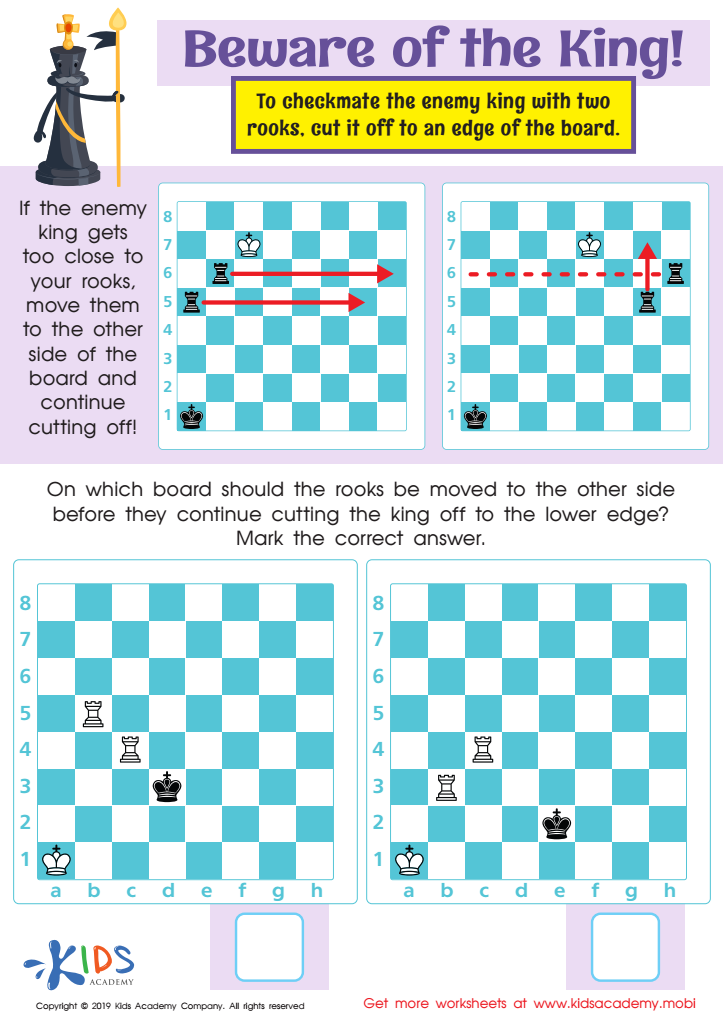
Beware of the King! Worksheet
Teach your child to play chess and gift them valuable skills like critical thinking, logic, and reasoning! This free PDF worksheet will teach them the Two Rook Mate strategy to checkmate an enemy king with two rooks. They'll learn how to keep the king away and move the rooks for checkmate. Have screen-free fun together!
 Assign to My Students
Beware of the King! Worksheet
Worksheet
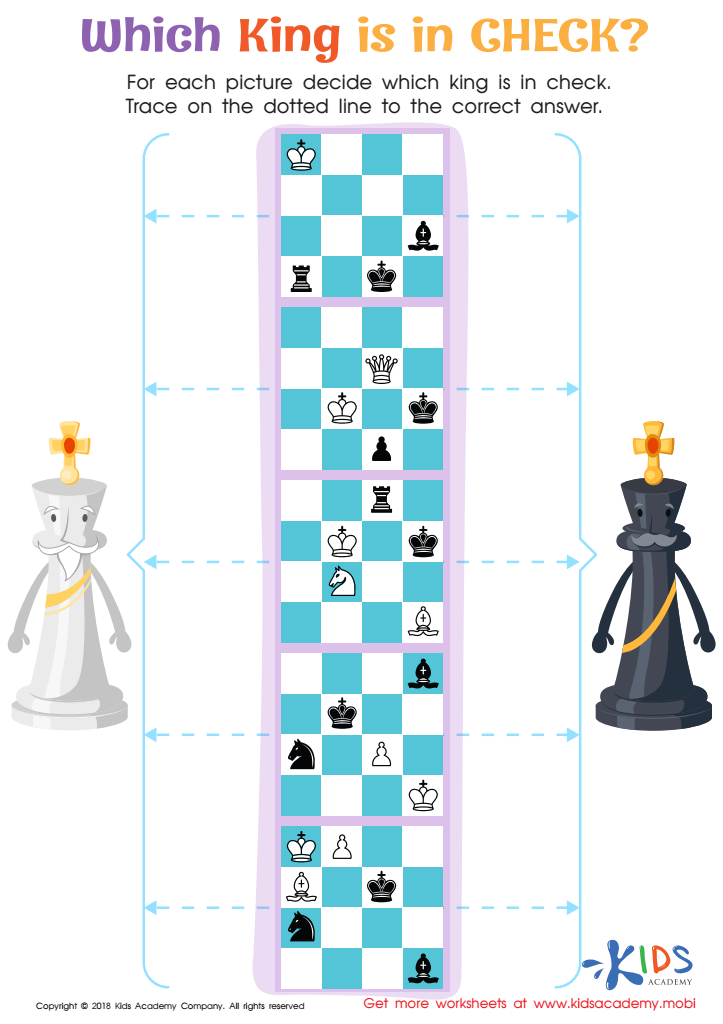
Which King is in Check? Worksheet
Teaching your children chess helps them solve problems, think critically, and develop logical patterns. With this free PDF, they'll analyze five boards to decide if the black or white king is in check. Tracing the lines, they'll improve their skills while having fun.
Which King is in Check? Worksheet
Worksheet
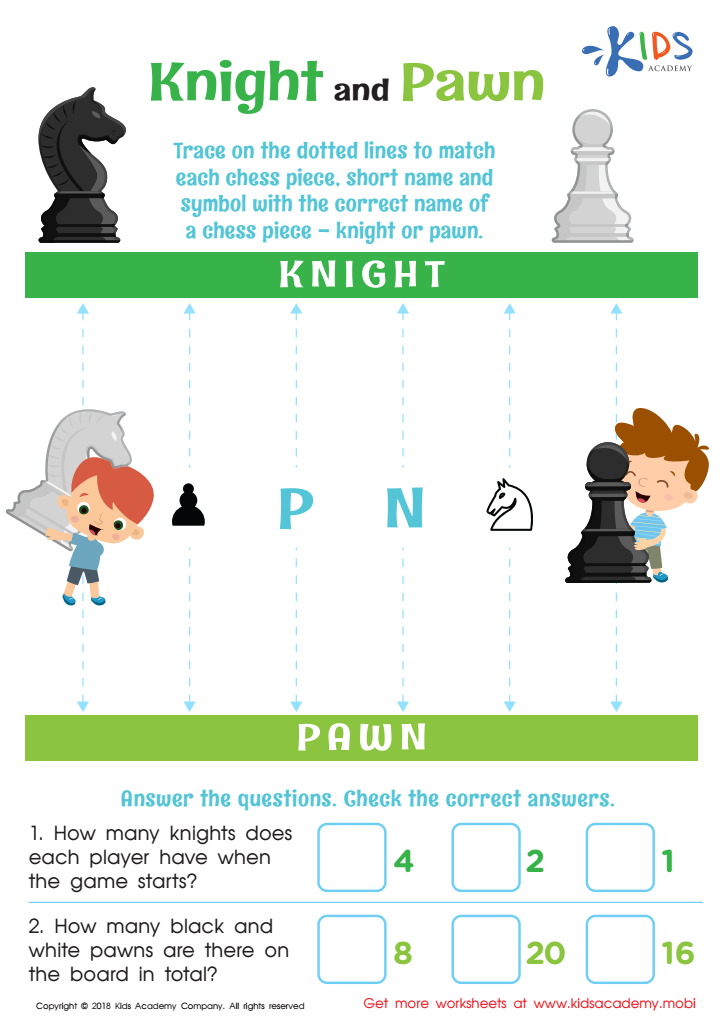
Knight and Pawn Worksheet
This tracing worksheet teaches kids about chess. They trace the dotted lines to match pieces, names and symbols to the correct chess piece. Questions at the bottom test their understanding. It's a simple exercise for a fun way to learn.
Knight and Pawn Worksheet
Worksheet
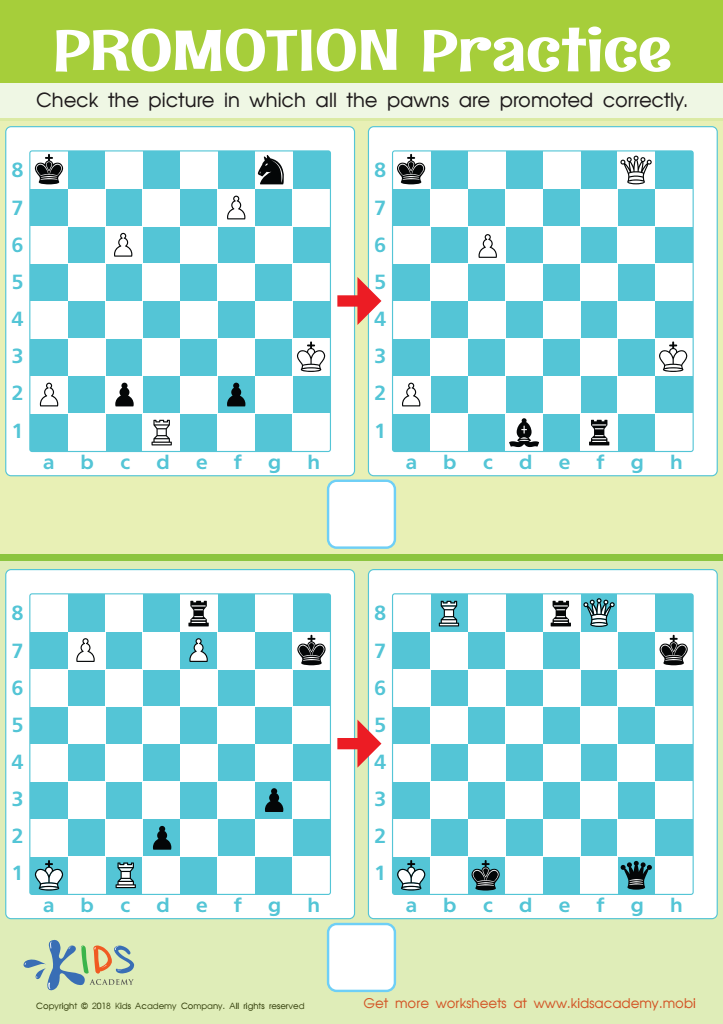
Promotion Practice Worksheet
Test your kids' promotions skills with this worksheet! Ask them to find the pictures in which the pawns are correctly promoted. Remember, when a pawn reaches the last rank it may be promoted to a queen, bishop, knight or rook. In addition, a pawn can be promoted when it captures a chess piece on the last rank.
Promotion Practice Worksheet
Worksheet
Join Kids Academy for Free
Who is primarily going to use this learning content?








Parents and teachers should care about Critical Thinking Chess for children ages 4-6 because it offers a playful yet profound way to nurture cognitive and emotional development. At this tender stage, children's brains are highly receptive to new experiences, and chess provides a structured yet flexible environment for learning essential skills.
Firstly, chess enhances critical thinking and problem-solving abilities. Children learn to analyze situations, consider various outcomes, and make strategic decisions. This intellectual exercise helps to boost their reasoning skills, which are crucial for their future academic performance.
Secondly, chess improves concentration and memory. The game requires children to stay focused, remember the movements of various pieces, and plan several moves ahead. This ability to concentrate and retain information can translate into better focus in the classroom.
Thirdly, chess encourages patience and discipline. Children learn to wait their turn and think before acting, fostering self-regulation and emotional control. These skills are essential for social interactions and managing frustration.
Lastly, chess promotes a growth mindset. Children experience both wins and losses, teaching them resilience and the value of effort and persistence. It also fosters creativity, as they devise novel strategies to achieve their objectives.
By introducing Critical Thinking Chess at an early age, parents and teachers set children up for a successful and well-rounded academic and personal future.