Logical thinking improvement Chess Worksheets for Ages 4-6
3 filtered results
-
From - To
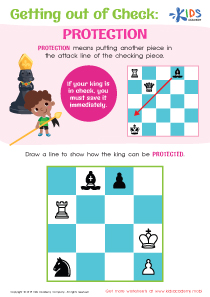
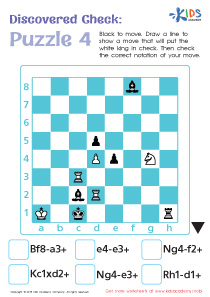
Enhance your child’s logical thinking skills with our engaging Chess Worksheets designed for ages 4-6! These printable activities introduce young learners to the fundamentals of chess while promoting critical thinking, problem-solving, and strategic planning. Each worksheet offers fun challenges tailored to their cognitive level, helping children develop essential skills through play. Whether they are identifying chess pieces, understanding basic moves, or solving simple problems, these engaging exercises make learning enjoyable. Perfect for parents and educators, our resources foster a love for chess and critical skills that benefit children in their academic journey. Start nurturing their logical thinking today!
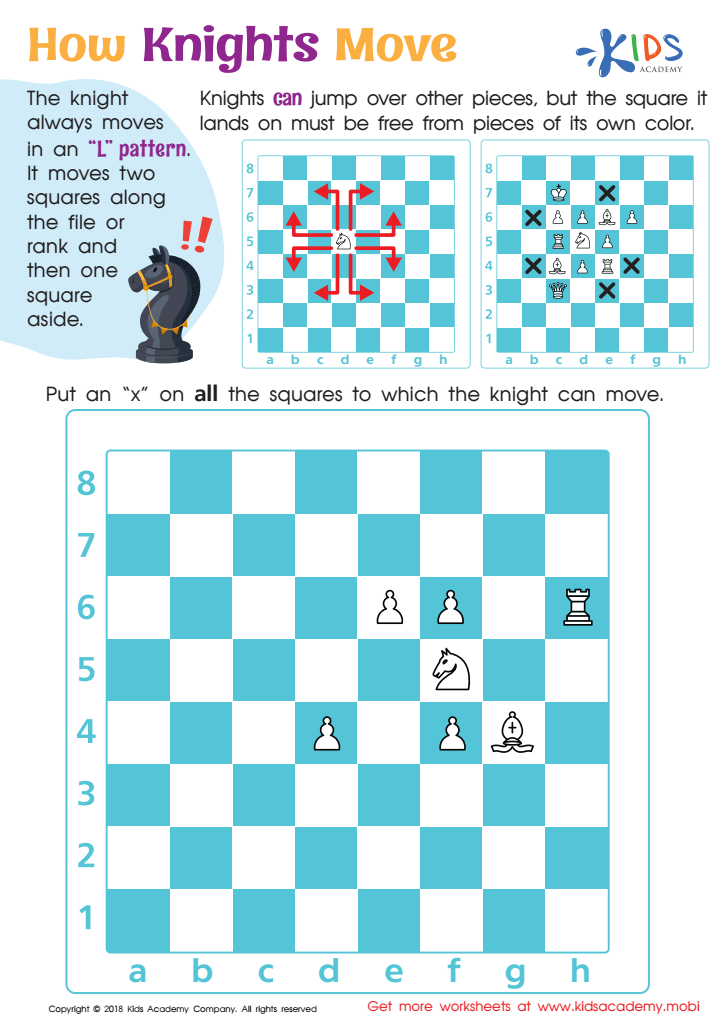
How Knights Move Worksheet
 Assign to My Students
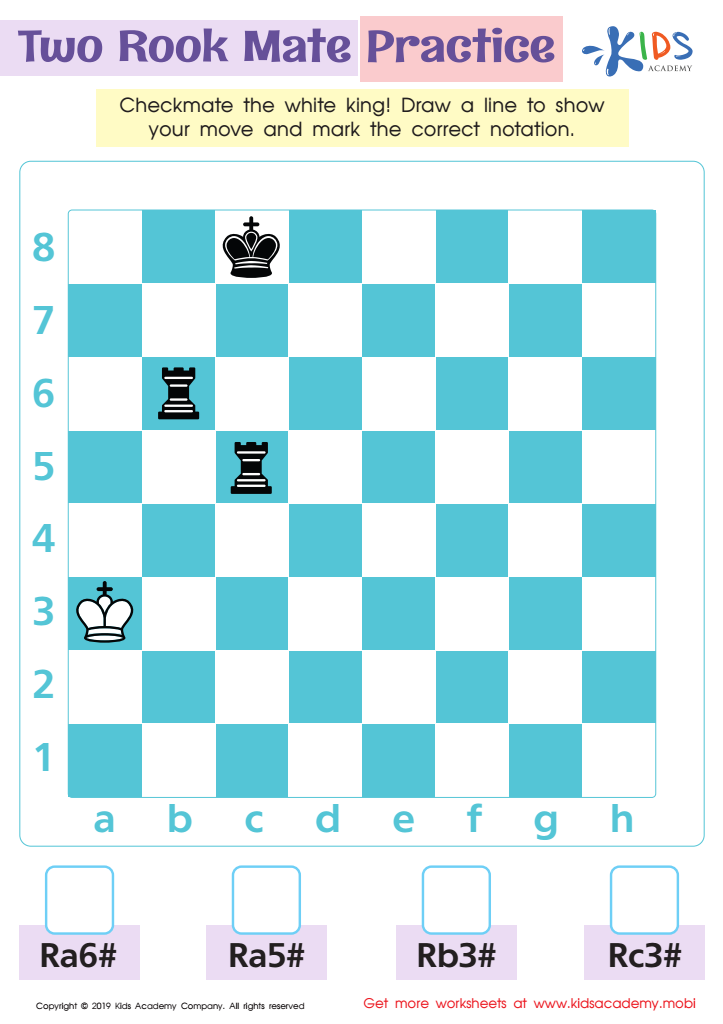
Two Rook Mate Practice Worksheet
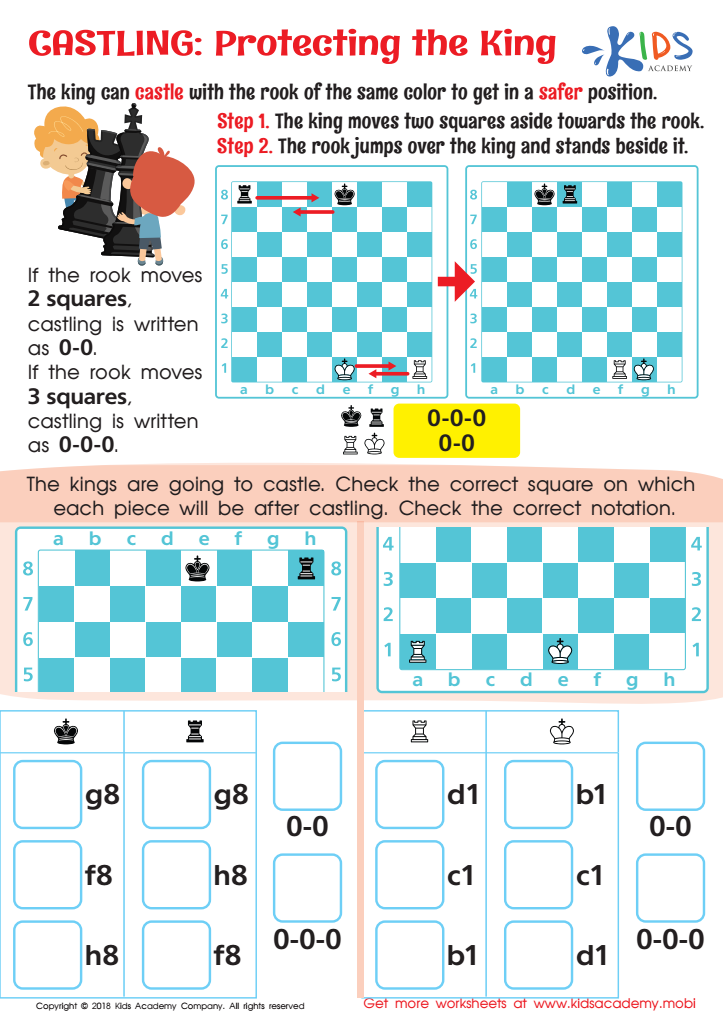
Castling: Protecting the King Worksheet






Logical thinking is a crucial skill that lays the foundation for problem-solving and decision-making in young children. Introducing chess to children aged 4-6 offers a playful yet profound way to enhance this ability. Chess encourages strategic thinking as players must plan several moves ahead, fostering cognitive skills like spatial awareness, pattern recognition, and critical thinking.
For parents and teachers, engaging young minds in chess creates a fun environment where children can learn to think critically about their choices and anticipate the actions of others, which is essential for social interactions. Chess also promotes patience and perseverance, teaching children that it's okay to lose, fostering resilience, and developing a growth mindset.
Moreover, chess stimulates creativity and imagination. As children explore various strategies, they learn to approach problems from multiple perspectives. For educators, incorporating chess into the curriculum supports not only logical thinking but also cooperation and communication skills when played in groups.
By prioritizing logical thinking through chess, parents and teachers equip children with valuable life skills that transcend the game, helping them navigate their educational journey and everyday challenges with confidence and ingenuity. Thus, nurturing logical thinking through chess is an investment in a child’s future success.