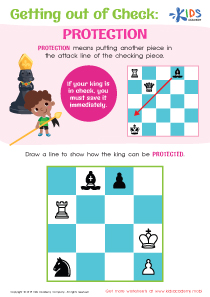
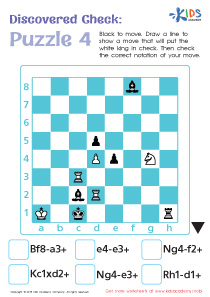
Number Recognition Chess Worksheets for Ages 4-6
4 filtered results
-
From - To
Discover our engaging Number Recognition Chess Worksheets designed specifically for children ages 4-6! These interactive worksheets combine the excitement of chess with essential early math skills, helping young learners recognize and understand numbers in a fun and captivating way. Through colorful illustrations and playful activities, children will explore number identification, counting, and one-to-one correspondence—all while developing a love for the strategic game of chess. Perfect for parents and educators, these carefully curated resources promote cognitive growth and critical thinking skills. Download our worksheets today and empower your child with the confidence to master both numbers and chess!
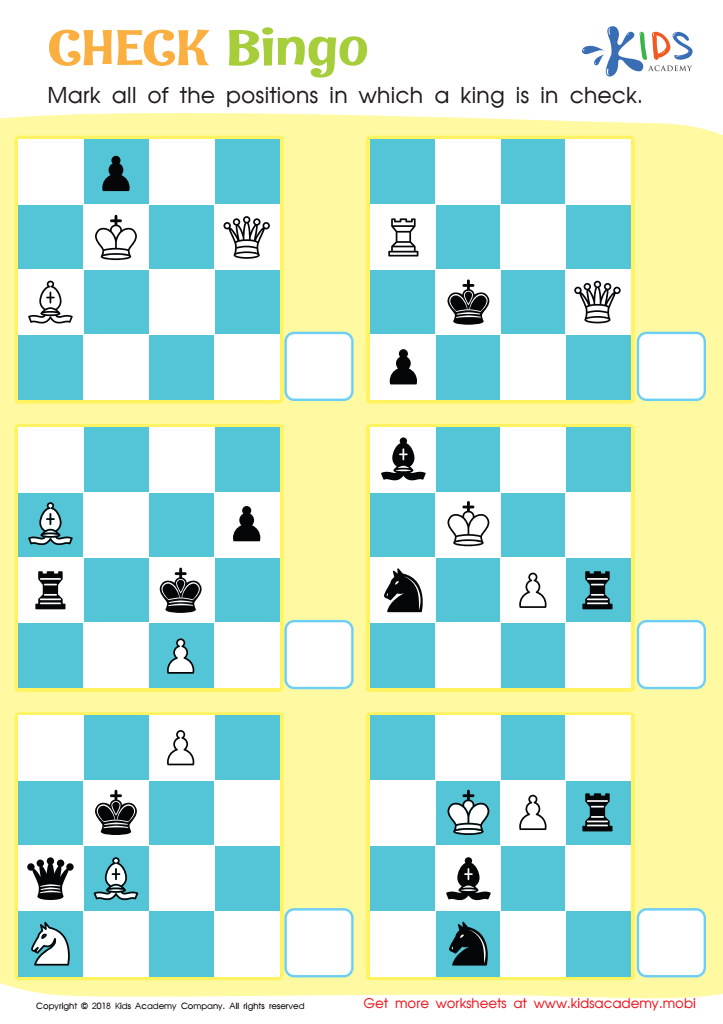
Check Bingo Worksheet
 Assign to My Students
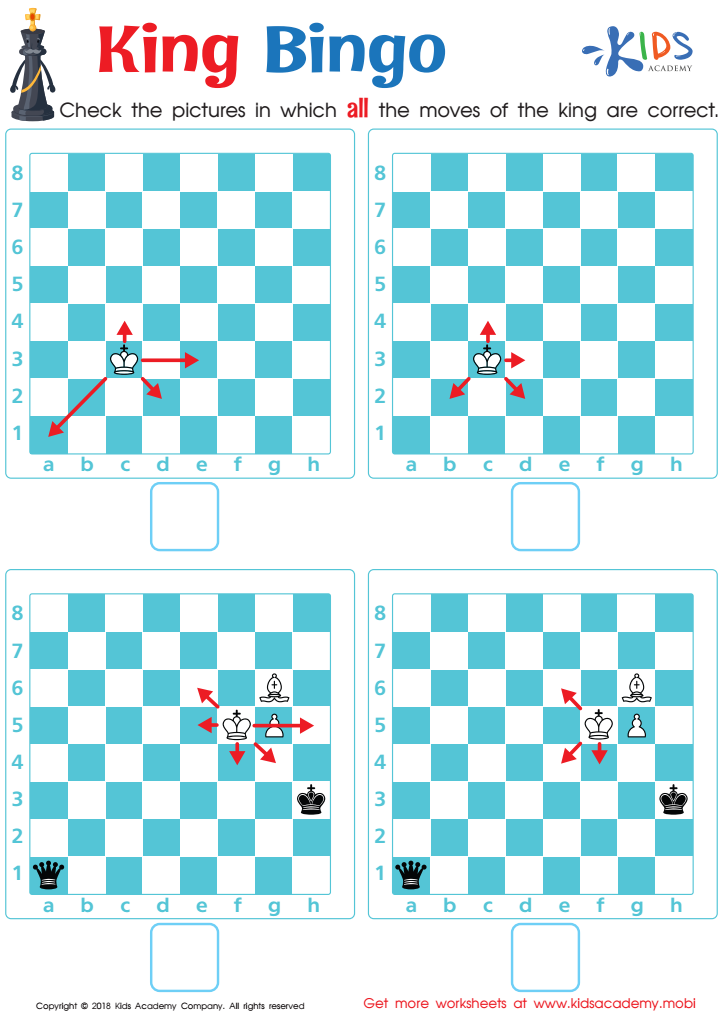
King Bingo Worksheet
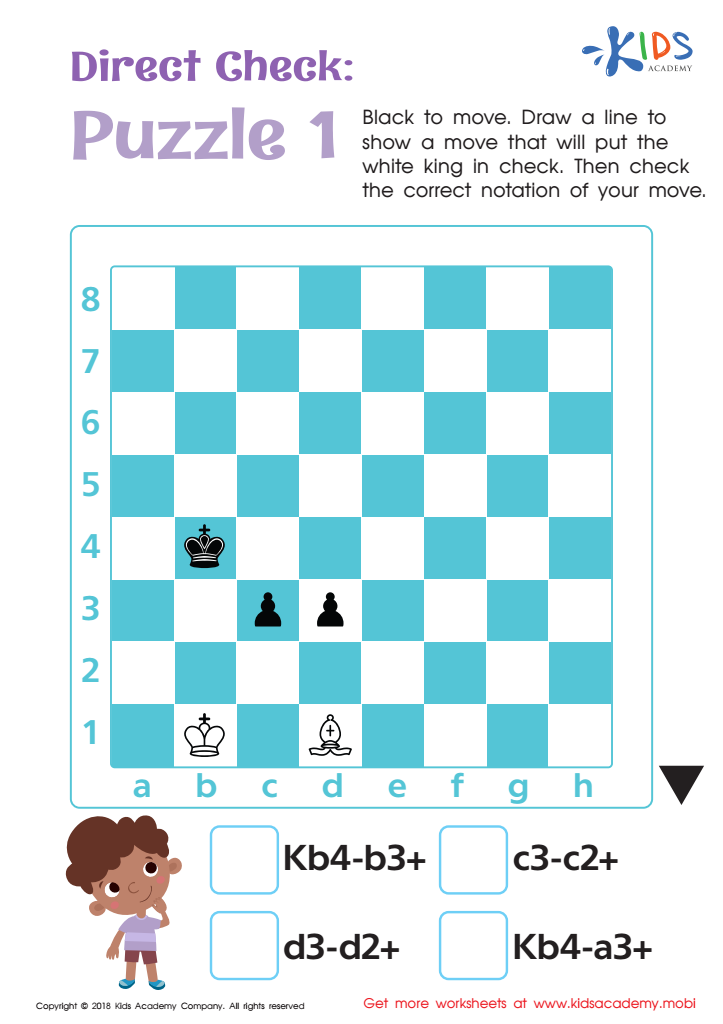
Direct Check: Puzzle 1 Worksheet
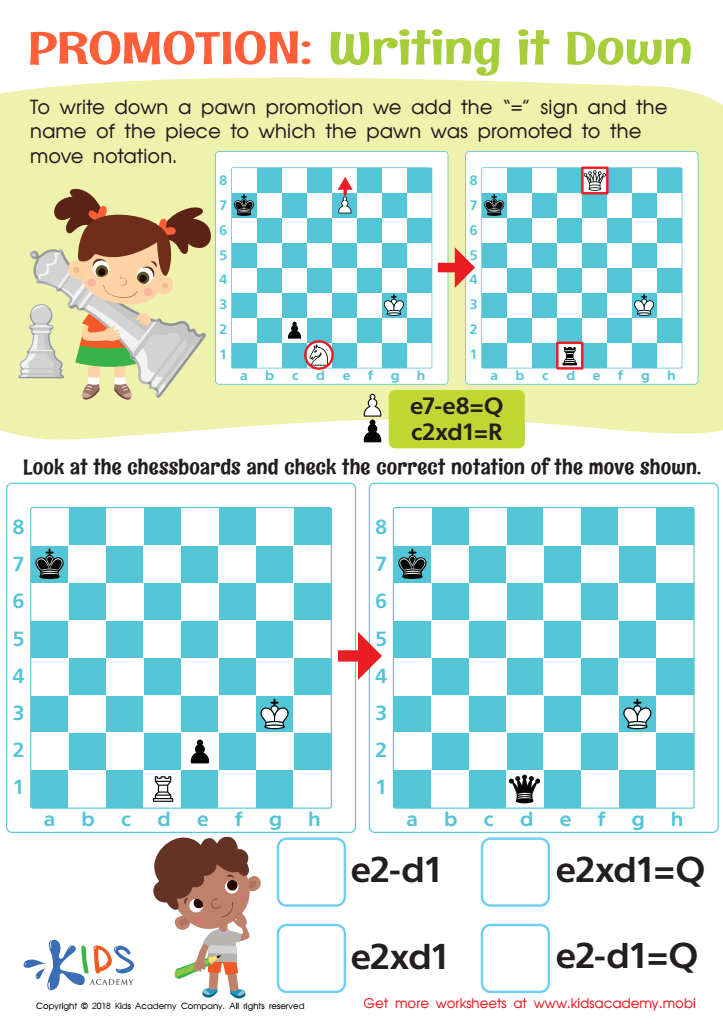
Writing it Down Worksheet




Number Recognition Chess is an engaging and educational tool designed for young children aged 4-6, blending the concepts of early mathematics with foundational chess skills. Parents and teachers should care about this innovative approach because it offers numerous cognitive and developmental benefits. First, it enhances number recognition, a crucial skill for early learners, by incorporating fun visuals and action in gameplay, making the learning process enjoyable and interactive.
Moreover, the game promotes critical thinking and problem-solving as children learn to strategize and make decisions about their moves. As they manipulate pieces and understand their different values, they are simultaneously engaging in early mathematical concepts like counting, addition, and subtraction. These skills are important for building a solid foundation in mathematics.
Additionally, Number Recognition Chess encourages social skills, cooperation, and patience as children take turns and learn to respect their opponents. It can also enhance memory and focus, as young players must remember their strategies and the positions of pieces on the board.
Ultimately, by introducing children to Number Recognition Chess, parents and teachers are investing in their cognitive development while fostering a love for learning and games that can last a lifetime. This combination of play and education sets young learners on a positive path for future academic success.