Check out this FREE "Addition skills" Trial Lesson for age 4-6!

Match Exactly the Same

Favorites
With answer key
Interactive
  • 4-6
  • Addition skills
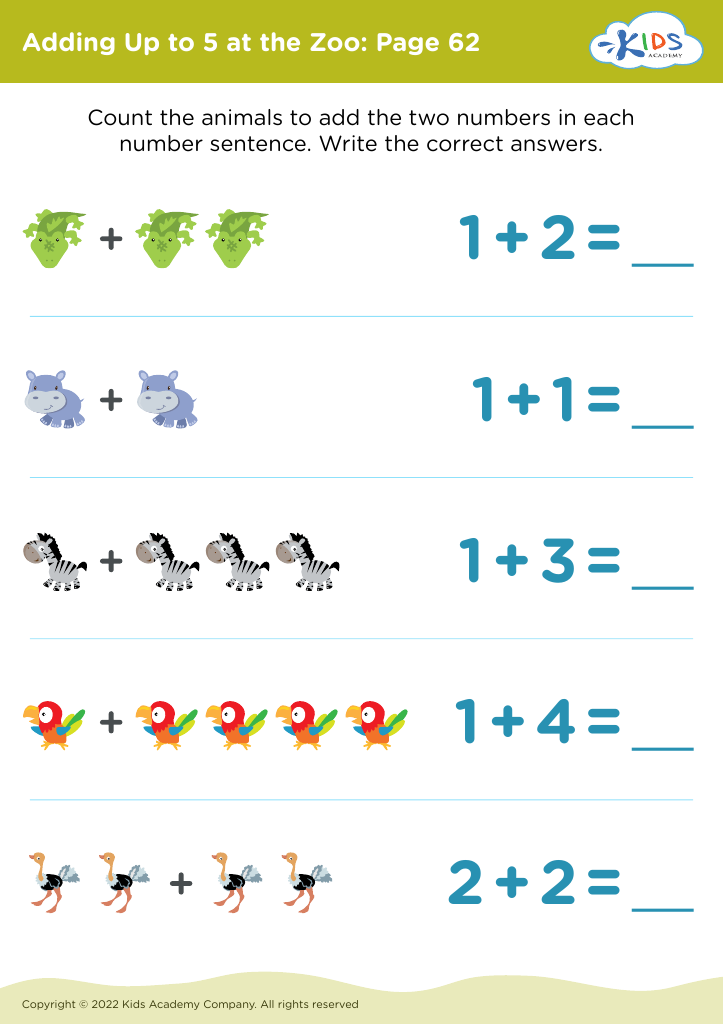
Adding Up to 5 at the Zoo: Page 62
Worksheet
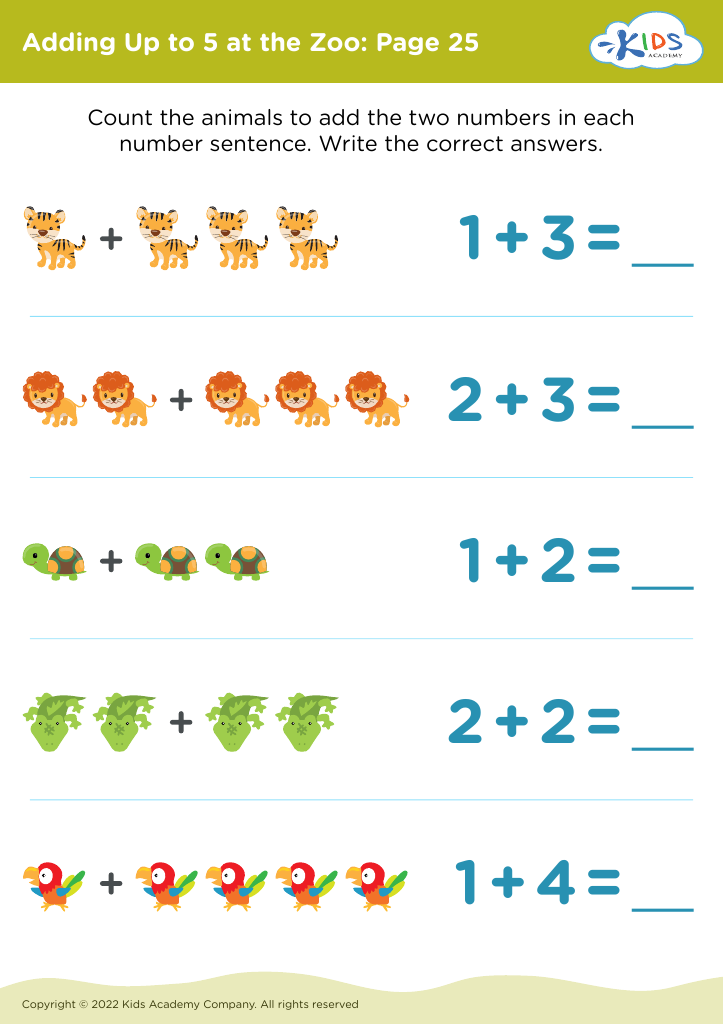
Adding Up to 5 at the Zoo: Page 25
Worksheet
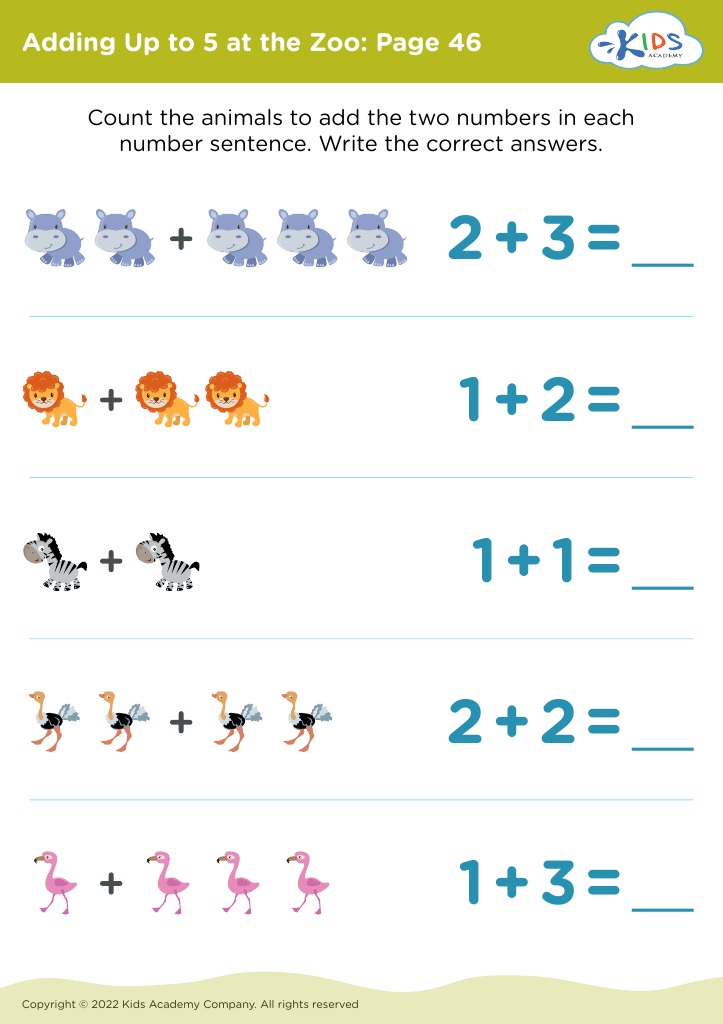
Adding Up to 5 at the Zoo: Page 46
Worksheet
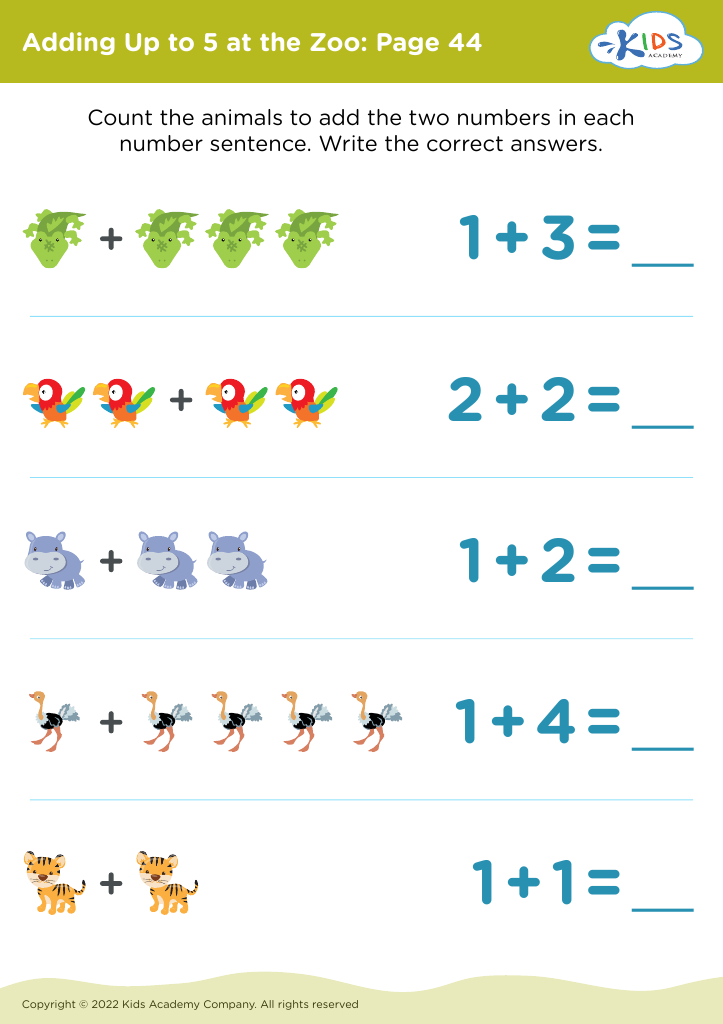
Adding Up to 5 at the Zoo: Page 44
Worksheet
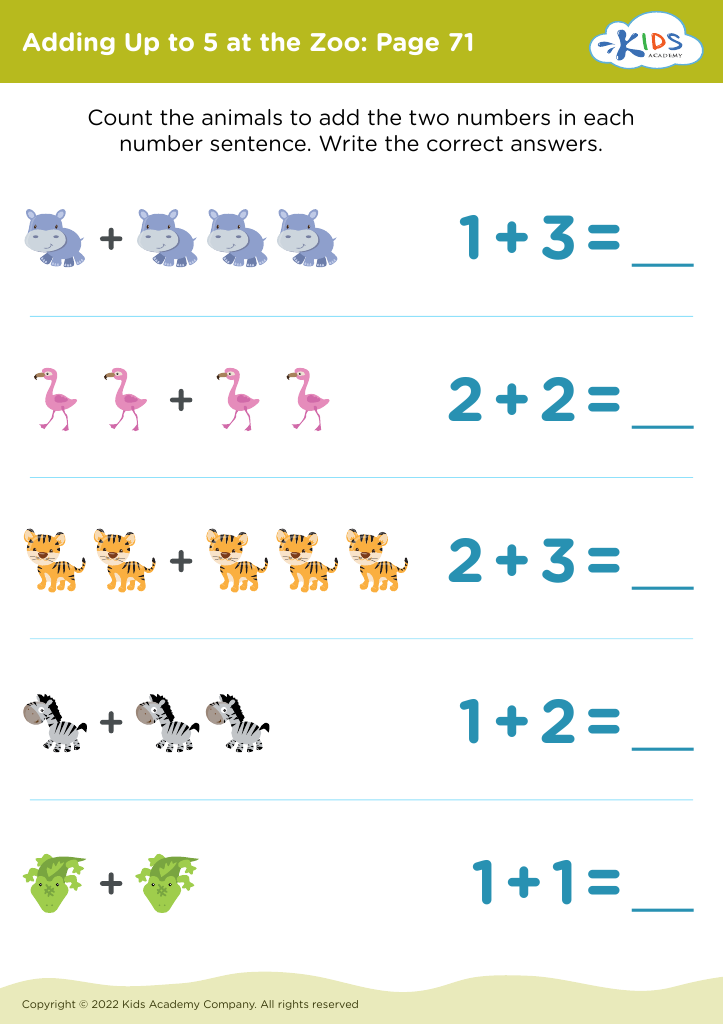
Adding Up to 5 at the Zoo: Page 71
Worksheet
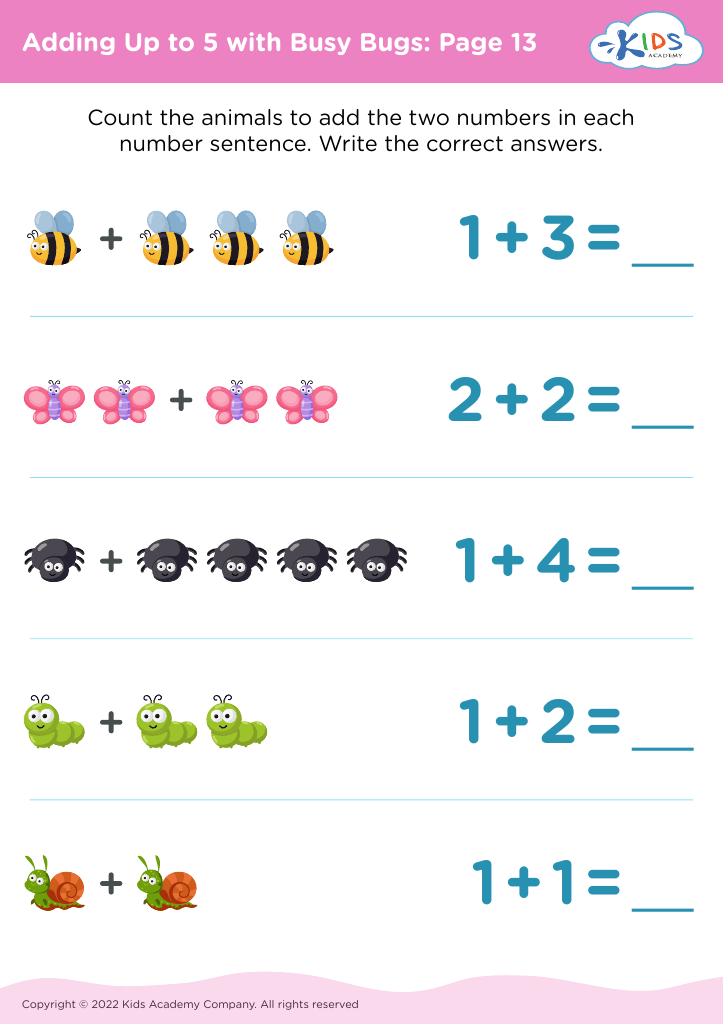
Adding Up to 5 with Busy Bugs: Page 13
Worksheet
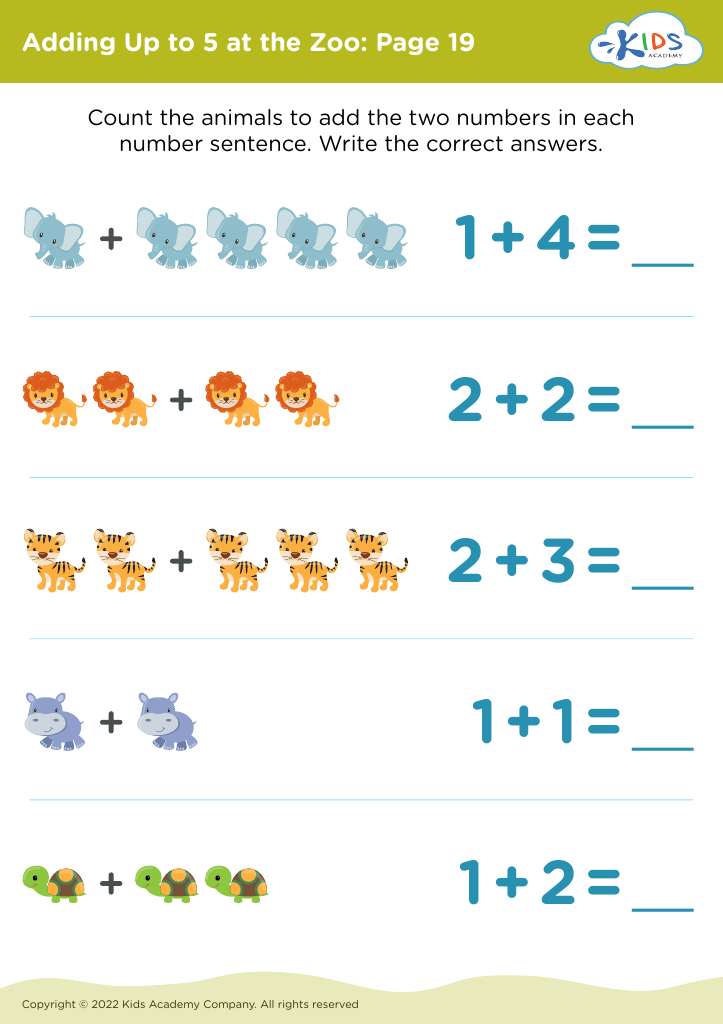
Adding Up to 5 at the Zoo: Page 19
Worksheet
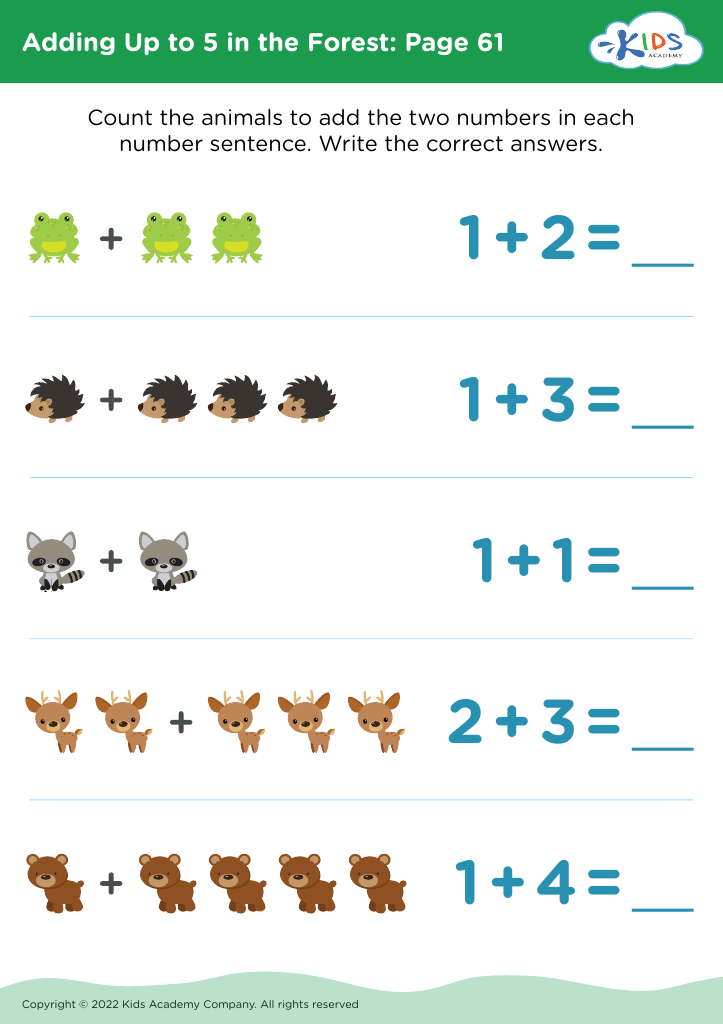
Adding Up to 5 in the Forest: Page 61
Worksheet
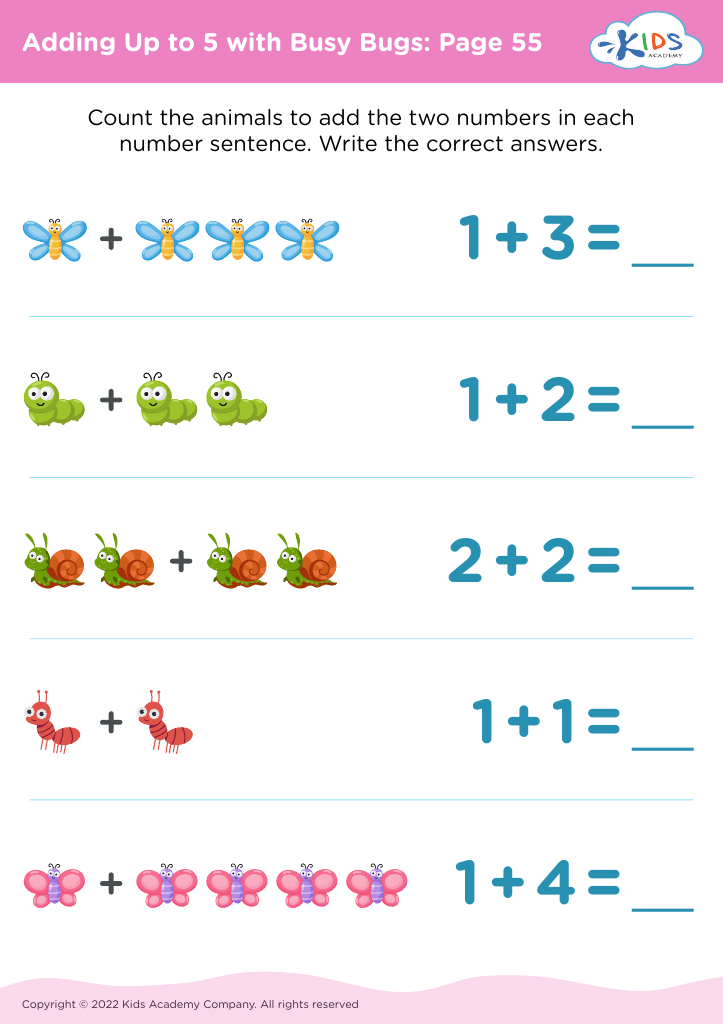
Adding Up to 5 with Busy Bugs: Page 55
Worksheet
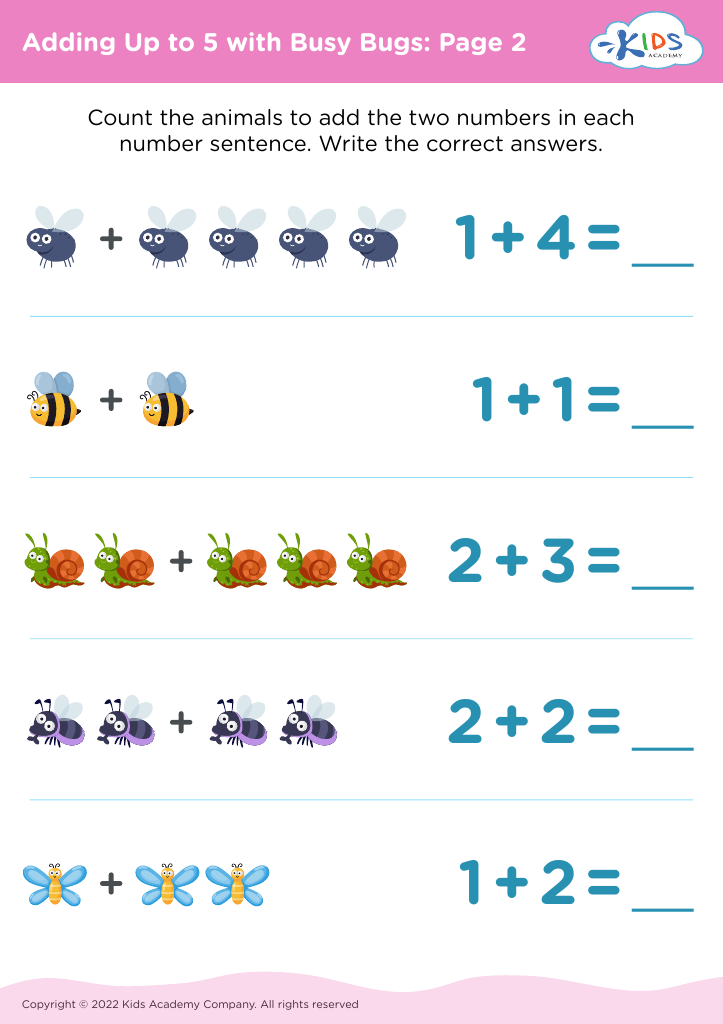
Adding Up to 5 with Busy Bugs: Page 2
Worksheet
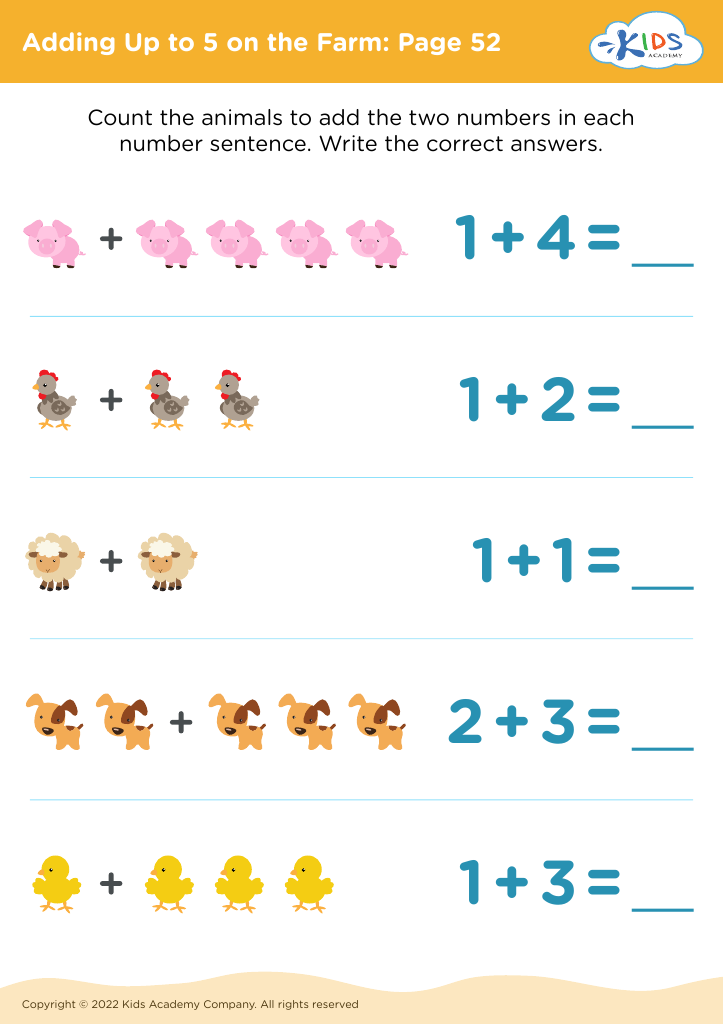
Adding Up to 5 on the Farm: Page 52
Worksheet
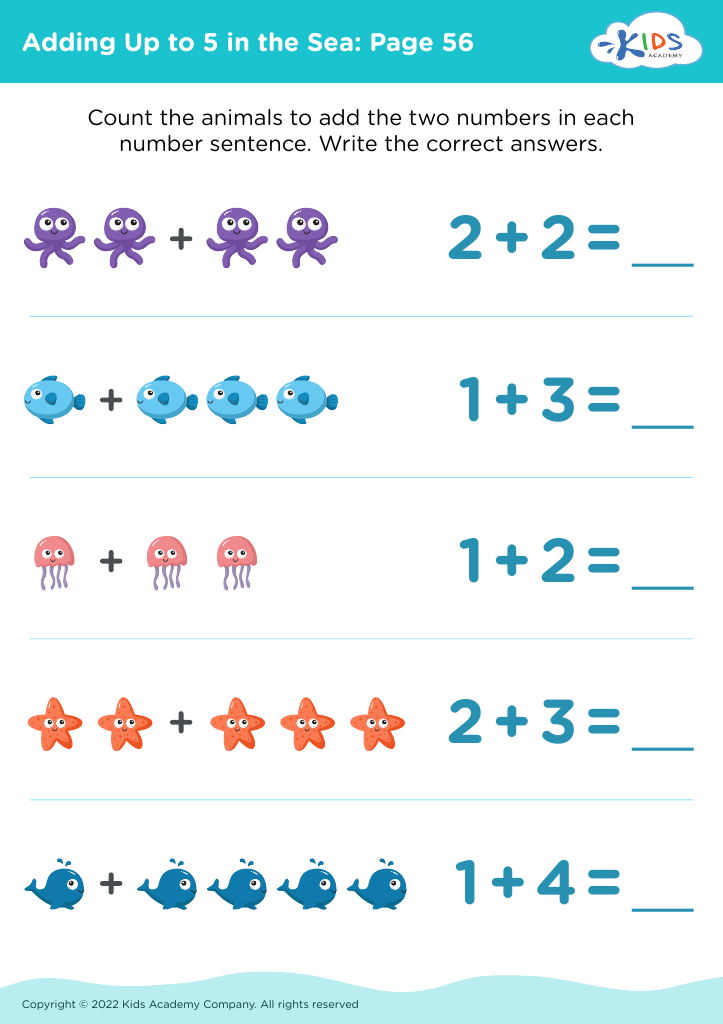
Adding Up to 5 in the Sea: Page 56
Worksheet
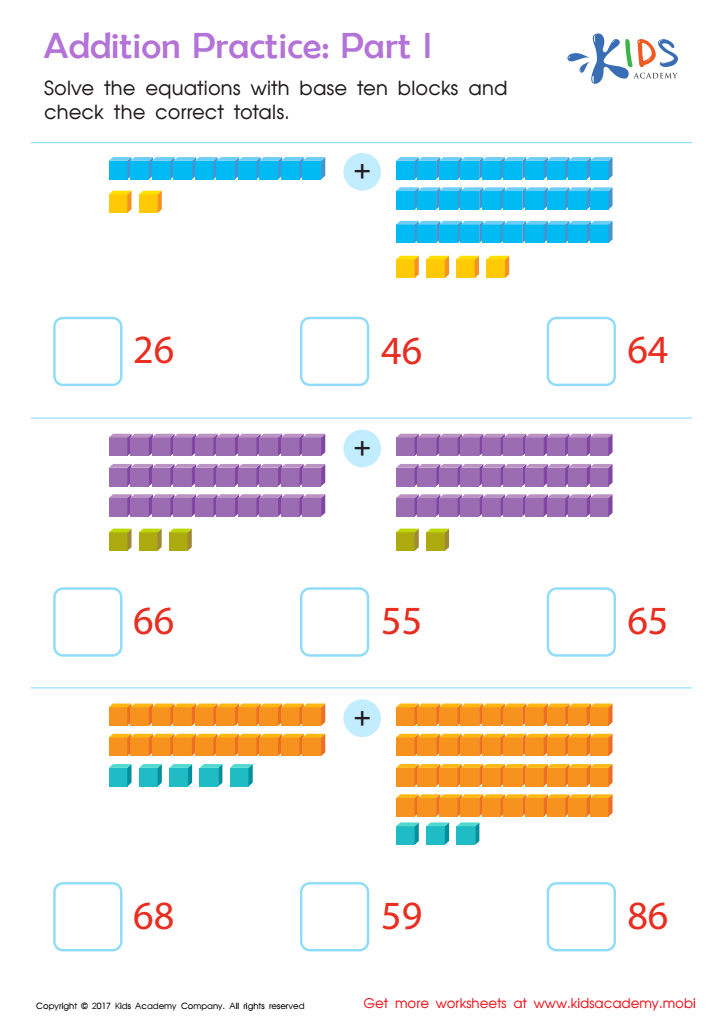
Addition Practice Sheet: Part 1

Addition Practice Sheet: Part 1

Kids Academy offers a free worksheet to help kids learn addition with base ten blocks, with or without actual manipulatives. Help your Kindergarten or First Grader flex and increase their knowledge of place value and understand math more deeply. Download this useful page for images that will promote success.
Addition Practice Sheet: Part 1
Worksheet
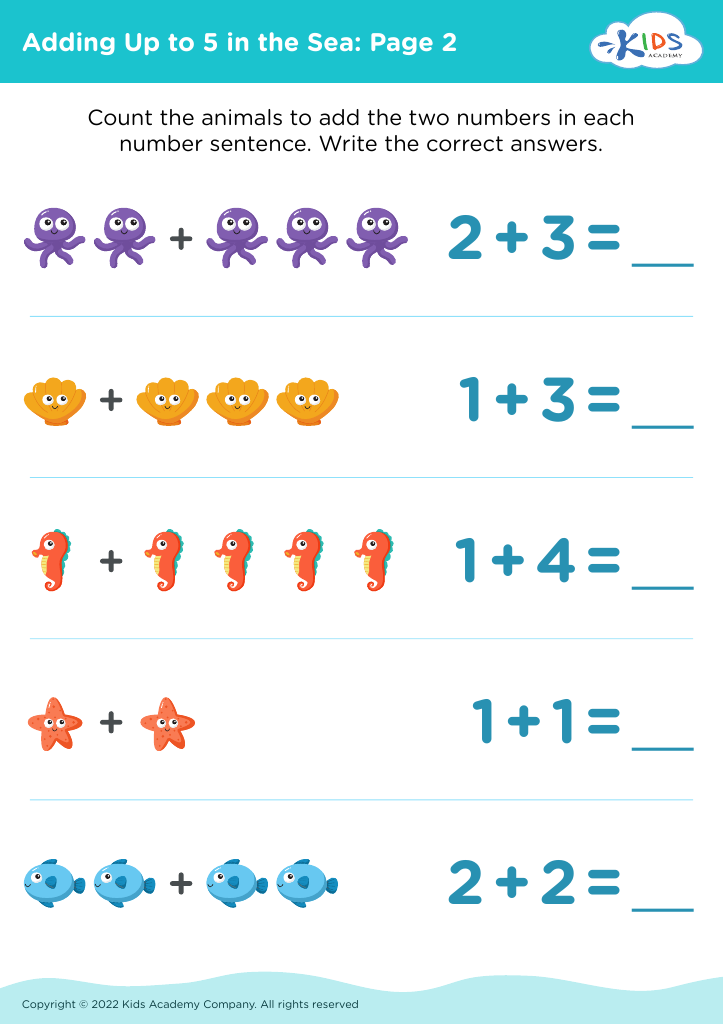
Adding Up to 5 in the Sea: Page 2

Adding Up to 5 in the Sea: Page 2

Adding Up to 5 in the Sea: Page 2
Worksheet
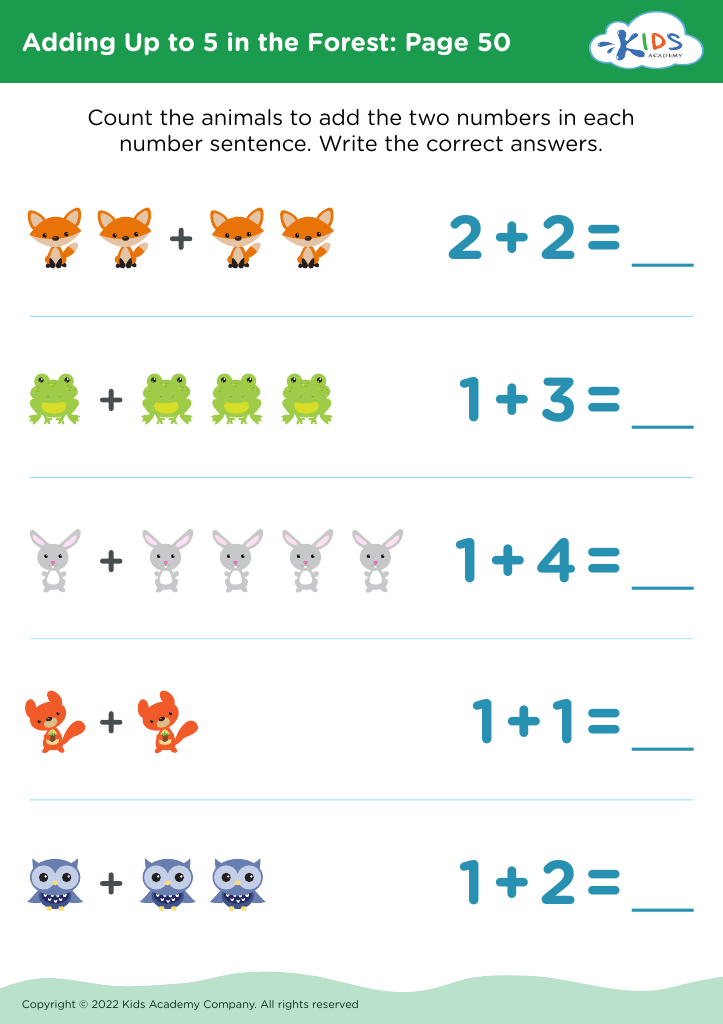
Adding Up to 5 in the Forest: Page 50
Worksheet
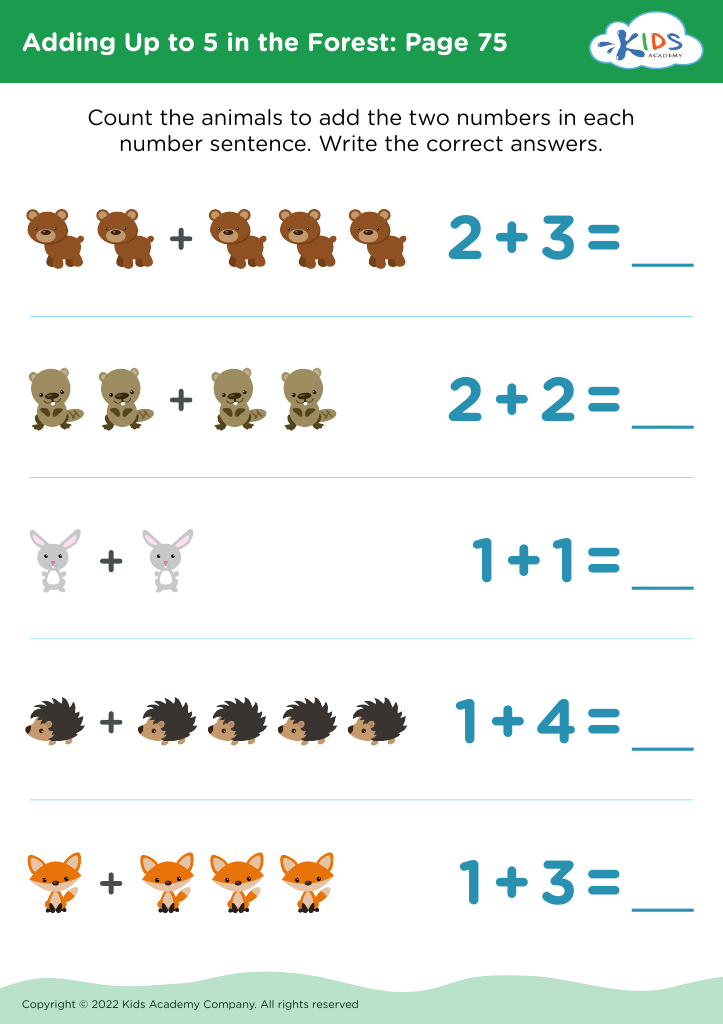
Adding Up to 5 in the Forest: Page 75
Worksheet
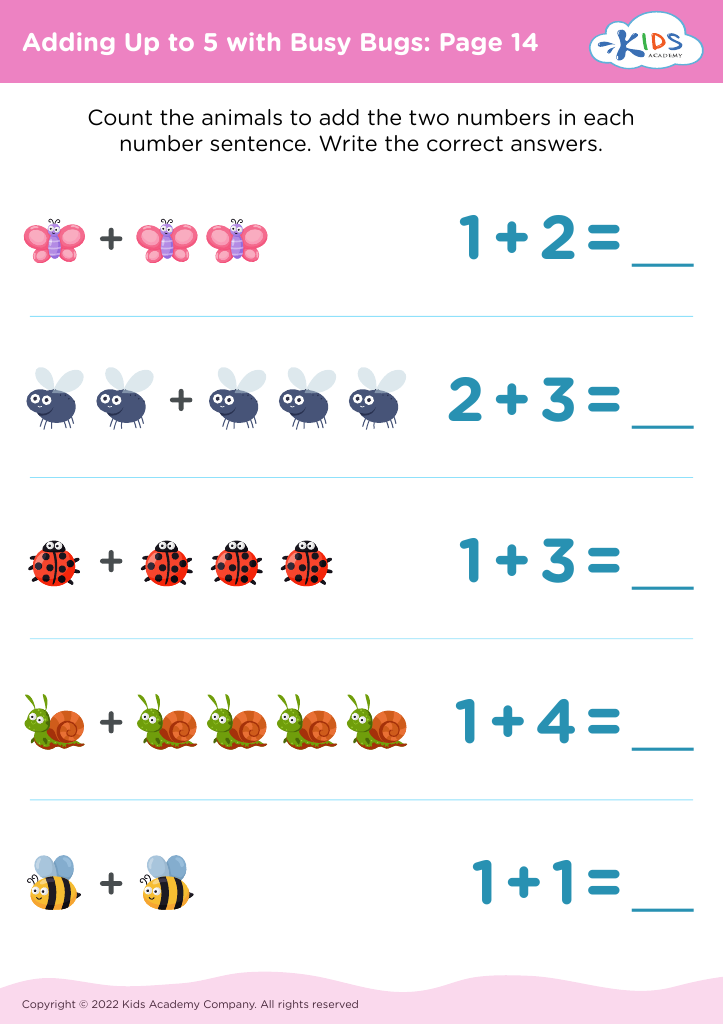
Adding Up to 5 with Busy Bugs: Page 14
Worksheet
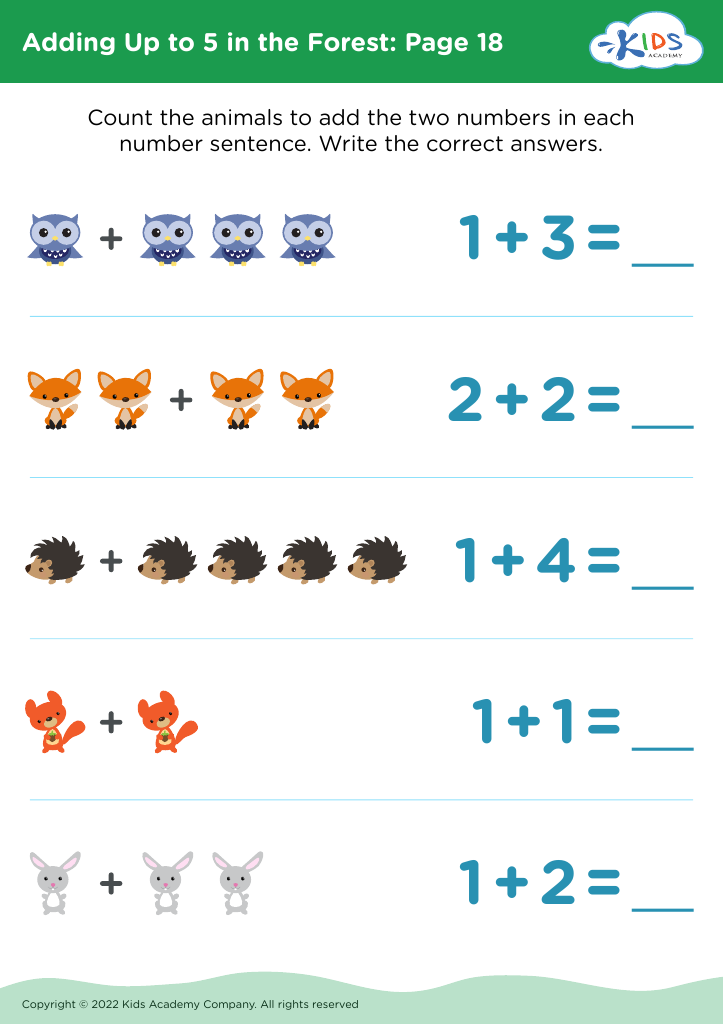
Adding Up to 5 in the Forest: Page 18
Worksheet
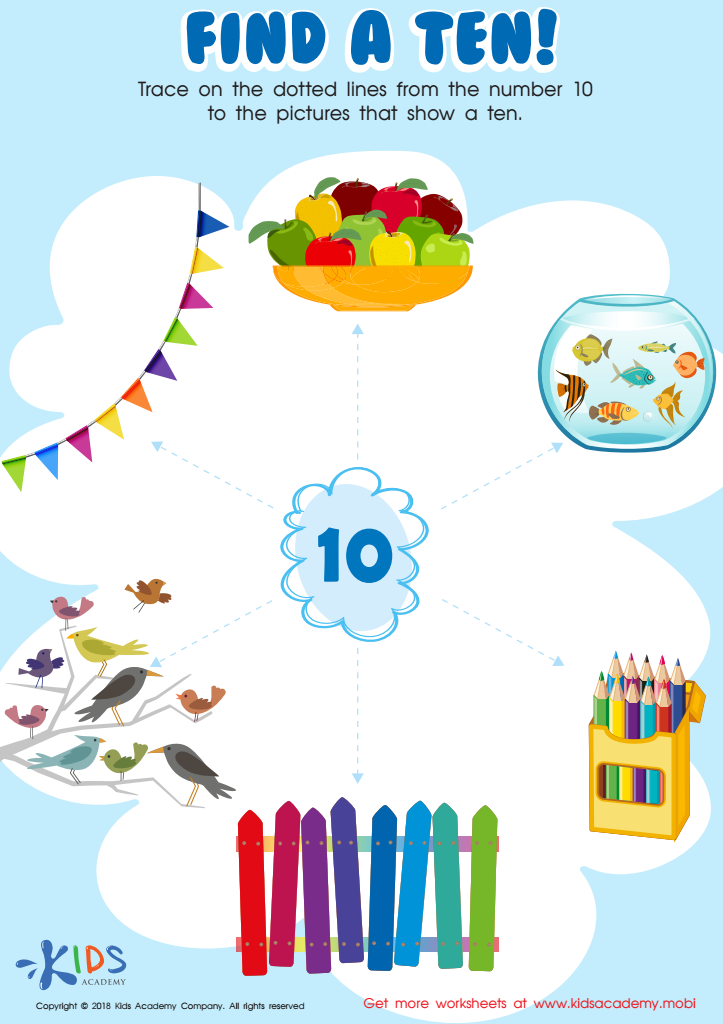
Kindergarten math worksheet: find a ten

Kindergarten Math Worksheet: Find a Ten
Help your child learn to count to 10 joyfully with this kindergarten math worksheet: Find a Ten! It's full of vivid images to make counting easier. Just count the items in each picture and trace the dotted lines for the correct answer.
Kindergarten Math Worksheet: Find a Ten
Worksheet
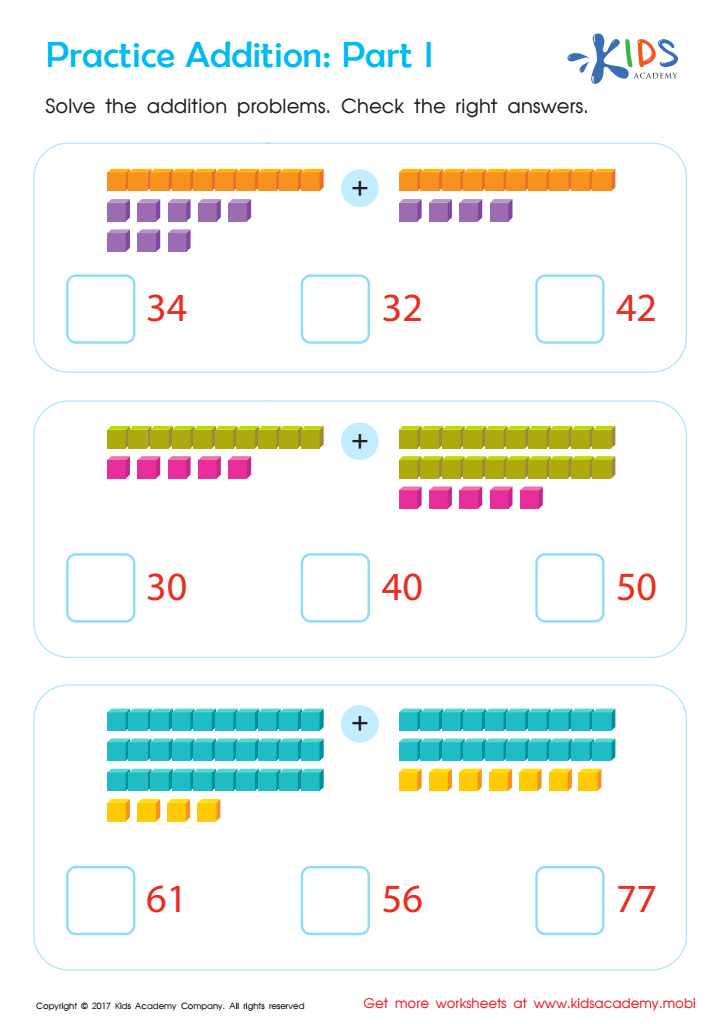
Practice Addition: Part 1 Worksheet

Practice Addition: Part 1 Worksheet

Having trouble teaching your 1st grader numbers and addition? Download this free worksheet! With colorful building blocks, it helps kids visualise and understand simple equations. For extra guidance, multiple choice answers are included to boost their confidence when practising.
Practice Addition: Part 1 Worksheet
Worksheet
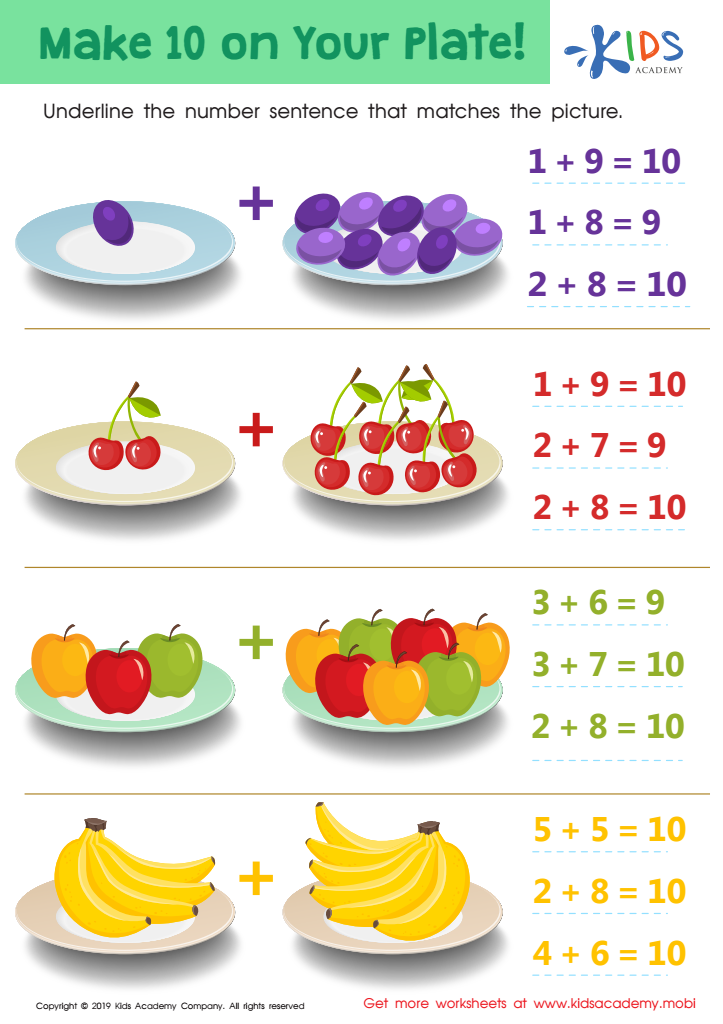
Make 10 on Your Plate! Worksheet
Make 10 on Your Plate! Worksheet
Get your students interested in this exercise by asking them to identify the fruits in the picture. Then, carefully count all the groups of fruit and add them up. Help preschoolers underline the number sentence that matches the picture. Engage their taste buds in a fun way with four different equations!
Make 10 on Your Plate! Worksheet
Worksheet
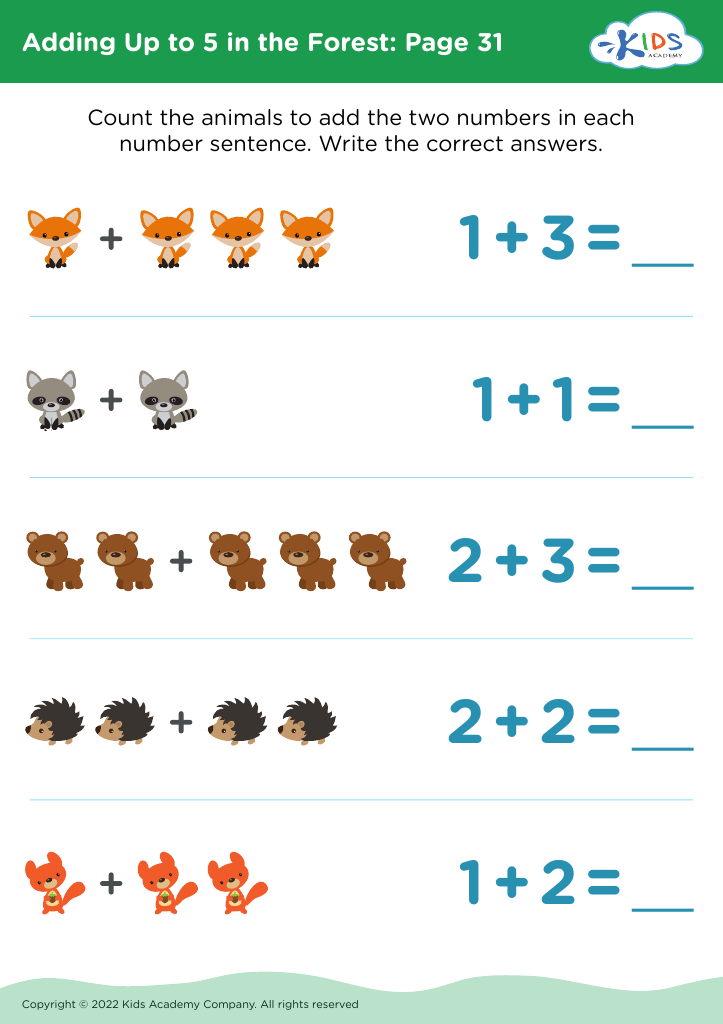
Adding Up to 5 in the Forest: Page 31
Worksheet
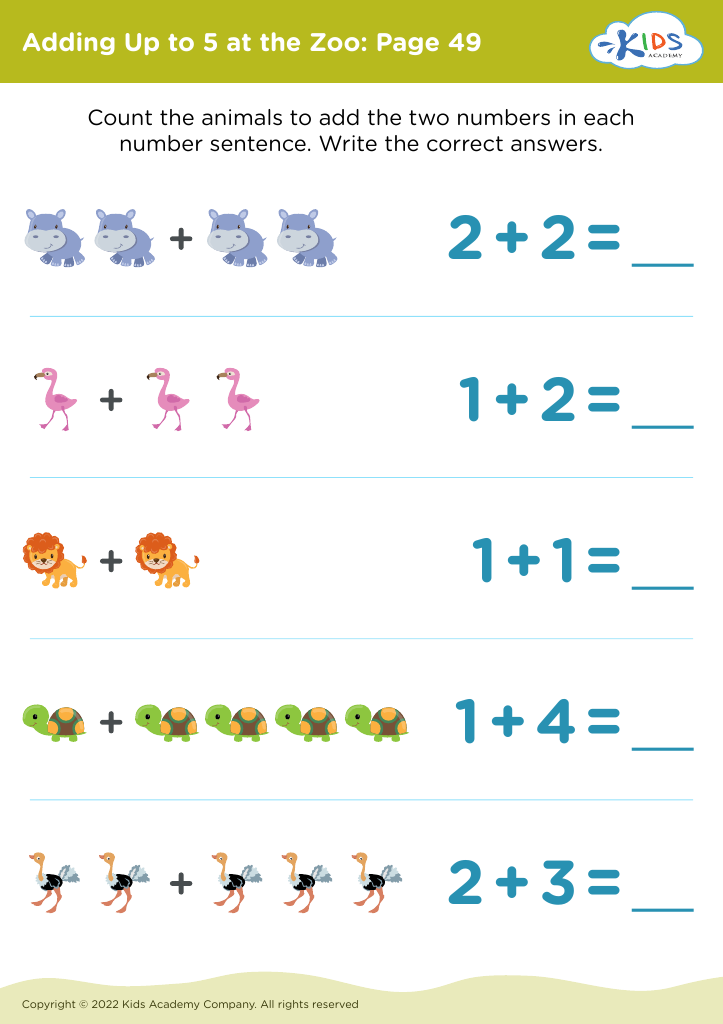
Adding Up to 5 at the Zoo: Page 49
Worksheet
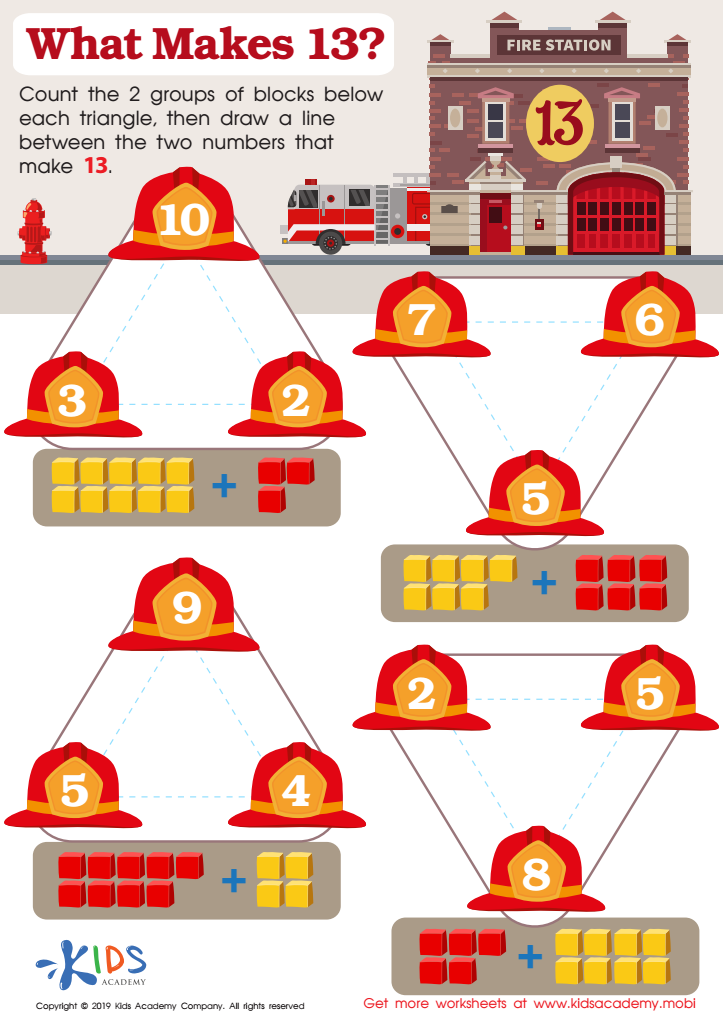
What Makes 13 Worksheet


What Makes 13 Worksheet
Help your kids practice maths with this worksheet! With colourful images and simple equations, your kids will be more engaged in learning. Go through the four equations and help them add up the numbers. Then, draw a line between the numbers that make 13. Doing this will aid their learning and understanding.
What Makes 13 Worksheet
Worksheet


Addition skills are foundational to early math education, critical for young learners (ages 4-6). Parents and teachers should prioritize developing these skills for several reasons.

Firstly, addition is one of the basic building blocks of mathematics. Proficiency in addition sets the stage for learning more complex math concepts, such as subtraction, multiplication, and division. Ensuring children have a strong grasp on addition helps build their confidence to tackle future math challenges.

Secondly, addition enhances cognitive development. Activities and games that involve adding numbers can improve kids’ problem-solving abilities and logical thinking. This cognitive growth isn't limited to mathematics alone but can extend to other areas, enhancing overall academic performance.

Moreover, early achievement in math can lead to a positive attitude towards the subject. When children can easily add numbers, they gain a sense of accomplishment, fostering a lifelong appreciation for learning and intellectual curiosity. This positive relationship with math can reduce math anxiety that often develops as children get older.

Furthermore, basic addition skills are vital for everyday life. From counting toys to understanding time and money, competency in addition helps children navigate and make sense of the world around them, promoting independence and confidence in various day-to-day situations.

Therefore, integrating fun and engaging ways to learn addition into early childhood education is essential for nurturing well-rounded and mathematically inclined future generations.