Addition skills Worksheets for Ages 4-6 - Page 3
116 filtered results
-
From - To
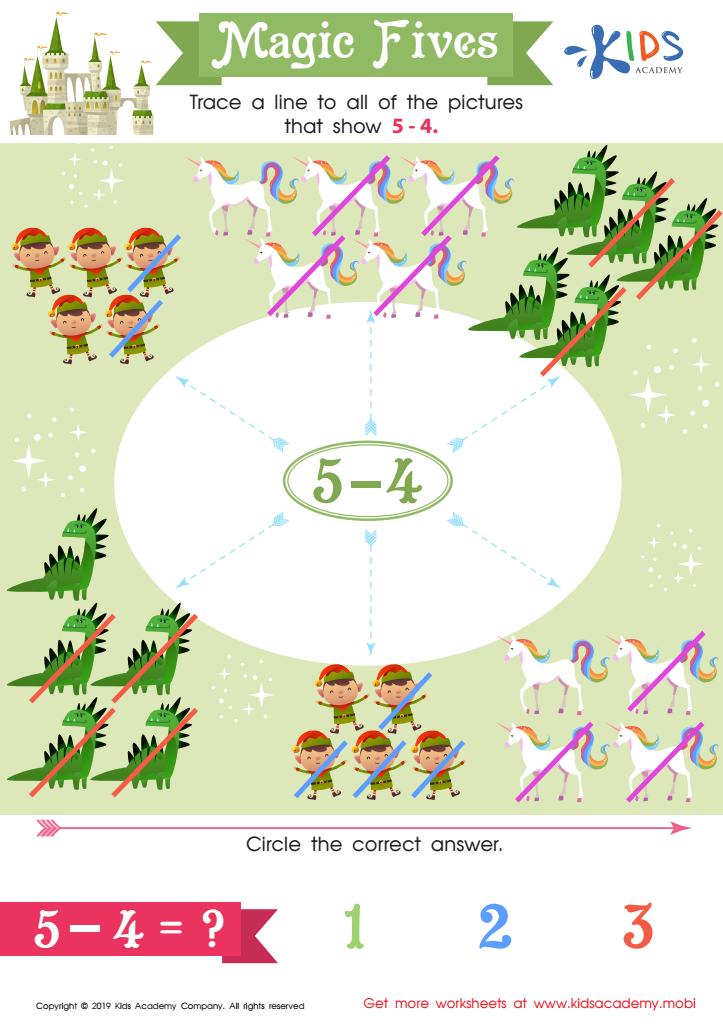
Magic Fives Worksheet
 Assign to My Students
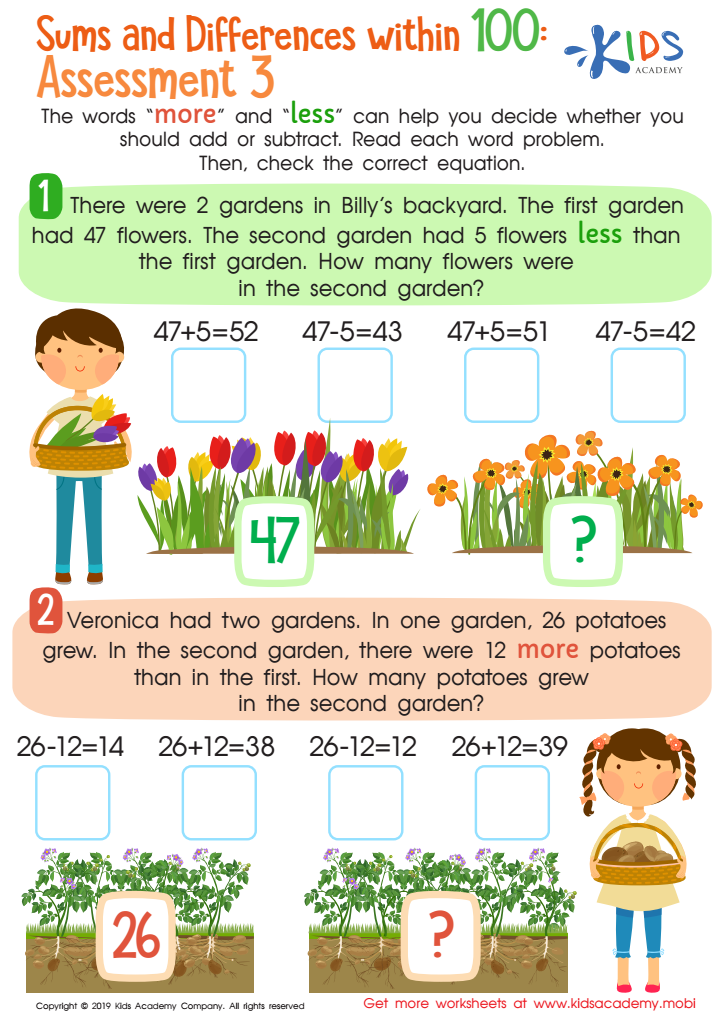
Sums and Differences Within 1 - Assessment 3 Worksheet
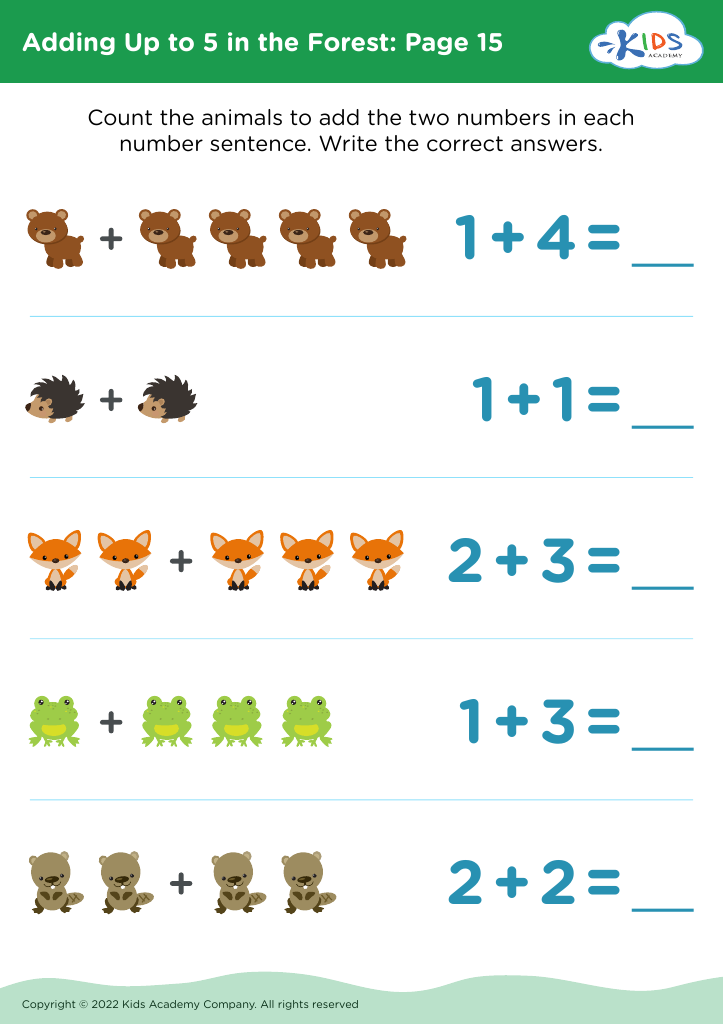
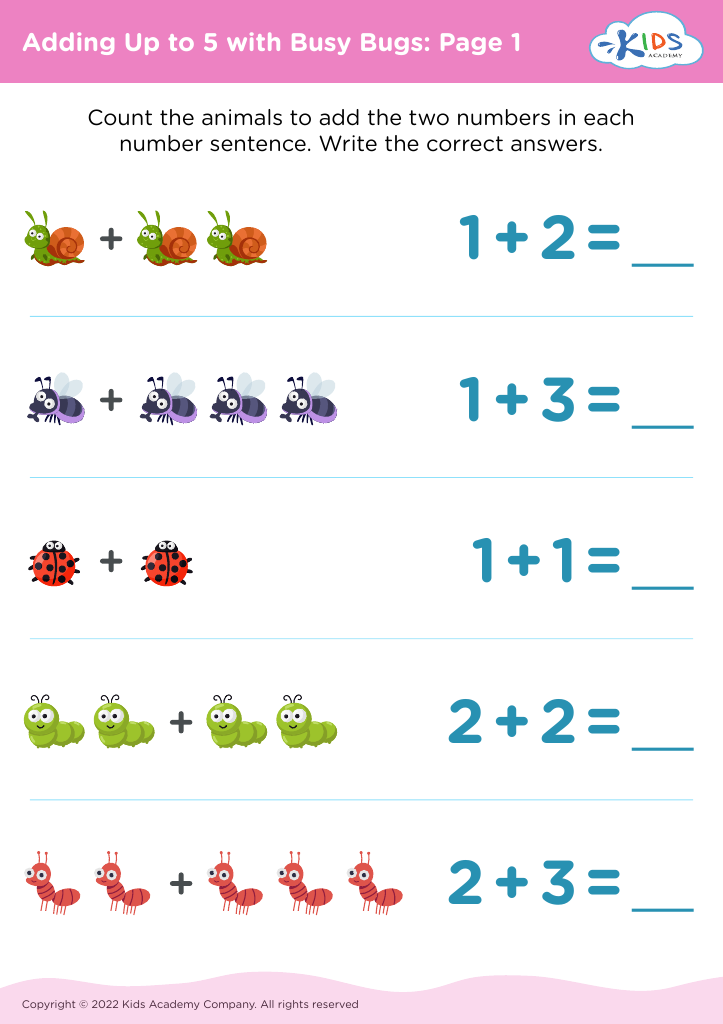
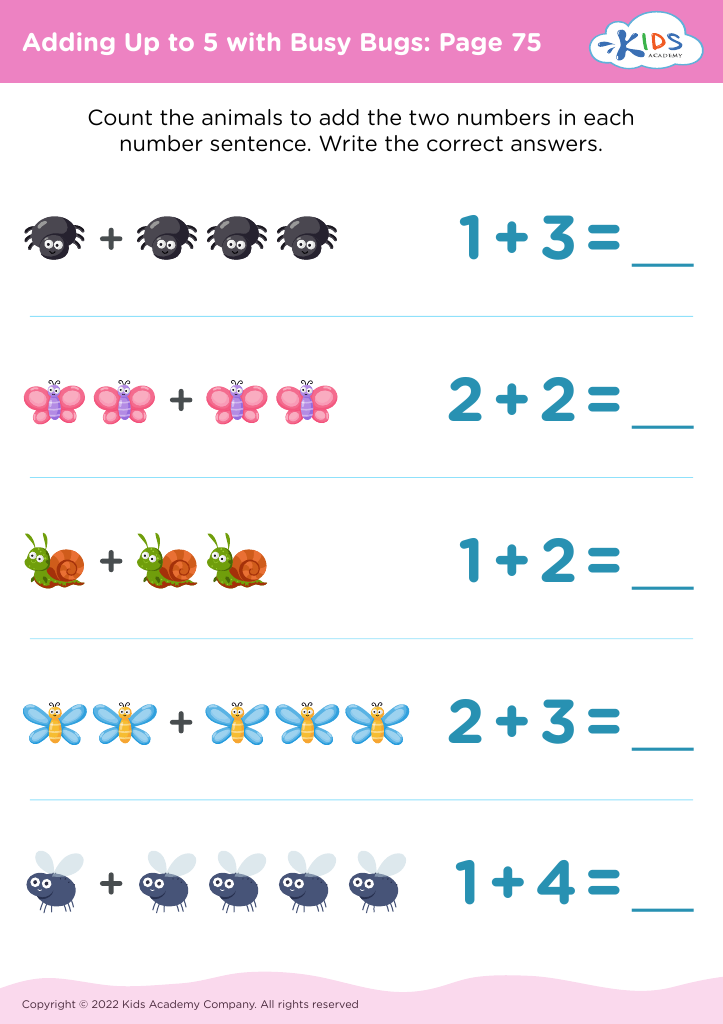
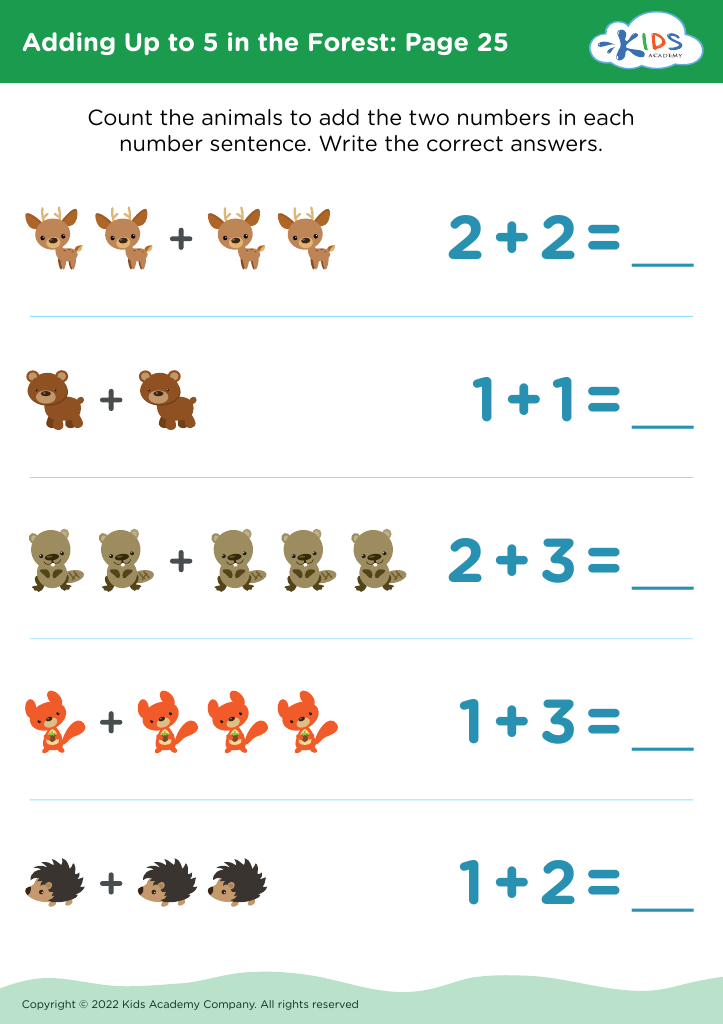
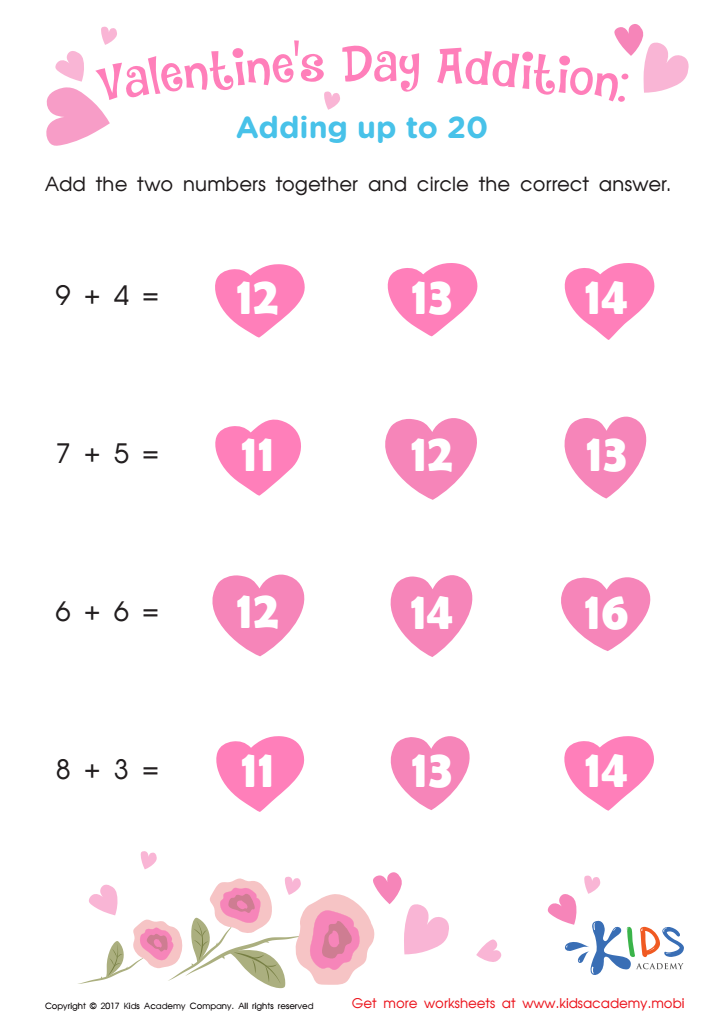
Valentine's Day Addition Worksheet
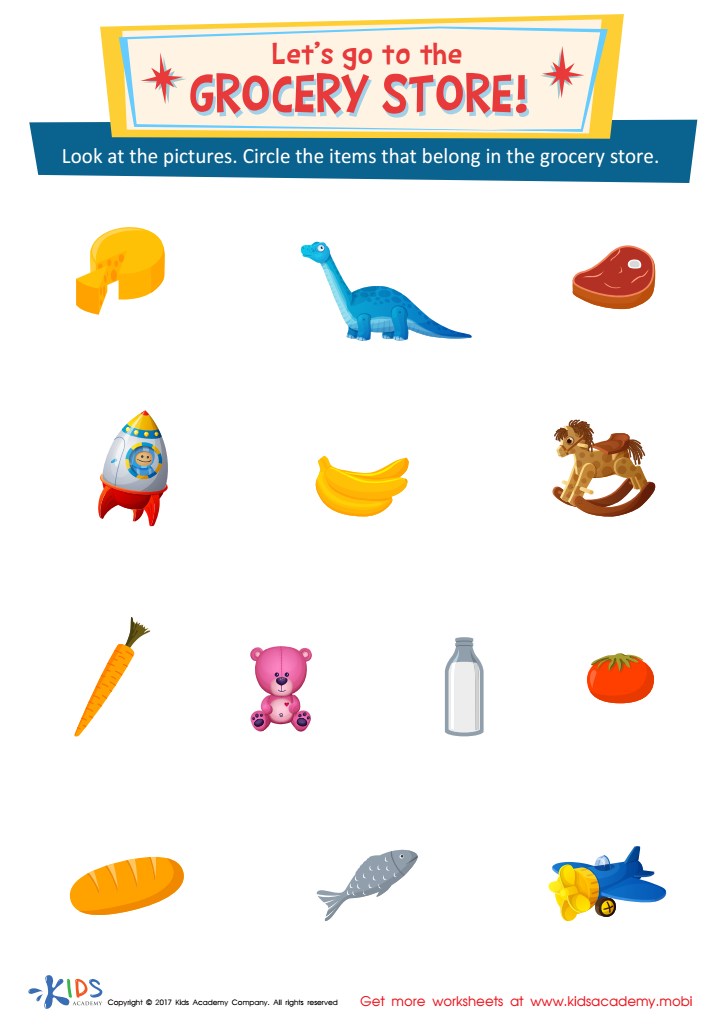
Grocery Store Worksheet
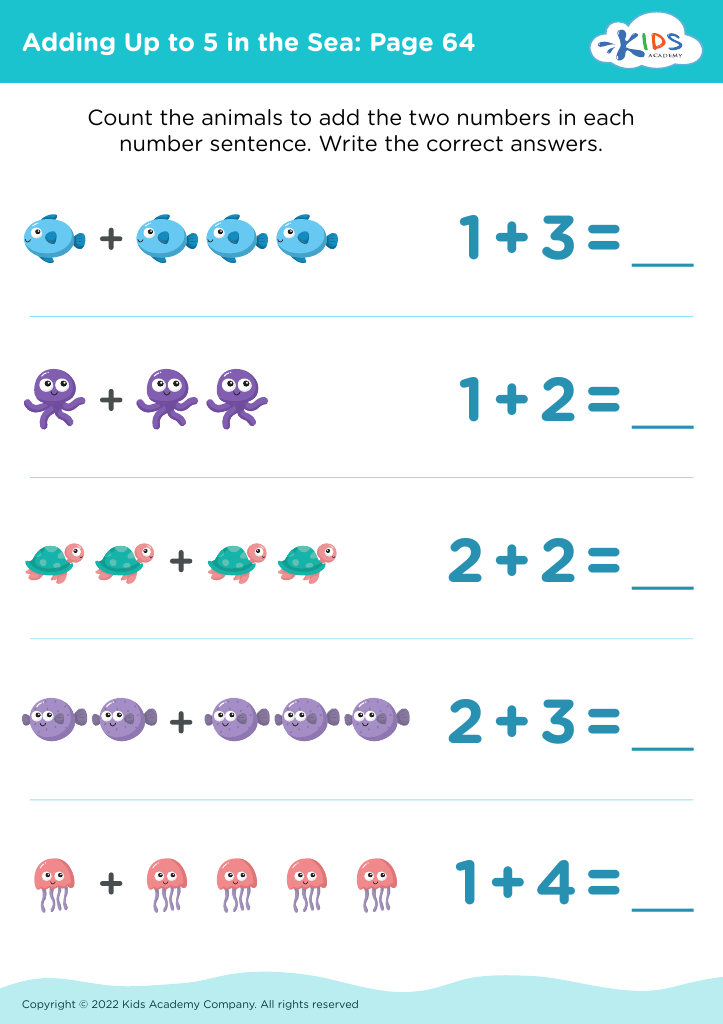
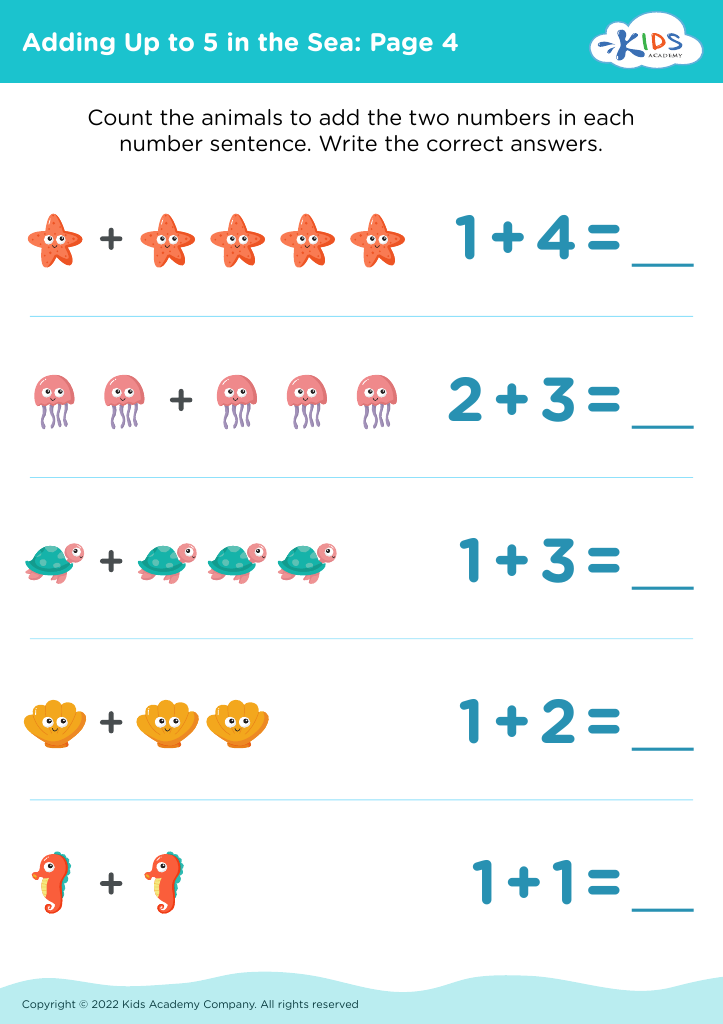
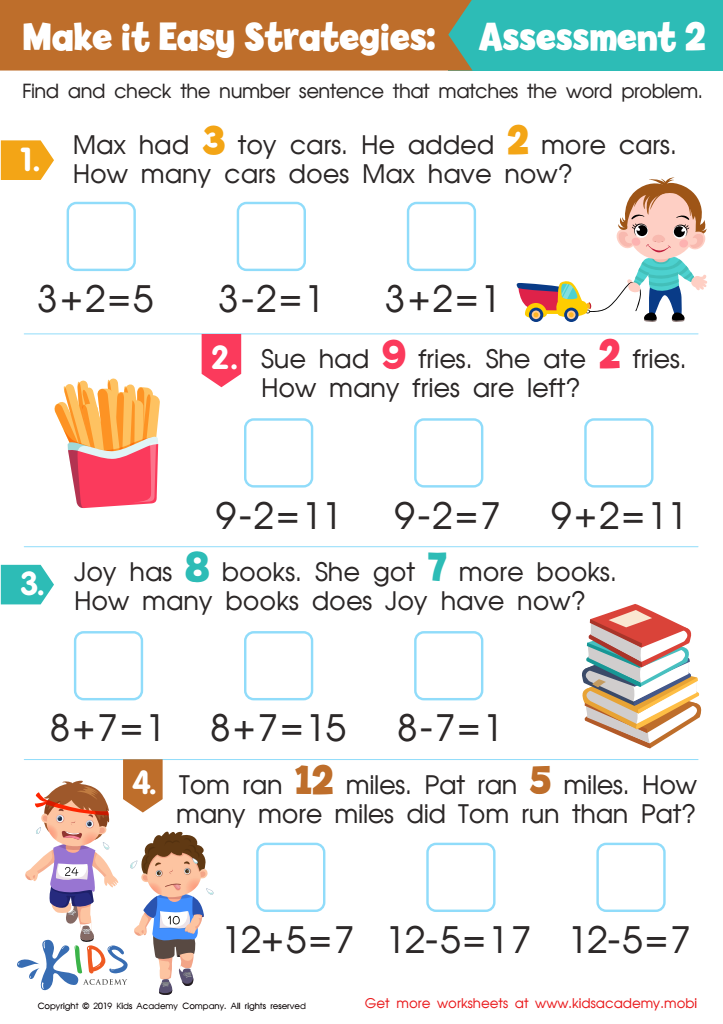
Make it Easy Strategies: Assessment 2 Worksheet







Addition skills are foundational to early math education, critical for young learners (ages 4-6). Parents and teachers should prioritize developing these skills for several reasons.
Firstly, addition is one of the basic building blocks of mathematics. Proficiency in addition sets the stage for learning more complex math concepts, such as subtraction, multiplication, and division. Ensuring children have a strong grasp on addition helps build their confidence to tackle future math challenges.
Secondly, addition enhances cognitive development. Activities and games that involve adding numbers can improve kids’ problem-solving abilities and logical thinking. This cognitive growth isn't limited to mathematics alone but can extend to other areas, enhancing overall academic performance.
Moreover, early achievement in math can lead to a positive attitude towards the subject. When children can easily add numbers, they gain a sense of accomplishment, fostering a lifelong appreciation for learning and intellectual curiosity. This positive relationship with math can reduce math anxiety that often develops as children get older.
Furthermore, basic addition skills are vital for everyday life. From counting toys to understanding time and money, competency in addition helps children navigate and make sense of the world around them, promoting independence and confidence in various day-to-day situations.
Therefore, integrating fun and engaging ways to learn addition into early childhood education is essential for nurturing well-rounded and mathematically inclined future generations.








