Animal Classification Worksheets for Ages 4-6
5 filtered results
-
From - To
Discover our fun and engaging Animal Classification Worksheets designed specifically for children aged 4-6! These activities help young learners explore the fascinating world of animals while developing essential skills such as critical thinking, pattern recognition, and fine motor skills. Filled with colorful images and interactive tasks, our worksheets encourage children to categorize animals based on various characteristics, including habitats, diets, and physical features. Perfect for at-home learning or classroom use, these resources make learning about animal classification both enjoyable and educational. Let your child embark on an exciting journey into nature, fostering a love for animals and science with our easy-to-use worksheets!
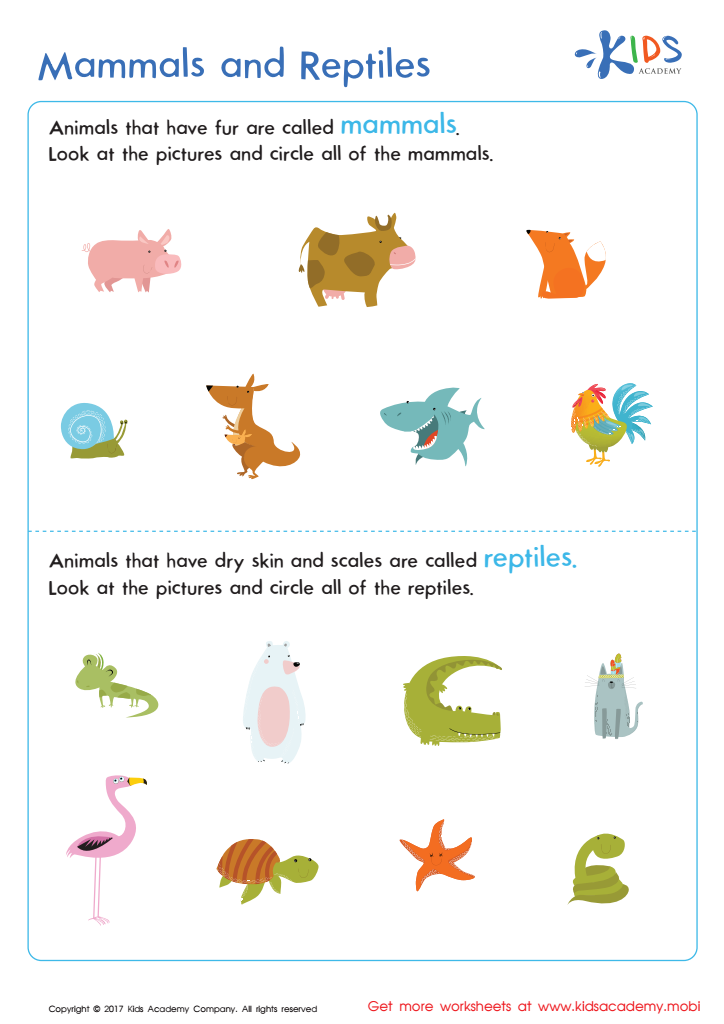
Mammals and Reptiles Worksheet
 Assign to My Students
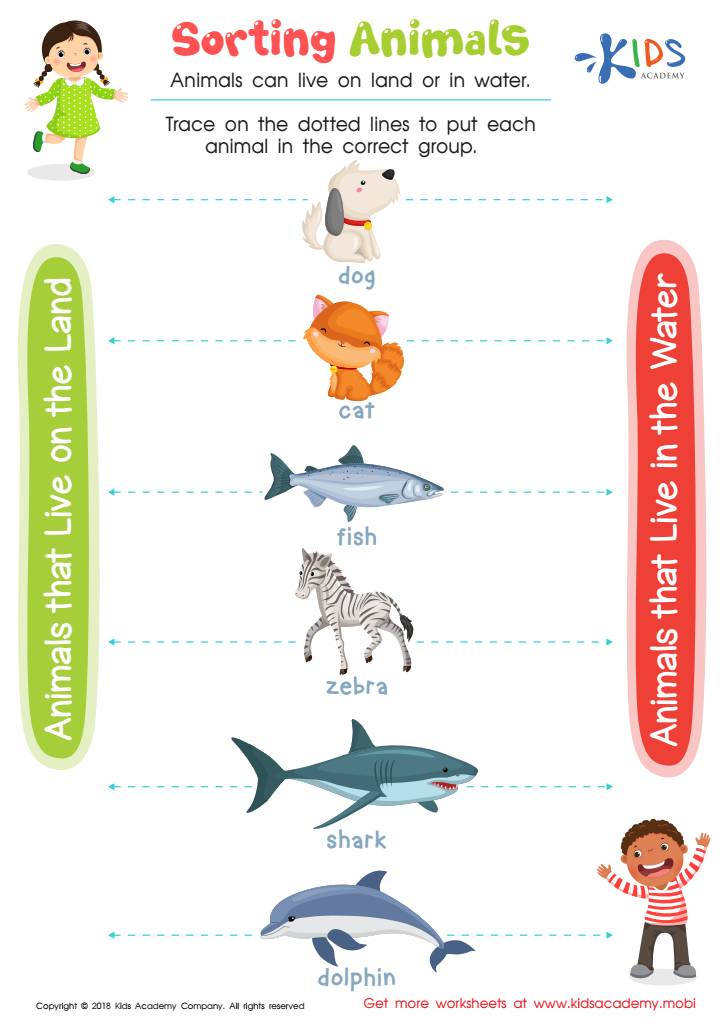
Sorting Animals Worksheet
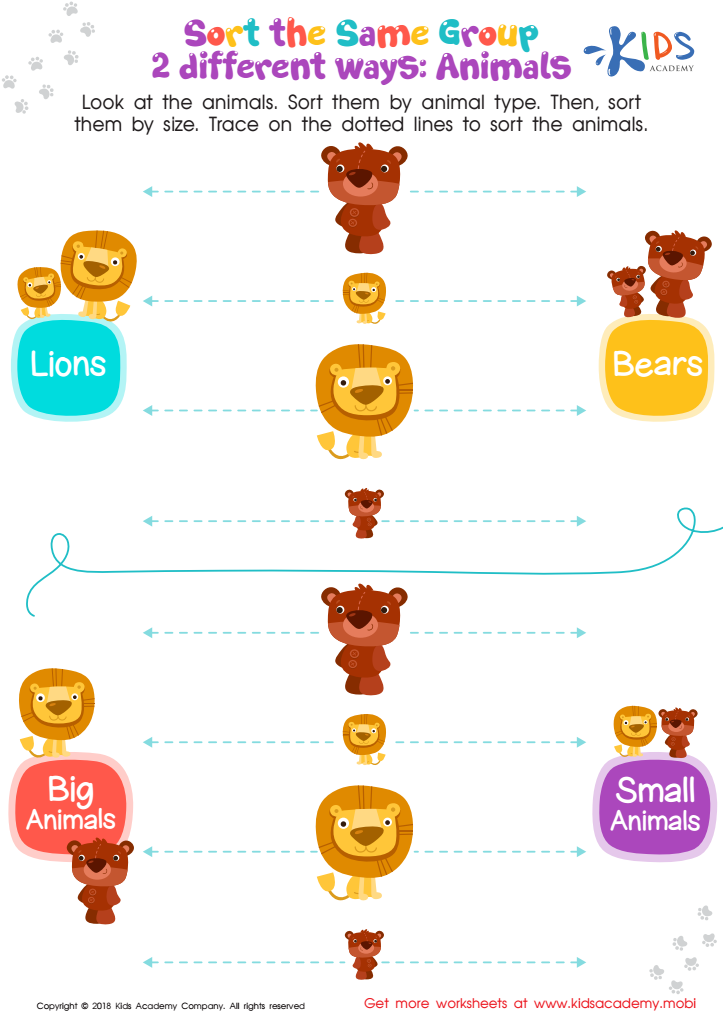
Sort the Same Group 2 Different Ways: Animals Worksheet
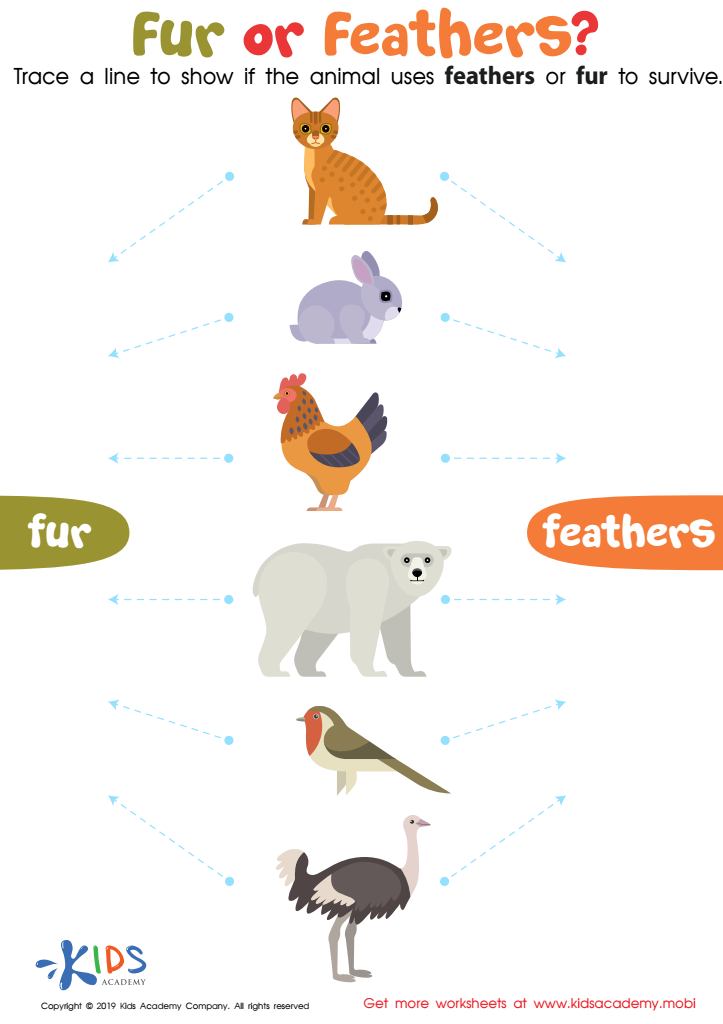
Fur or Feathers? Worksheet
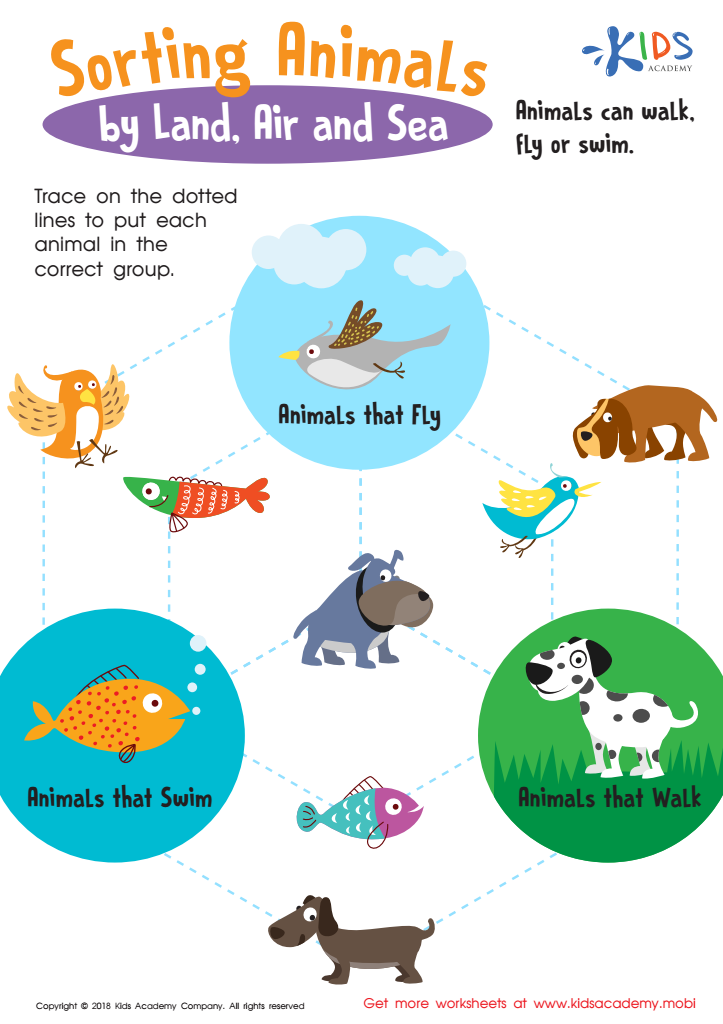
Sorting Animals by Land, Air and Sea Worksheet


.jpg)





Animal classification is essential for young children aged 4-6 as it lays the foundation for their understanding of the natural world. When parents and teachers engage children in learning about animal classification, they foster curiosity and instill a sense of wonder about diverse life forms. This exploratory learning enhances children's critical thinking skills as they compare and contrast different animals based on characteristics such as habitat, diet, and physical traits.
Additionally, animal classification teaches children the importance of biodiversity and ecosystems. By understanding how animals are grouped into categories such as mammals, birds, reptiles, amphibians, and fish, children can appreciate the roles different creatures play in their environments, fostering appreciation for conservation and empathy for living beings.
Incorporating classification activities in fun and interactive ways, through storytelling or hands-on projects, also supports language and vocabulary development. Children learn new words when describing animals and their characteristics, making learning more effective.
Overall, by emphasizing animal classification, parents and teachers provide essential life skills, promote scientific inquiry, and nurture a respectful attitude toward the planet, preparing children for a lifetime of exploration and understanding of the natural world.








