Basic Arithmetic Worksheets for Ages 4-6
52 filtered results
-
From - To
Explore our engaging and educational Basic Arithmetic Worksheets designed for children ages 4-6, available on Kids Academy. These expertly crafted worksheets focus on fundamental math skills, including addition, subtraction, counting, and number recognition. Each activity is designed to make learning fun and interactive, helping young learners develop a solid mathematical foundation. Aligned with early grade curricula, our worksheets provide essential practice for little learners, boosting their confidence and preparing them for more advanced concepts. Perfect for use at home or in the classroom, ensure your child builds strong arithmetic skills with our age-appropriate resources.
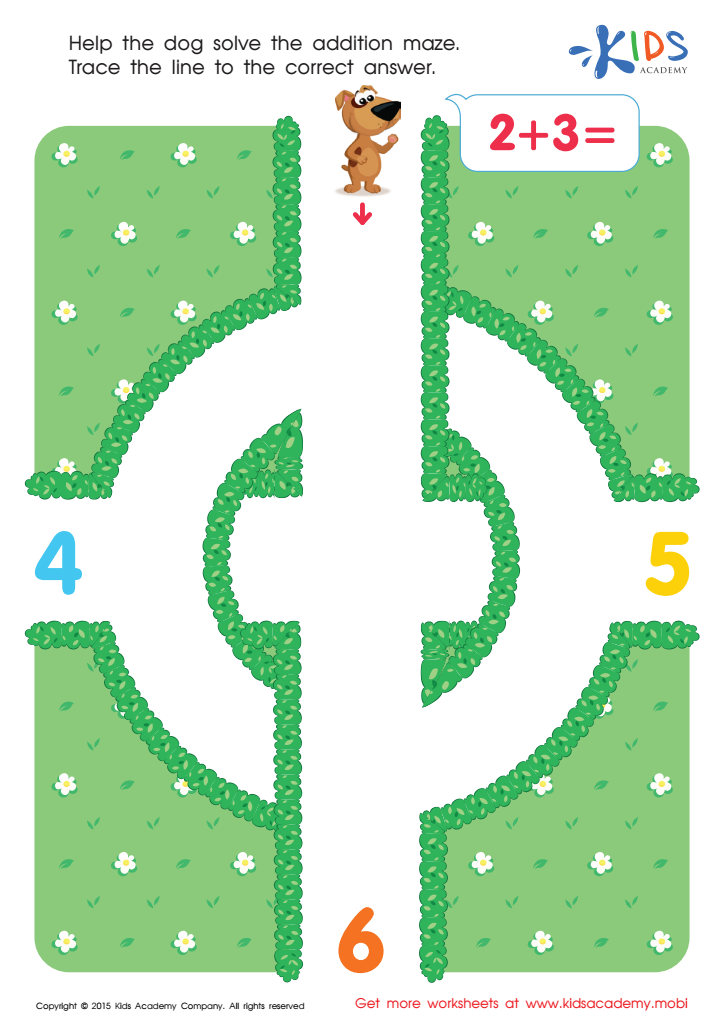
Two And Three Addition Worksheet
 Assign to My Students
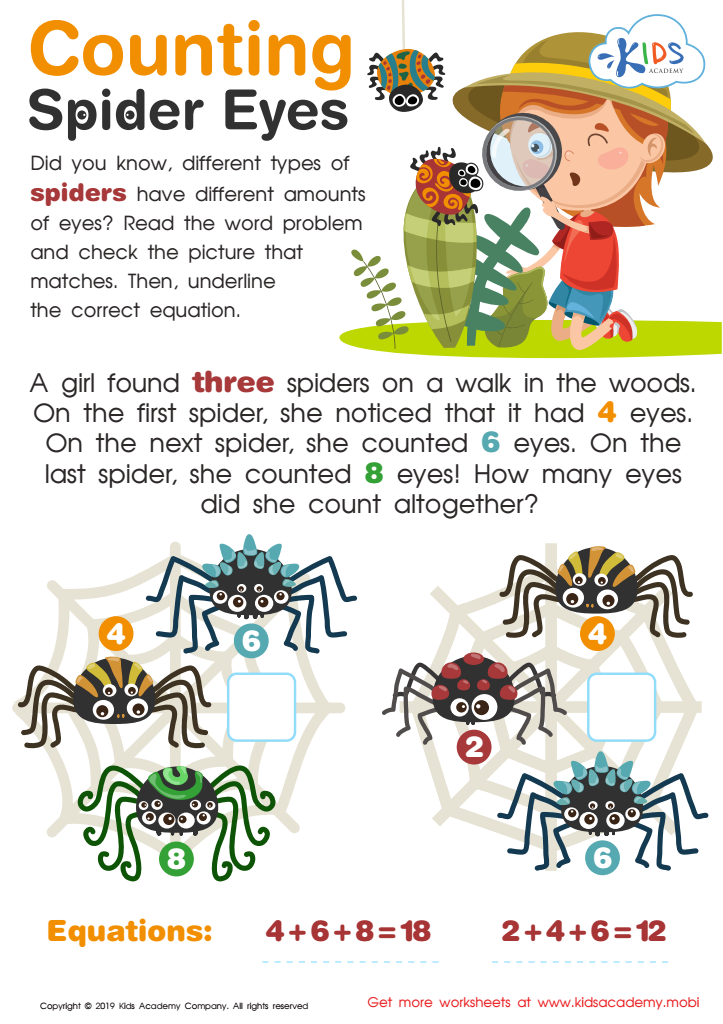
Counting Spider Eyes Worksheet
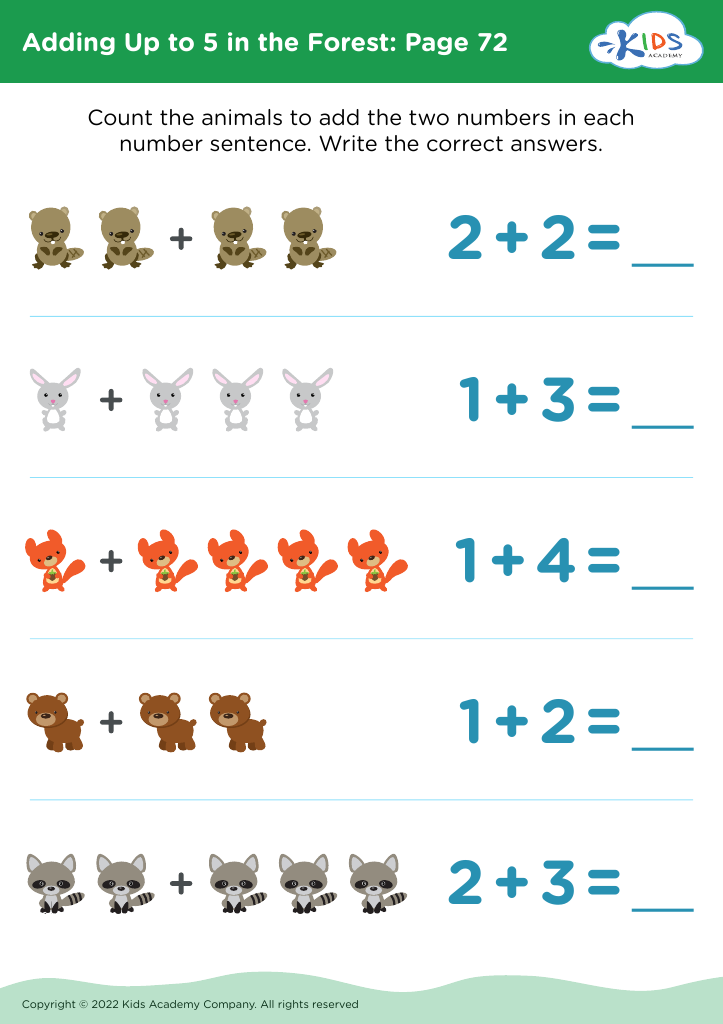
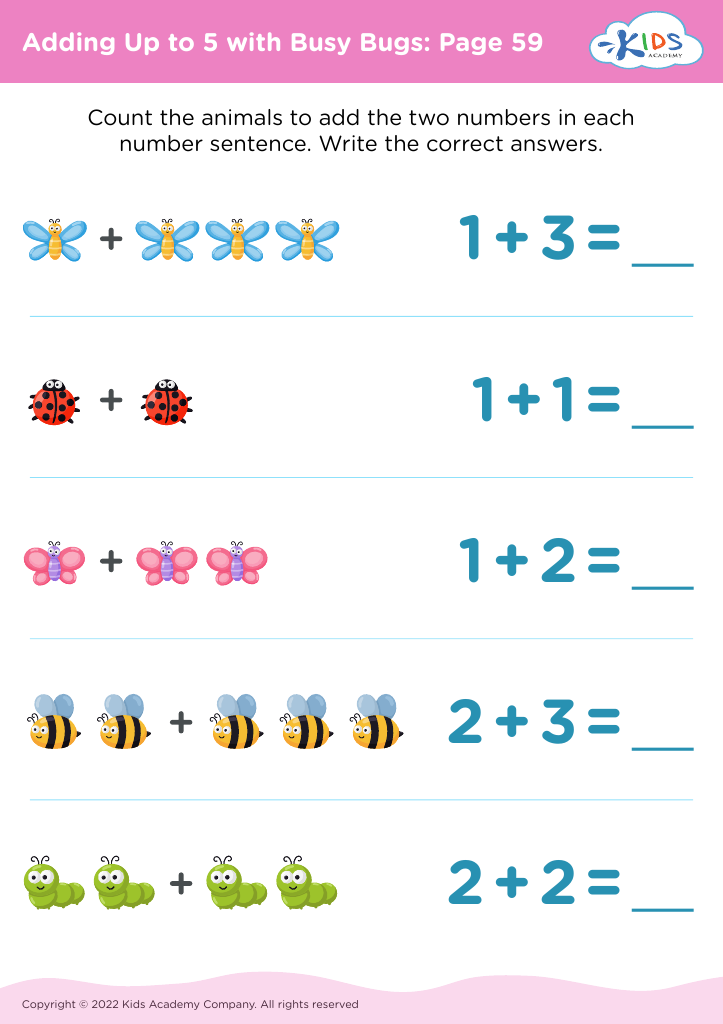
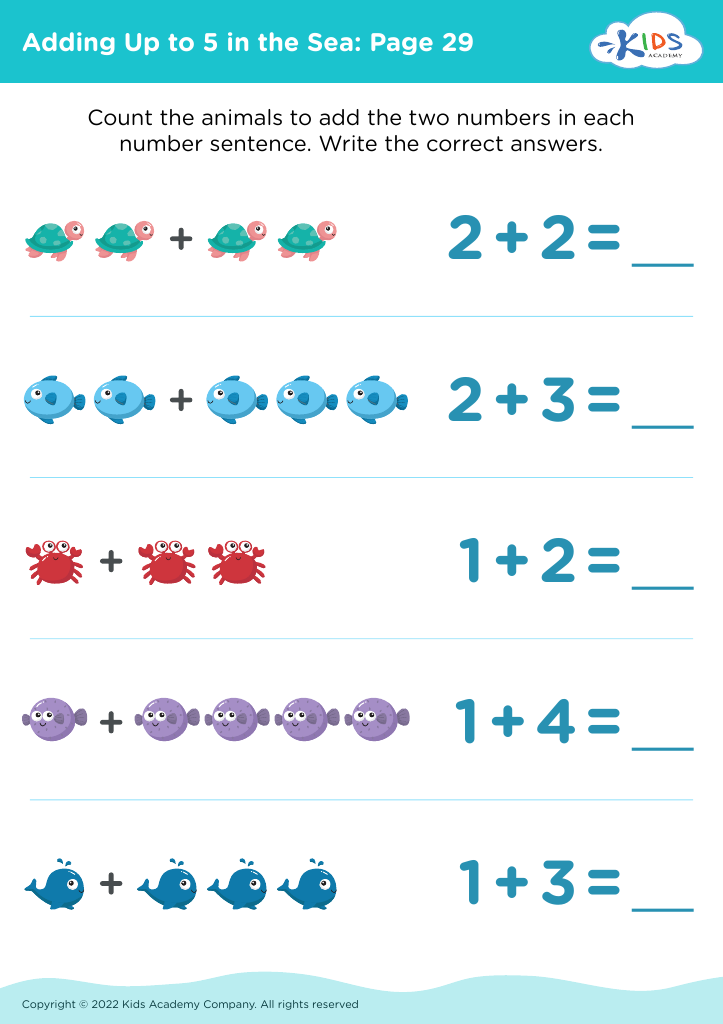
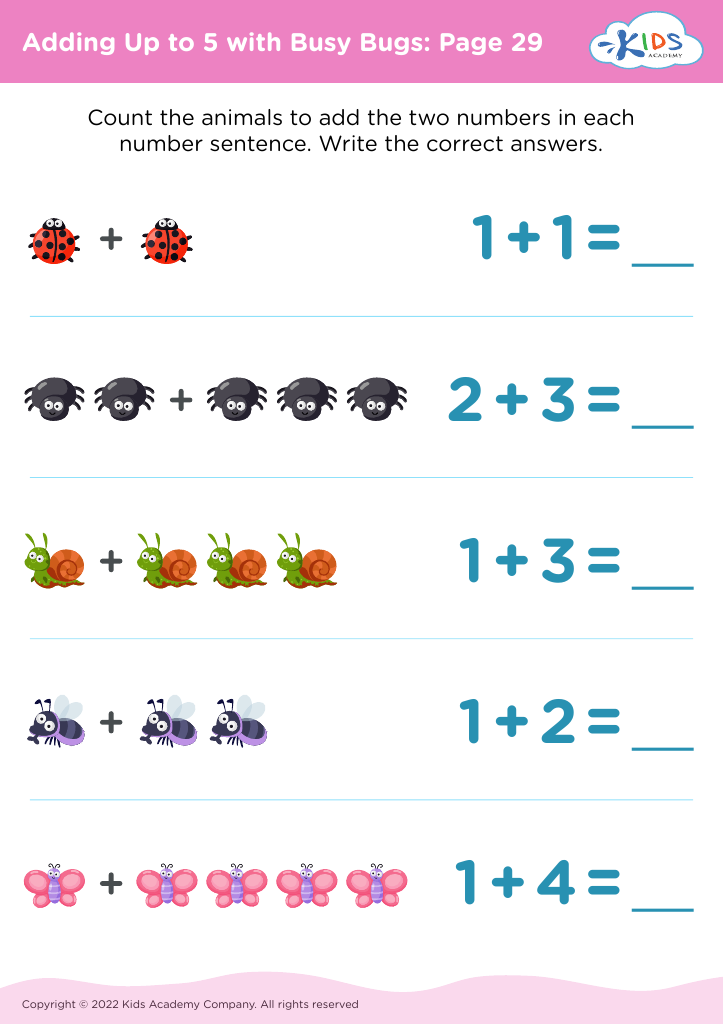
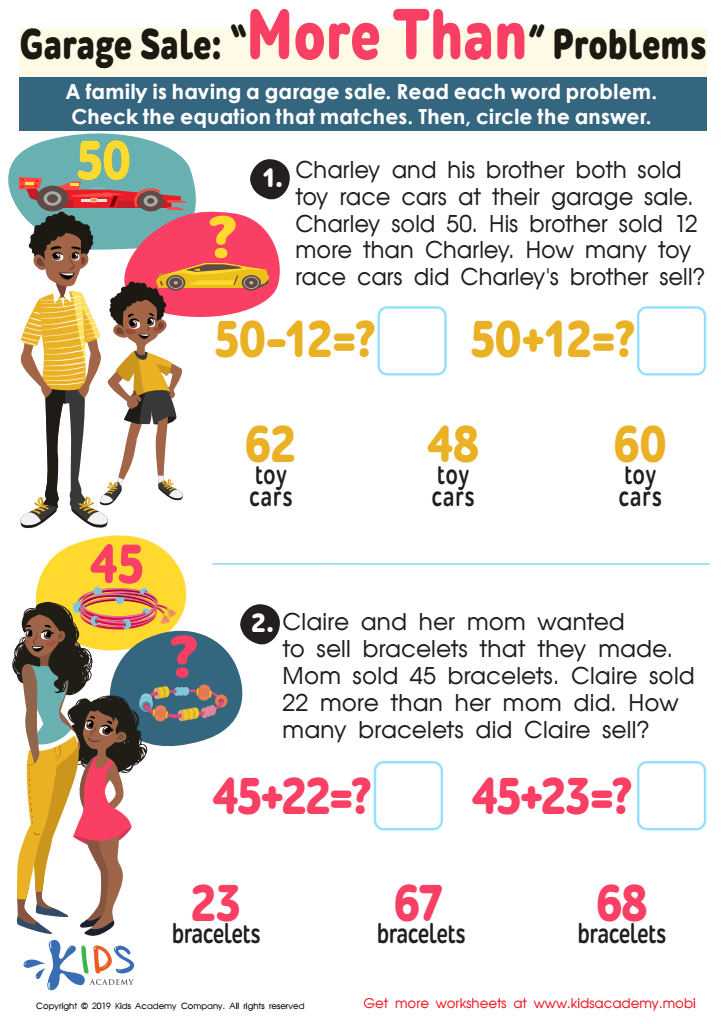
Garage Sale - More yhan Worksheet
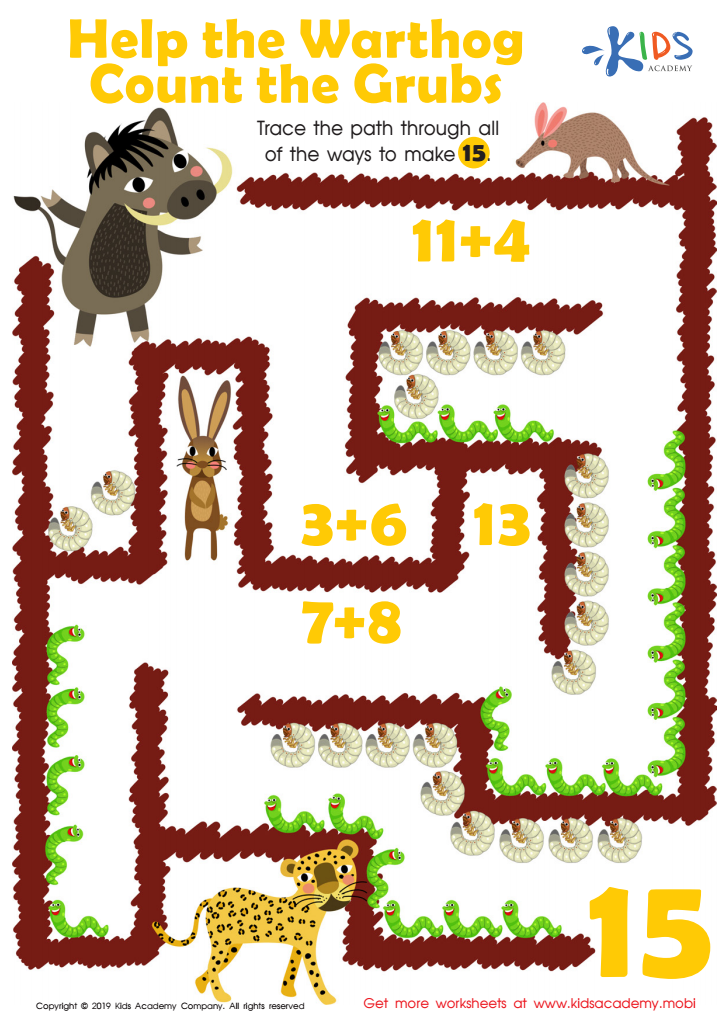
Help the Warthog Count the Grubs Worksheet
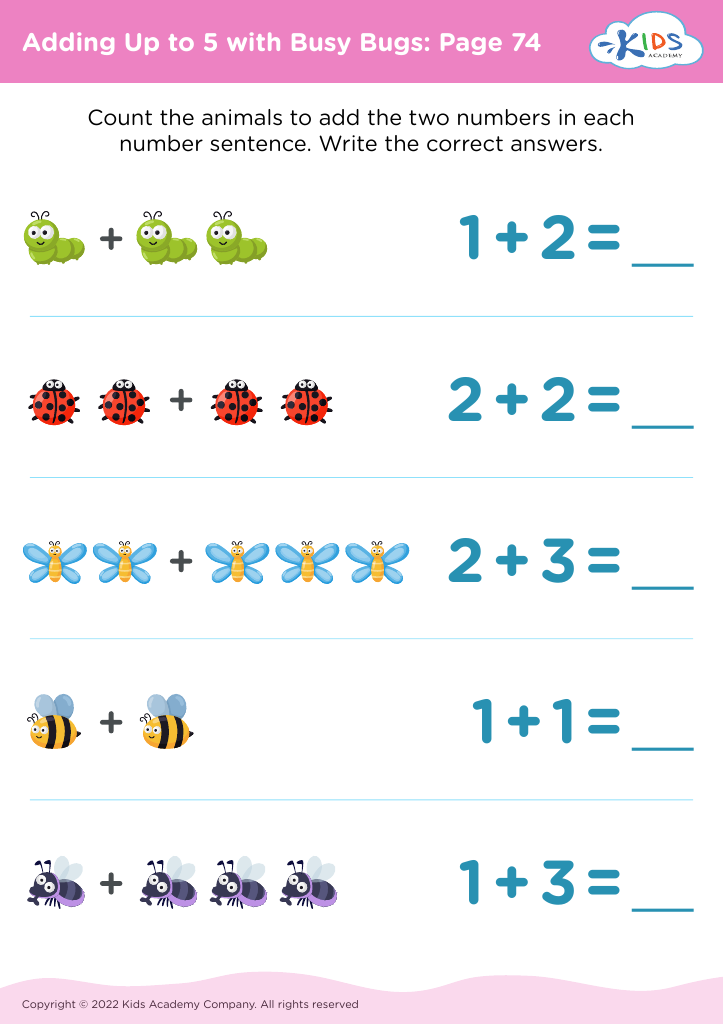
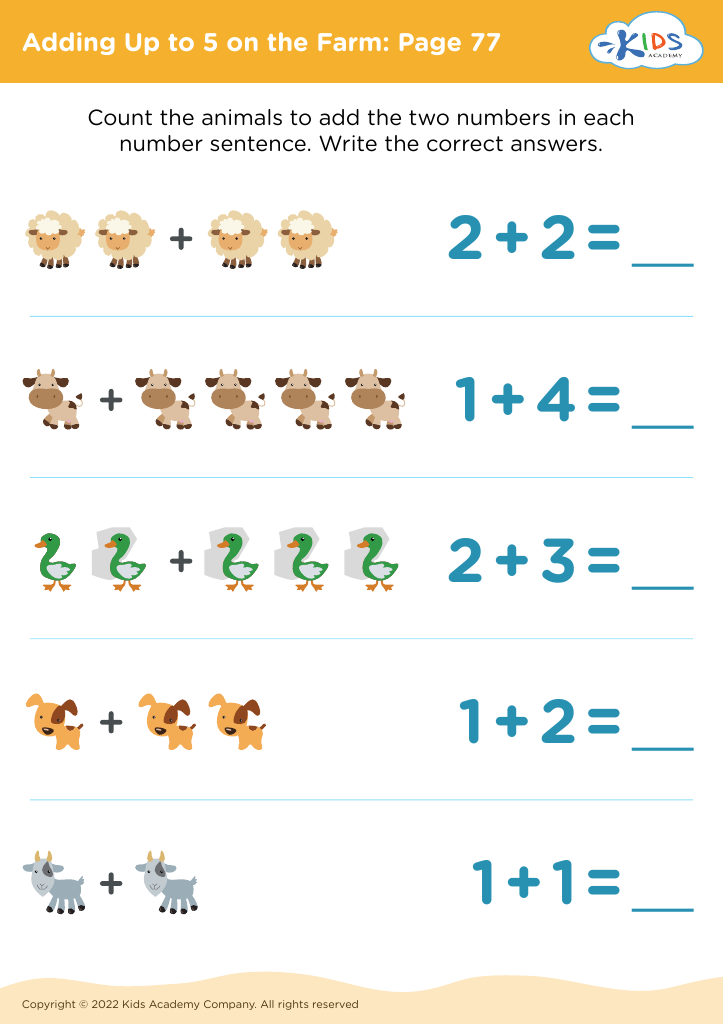
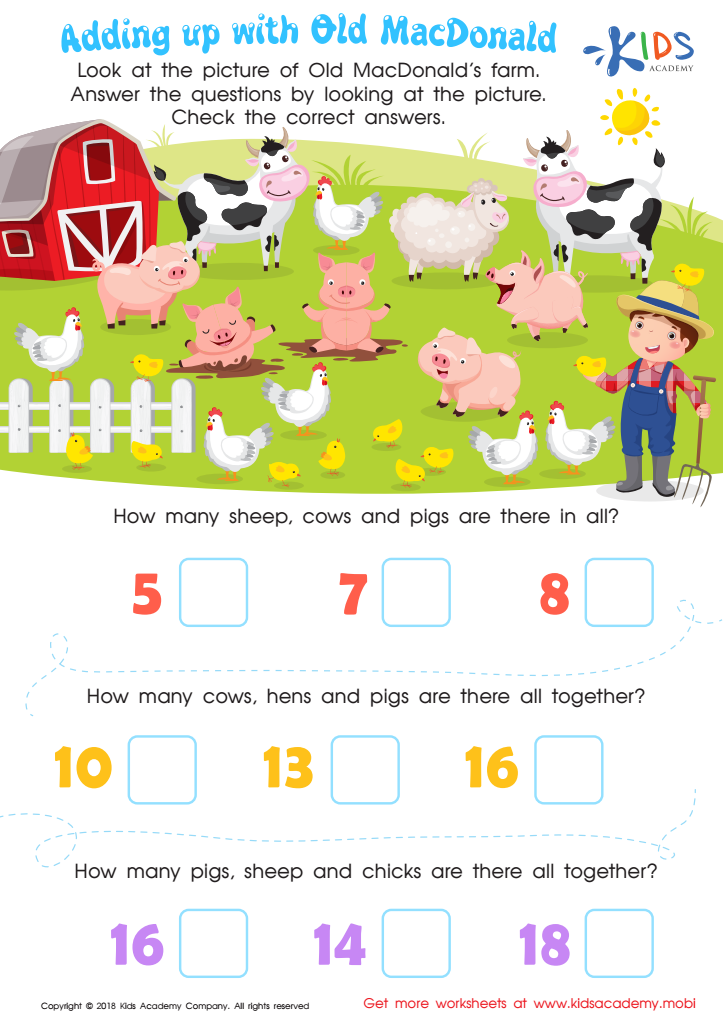
Adding Up with Old MacDonald Worksheet
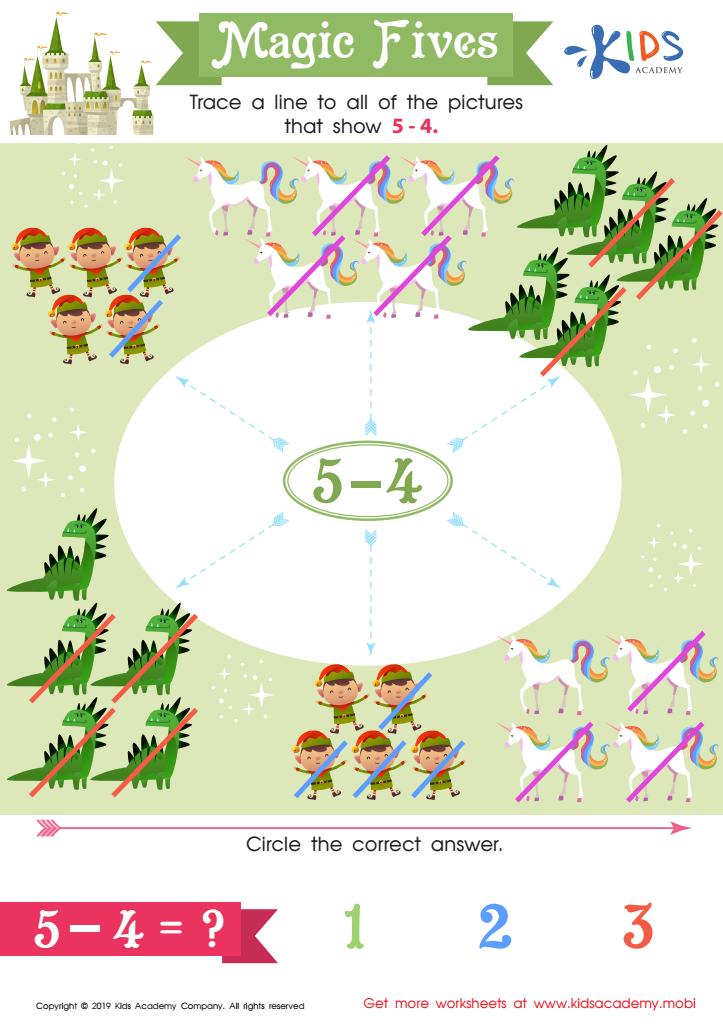
Magic Fives Worksheet
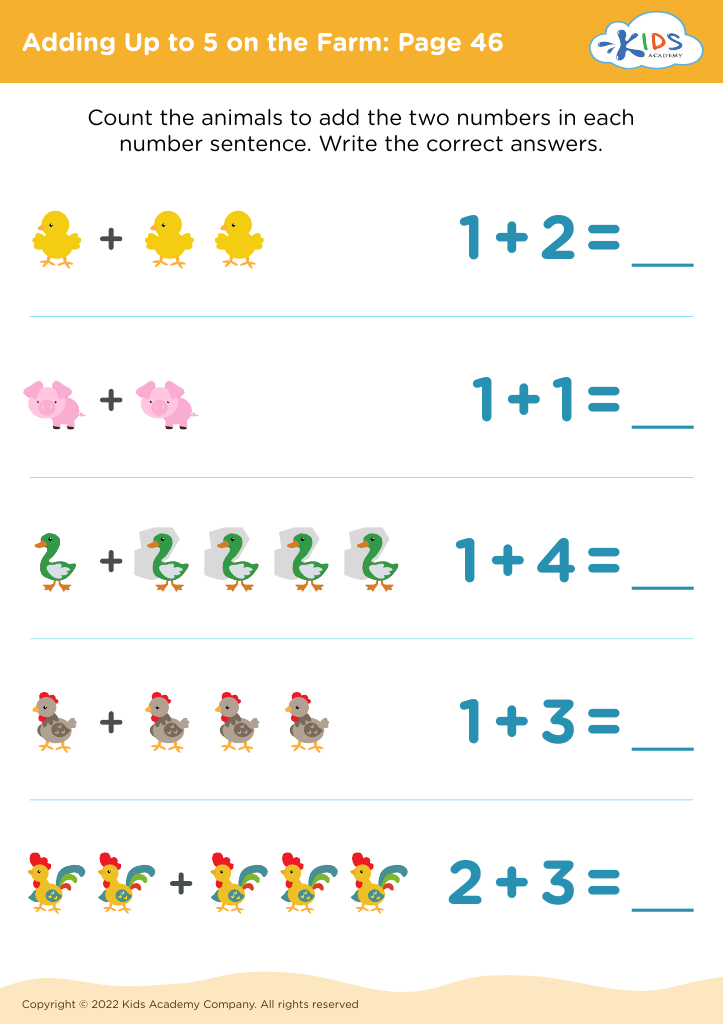
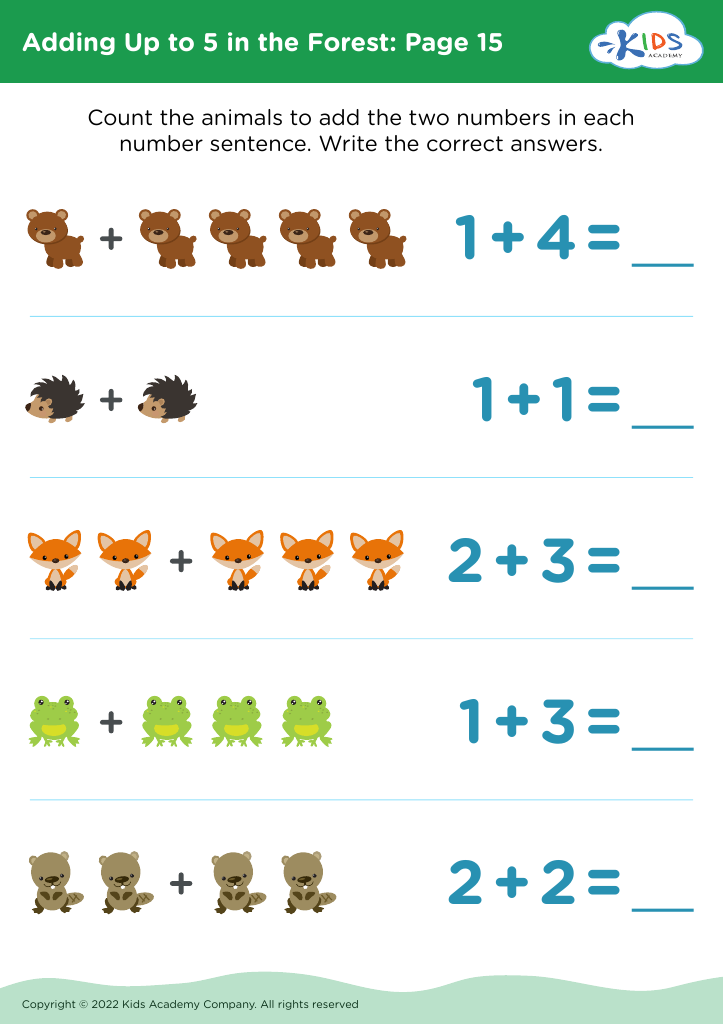
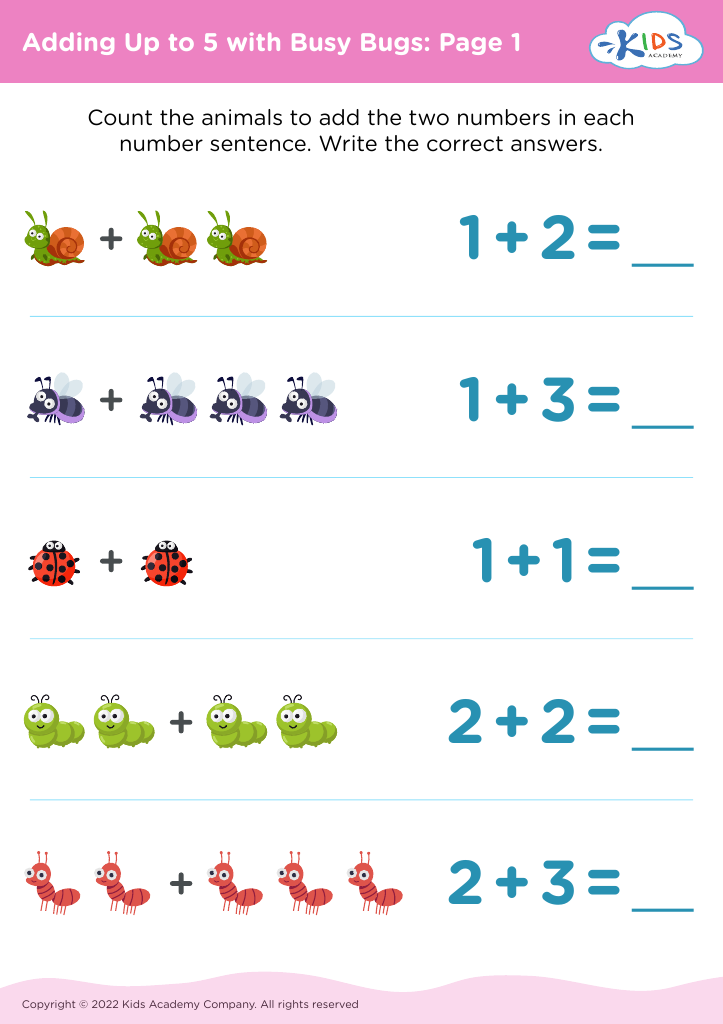
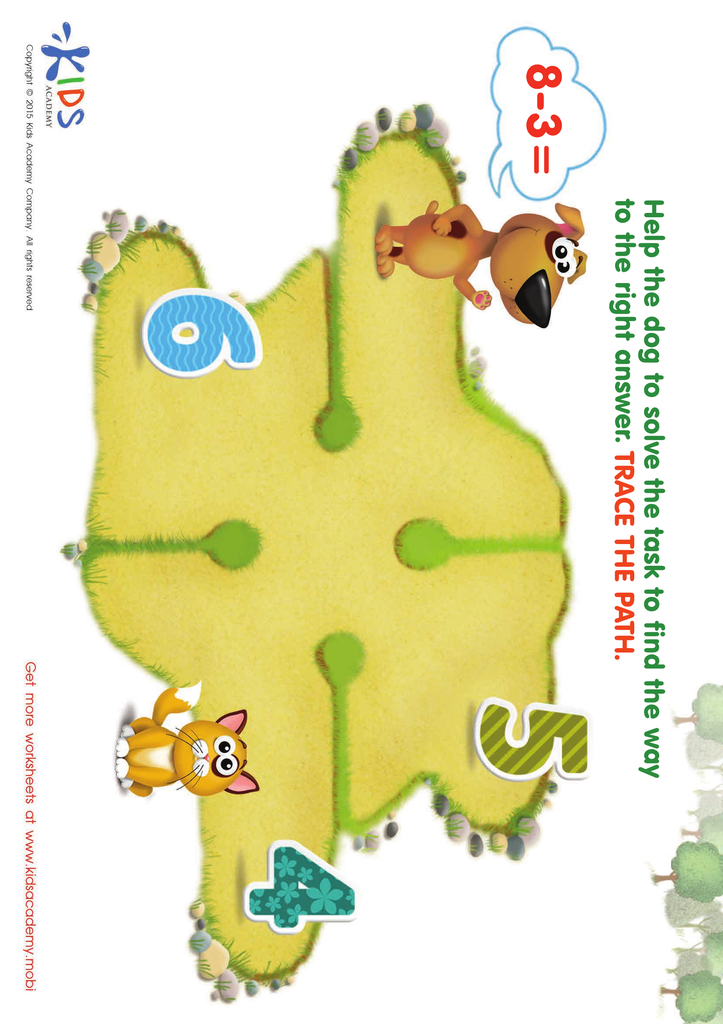
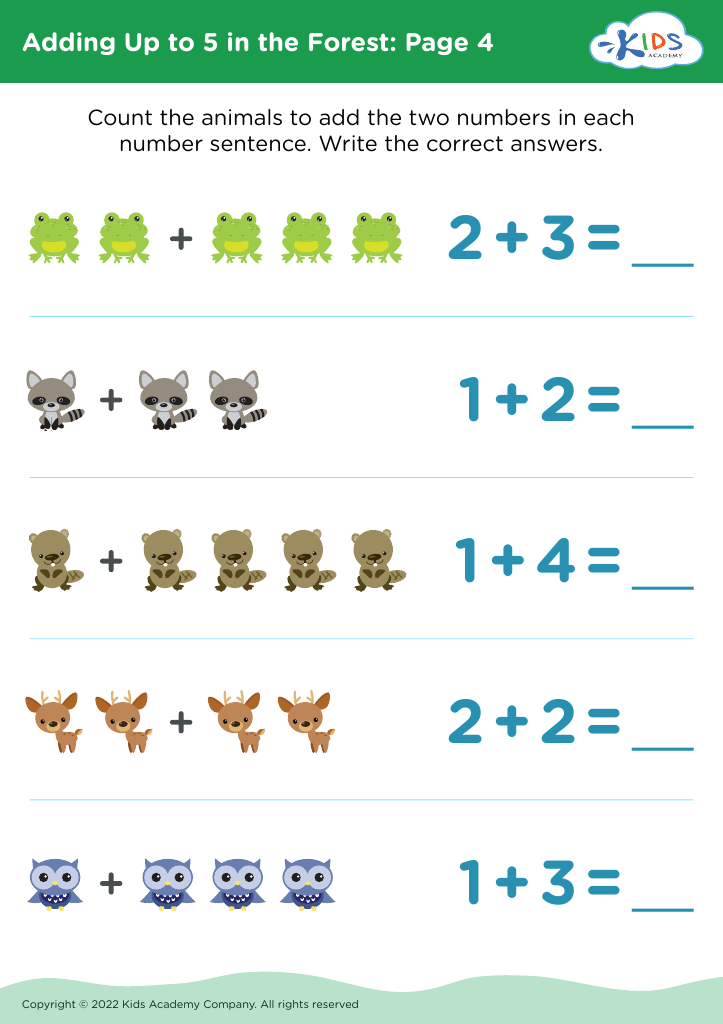
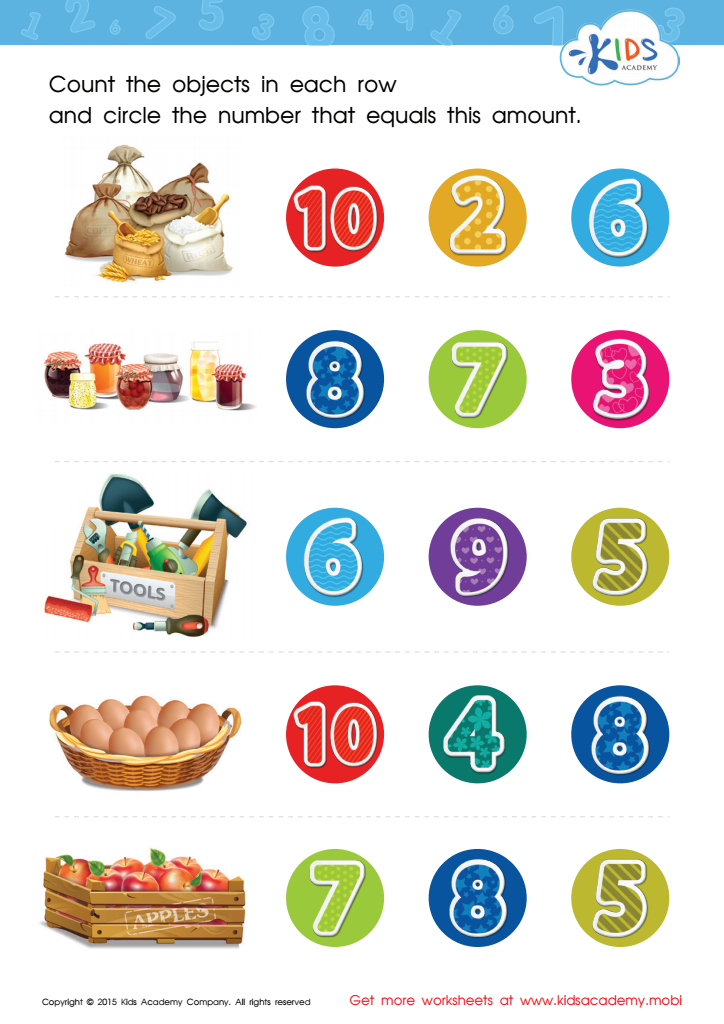
Count and Match 6 – 10 Math Worksheet
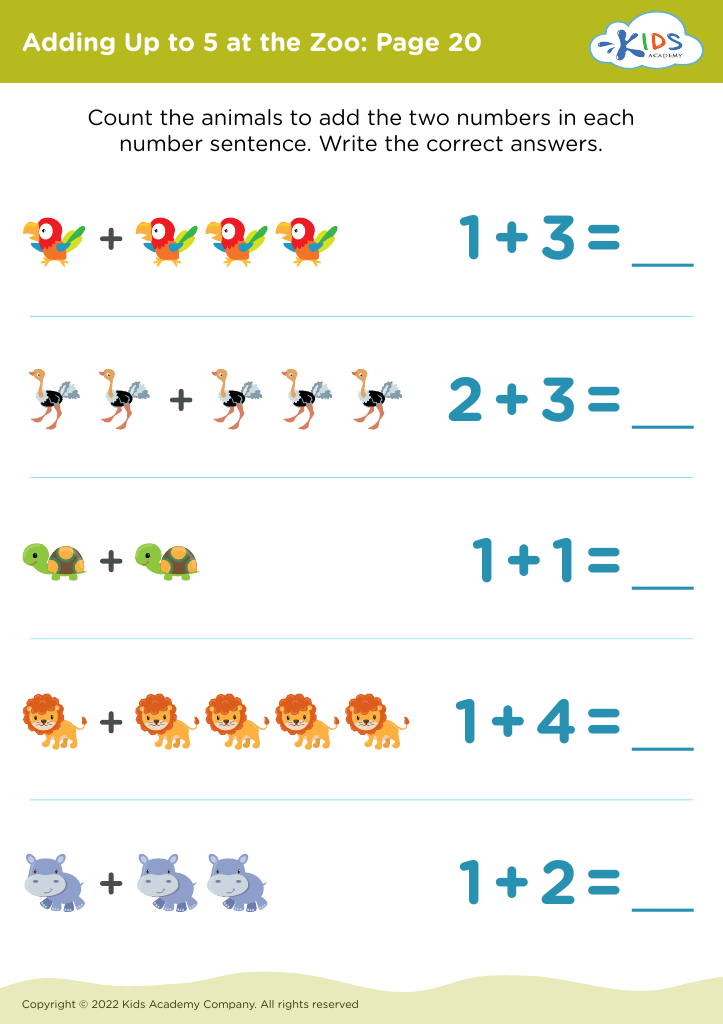
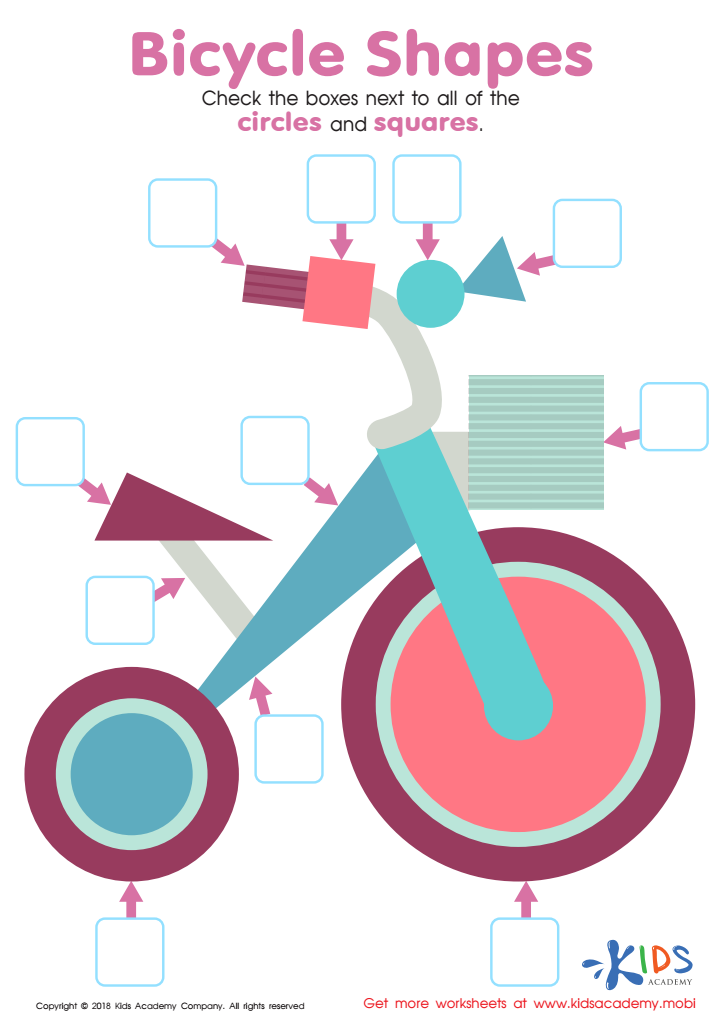
Bicycle Shapes Worksheet







Basic arithmetic for ages 4-6 is crucial as it lays the foundation for all future learning in mathematics and fosters cognitive and problem-solving skills. At this developmental stage, children's brains are highly receptive to new information, and introducing basic arithmetic concepts such as counting, addition, and subtraction can significantly impact their overall academic success.
First, early exposure to arithmetic helps children develop number sense, which is the understanding of numbers and their relationships. This foundational skill is critical not just for mathematics, but for day-to-day tasks and logical thinking. Engaging children in playful, hands-on activities like counting toys, measuring ingredients, or identifying shapes helps solidify these concepts in a fun and memorable way.
Furthermore, mastering basic arithmetic boosts children's confidence and prepares them for more complex mathematical concepts encountered in later grades. Early proficiency in arithmetic has been linked to higher academic achievement in other subjects, including science, reading, and problem-solving. It promotes a growth mindset, encouraging children to view challenges as opportunities for learning and development.
In summary, caring about basic arithmetic for ages 4-6 means more than just teaching numbers. It is about nurturing critical thinking, fostering a love for learning, and equipping children with essential tools that will support their academic and personal growth throughout their lives.








