
Basic Math understanding Worksheets for Ages 4-6
12 filtered results
Difficulty Level
Grade
Age
-
From - To
Subject
Activity
Standards
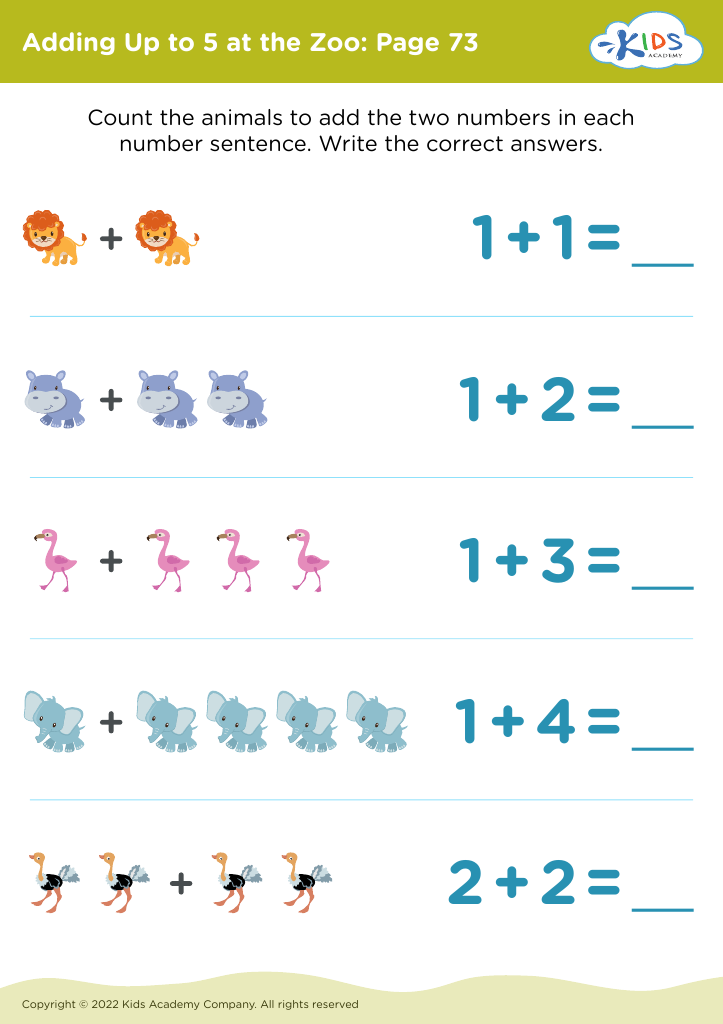
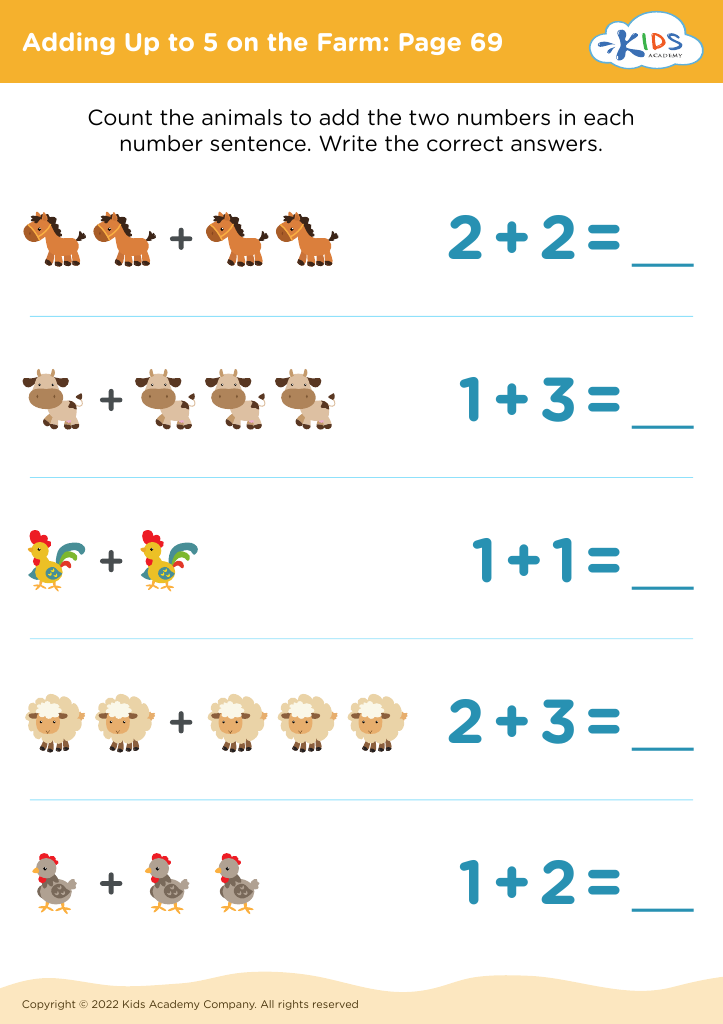
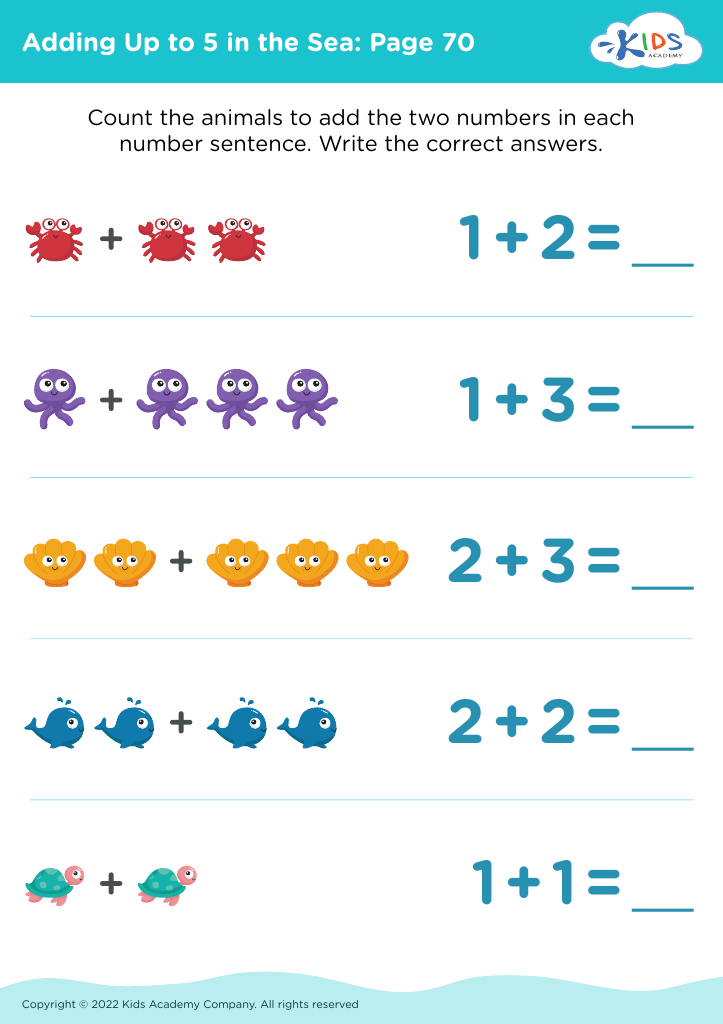
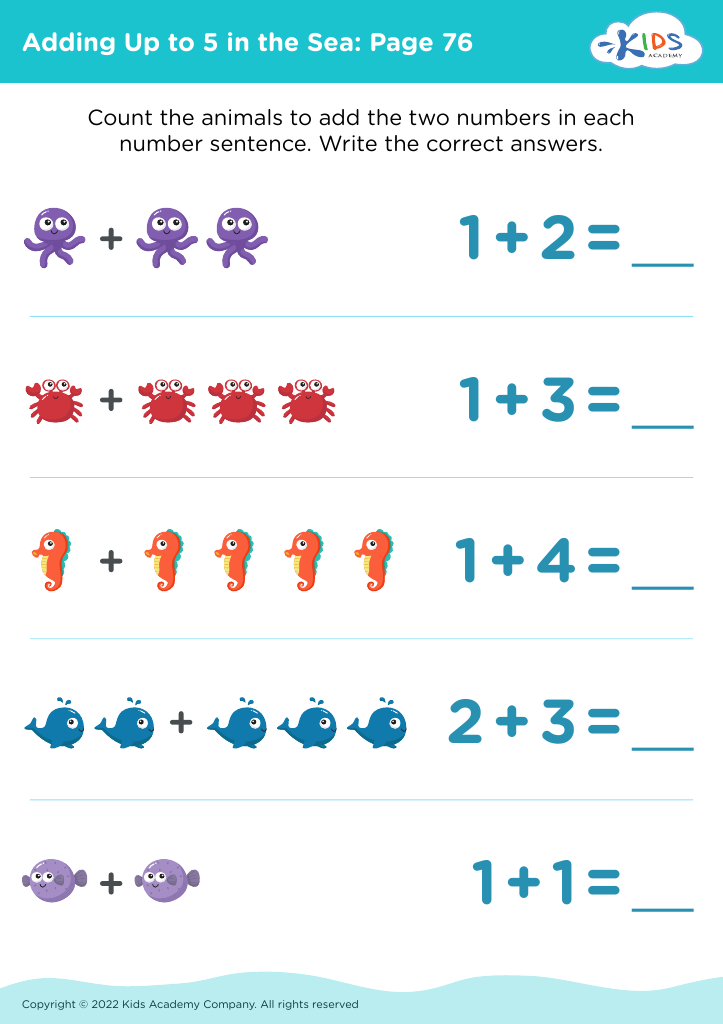
Unlock your child's potential with our Basic Math Understanding Worksheets for ages 4-6. Specifically designed to develop foundational math skills, these worksheets make learning fun and engaging. From counting and number recognition to simple addition and subtraction, each activity is tailored to boost confidence and ensure a smooth transition to more complex math concepts. With colorful graphics and interactive exercises, children will be motivated to practice and learn. Perfect for homeschooling, classroom tasks, or supplemental at-home practice, our worksheets set the stage for a lifetime of math success. Download now and watch your child's math skills soar!
Favorites
With answer key
Interactive
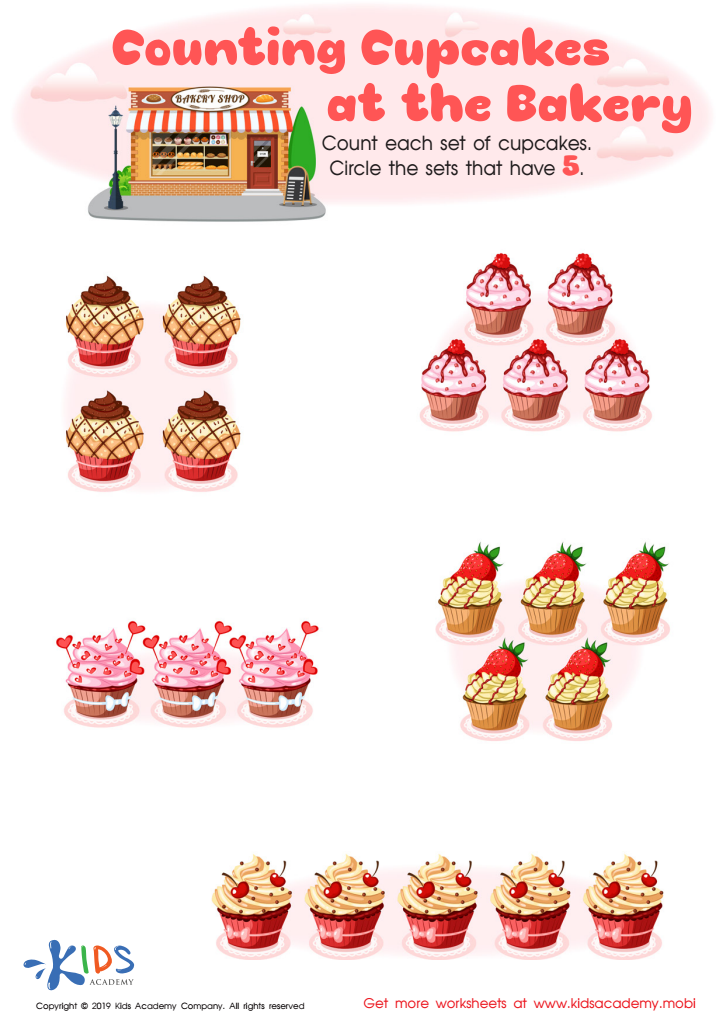
Counting Cupcakes Worksheet
This fun worksheet for preschoolers uses cupcakes to teach counting. Kids must circle the groups of cupcakes that add up to 5. The delicious treats make learning fun and engaging!
Counting Cupcakes Worksheet
Worksheet
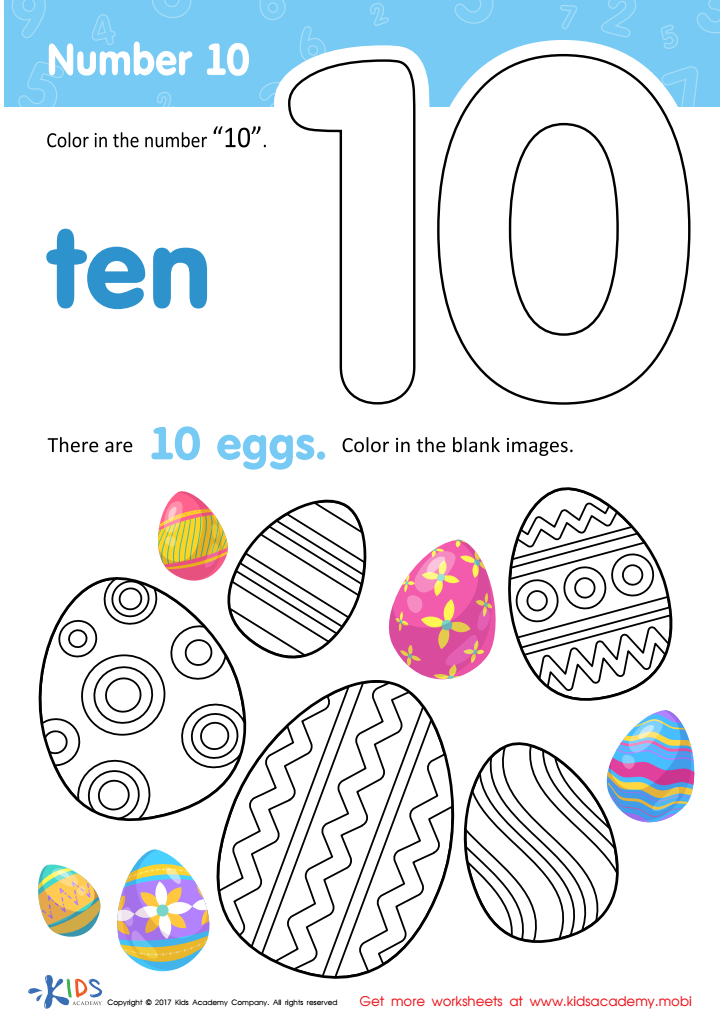
Number 10 Printable
Easter eggs are a great way to combine creativity and learning! Help your child explore the number 10 with our fun coloring page. The intricate designs will spark their imagination and fuel their artistic side, while they practice important numeracy basics. Get creative with eggs and enjoy the fun, no matter the time of year!
Download (PDF)
 Assign to My Students
Assign to My Students
Number 10 Printable
Worksheet
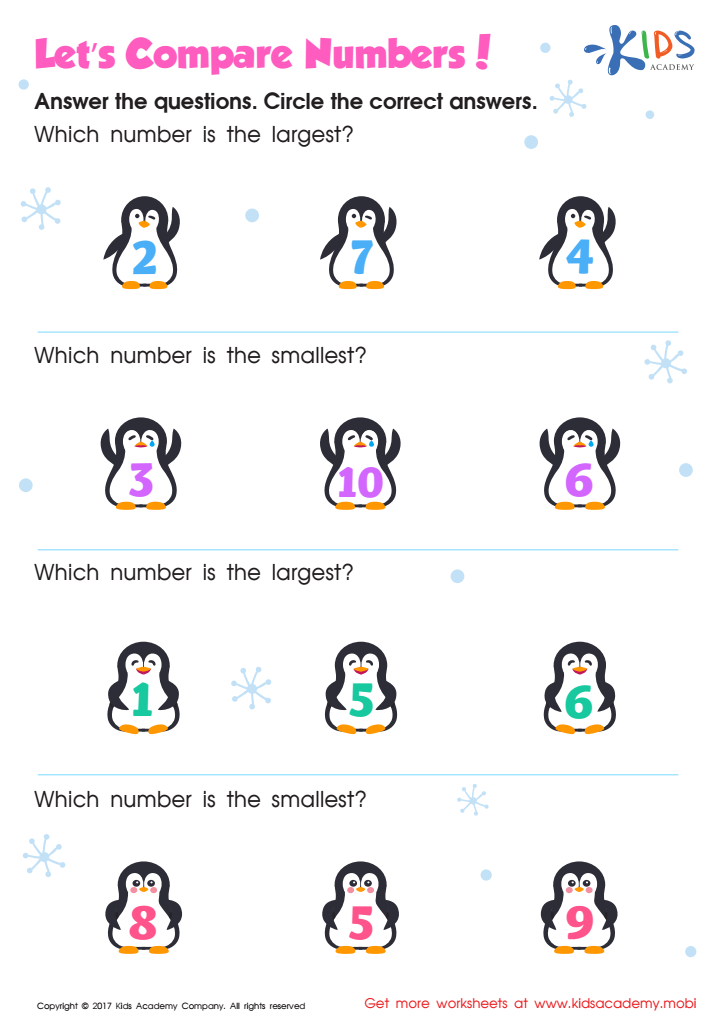
Comparing Numbers 1–10 Worksheet Kindergarten
Help your child sort out numbers 1-10 with this fun worksheet! They'll practice comparing numbers and boost their number sense. Plus, it features cute little penguins with numbers on their bellies - they make learning even more exciting!
Comparing Numbers 1–10 Worksheet Kindergarten
Worksheet
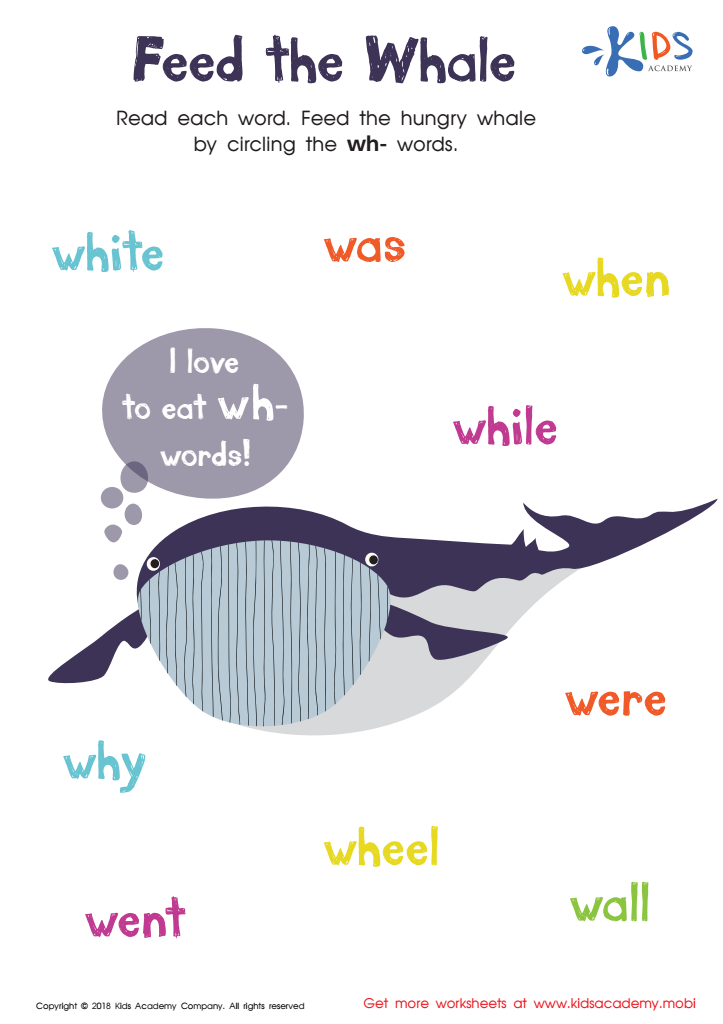
Feed the Whale Worksheet
Help your early reader build beginning consonant and blend recognition with this fun whale worksheet! They'll feed the whale wh- words, circle sight words, and build fine motor skills—all while discriminating between differently colored words.
Feed the Whale Worksheet
Worksheet
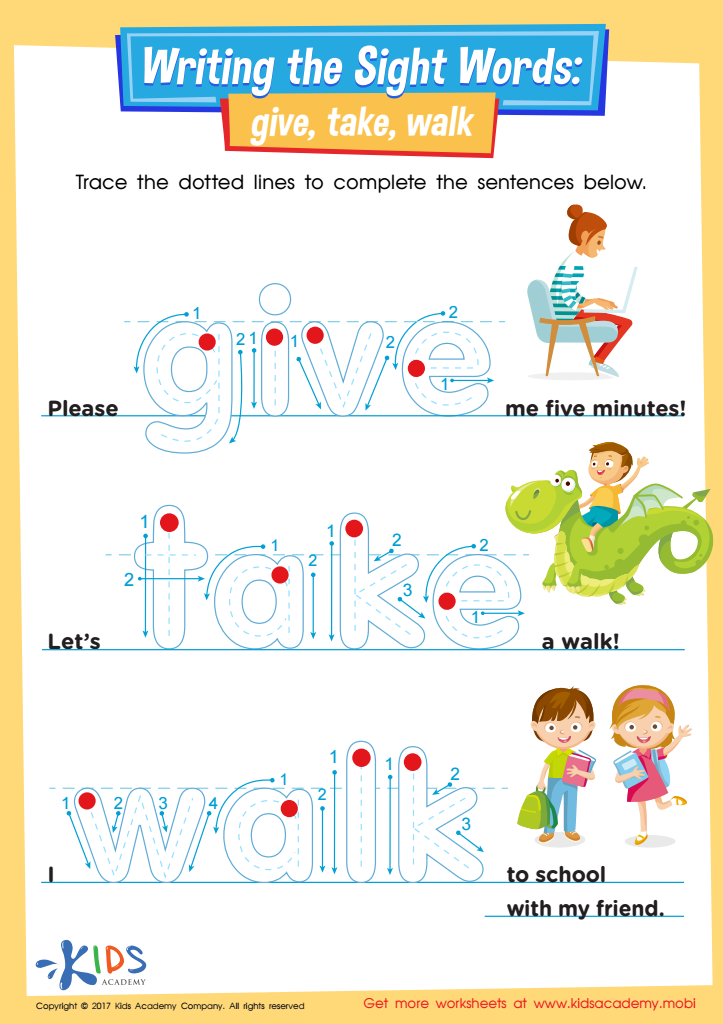
Give, Take, Walk Printable Sight Words Worksheet
Reading aids writing development: this worksheet has your child read sentences and write three sight words: give, take, and walk. It's a great way to strengthen writing skills.
Give, Take, Walk Printable Sight Words Worksheet
Worksheet
Join Kids Academy for Free
Who is primarily going to use this learning content?





Parents and teachers should recognize the critical importance of basic math understanding for children ages 4-6 because it lays the foundational skills essential for future learning and everyday activities. Early math skills encompass simple counting, shape recognition, basic addition and subtraction, and number sense. These concepts are pivotal as they not only enhance cognitive development but also encourage logical thinking and problem-solving skills.
When children understand these basic math principles at an early age, they develop confidence and a positive attitude towards learning, which can lead to increased academic achievement across various subjects. Furthermore, research shows that early math proficiency is a strong predictor of later school success, even more so than early literacy skills.
In everyday life, early math skills help children make sense of the world around them. Whether it's understanding time, measuring ingredients while cooking, or noticing patterns in nature, basic math strengthens children's ability to make connections and understand their environment better. Engaging children in playful and interactive math activities enhances their experiential learning and solidifies these fundamental concepts in a manner that is both enjoyable and educational.
By prioritizing early math education, parents and teachers ensure children are well-prepared for the increasingly complex math and science curriculum that lies ahead, setting the stage for lifelong learning and critical thinking.








