
Basic subtraction Worksheets for Ages 4-6
7 filtered results
Difficulty Level
Grade
Age
-
From - To
Subject
Activity
Standards
Introduce your young learner to the world of numbers with our "Basic Subtraction Worksheets for Ages 4-6." These carefully crafted worksheets from Kids Academy are designed to help children grasp the fundamental concepts of taking away in a fun and engaging way. Perfect for early learners, each sheet offers a variety of exercises that cater to different skill levels, ensuring that your child can progress at their own pace. Our colorful and interactive worksheets make learning subtraction as simple as 1-2-3! Foster a love for math in your child today with these essential educational resources.
Favorites
With answer key
Interactive
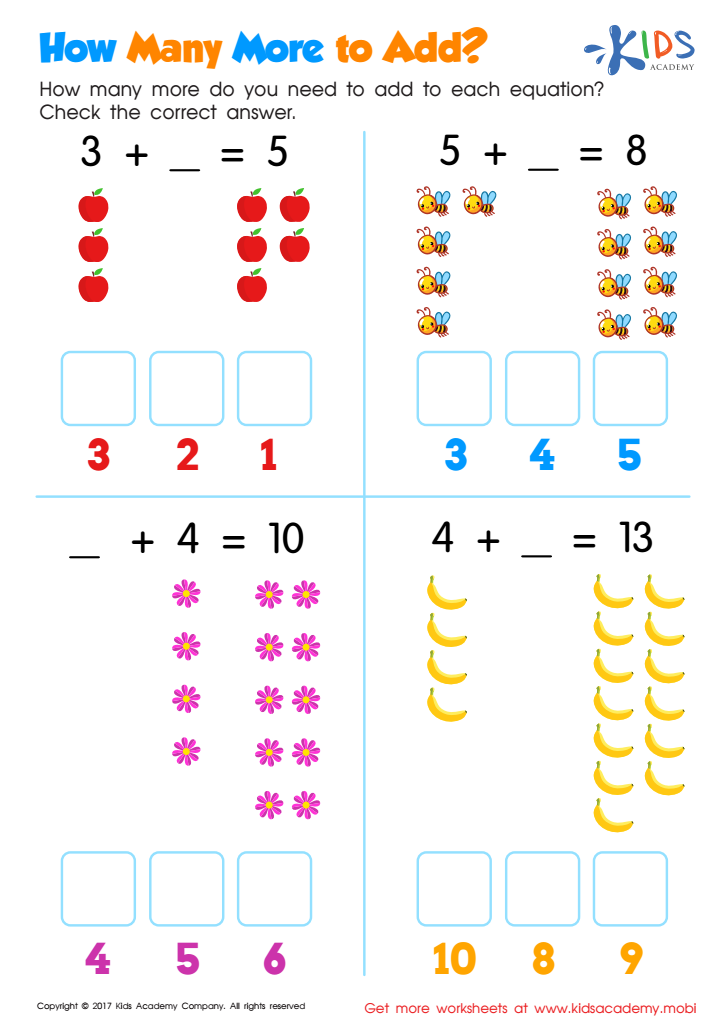
How Many More to Add Worksheet
Sharpen your child's math skills with this pdf worksheet. Help them figure out how many apples, bees, flowers and bananas are needed to reach the answer given. The possible answers are provided at the bottom of the boxes. Have some fun doing some addition and subtraction magic together and get those math skills sharpened!
 Assign to My Students
How Many More to Add Worksheet
Worksheet
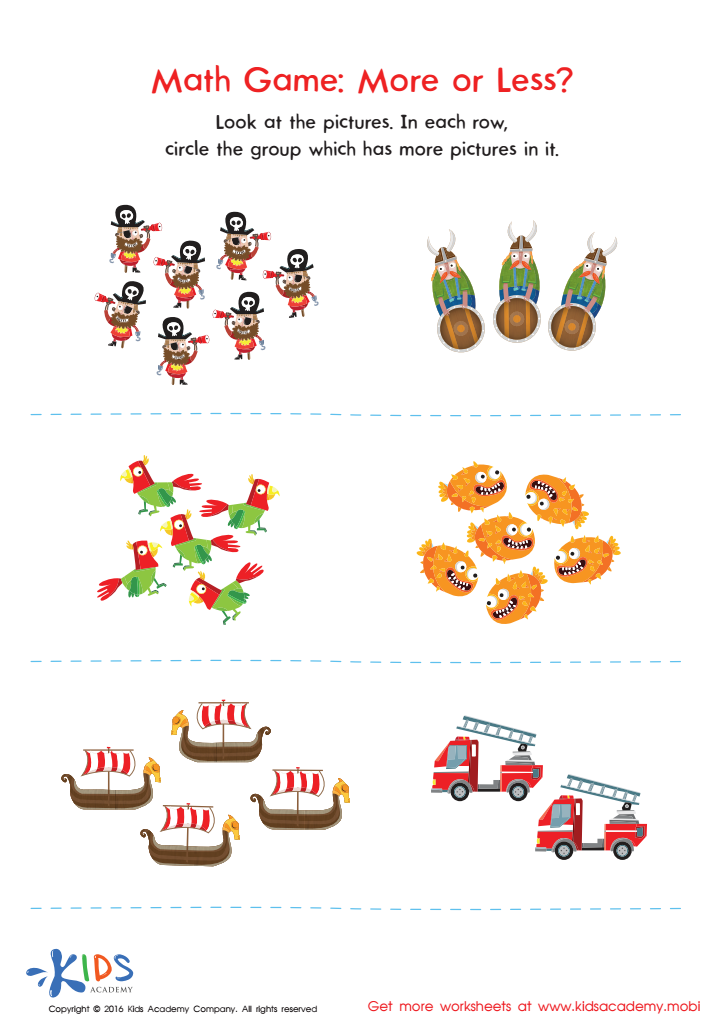
More or Less Worksheet
Counting and understanding quantity are essential skills for kindergarteners. Get your free printable more or less worksheet now!
More or Less Worksheet
Worksheet
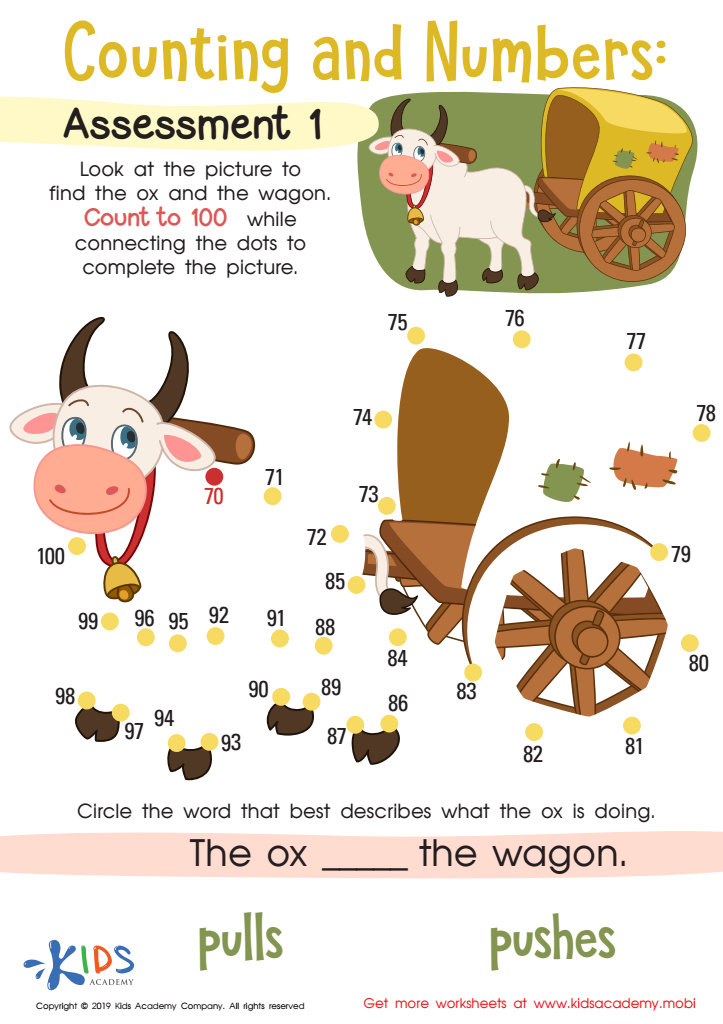
Counting and Numbers: Assessment 1 Worksheet
Let your kids use the picture as a guide and count from 70 to 100 to complete an ox pulling a wagon. As a comprehension check, have them answer the related question using words from the word bank. This dot-to-dot worksheet is a great way to assess their number reasoning and counting forward skills.
Counting and Numbers: Assessment 1 Worksheet
Worksheet
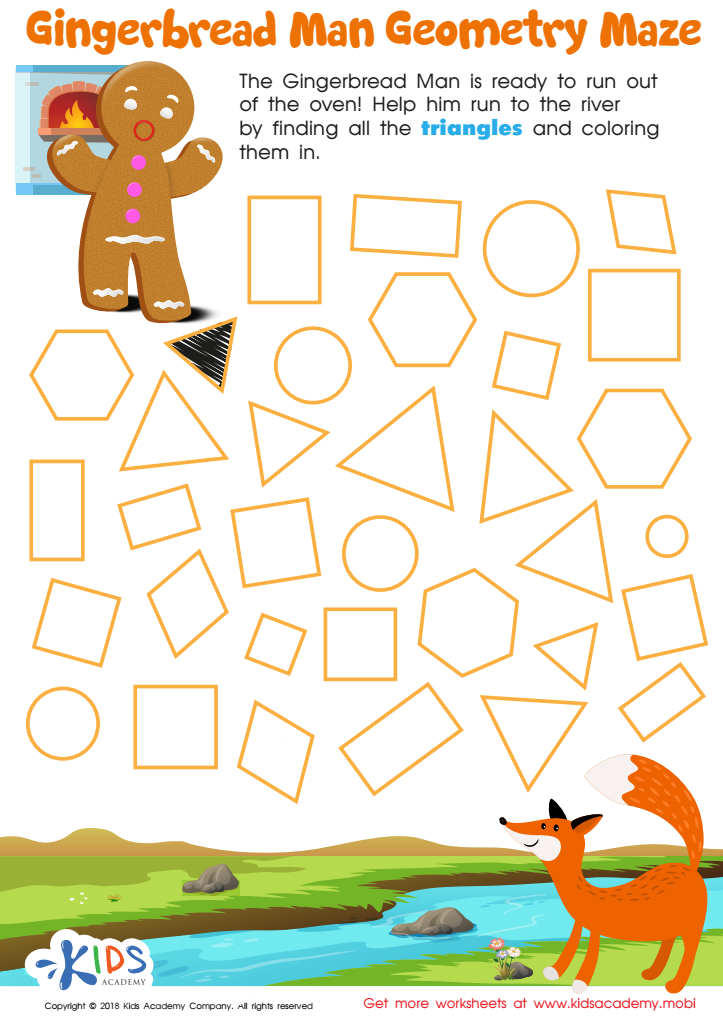
Gingerbread Man Geometry Maze Worksheet
Help a beloved character escape the oven! Kids race through a sea of geometrical shapes, searching for triangles of various sizes. With this free worksheet, they can have fun while learning about similarity of geometrical shapes concepts. Run, run, run as fast as they can!
Gingerbread Man Geometry Maze Worksheet
Worksheet
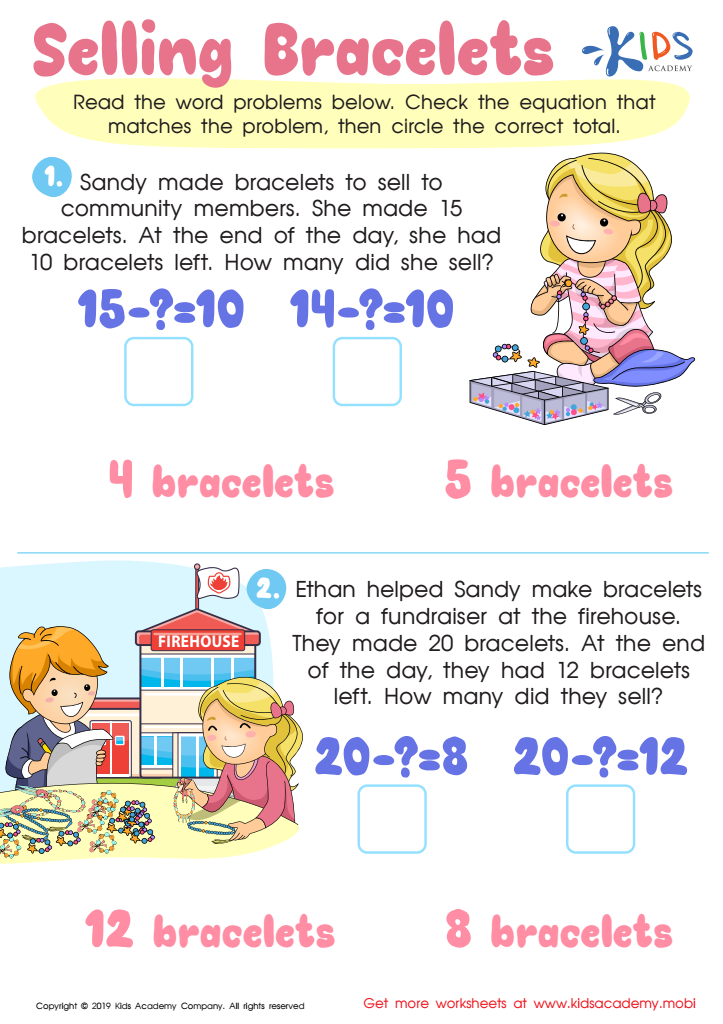
Selling the Bracelets Worksheet
Engage your kids with learning by making it fun! Try this creative worksheet: your kids can practice subtraction while making bracelets. Download the pdf; read the two word problems to them and help them choose the correct total. Have fun! (80 words)
Selling the Bracelets Worksheet
Worksheet
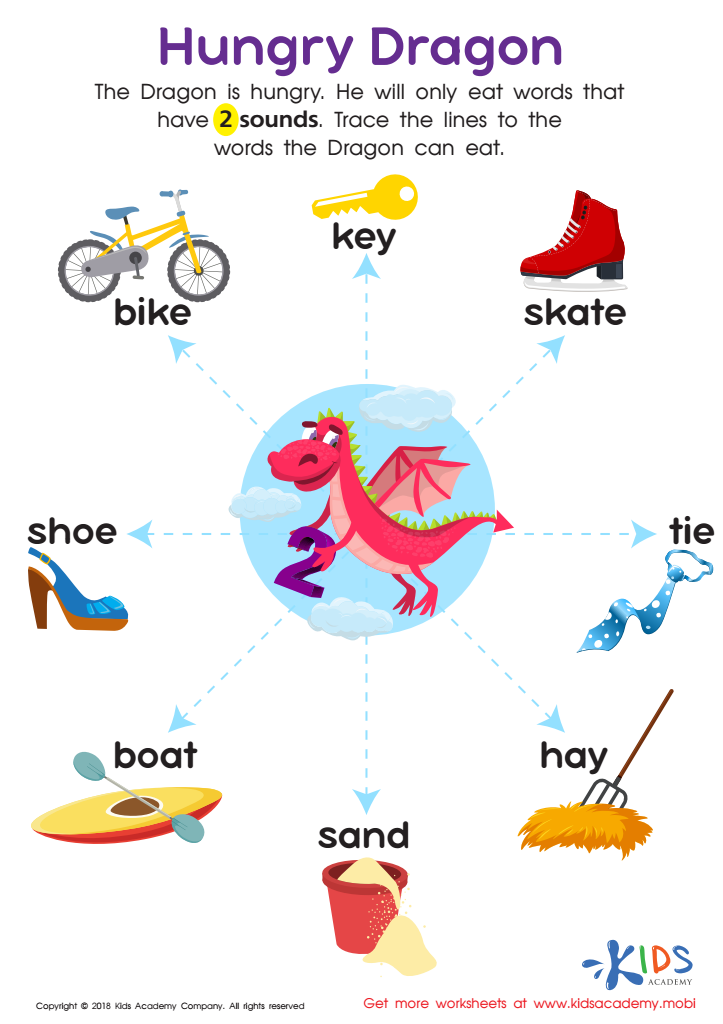
Hungry Dragon Worksheet
Feed the dragon words and watch your child strengthen their phonological awareness and auditory discrimination skills! Download this free PDF for tracing exercises that build their fine motor skills too. Kids will love spending time with the cute dragon while they unwittingly learn reading skills!
Hungry Dragon Worksheet
Worksheet
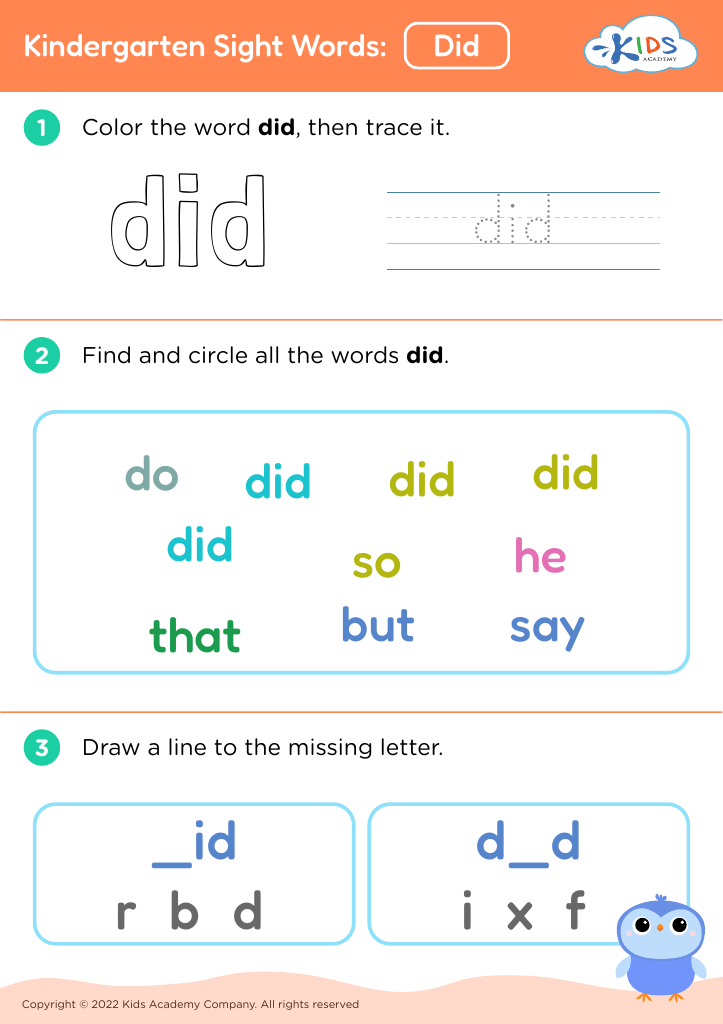
Join Kids Academy for Free
Who is primarily going to use this learning content?






Basic subtraction is a fundamental building block in early childhood education, forming the foundation for many future mathematical concepts. For children aged 4-6, understanding subtraction is essential for several reasons. Firstly, it helps develop critical thinking and problem-solving skills. Knowing how to subtract allows children to find missing information and make sense of quantitative relationships, which are skills they will use in everyday life.
Secondly, mastering subtraction enhances numerical literacy. Early familiarity with subtraction makes future concepts, such as division and algebra, more comprehensible. When young learners grasp subtraction, they are better prepared to tackle complex mathematical problems later on.
Thirdly, subtraction underpins a wide array of practical activities such as sharing, playing games, and managing small allowances. These real-world applications make learning subtraction relevant and meaningful to young children, providing them with immediate and practical experiences.
Additionally, building confidence in mathematics at an early age sets a positive academic tone and encourages a lifelong interest in learning. Teachers and parents who invest time in ensuring that children understand basic subtraction lay the groundwork for success in school and beyond.
In summary, early exposure to subtraction equips children with vital skills that support both their academic growth and daily life, making it an essential focus for educators and parents.








