Data interpretation Worksheets for Ages 4-6
10 filtered results
-
From - To
Explore our engaging Data Interpretation Worksheets designed specifically for children aged 4-6! These worksheets provide a fun and interactive way for young learners to develop essential analytical skills. Your child will explore various activities including sorting, chart reading, and graph interpretation, fostering early mathematical understanding. Each worksheet is tailored to help little ones grasp concepts like comparison and categorization through colorful visuals and relatable themes. Perfect for classroom use or at-home learning, our worksheets are an excellent resource to prepare your child for future educational success. Start building their confidence in data interpretation today with our enjoyable and easy-to-use resources!
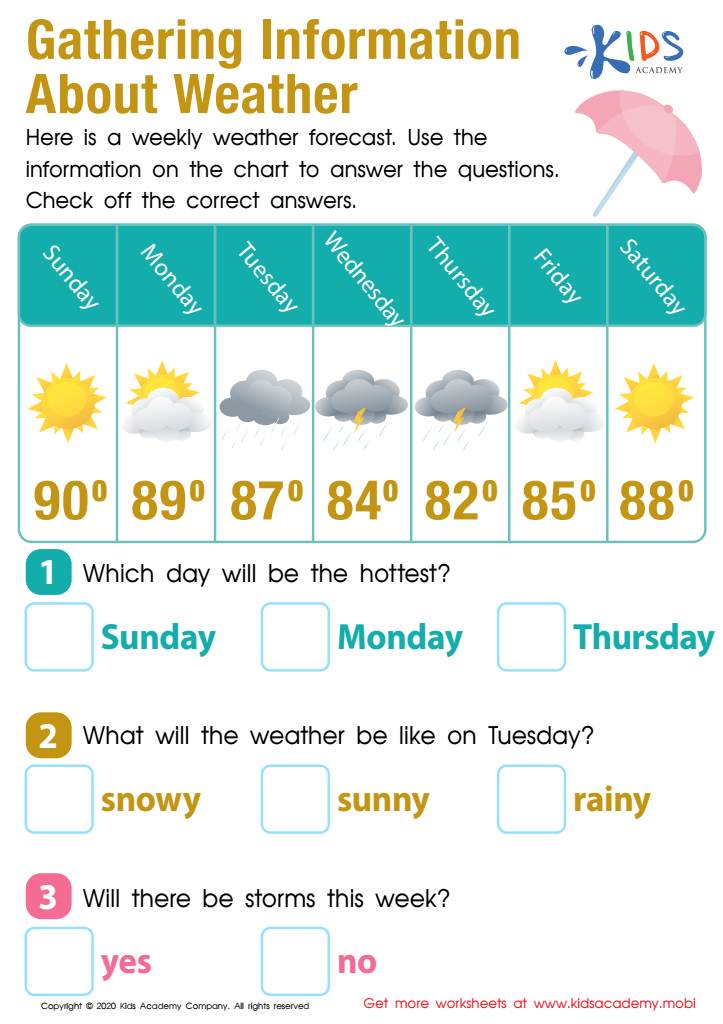
Gathering Information About the Weather Worksheet
 Assign to My Students
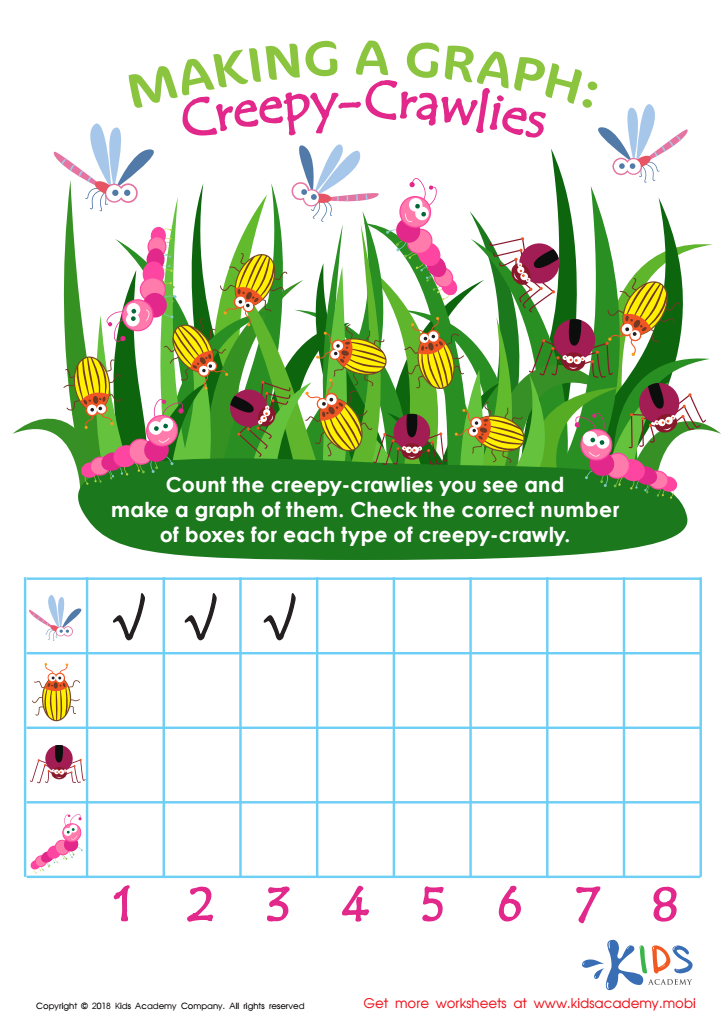
Making a Graph: Creepy Crawlies Worksheet
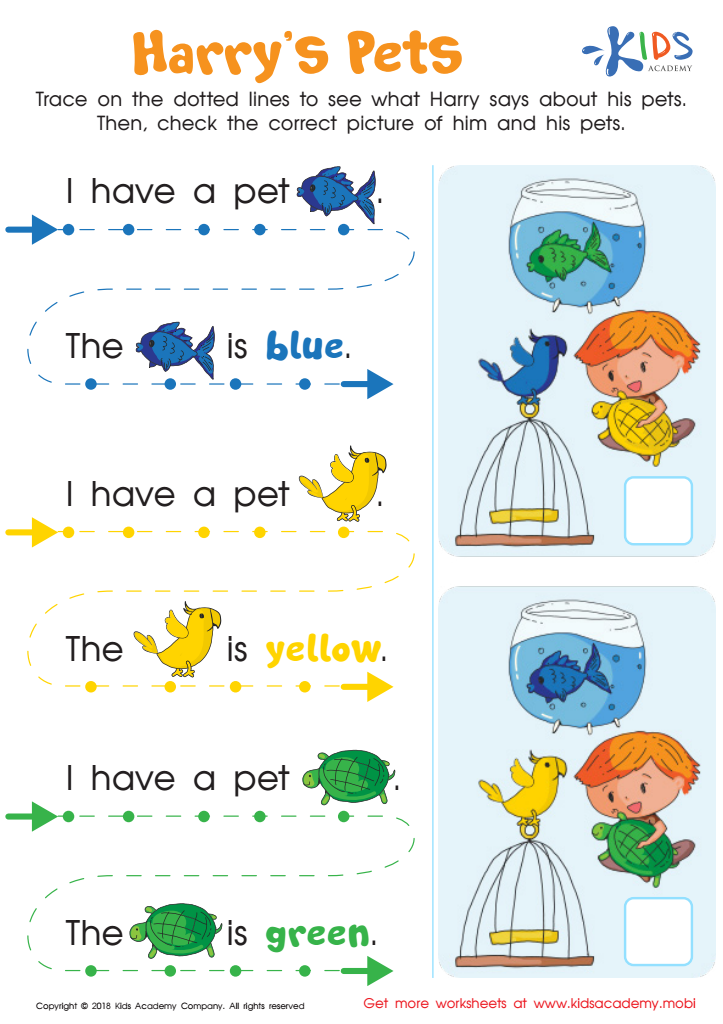
Read from Left to Right: Harry's Pets Worksheet
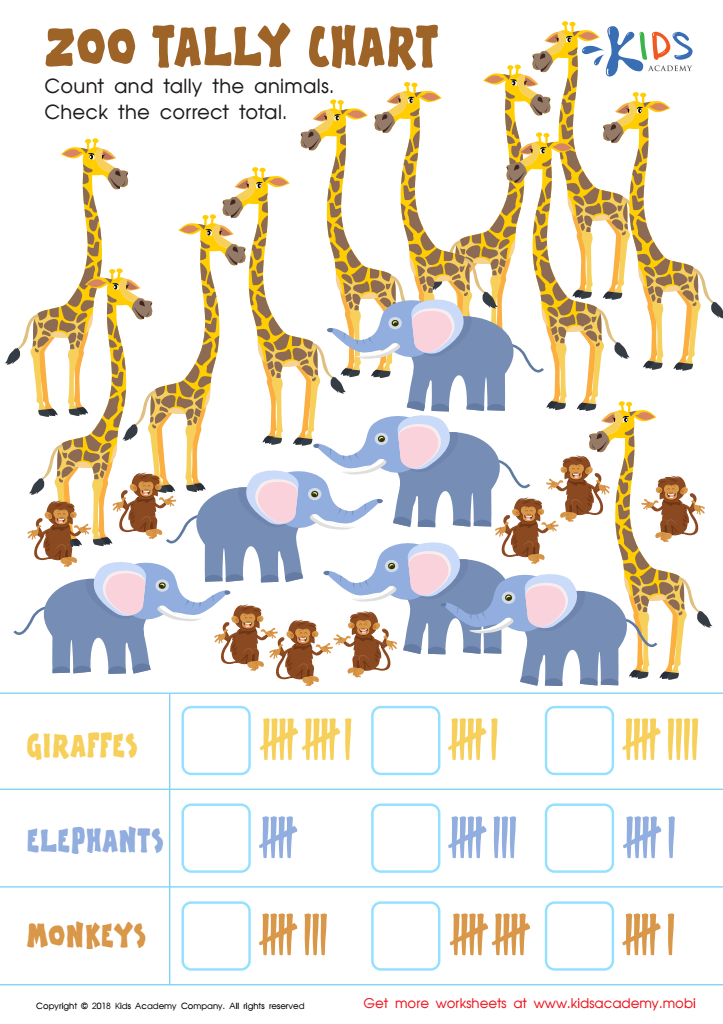
Zoo Tally Chart Worksheet
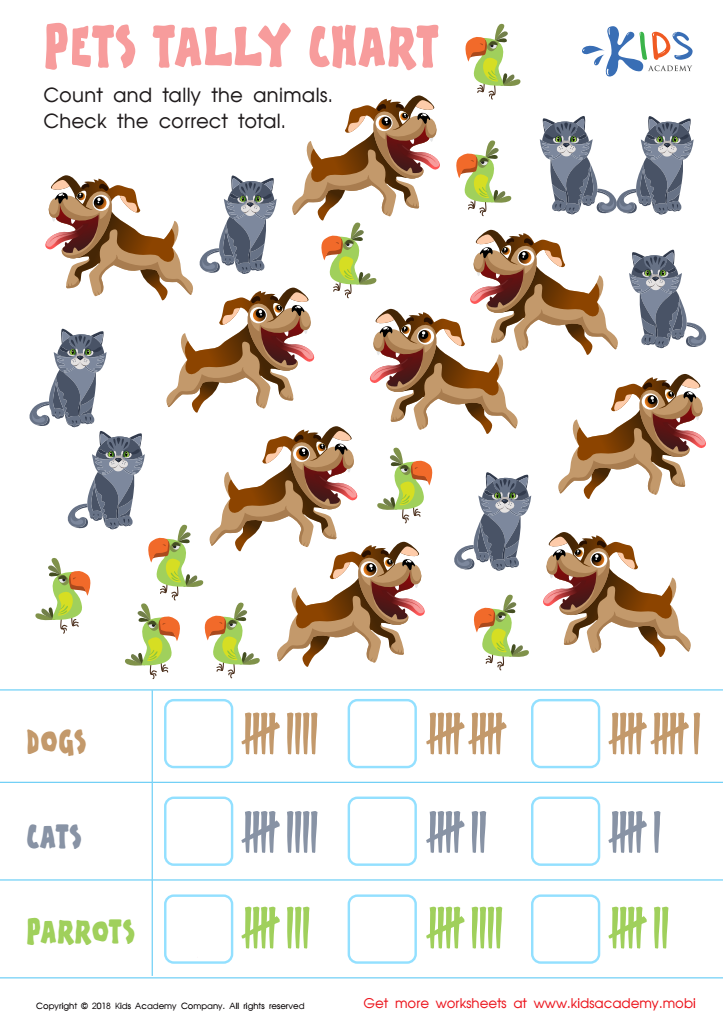
Pets Tally Chart Worksheet
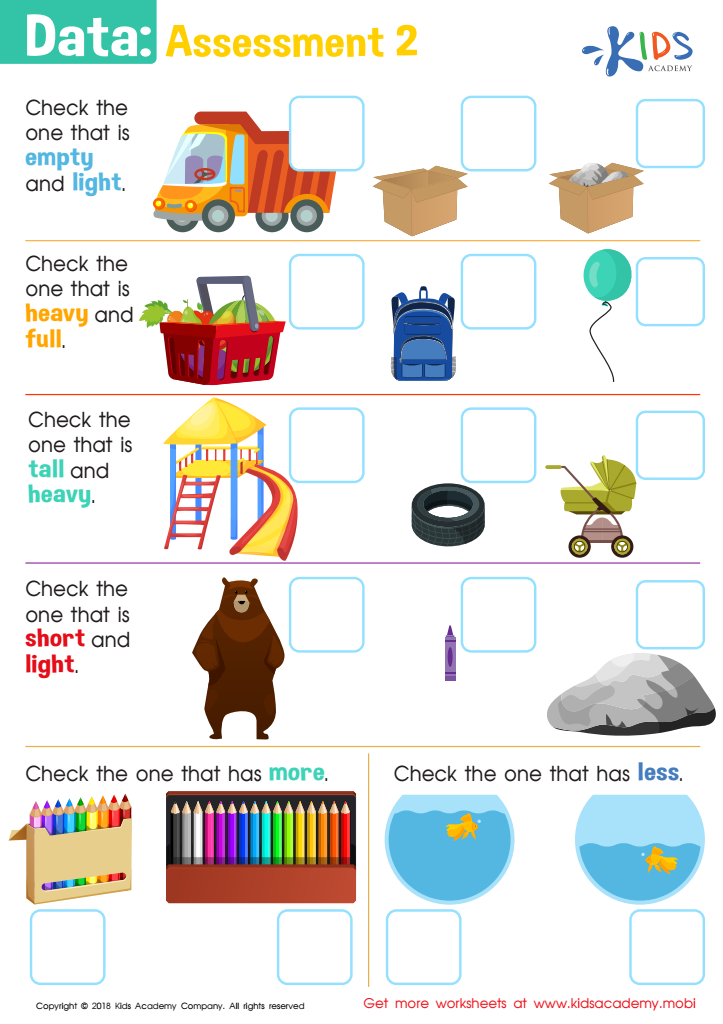
Data: Assessment 2 Worksheet
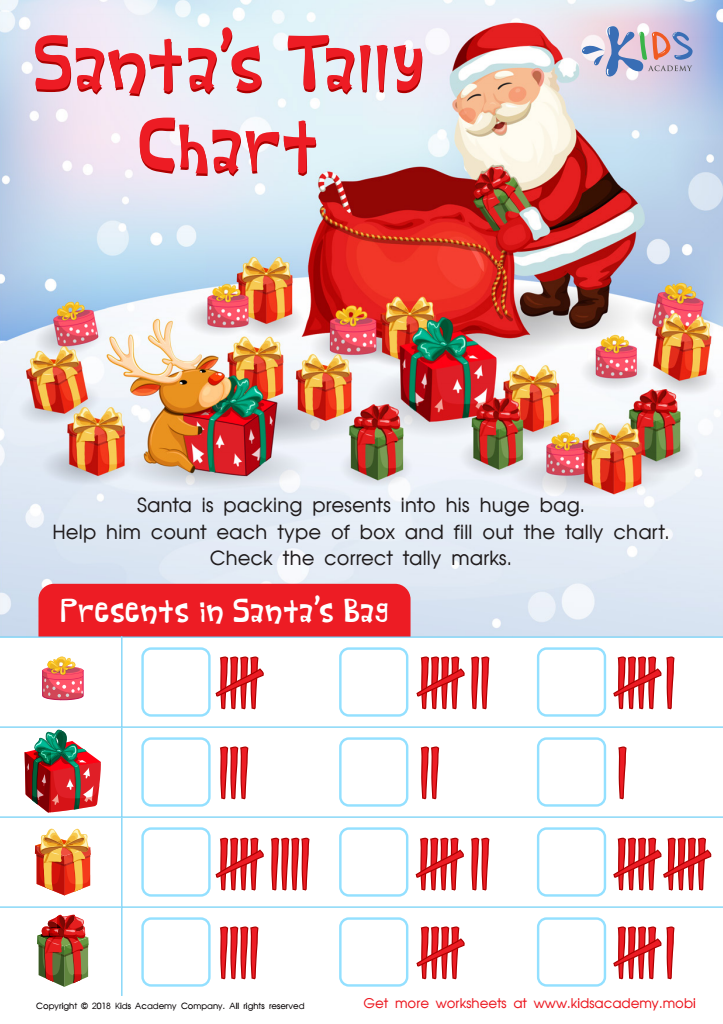
Santa Tally Chart Worksheet
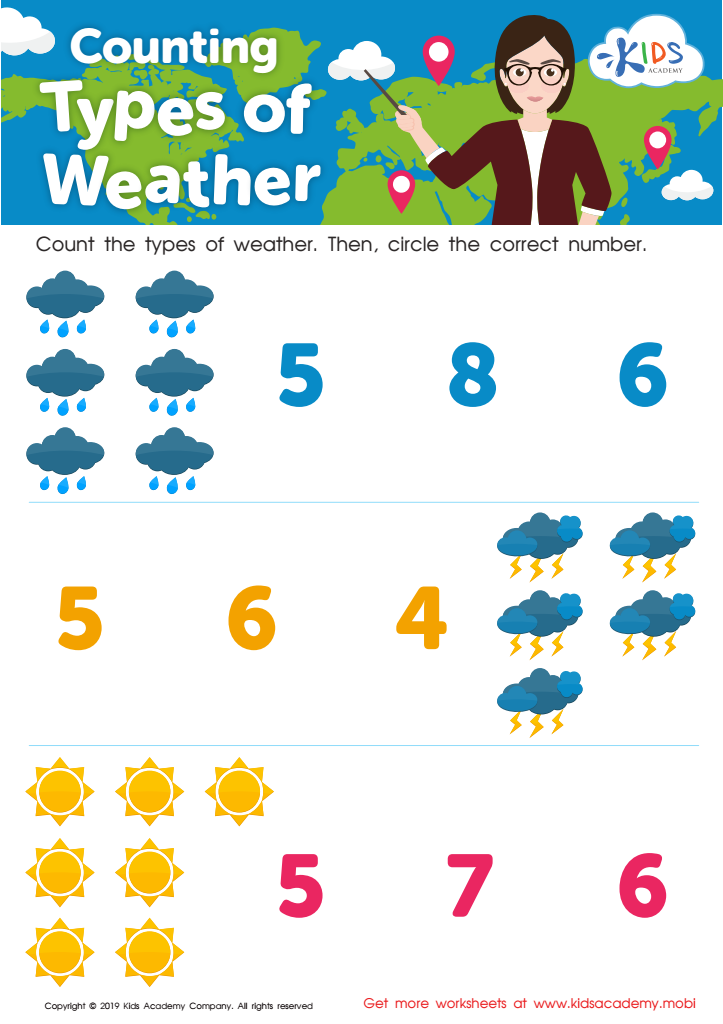
Counting Types of Weather Worksheet







Data interpretation is a foundational skill that significantly impacts young children's learning and development. For parents and teachers of children aged 4-6, focusing on data interpretation is crucial for several reasons.
First, early exposure to data fosters critical thinking and analytical skills. Young children often engage in basic activities such as counting objects or categorizing toys, which can naturally evolve into understanding simple graphs and charts. This early engagement encourages them to think logically and make connections between different pieces of information.
Second, data interpretation enhances children's mathematical skills. The ability to read and comprehend data forms a strong basis for future mathematical concepts such as addition, subtraction, and graphing. These skills are essential as they advance in their education.
Lastly, data interpretation promotes informed decision-making. Teaching children how to interpret information empowers them to make thoughtful choices, whether in problem-solving throughout their day or understanding outcomes of game scores or in conversations involving comparisons.
Overall, incorporating data interpretation into the early curriculum enables children to develop crucial life skills that benefit their academic performance and personal growth. By supporting this skill development, parents and teachers are investing in children’s future success.








