Division practice Worksheets for Ages 4-6
6 filtered results
-
From - To
Enhance your child's early math skills with our Division Practice Worksheets for ages 4-6. These engaging and age-appropriate worksheets from Kids Academy are designed to simplify the introduction to division through fun-filled activities. Featuring colorful illustrations and clear instructions, these printables help young learners grasp basic division concepts effortlessly. Perfect for preschool and kindergarteners, each worksheet offers a blend of practice problems and interactive exercises ensuring a positive and productive learning experience. Start building a strong foundation in math today with our expertly crafted division worksheets tailored for curious young minds.
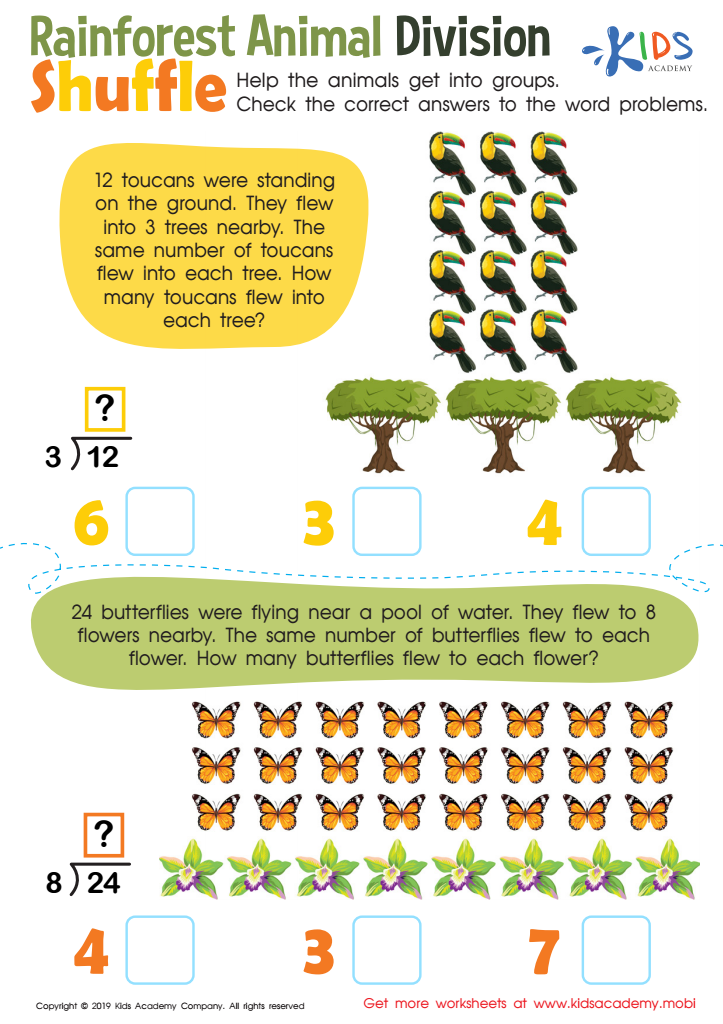
Rainforest Animal Division Worksheet
 Assign to My Students
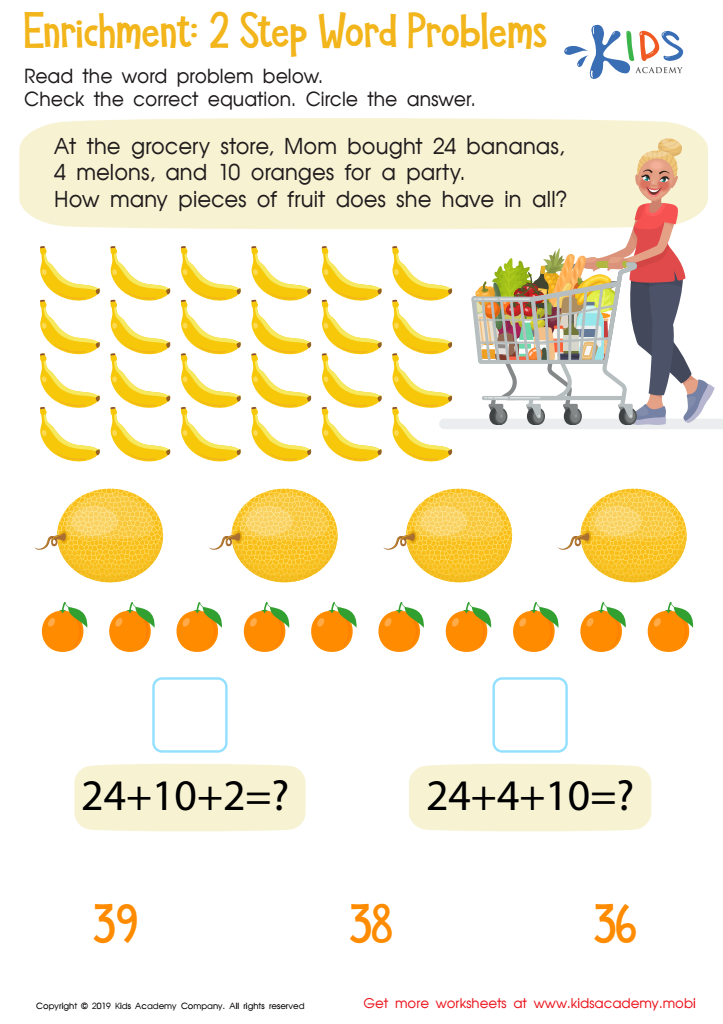
Enrichment -2 Step Word Problems Worksheet
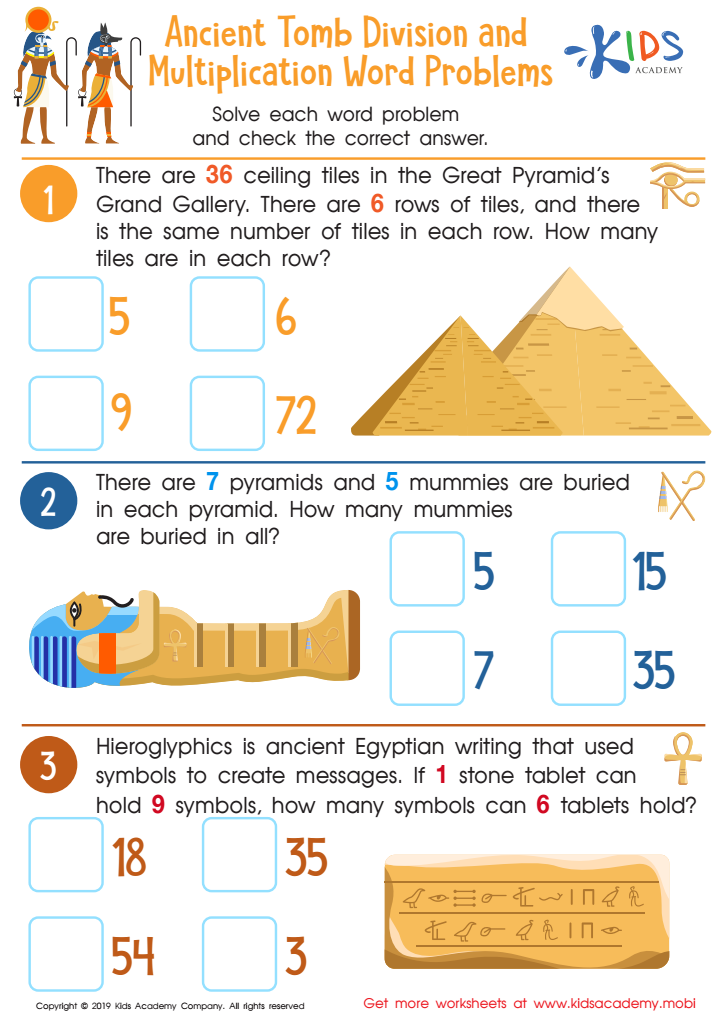
Ancient Tomb Division and Multiplication Word Problems Worksheet
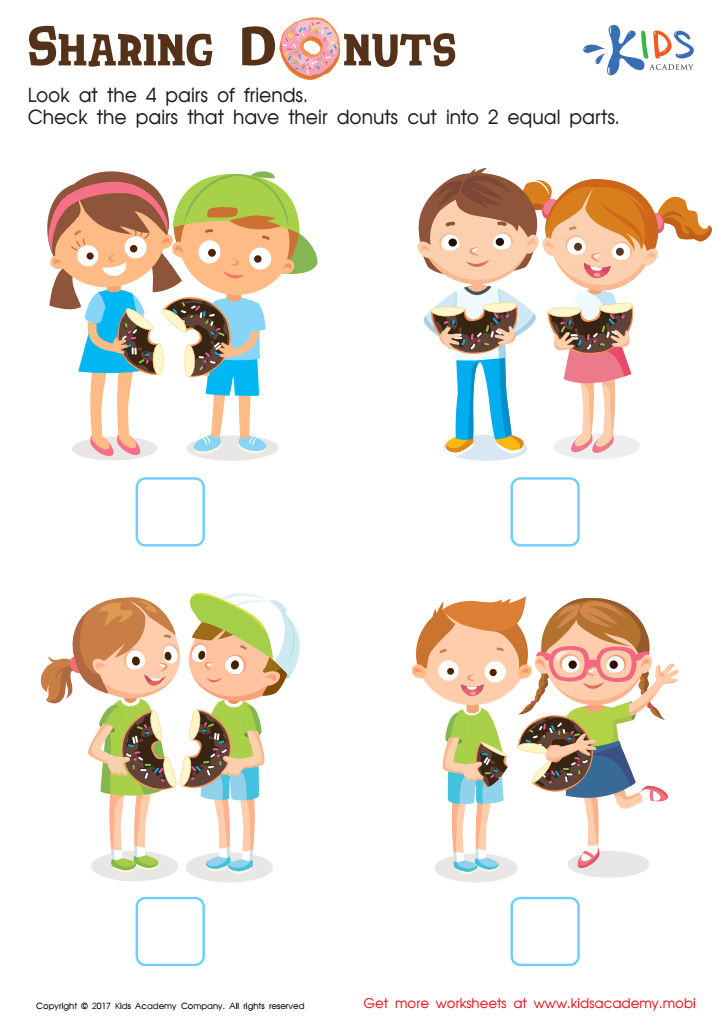
Sharing Donuts Worksheet
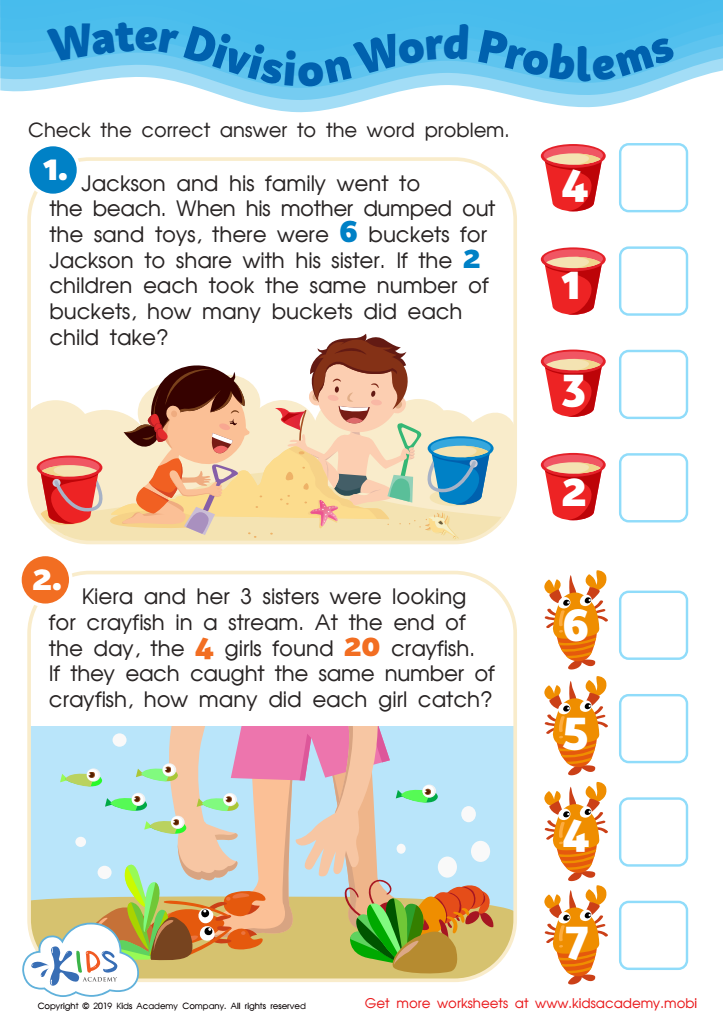
Water Division Word Problems Worksheet
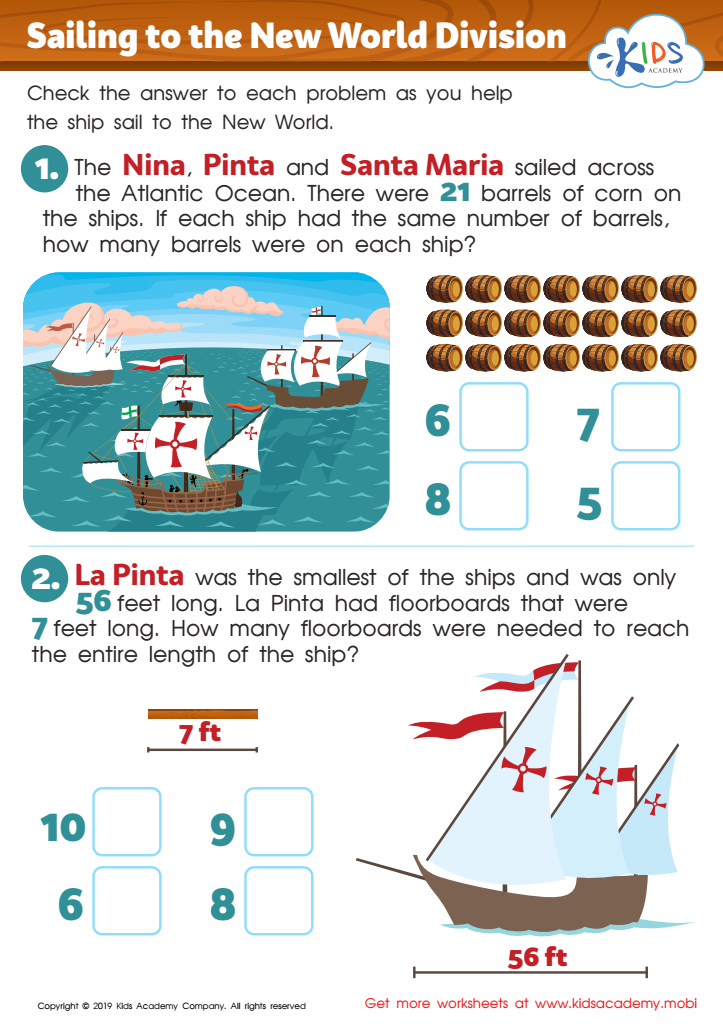
Sailing to the New World Division Worksheet




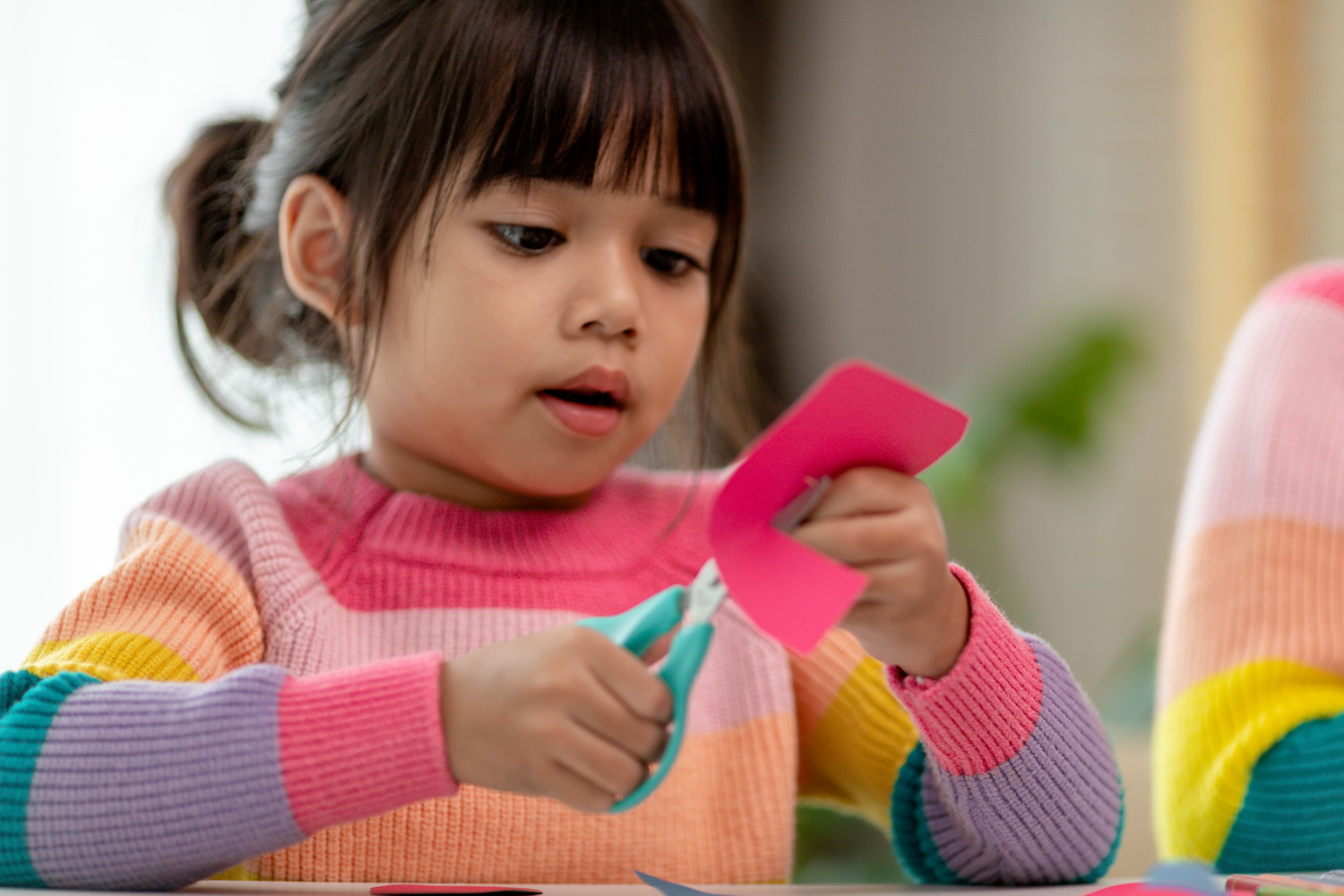



While division might traditionally be introduced in later grades, early exposure to such mathematical concepts can be incredibly beneficial for young children. For ages 4-6, starting with basic, developmentally-appropriate division practice offers several key advantages.
Firstly, introducing division early fosters a strong foundational understanding of number relationships and mathematical operations. Understanding concepts like sharing and grouping helps children recognize patterns and relationships between numbers, which are crucial skills as they progress in their math education.
Secondly, early division practices can enhance problem-solving abilities. Even at a young age, engaging with division shapes a child's critical thinking and logical reasoning skills. Activities involving simple sharing scenarios (like dividing candies among friends) lay a groundwork for more complex problem-driven learning in later years.
Moreover, early practice with division makes advanced math less intimidating. Children who have been exposed to various mathematical concepts from an early age are less likely to develop math anxiety and more likely to tackle challenging problems with confidence.
Parents and teachers thus play a pivotal role by incorporating basic division into games, storytelling, or daily activities. Such playful and informal methods ensure that young learners perceive division as a natural, enjoyable activity, setting a positive tone for their future mathematical journey.








