Fraction simplification Worksheets for Ages 4-6
9 filtered results
-
From - To
Welcome to our engaging Fraction Simplification Worksheets for Ages 4-6! These carefully crafted activities introduce young learners to the world of fractions in a fun and accessible way. Our vibrant worksheets help children grasp the fundamental concepts of simplifying fractions through visual aids and interactive exercises. Designed to enhance early math skills, these resources promote critical thinking and problem-solving abilities while building confidence. Perfect for both classroom and home learning, our worksheets ensure that students enjoy mastering fractions. Discover a variety of exercises that make fraction simplification an exciting adventure for your little ones! Download your worksheets today and watch skills soar!
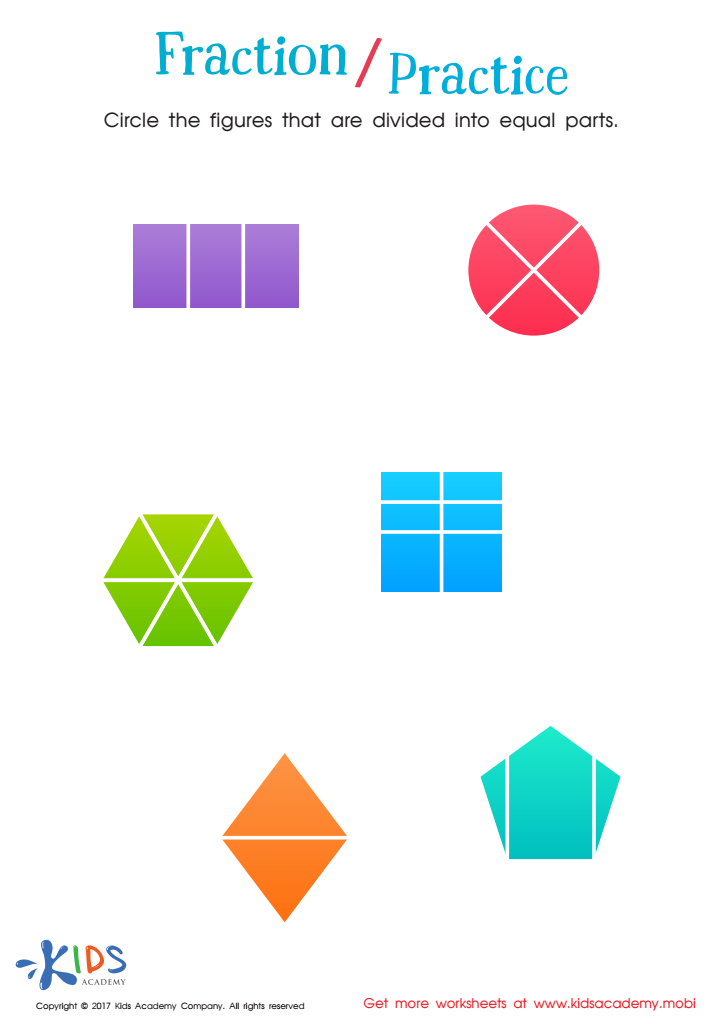
Fractions: Shapes Worksheet
 Assign to My Students
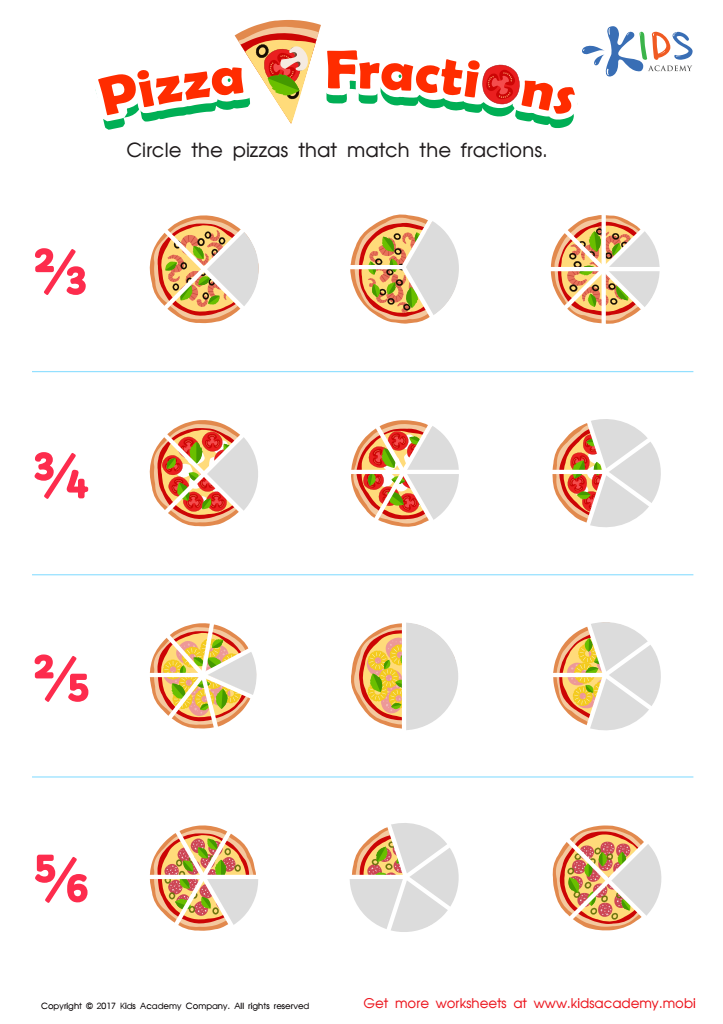
Fractions: Pizza Printable
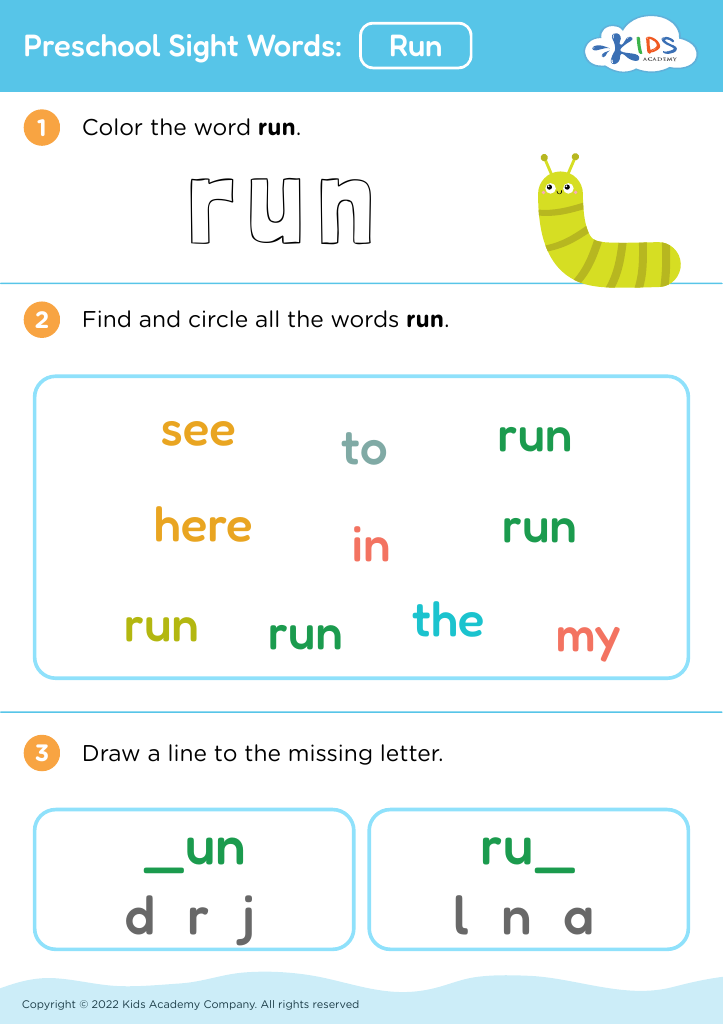








Fraction simplification for young learners aged 4-6 is a foundational math skill that serves as an introduction to more complex concepts in mathematics. At this age, children are naturally curious and receptive to exploring ideas, making it an ideal time to introduce fractions. Understanding fractions not only enhances their numerical skills but also fosters critical thinking and problem-solving abilities.
Simplifying fractions can help young children grasp the concept of equivalence. When they learn that different fractions can represent the same quantity, it enhances their number sense, allowing them to make connections between numbers and quantities in everyday life. Moreover, simplifying fractions lays the groundwork for future math learning, including addition, subtraction, and operations with larger fractions, which are crucial in later grades.
Additionally, engaging children in fun, hands-on activities involving fractions—like using food, toys, or art—makes the learning experience enjoyable and memorable. By involving parents and teachers in collaborative learning, children can develop a multifaceted understanding of math. Ultimately, when parents and teachers emphasize fraction simplification early on, they cultivate a love for mathematics that can enhance overall academic success and foster lifelong skills.








