
Identifying differences Worksheets for Ages 4-6
3 filtered results
Difficulty Level
Grade
Age
-
From - To
Subject
Activity
Standards
Discover a fun and educational way to enhance your child's observational skills with our "Identifying Differences Worksheets for Ages 4-6". These engaging activities are designed to help young learners improve their ability to notice differences and similarities in pictures, promoting critical thinking and attention to detail. Perfect for preschool and kindergarten-aged kids, these worksheets will keep your little ones entertained while developing essential learning skills. Enjoy activities that range from spotting the odd one out to differentiating between shapes, sizes, and patterns. Unlock your child’s potential with these expertly crafted printable sheets from Kids Academy!
Favorites
With answer key
Interactive
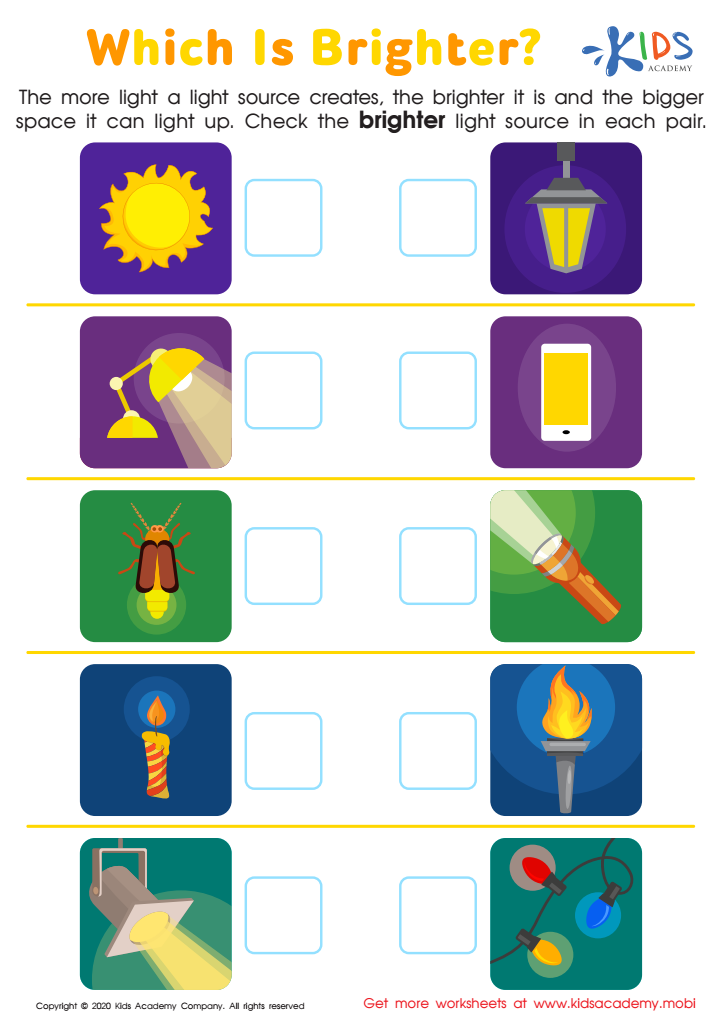
Which Is Brighter? Worksheet
Before the exercise, ask students to recall sources of light. Use this worksheet to explain that the brighter the light source, the more space it can light up. Identify the different light sources in the pictures, then check the brighter light source in each pair. The biggest natural source of light is the sun.
 Assign to My Students
Which Is Brighter? Worksheet
Worksheet
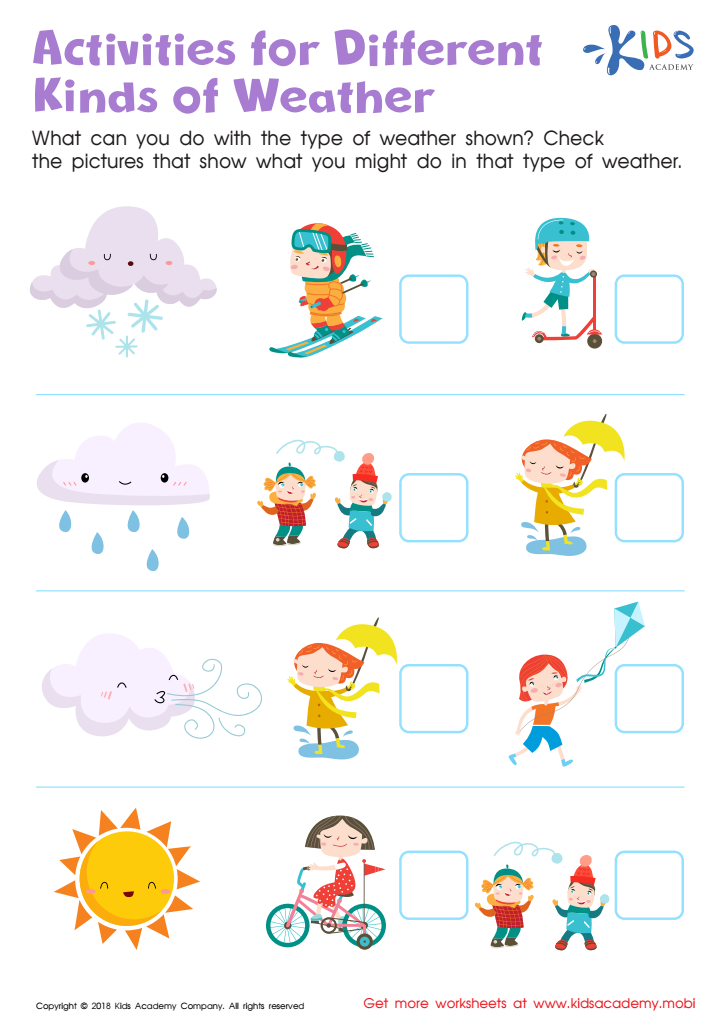
Activities for Different Kinds of Weather Worksheet
Help your child explore the changing seasons with this interactive worksheet. Ask them to name the different seasons and activities associated with each type of weather. Show the pictures and explain what they can do in that kind of weather. Have them check off the activities to help them learn and enjoy the changing seasons.
Activities for Different Kinds of Weather Worksheet
Worksheet
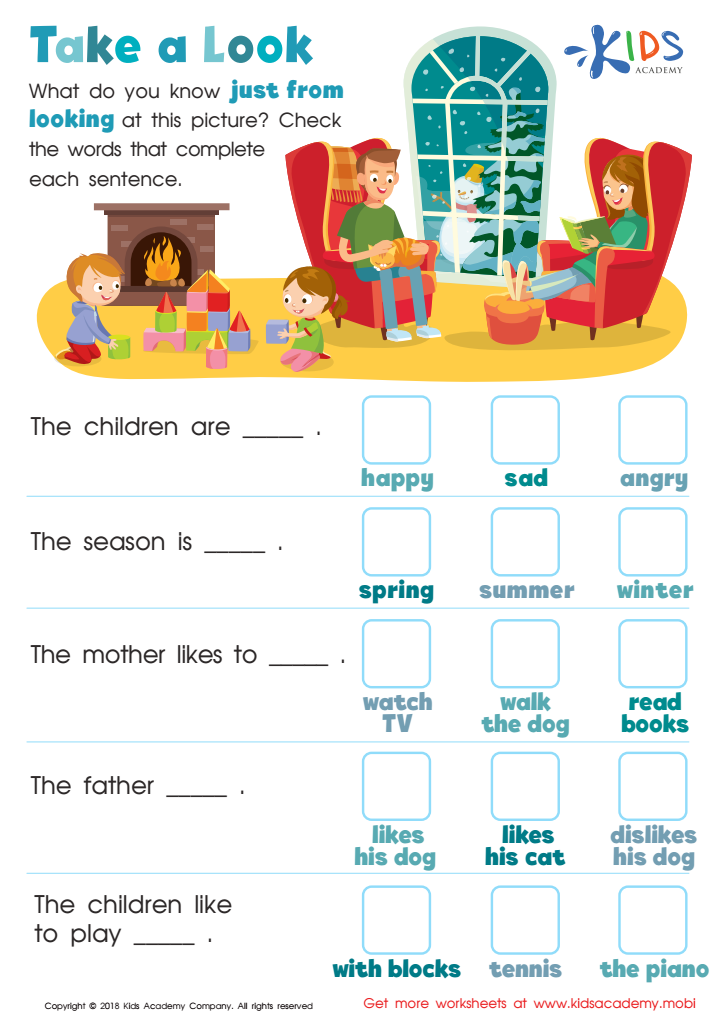
Take a Look - Part 1 Worksheet
Young learners gain understanding when using picture clues when reading. Looking at illustrations can help students learn the meaning of key vocabulary when reading fiction or informational text. Ask your students to look at the worksheet and observe what they can learn from the picture. It's a great comprehension strategy for early readers.
Take a Look - Part 1 Worksheet
Worksheet
Join Kids Academy for Free
Who is primarily going to use this learning content?





Identifying differences for children ages 4-6 is incredibly important for both parents and teachers. At this age, kids are in a critical developmental stage where they are learning to observe, categorize, and understand the world around them. Recognizing differences—from shapes and colors to emotional states and social dynamics—helps build essential cognitive skills.
Academically, identifying differences lays a foundation for future learning. It enhances pattern recognition, which is crucial for math and reading skills. For example, differentiating between letters and numbers is the first step in literacy and numeracy. This skill also translates into improved problem-solving abilities and critical thinking.
Socially and emotionally, understanding differences fosters empathy and adaptability. When children learn to see and appreciate differences among people whether it’s in appearances, abilities, or cultural backgrounds, they become more inclusive and compassionate individuals. It also aids in emotional regulation; by recognizing different facial expressions and body language, kids can better interpret and respond to social cues.
Furthermore, early identification of learning differences or developmental delays allows for timely intervention, improving outcomes considerably. For these reasons, fostering an environment where differences are acknowledged and celebrated is fundamental, paving the way for well-rounded development in young children.








