Improves hand-eye coordination Worksheets for Ages 4-6
3 filtered results
-
From - To
Enhance your child’s motor skills with our "Improves Hand-Eye Coordination Worksheets" designed specifically for ages 4-6. These engaging and colorful worksheets encourage young learners to develop essential hand-eye coordination through fun activities such as tracing, connecting dots, and completing puzzles. Each worksheet is crafted to promote concentration and precision, fostering both educational growth and fine motor development. Ideal for parents and teachers, these resources can be easily integrated into your child’s daily learning routine, ensuring a perfect blend of education and enjoyment. Help your little ones sharpen their skills and boost their confidence with our specially designed hand-eye coordination worksheets!
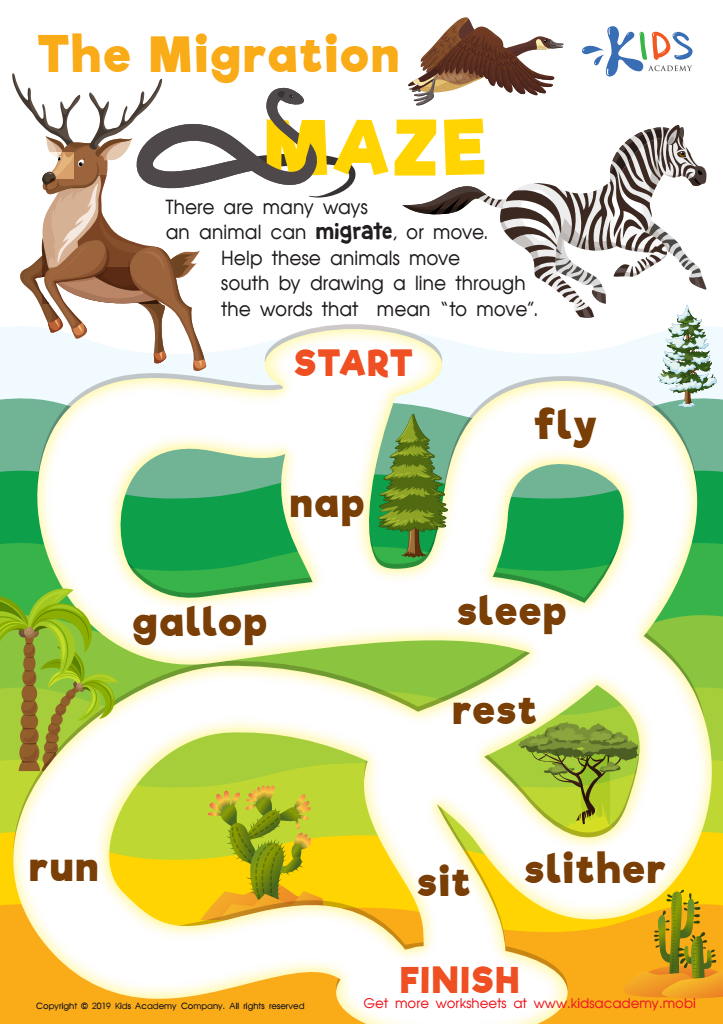
The Migration Maze Worksheet
 Assign to My Students
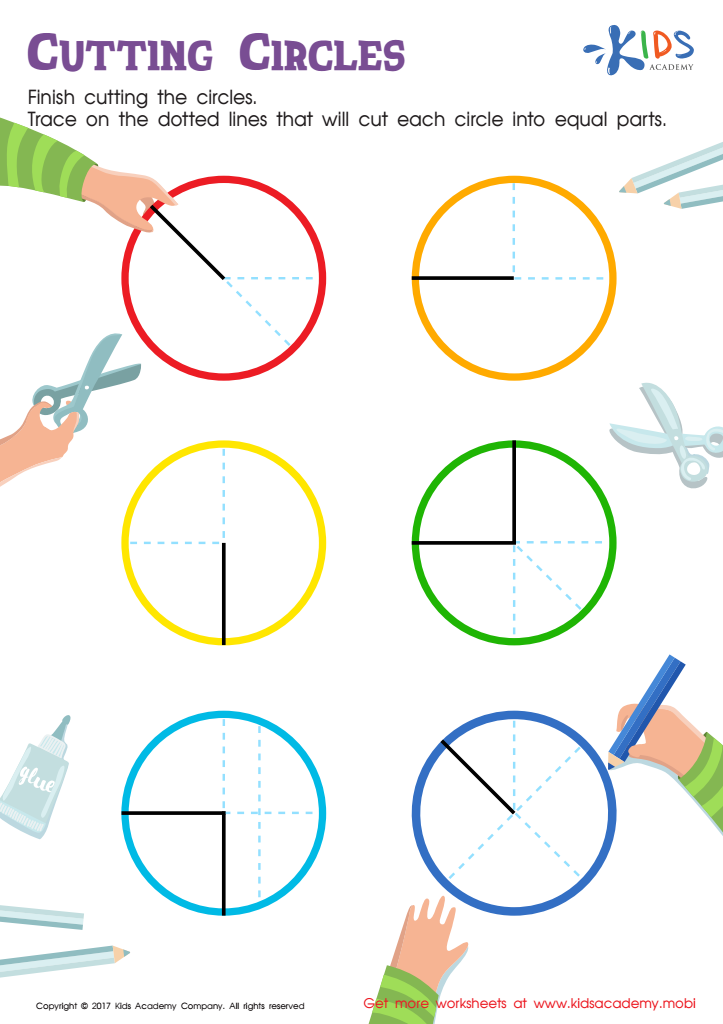
Cutting Circles Worksheet
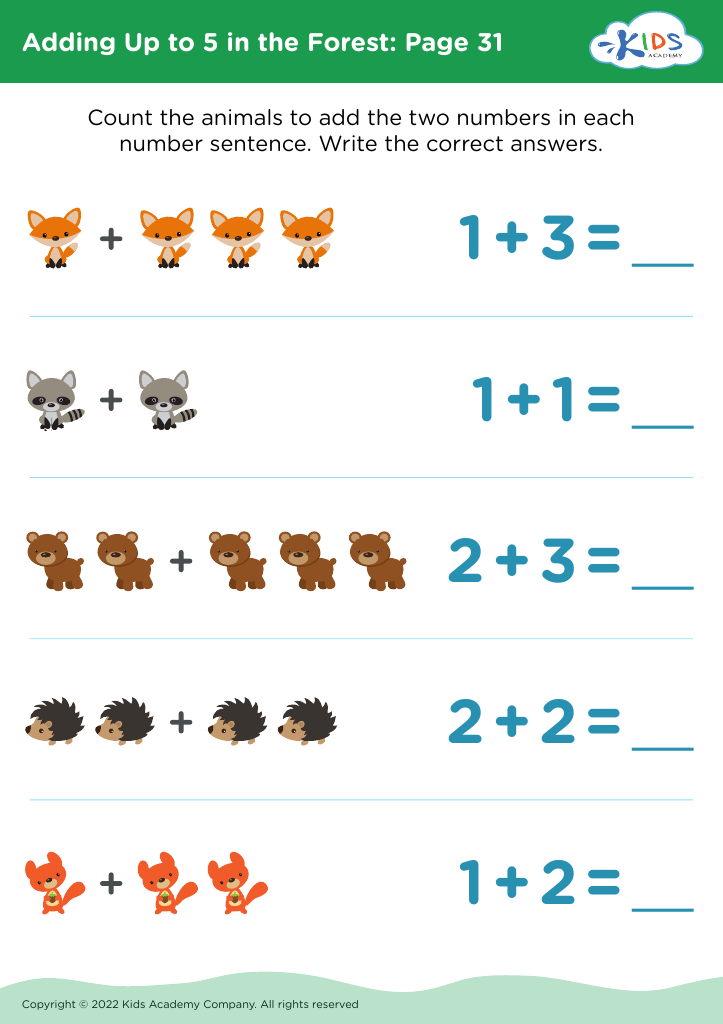






Improving hand-eye coordination in children aged 4-6 is crucial for their overall development and future learning. At this stage, children are rapidly developing physical skills and cognitive abilities that lay the foundation for more complex tasks. Enhanced hand-eye coordination aids in developing fine motor skills necessary for everyday activities such as writing, drawing, and performing self-care tasks like buttoning their shirts.
Activities that promote hand-eye coordination, such as playing catch, engaging in arts and crafts, or manipulating toys like building blocks or puzzles, not only enhance these skills but also nurture problem-solving and critical thinking abilities. Additionally, improved coordination boosts children's confidence and encourages them to participate more actively in sports and play, fostering teamwork and social interaction.
Parents and teachers play a vital role in creating an environment rich in opportunities for coordination-building activities. By incorporating games and tasks that challenge and engage children, they can significantly contribute to their physical and cognitive growth. Recognizing the importance of this skill set is essential, as strong hand-eye coordination can lead to better academic performance and a greater ability to navigate the physical world as children move through their developmental stages. By prioritizing these activities, adults set the stage for lifelong learning and success.








