Matching skills Worksheets for Ages 4-6 - Page 2
28 filtered results
-
From - To
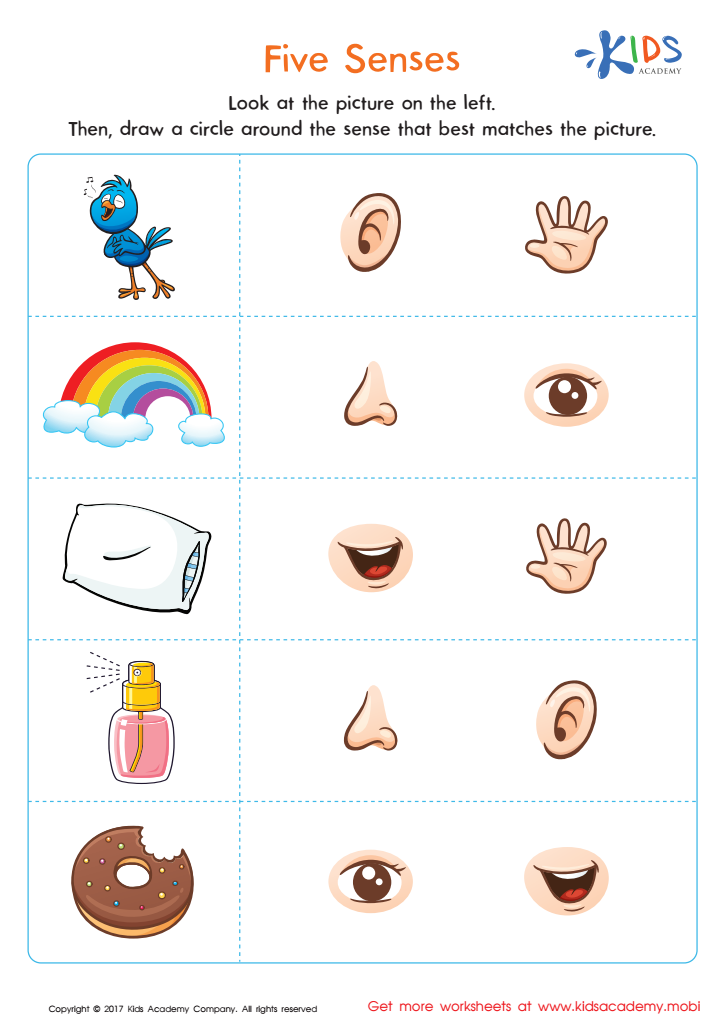
Five Senses Printable
 Assign to My Students
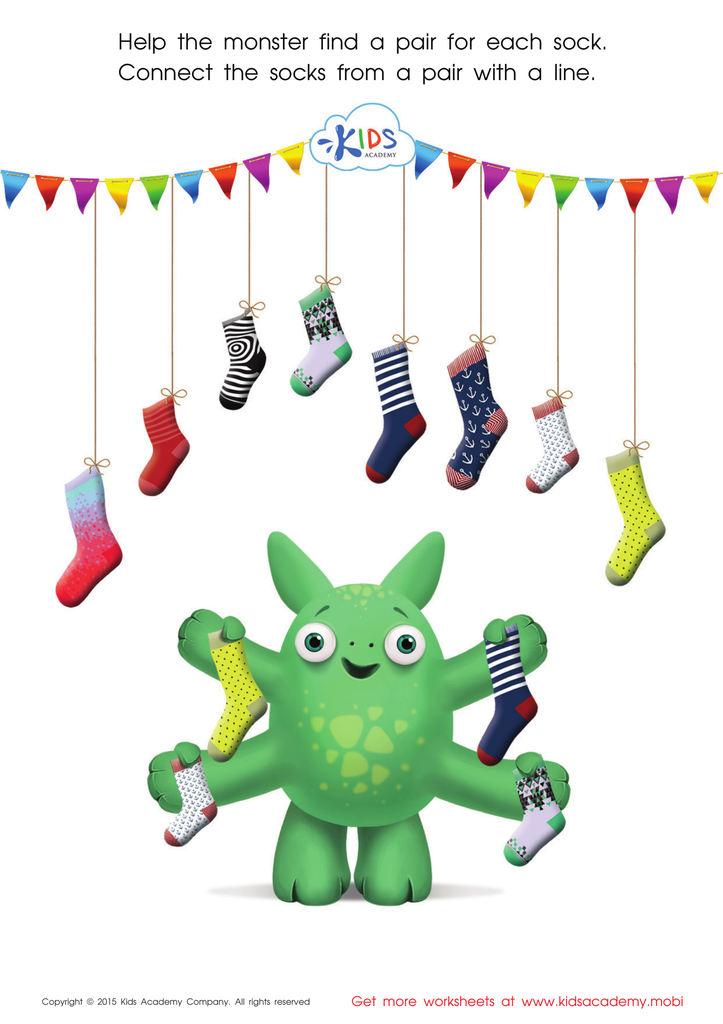
Math Matching Pairs Game: Monsterв's Socks Worksheet
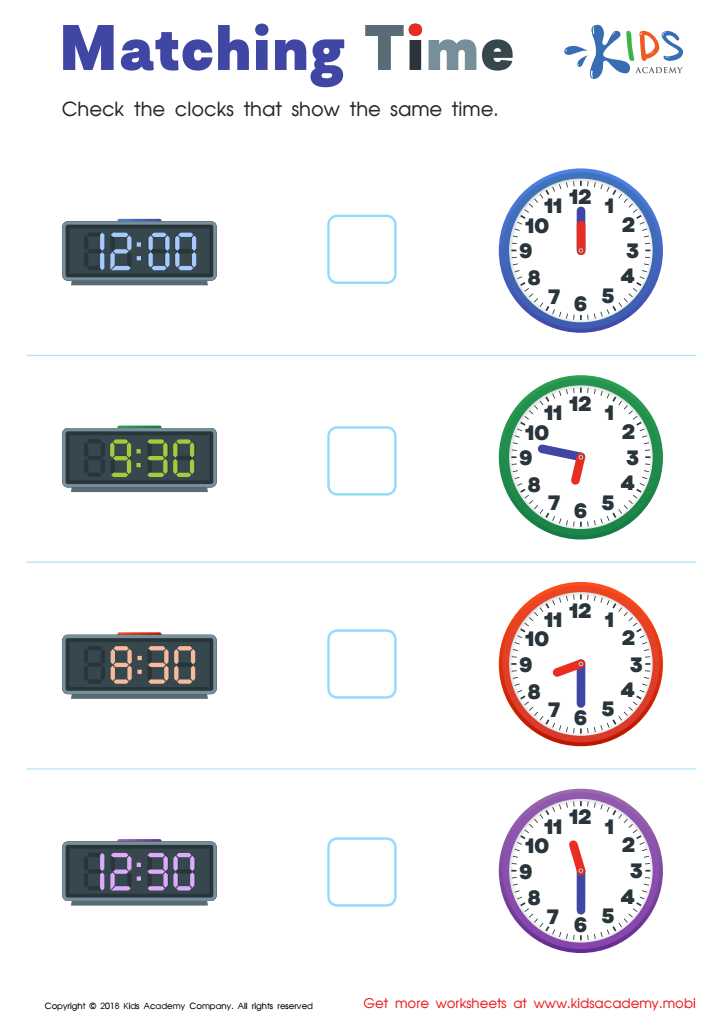
Matching Time Worksheet
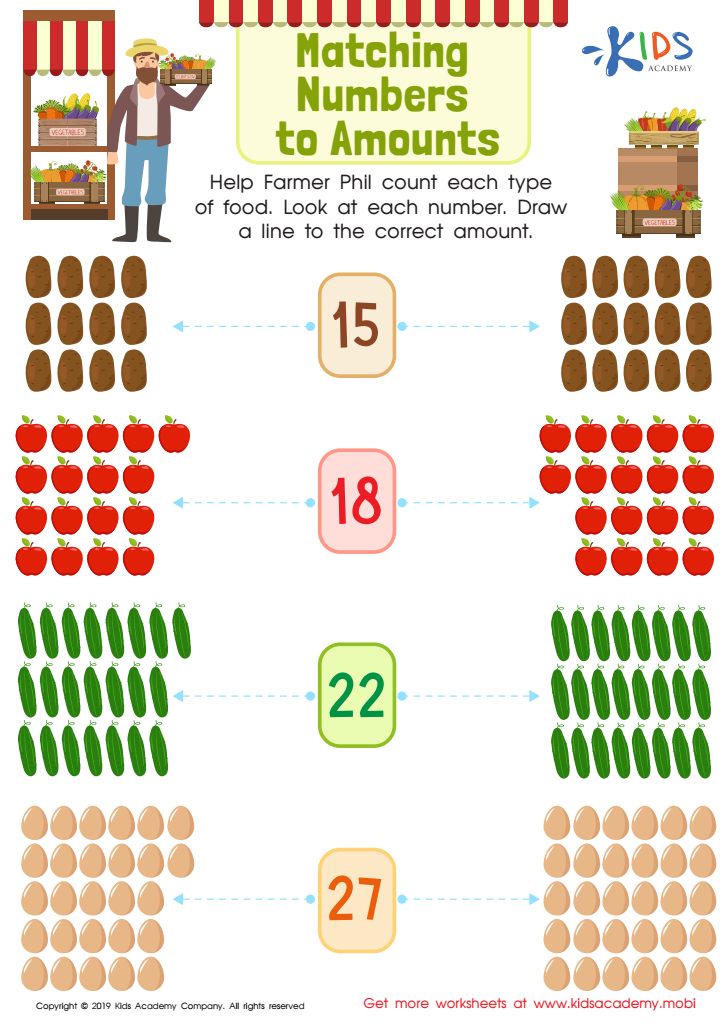
Matching Numbers to Amounts Worksheet







Matching skills are essential for young children aged 4-6 as they directly contribute to cognitive, social, and emotional development. At this stage, children's brains are rapidly developing, absorbing new information and forming critical connections. Engaging in matching activities helps to enhance their memory, critical thinking, and problem-solving abilities. When children match shapes, colors, patterns, or objects, they learn to identify similarities and differences, which is a foundational skill in mathematical reasoning and literacy.
Furthermore, matching skills support language development by expanding vocabulary. As children describe why items match, they practice using descriptive language and improve their communication skills. Socially, matching activities often involve cooperative play, fostering teamwork, turn-taking, and sharing—key components of effective social interaction.
Emotionally, mastering matching tasks boosts a child's confidence and self-esteem. Success in these activities provides a sense of accomplishment, encouraging a positive attitude toward learning. Additionally, matching exercises improve fine motor skills as children manipulate objects and materials, which is crucial for writing and other tasks requiring hand-eye coordination.
Overall, parents and teachers should value and incorporate matching activities into daily routines to lay a strong foundation for future learning and overall development. The skills learned through matching are vital building blocks for academic success and personal growth.








