
Math problem-solving Worksheets for Ages 4-6
14 filtered results
Difficulty Level
Grade
Age
-
From - To
Subject
Activity
Standards
Explore our engaging Math Problem-Solving Worksheets for ages 4-6, designed to make learning fun and interactive! These worksheets help young learners develop essential math skills through exciting activities tailored to their developmental stage. Kids will tackle problems that involve basic addition, subtraction, and number recognition while honing their critical thinking skills. Our vibrant, easy-to-follow designs capture children's attention and encourage independent thinking. Perfect for home, classroom, or after-school practice, these resources foster a love for math in early learners and lay a strong foundation for future success. Unlock your child's potential with our dynamic math worksheets today!
Favorites
With answer key
Interactive
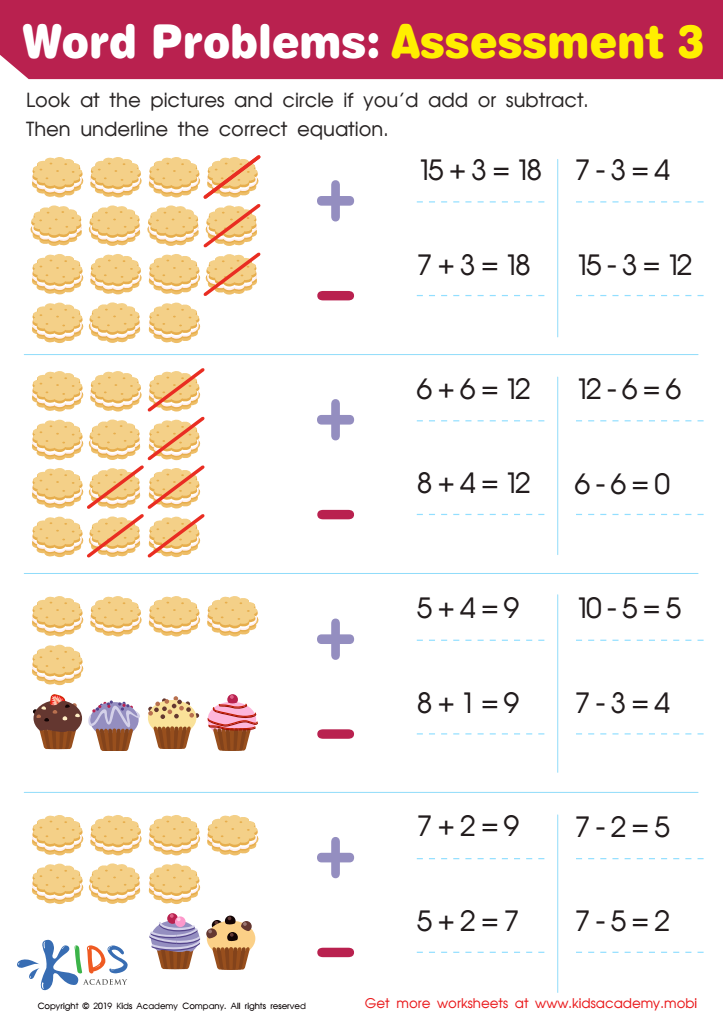
Word Problems: Assessment 3 Worksheet
This free worksheet challenges kids to use one-to-one representations and order of operations to solve basic addition and subtraction problems. They'll trace the correct equations and gain confidence with higher numbers. A great way to check their skills!
Word Problems: Assessment 3 Worksheet
Worksheet
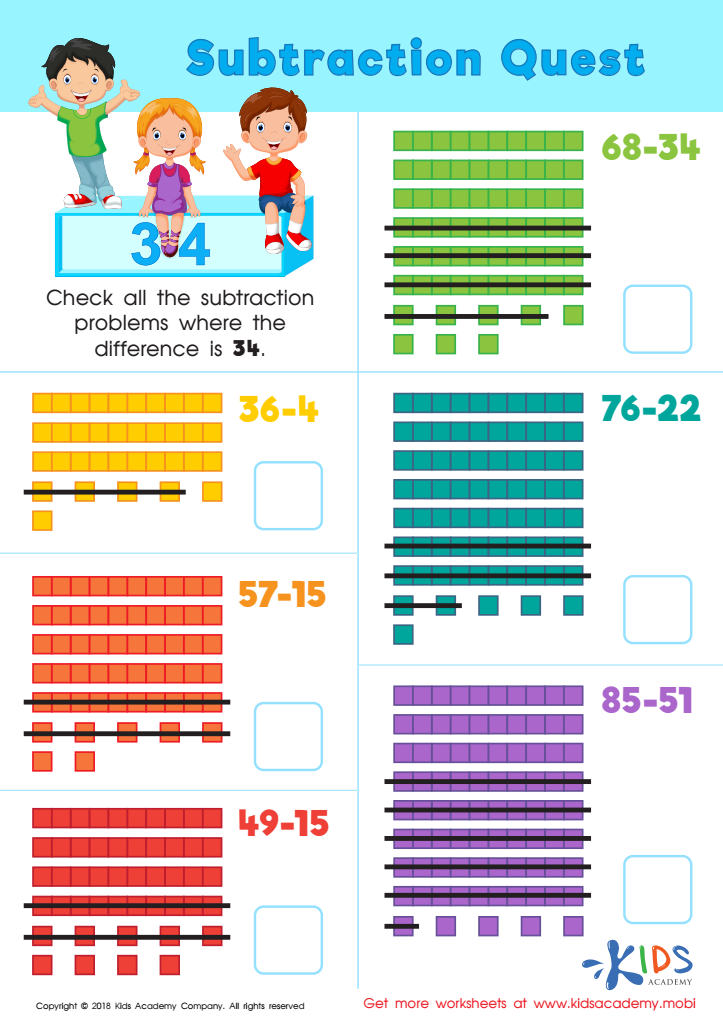
Subtraction Quest Worksheet
Send your little mathematicians on a quest full of fun! This free, downloadable PDF worksheet has them using base ten blocks to decide if the difference in each problem is 34. They'll solve each problem, marking equations where the difference is 34. It's a great way to build number sense and challenge themselves - plus, they won't even realize it's math!
Subtraction Quest Worksheet
Worksheet
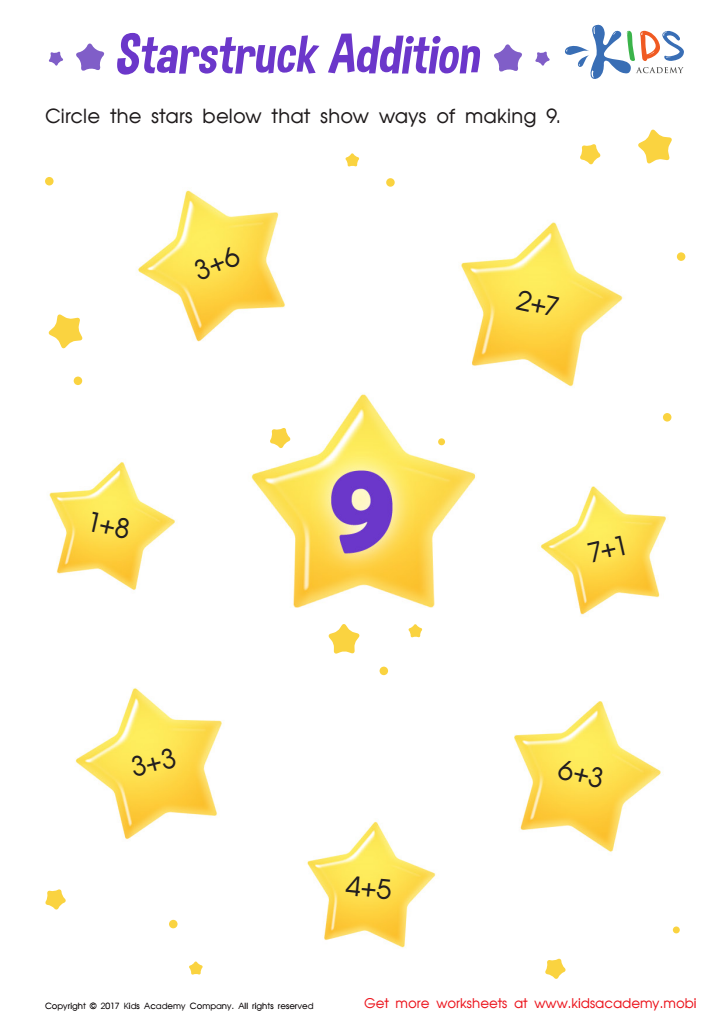
Starstruck Addition Printable
This interactive addition worksheet motivates your preschooler to practice addition and analyze number combinations. Their cognitive and analysis skills will be sharpened as they find the magic number in each problem.
Starstruck Addition Printable
Worksheet
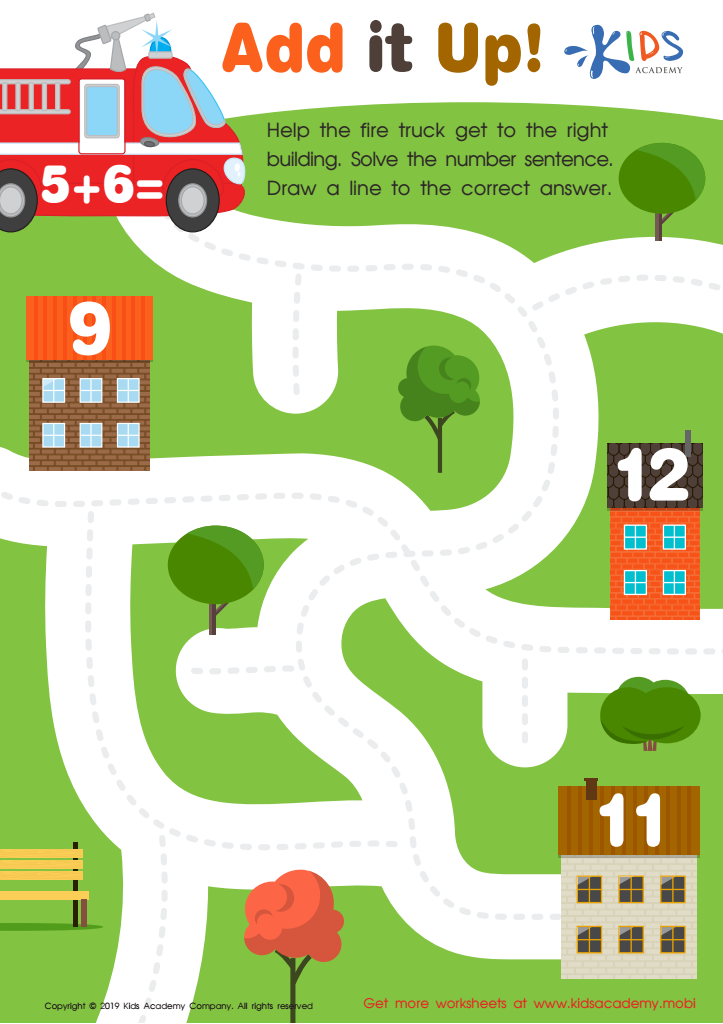
Add it Up Worksheet
The fire service is the right number to call in case of a fire. Test your children's safety knowledge by asking them other emergency numbers. Have them identify the fire truck in the worksheet and solve the number sentences. Guide them in drawing a line to the right answer.
Add it Up Worksheet
Worksheet
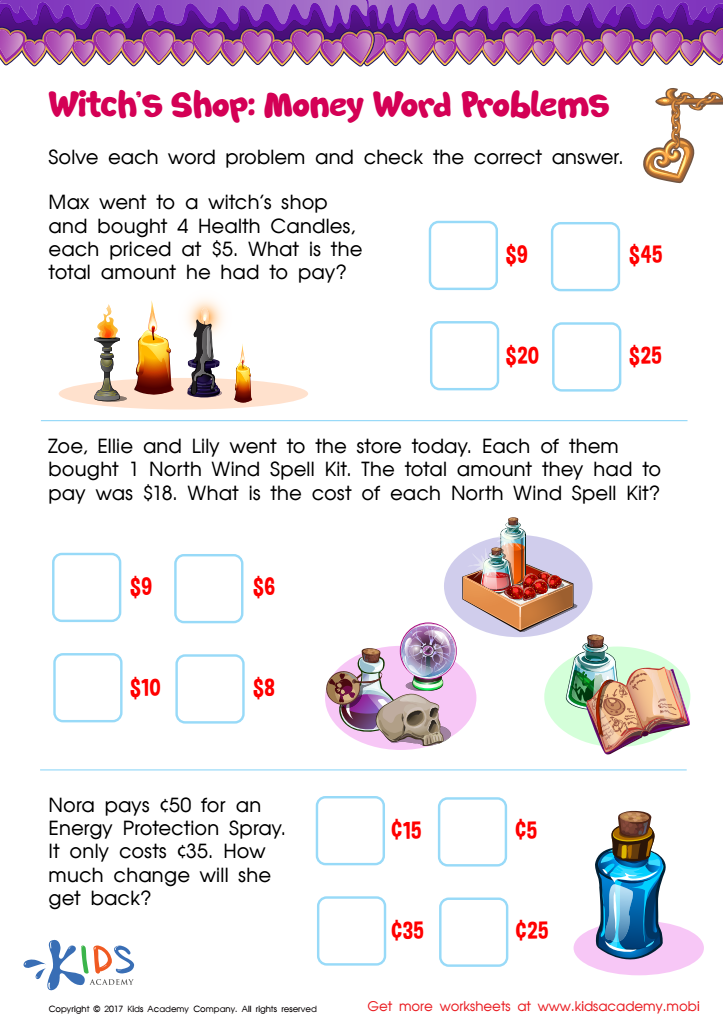
Money Word Problems Printable
Boost your 3rd grader's math skills with money word problems. This worksheet takes them to a witch's shop for a fun way to practice multiplication and division.
Money Word Problems Printable
Worksheet
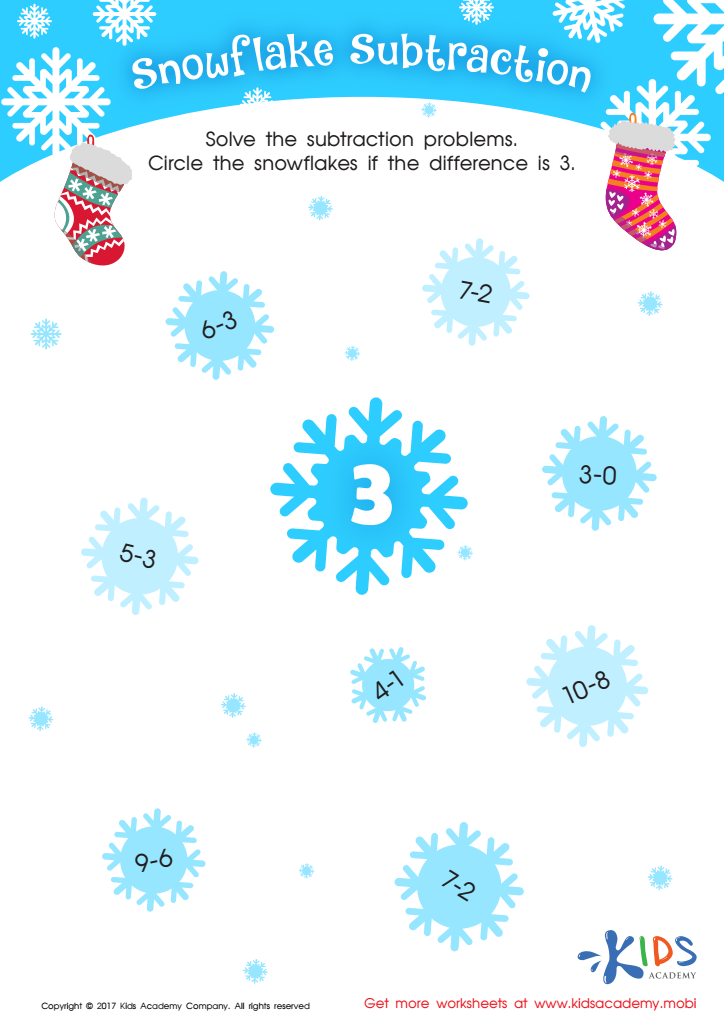
Snowflake Subtraction Worksheet
This winter-themed subtraction printable worksheet is perfect for a chilly day. The task: find the difference of 3!
Snowflake Subtraction Worksheet
Worksheet
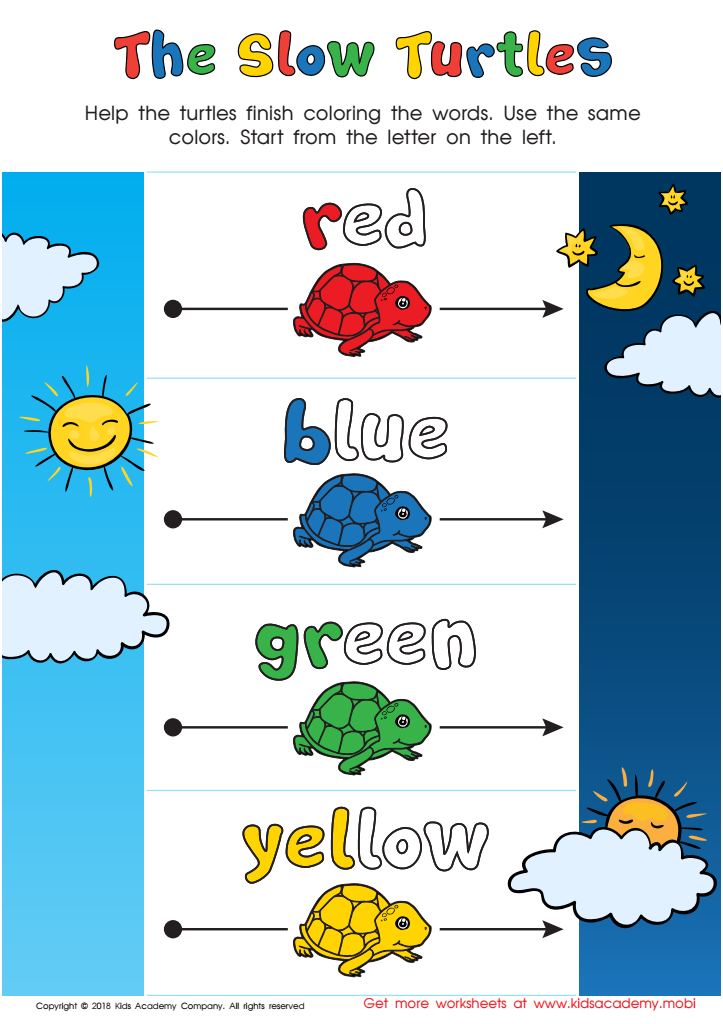
Read from Left to Right: Slow Turtles Worksheet
Can your students identify the animals in this worksheet? They're turtles! Ask if they know their characteristics – slow and living in shells. Guide them to color the words in the picture, starting from the letters on the left and using the turtles' color. Check they know turtles are slow and live in shells!
Download (PDF)
 Assign to My Students
Assign to My Students
Read from Left to Right: Slow Turtles Worksheet
Worksheet
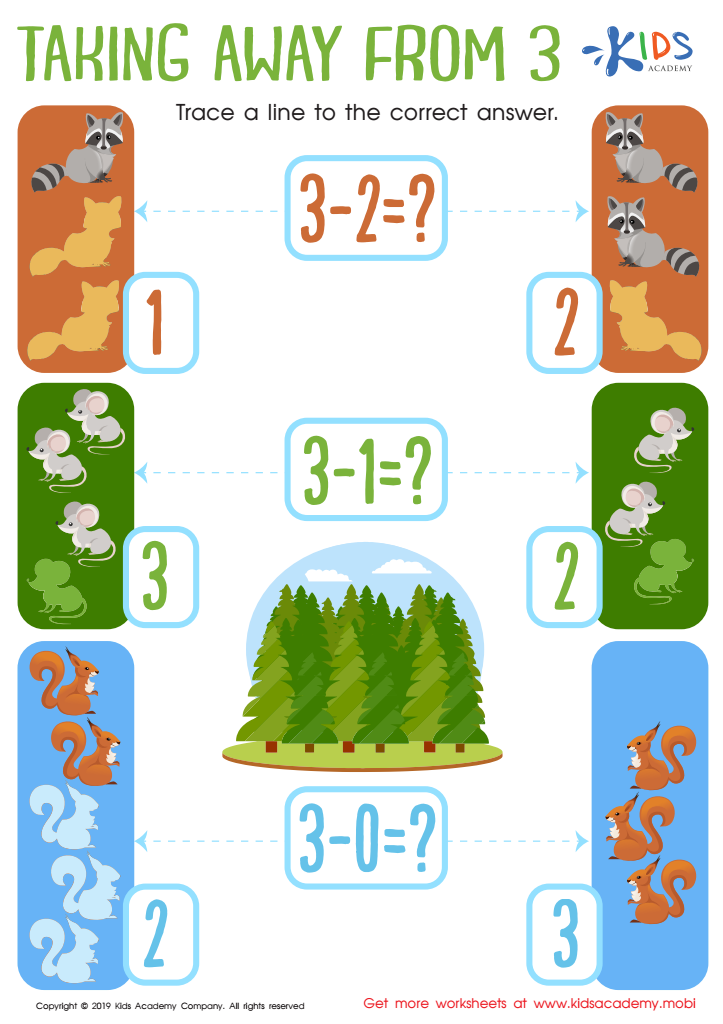
Taking Away From 3 Worksheet
Help your students learn equations and math easily by using this tracing worksheet. It has three different equations that they can count and solve, then trace a line to the correct answer. This will make the learning process fun and exciting.
Taking Away From 3 Worksheet
Worksheet
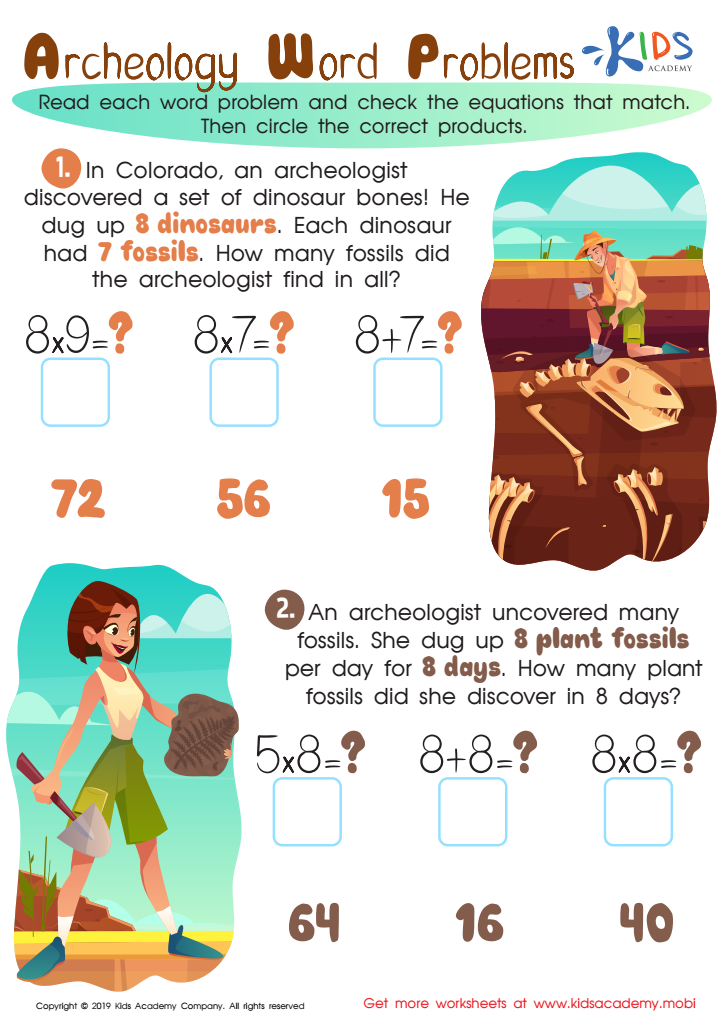
Archeology Word Problems Worksheet
Encourage your child to explore their career options! Show them an archeologist's job with this worksheet - featuring a picture of a dinosaur bone discovery. Read the accompanying text, then solve the word problems. Help your kids circle the correct answers to better understand this profession.
Archeology Word Problems Worksheet
Worksheet
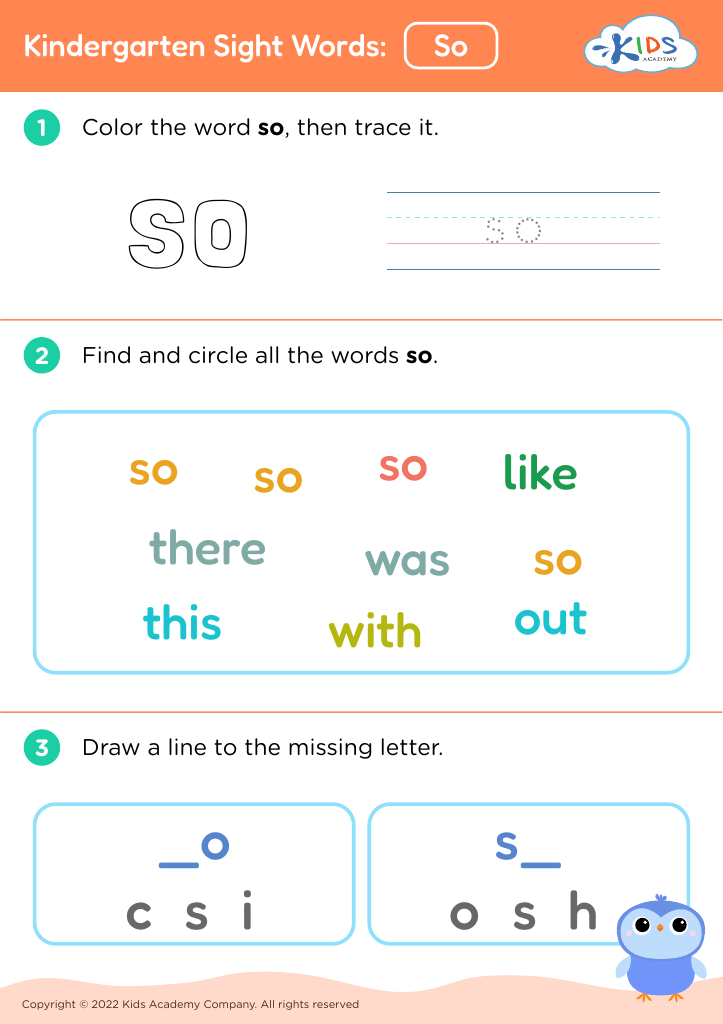
Join Kids Academy for Free
Who is primarily going to use this learning content?








Math problem-solving for ages 4-6 is crucial for early childhood development, as it lays the foundation for critical thinking and cognitive skills essential for future learning. At this age, children are naturally curious and eager to explore the world around them. Engaging them in math problem-solving activities nurtures this curiosity and encourages them to ask questions, make predictions, and develop reasoning skills.
Additionally, math problem-solving fosters the ability to recognize patterns and relationships, building strong numerical fluency. As children learn to approach a problem systematically, they develop perseverance and resilience—skills that are invaluable in all areas of life. Moreover, math is often integrated with everyday situations, from counting toys to sharing snacks, making learning meaningful and relatable.
For parents and teachers, promoting math problem-solving at this early stage sets the tone for a positive attitude toward learning. When children experience success, they build confidence, which encourages a lifelong love for math and learning in general. Early exposure to math challenges can help identify children's individual strengths and areas needing support, enabling tailored approaches that meet diverse learning needs. Overall, nurturing math problem-solving in young children are vital for their intellectual and emotional development.








