Number comparison skills Worksheets for Ages 4-6
3 filtered results
-
From - To
Enhance your child's early math skills with our engaging Number Comparison Skills Worksheets for Ages 4-6. Tailored to foster essential numeracy, these worksheets help young learners compare numbers through fun activities, such as matching, circling, and identifying greater or lesser values. Designed for home or classroom use, our resources encourage interactive learning and reinforce core math concepts in an enjoyable way. Each worksheet is visually appealing and suitable for varying skill levels, ensuring that every child can succeed. Support your child's foundational math abilities and prepare them for future success with our thoughtfully created worksheets today!
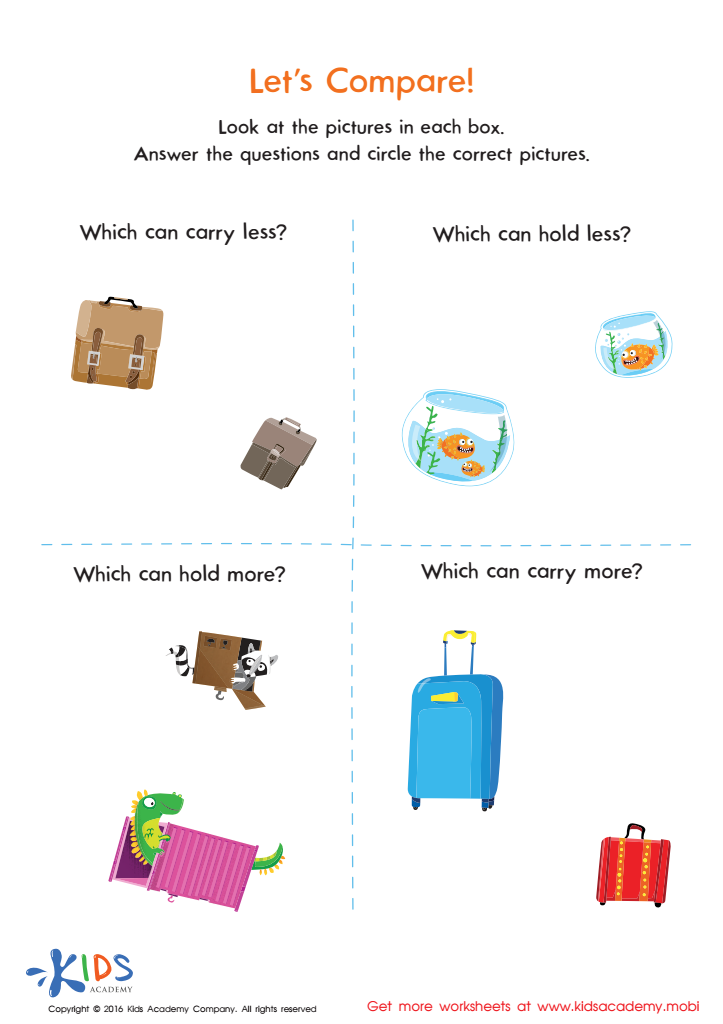
Let's Compare Worksheet: Big or Small
 Assign to My Students
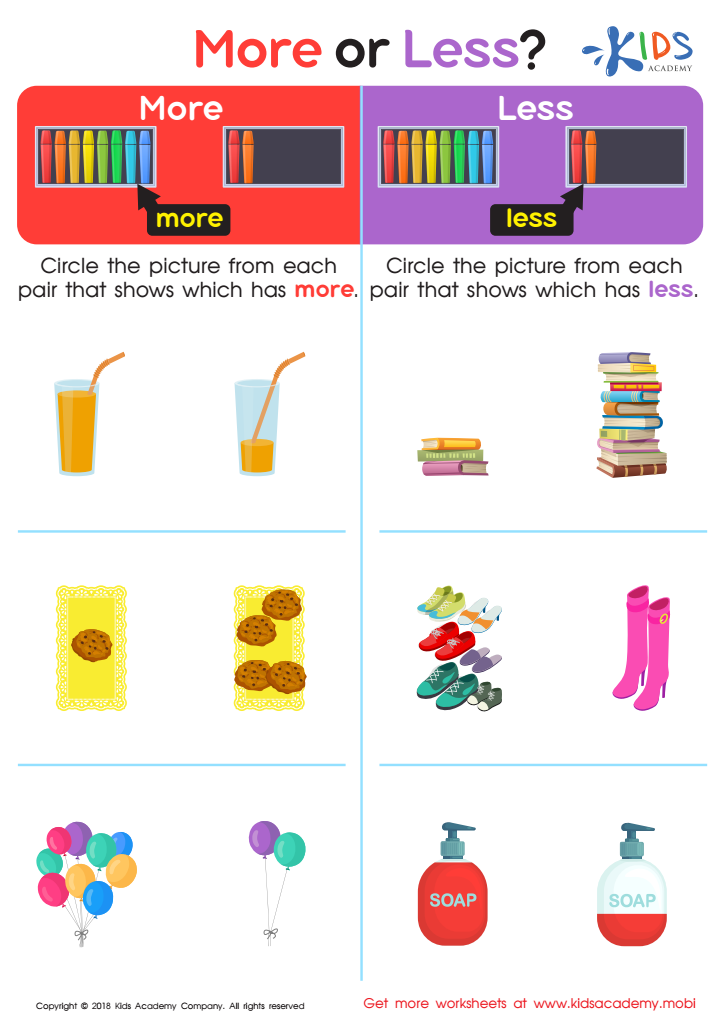
More or Less? Worksheet
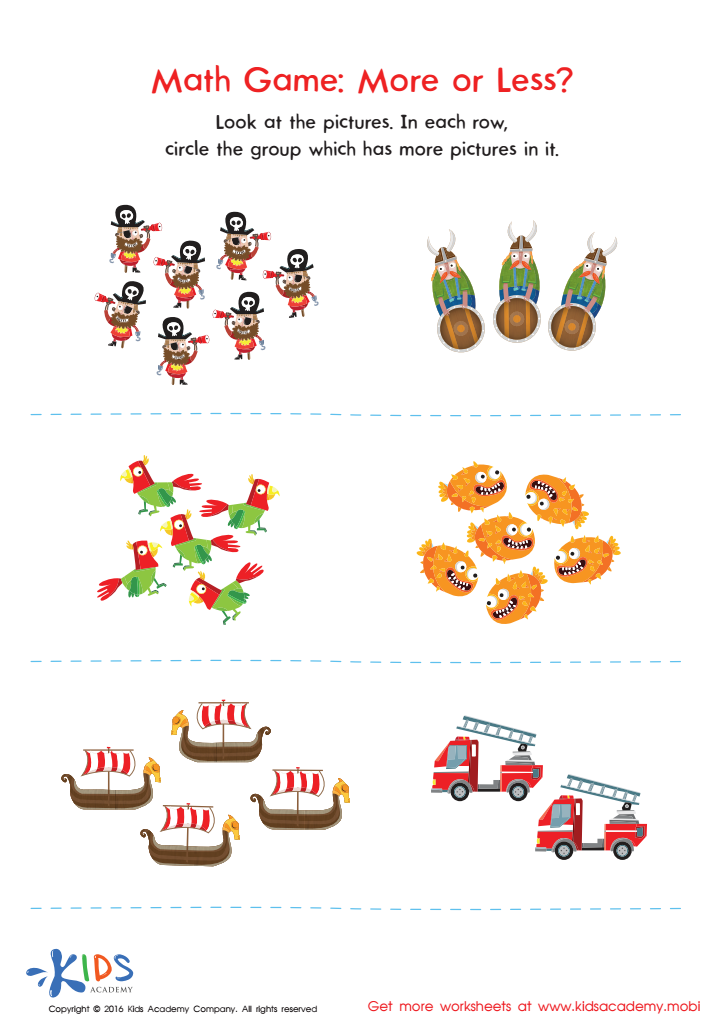
More or Less Worksheet







Number comparison skills are crucial for children ages 4-6 as they lay the foundation for future mathematical understanding. At this developmental stage, children begin to grasp concepts of quantity, size, and value, which are fundamental to more complex arithmetic and problem-solving skills.
Engaging in number comparison activities helps children develop critical cognitive abilities, such as analytical thinking and reasoning. These skills enable young learners to make sense of their world by categorizing and organizing information, which is essential not just in math but also in everyday decision-making and practical situations. For instance, distinguishing between larger and smaller groups aids in basic counting, measurement, and even future operations like addition and subtraction.
Moreover, supporting number comparison skills fosters confidence and a positive attitude towards math from an early age. Children who feel comfortable with numbers are more likely to embrace challenging concepts later on. Additionally, strong foundational skills in comparative reasoning can translate to improved academic performance and competence in various subjects.
Therefore, parents and teachers should prioritize activities that encourage number comparison, ensuring children are well-equipped for their educational journey ahead. A solid start in math opens doors and builds resilience, preparing them for a lifetime of learning.








