Practical math application Worksheets for Ages 4-6
6 filtered results
-
From - To
Discover our engaging Practical Math Application Worksheets tailored for ages 4-6! Designed to seamlessly integrate learning with fun, these worksheets cover essential math skills including counting, shapes, measurements, and simple problem-solving. Each activity is crafted to encourage hands-on learning and real-world application, helping young minds understand the relevance of math in everyday life. Perfect for parents and teachers alike, our printable resources not only build foundational math skills but also boost confidence and critical thinking. Explore today and support your child's journey toward math mastery!
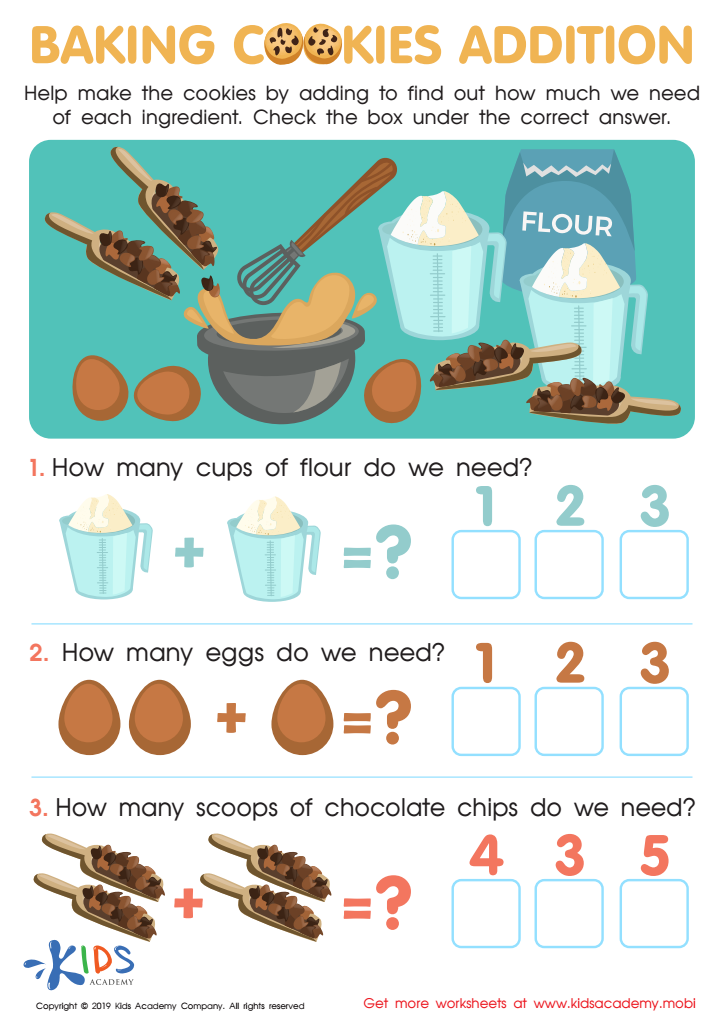
Baking Cookies Addition Worksheet
 Assign to My Students
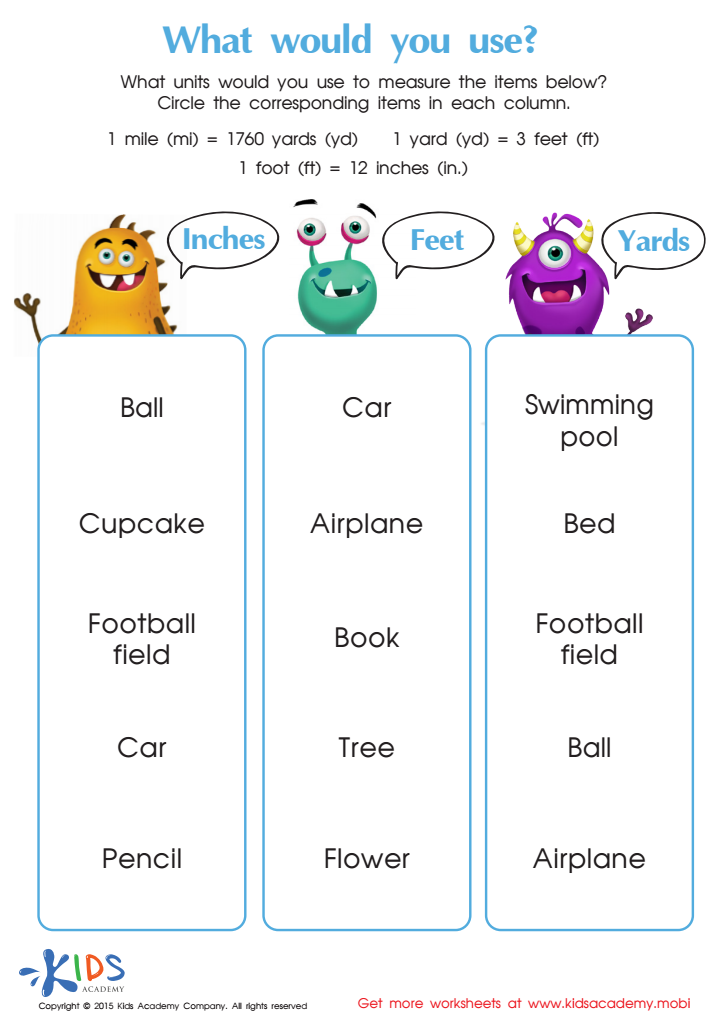
Learning about measuring objects in inches, feet and yards Worksheet
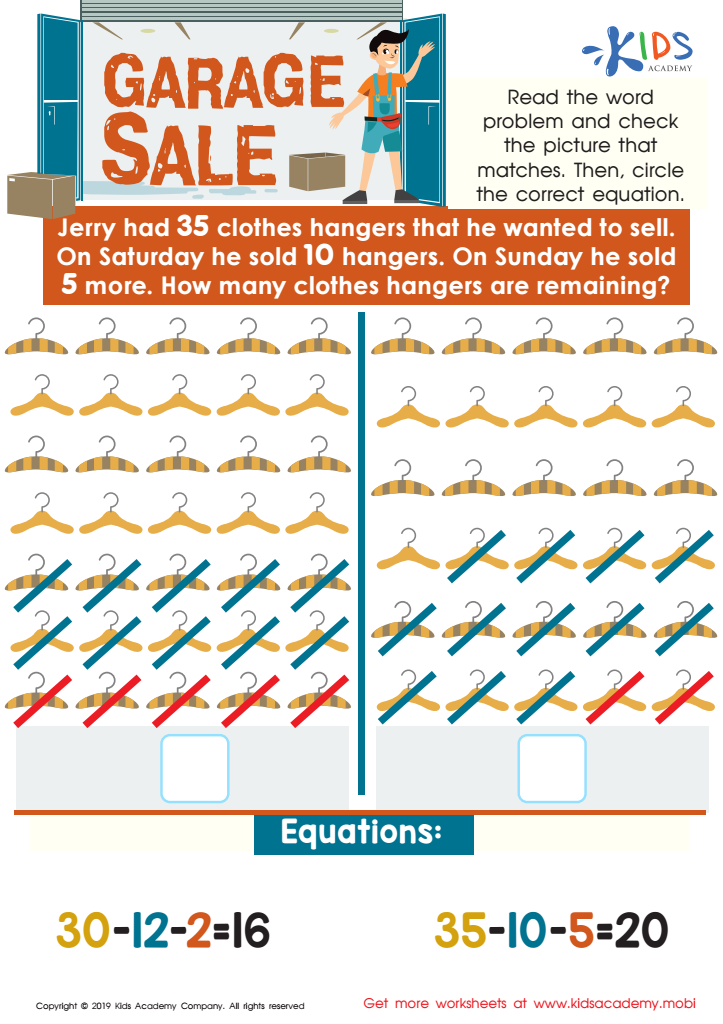
Garage Sale Worksheet
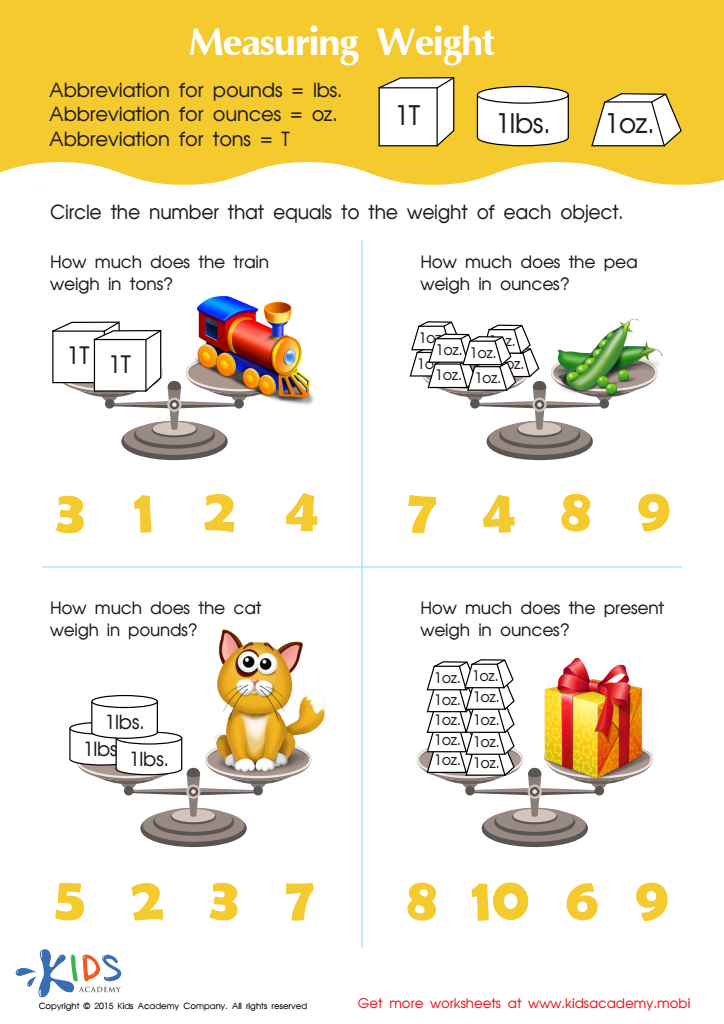
Measuring Weight in Ounces, Pounds and Tons Worksheet
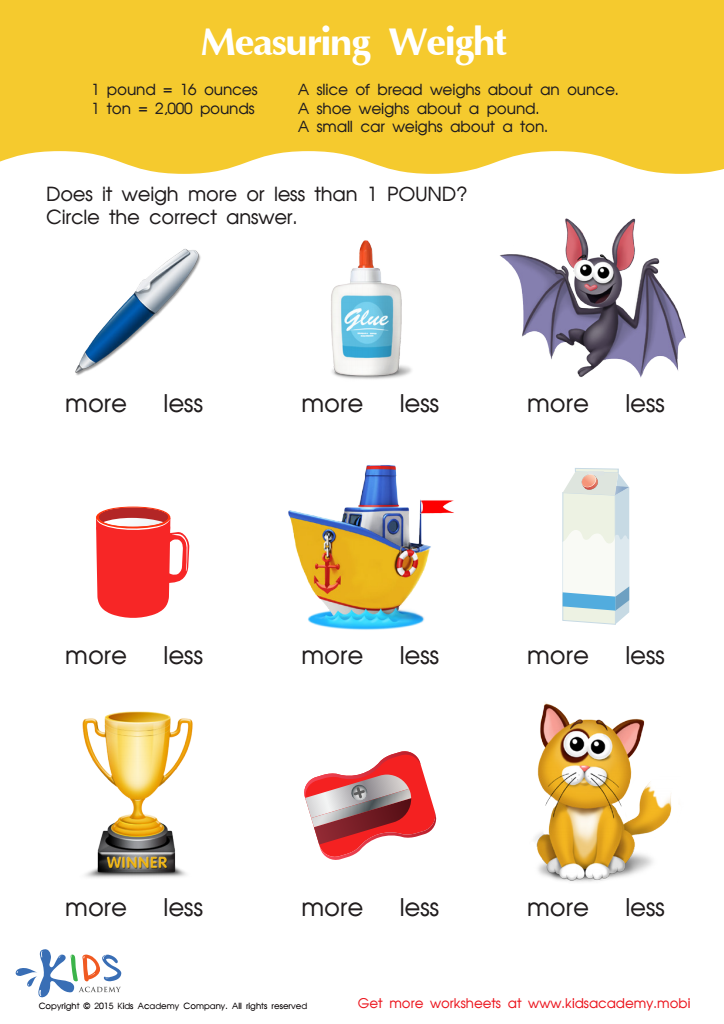
Measuring weight in pounds Worksheet
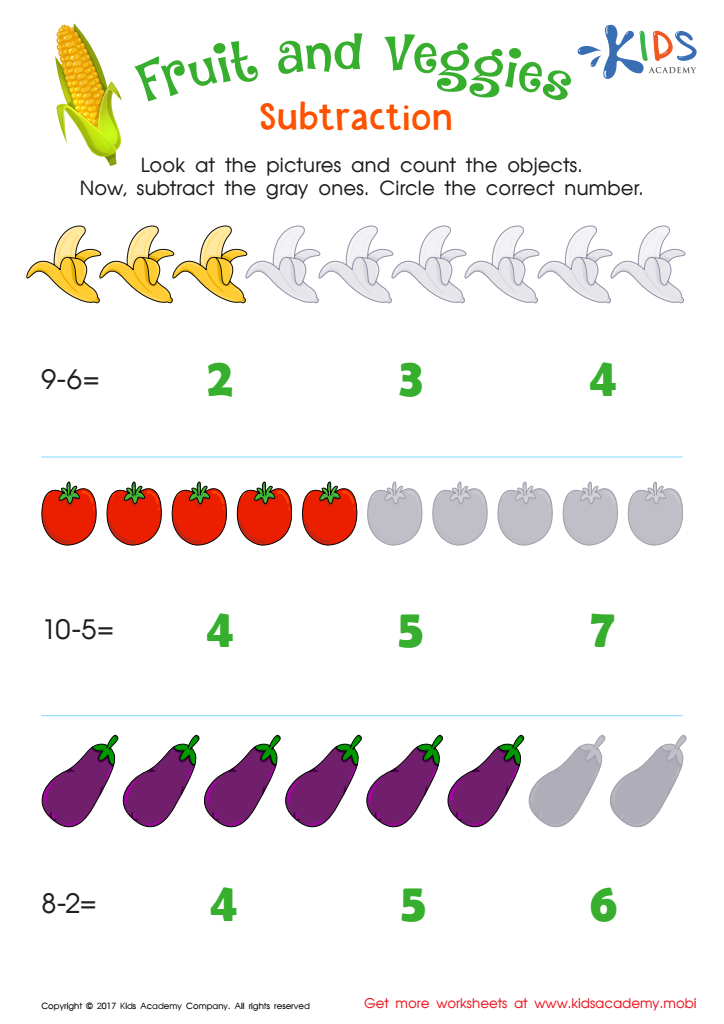
Fruit and Veggies Subtraction Worksheet








Parents and teachers should prioritize practical math applications for children ages 4-6 because early exposure to math in everyday context fosters a strong foundation for future academic success and practical problem-solving skills. At this formative stage, children are naturally curious and open to learning through play and daily activities. Integrating math into these experiences helps demystify the subject and makes it enjoyable and relevant.
Incorporating math concepts such as counting, sorting, or simple addition and subtraction into routine tasks like cooking, shopping, or playing games, can significantly enhance a child's cognitive development. It strengthens their ability to think critically and solve problems. Moreover, early success and positive experiences with math can boost a child’s confidence and interest in the subject, which can lead to improved performance in school later on.
Additionally, understanding basic mathematical principles is vital for everyday life. Skills like measuring ingredients, recognizing patterns, or understanding time and money, are essential for independent living. By embedding practical math into the daily lives of young children, parents and teachers ensure that they develop these essential life skills, setting them up for a lifetime of competent decision-making and self-reliance.
By making math both practical and fun, adults can greatly enhance a child's learning experience and pave the way for future success in more complex mathematical concepts.








